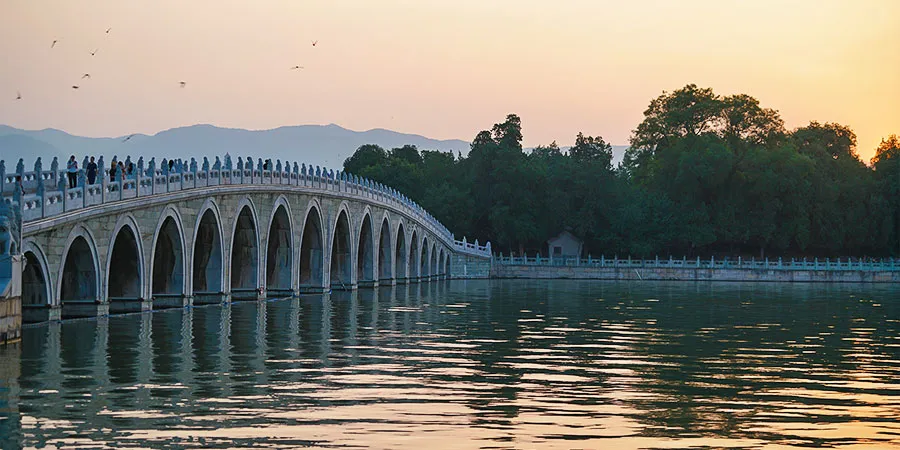
The Seventeen-Arch Bridge, as the largest and longest multi-arched stone bridge in China's imperial gardens, has been an unmissable landmark in Summer Palace for its ingenious design, intriguing legends, and seasonal spectacles.
Seventeen-Arch Bridge, Summer Palace
When & Why Was the Seventeen-Arch Bridge Built?
The Seventeen-Arch Bridge was originally constructed in 1750 as a central project during the large-scale renovation of the Summer Palace by Emperor Qianlong (1711-1799) to celebrate his mother's sixtieth birthday. Despite the ravages of war, the existing structure still maintains the grand scale of the Qianlong period and underwent extensive repairs in the early 20th century.
More than just a pathway, this bridge links the East Causeway to the Nanhu Island, with Nanhu Island symbolizing the legendary Isle of the Immortals, and the bridge acting as the "rainbow" leading to this fairyland. This layout implies that Qianlong is not only the emperor on earth but also a ruler mandated by heaven.
Stone Carvings on the Bridge
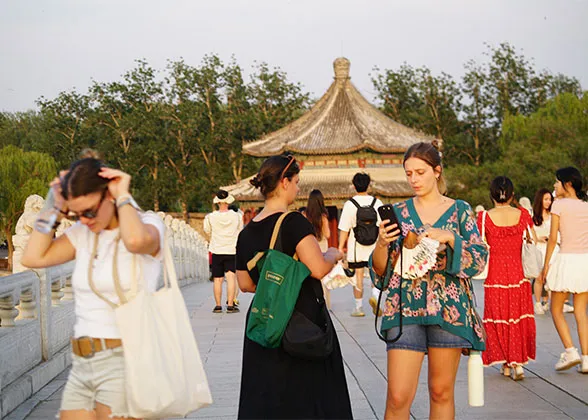
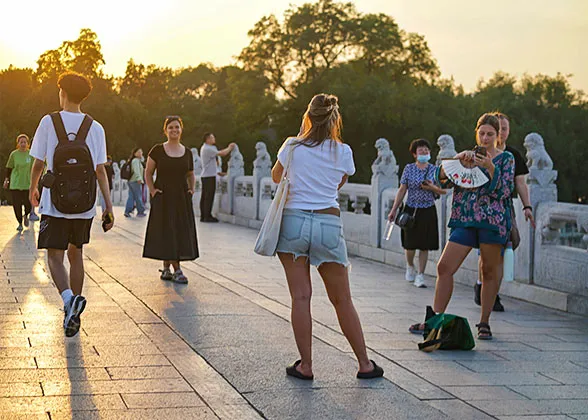
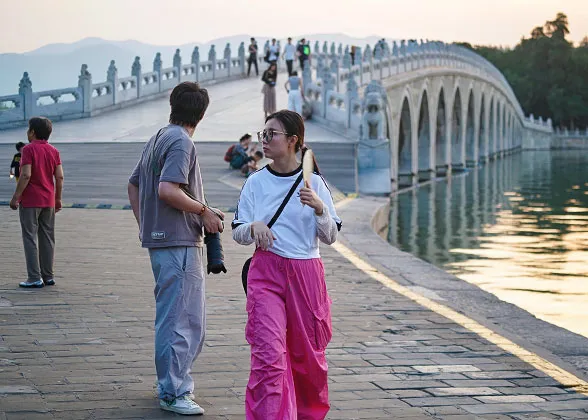
Visitors on the Bridge
Bridge Legend: The Divine Keystone
As construction neared completion, the final keystone symbolizing the pinnacle of imperial power, known as the "Dragon Gate Stone" at the center arch, couldn't fit. This was seen as an ominous sign of divine disfavor, potentially leading to severe punishment from the emperor.
Then an elderly man appeared by the bridge, selling a strangely shaped stone. Ragged and unremarkable, he drew no attention, until workers realized his stone matched the gap exactly. Once set, the arch locked firm and true. Only then did they understand: Lu Ban, the best architectural engineer in Chinese history, had descended in disguise to lend a helping hand.
What to See about the Seventeen-Arch Bridge?
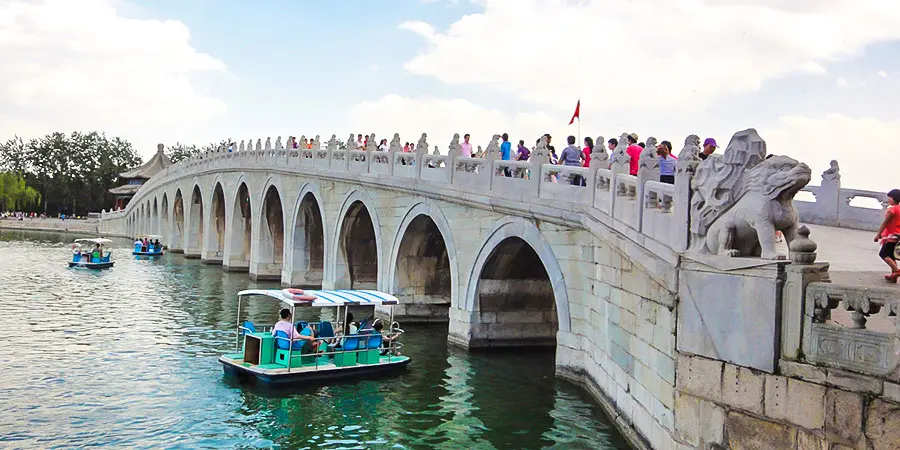
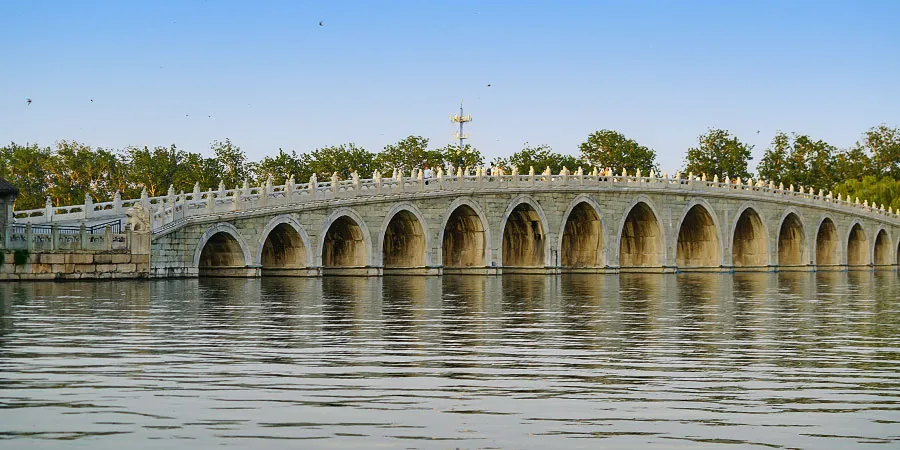
At 150 meters (164 yards) long, the bridge spans Kunming Lake with seventeen graceful arches carved from gray-green granite. Flanked by gleaming white marble balustrades, its gentle upward curve evokes both a rainbow arcing across the sky and a delicately strung pearl necklace.
Seventeen-Arch Bridge
Imperial Power in Numerical Design
Whether you count the arches from either end, the tallest, central arch is always the ninth. In traditional Chinese cosmology, “nine” is the highest yang numeral associated with strength, activity, and enduring sovereignty. This design ensures the emperor stands at the symbolic apex whether approaching from east or west, making supreme authority measurable and visible.
Stone Lions of No Shared Shapes
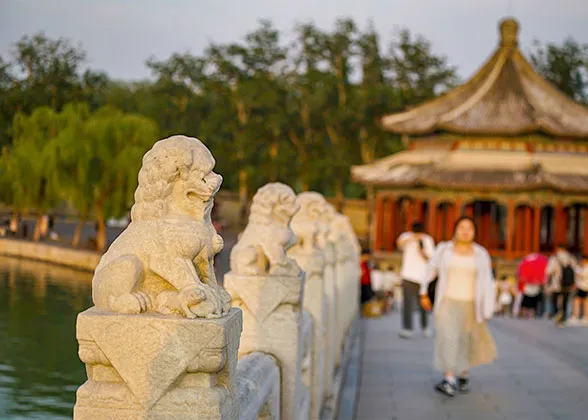
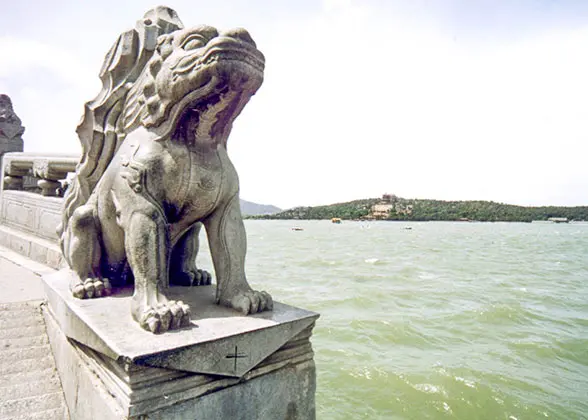
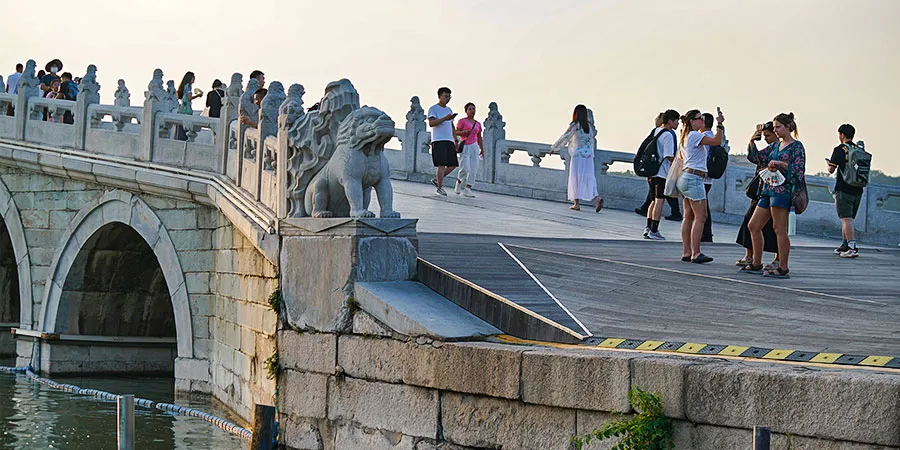
Taking cues from the iconic arch design and stone lion decorations of the Marco Polo Bridge in southern Beijing, the Seventeen-Arch Bridge features 128 white marble balusters on either side, each adorned with intricately carved stone lions. To show imperial splendor, Emperor Qianlong demanded more stone lions on the Seventeen-Arch Bridge. Consequently, the bridge boasts a total of 544 stone lions, exceeding the Marco Polo Bridge count by 43.
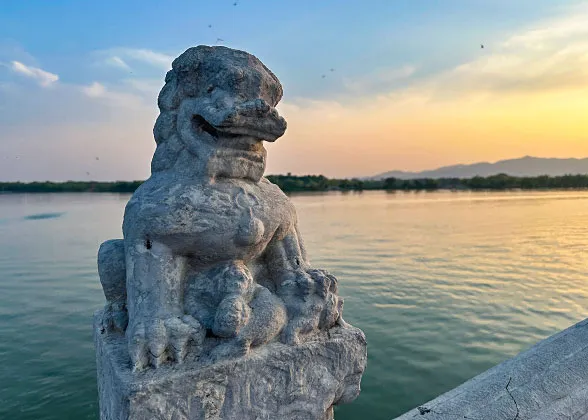
Each lion exhibits a unique posture. Some appear majestic as if on patrol, others playful as if hiding, and some gentle, lowering their heads to caress their cubs. These lions are considered auspicious symbols of warding off evil spirits. They serve not only as decorations for the Seventeen-Arch Bridge but also as its guardians.
A Stone Lion of the Bridge
Watchful Roarers
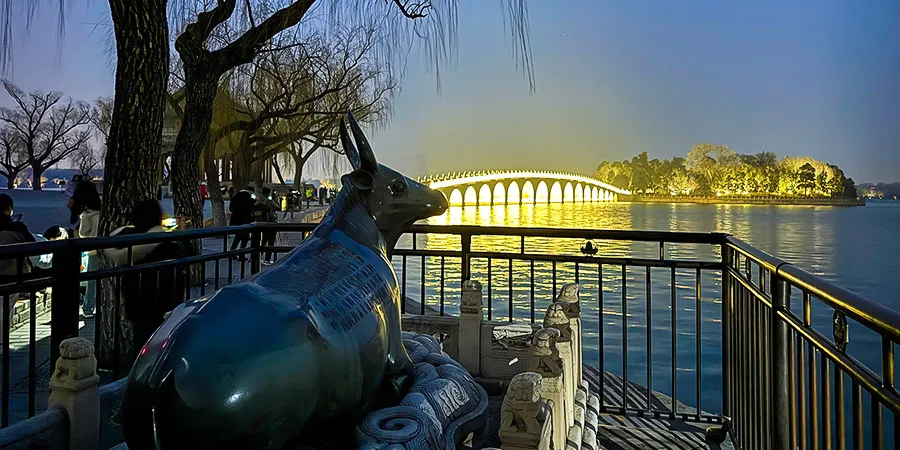
At each end of the bridge stand two stone mythical creatures known as the Watchful Roarers, guardians with a habit of watchfulness. They are said to be sons of dragons, roaring towards the heavens, their voices echoing loudly, symbolizing the connection between the emperor and his people.
Gardening Ingenuity for Longevity
Viewed from the Longevity Hill, the bridge, with the left pavilion and the right Nanhu Island, creates an image of a tortoise resting on the water. The island resembles the shell, the bridge the neck, and the pavilion the head of the tortoise. Together, they form the enduring image of a "Divine Tortoise Amidst Waves", a traditional emblem of longevity, stability, and perpetual ruling, reflecting the emperor's aspiration for his life and sovereignty.
Photoing on the Bridge
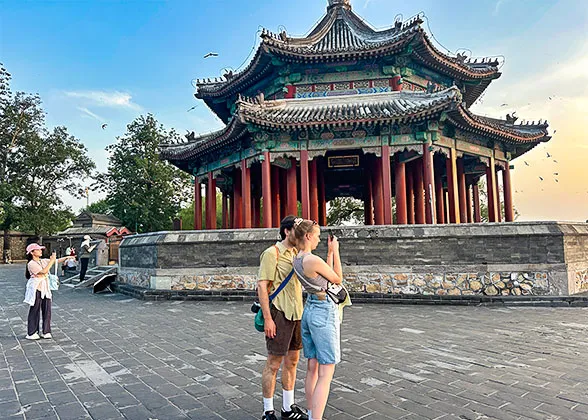
Pavilion Near the Bridge
Evening Illumination
The bridge is lit up on weekends and significant holidays, during which the golden reflection on the lake creates a serene atmosphere perfect for photography.
The illumination is typically 30 minutes after sunset (around 18:10–18:30). If you visit during the off season (November to March), arrive before the Summer Palace's latest entry time at 18:00.
Golden Light Through the Arches in Winter
"Golden Light through Arches" is a natural phenomenon that occurs during the winter sunset at the Seventeen-Arch Bridge. As the sun dips below the horizon, its golden rays align perfectly with all seventeen bridge arches, illuminating each one in sequence and creating a stunning visual spectacle.
Seventeen-Arch Bridge
This phenomenon can typically be observed from November to January each year, with the peak viewing period falling around the Winter Solstice—December 21st to 23rd. For the best experience, visit on a clear day or one with slight cloud cover, and wait for the golden illumination between 16:00 and 16:30.
The prime spot for viewing and photography is Nanhu Island. Other excellent vantage points can be found along the front Longevity Hill, especially at the Tower of Buddhist Incense, which allows you to appreciate the majestic moment from an elevated panoramic view.
Prime shooting locations on Nanhu Island fill up quickly due to the popularity. For photography enthusiasts, it's better to arrive by 13:00 and set up your tripod securely to avoid accidental bumps from passing visitors. As the weather will be cold this period, it is advised to dress warmly.
 Next: Nanhu Island
 Related Link: Summer Palace Travel Tips