Suzhou Market Street (Suzhoujie)
Suzhou Market Street is an entertainment and shopping street built by Emperor Qianlong (1711~1799) on both banks of the Back Lake in Summer Palace, imitating the waterside town market styles of China’s southern Yangtze River area for his mother, empress, and concubines. It stands as the only surviving example of an ancient Chinese imperial market.
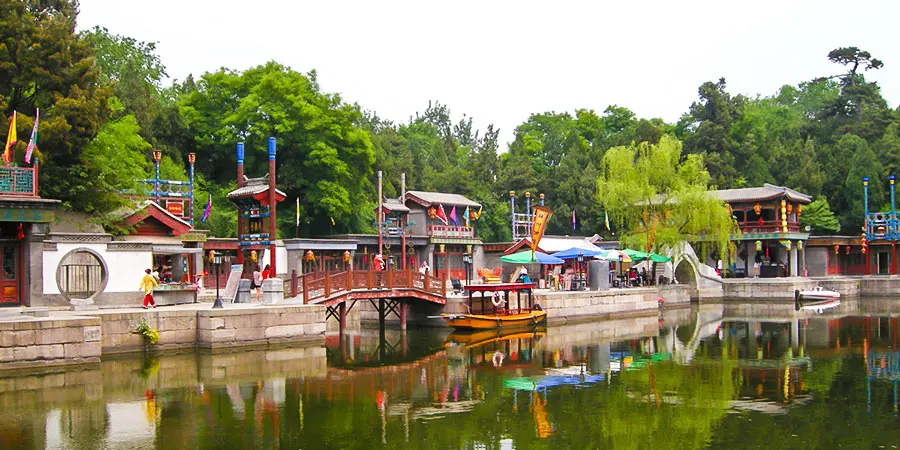 |
| Suzhou Market Street |
What does Suzhou Market Street look like?
Suzhou Market Street, stretching about 270 meters (295 yards), adopts the typical “one river, two streets” layout commonly seen in the regions south of the Yangtze River in China, which is characterized by grey tiles, grey bricks, and white-washed walls.
Centered on a three-arch stone bridge spanning the middle of Back Lake, it extends on both sides, with more than 60 small shops lining the banks, using the river as the main thoroughfare and the banks as marketplaces.
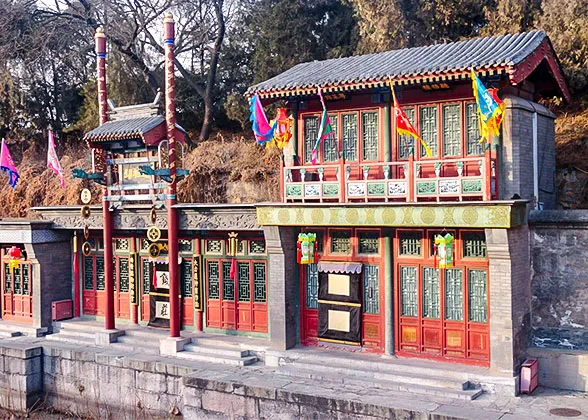
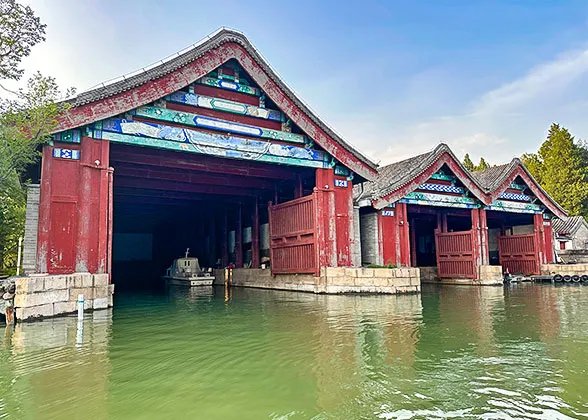
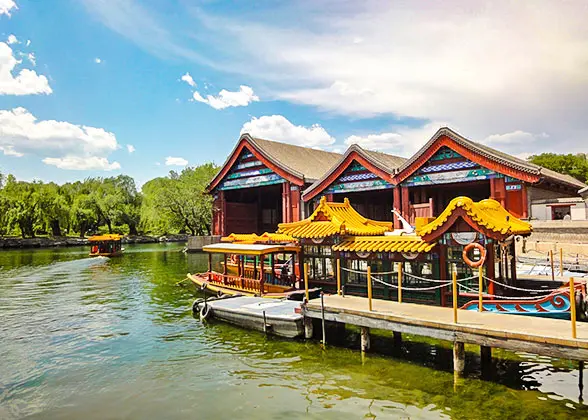
On the east side of the waterway lies a dockyard comprising two docks with a total of 40 chambers, which once accommodated Emperor Qianlong’s imperial boats. The larger dock, constructed in 1782, was destroyed along with the luxurious vessels and was subsequently rebuilt in 1888. It stands as the largest existing royal dock in China’s imperial gardens, built with precious timber imported from Southeast Asia, renowned for its exceptional hardness.
|
|
Why was Suzhou Market Street built?
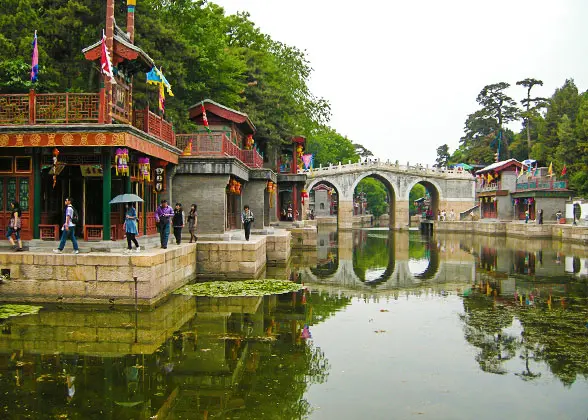 |
| River in Suzhou Market Street |
Emperor Qianlong commissioned the construction of Suzhou Market Street in 1751 specifically to recreate the vibrant waterside markets he had witnessed during his visit to Suzhou in southern China. Inspired by the unique floating market culture, he designed this commercial street in the Summer Palace to enrich royal women's imperial harem life.
The original Suzhou Market Street was destroyed in 1860. After its foundations were rediscovered in 1962, the street was reconstructed in the 1980s and reopened to the public in 1990. From 1990 to the 2010s, the street hosted immersive palace market events, where staff in Qing Dynasty attire recreated 18th-century commerce. Visitors could exchange replica currency for goods, enhancing the historical experience.
What was Suzhou Market Street like in 18th century?
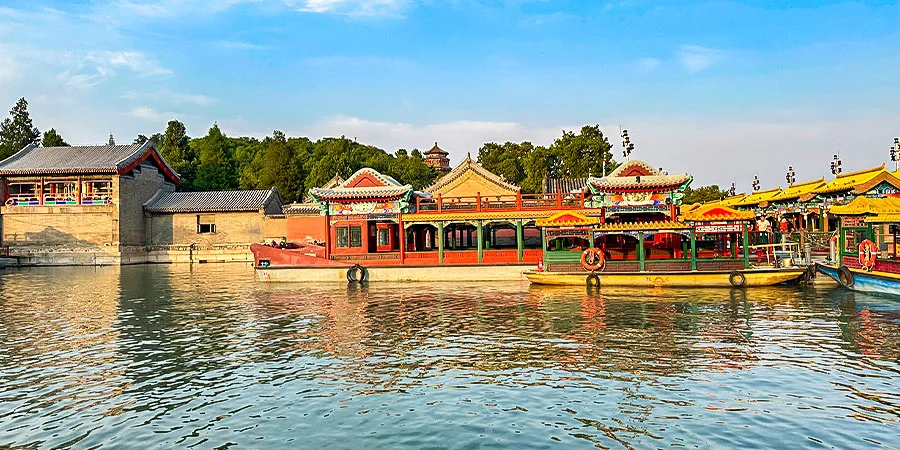 |
| Boats on the River |
The street was home to various shops, including restaurants, pawnshops, pharmacies, dye houses, printing presses, banks, official uniform stores, tea houses, storytelling venues, and weaving workshops—practically everything found on a southern folk street.
Maidservants and eunuchs were dressed to pretend as buyers and sellers, haggling earnestly, while others were assigned to tell stories, pawn items, and enjoy tea in respective venues, creating a lively market atmosphere. To enhance realism, there were even hired thieves to steal among the crowds.
Sitting in delicate boats, the royals enjoyed the bustling streetscape amidst the sound of oars and the soft southern accent calls of vendors, as if revisiting the towns of southern China and immersing themselves in its rustic charm.
Visiting Tips for Suzhou Market Street
1. Suzhou Market Street is a separately ticketed attraction in the Summer Palace, requiring either a single entry ticket (CNY 10) or a combined ticket for entry (CNY 60). Pay attention it will be close on Mondays.
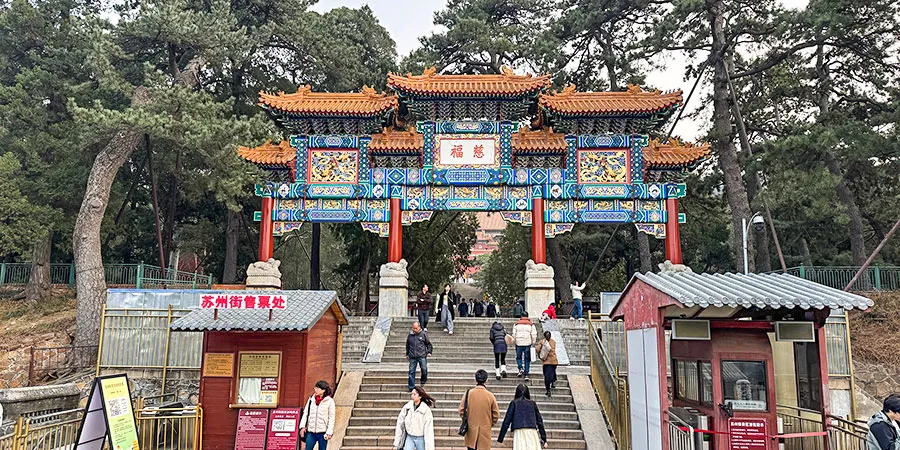 |
| Suzhou Market Street Ticket Windows |
2. Suzhou Market Street is currently under reconstruction until September 2026. While tickets are available, as all buildings are closed for construction, you can only see a river there. Honestly speaking, you are advised to bypass this attraction until the reconstruction is finished.
 Related Link: Summer Palace Travel Tips
Recommended Tours
- Last updated on Oct. 23, 2025 by Jally Zhang -