Constructed in 1420, the Long Corridor originally served as a sacred passage connecting the Divine Kitchen to the altars, protecting sacrificial offerings from wind and rain during transport.
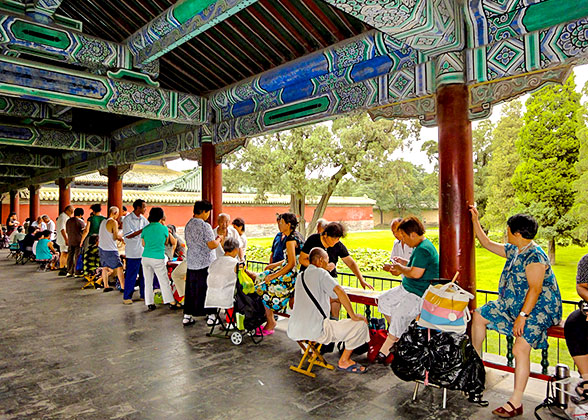 | | Long Corridor, Temple of Heaven | | 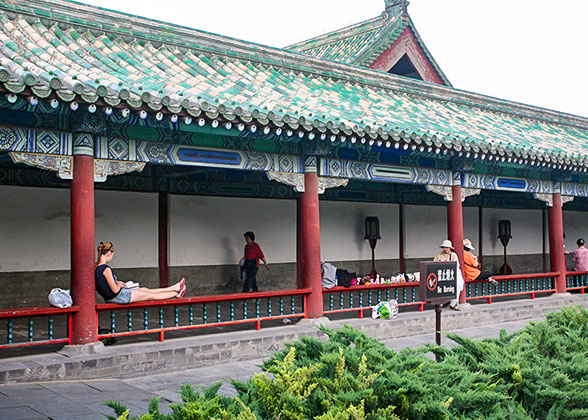 | | Long Corridor, Temple of Heaven | |
Before its reconstruction in 1937, the corridor featured latticed windows and low walls, resembling 72 residential houses, earning it the name "Seventy-Two Connected Rooms." Livestock passed through the corridor to the Divine Kitchen for preparation; finished offerings then traveled the same route to the altar. Since rituals took place at midnight, lanterns were lit in every section for illumination. Due to its specific function, it was also known as the "Corridor for Offerings."
In 1937, the management converted the Long Corridor's connected rooms into today's open gallery. Heavy wooden windows and walls were removed to install benches, and a Commemorative Stone embedded in the wall still records the details of this renovation.
What to See at Long Corridor Today?
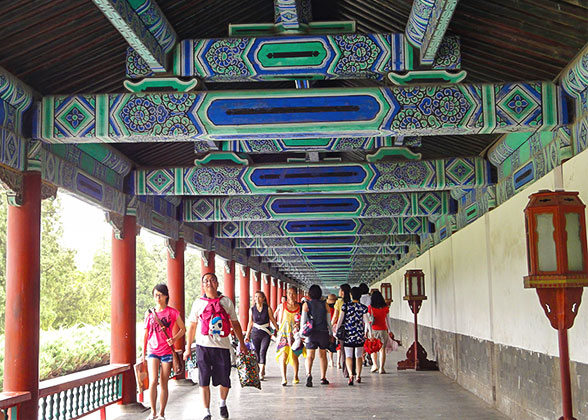 |
| Colored Paintings of Long Corridor |
Being 330 years older than the famous Long Corridor in the Summer Palace, the seventy-two-roomed Long Corridor in Temple of Heaven holds the title of Beijing's oldest corridor in classical garden. Here, you can admire beautifully preserved traditional paintings and also catch a glimpse of local Beijing life.
Look up at the painted beams, and you will see a unique and elegant style. Using only four colors, the designs are outlined in ink with delicate petals and patterns. Although repainted in 2023 to restore its original appearance, the corridor retains a refined simplicity that is quite rare in imperial buildings. Unlike the colorful, story-filled paintings in the Summer Palace, the style here is more understated, matching the solemn and sacred atmosphere of the Temple of Heaven, where emperors once prayed to heaven.
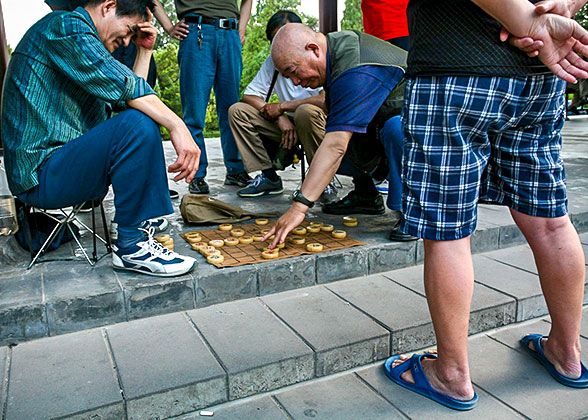 | | Locals Playing Chess in Long Corridor | | 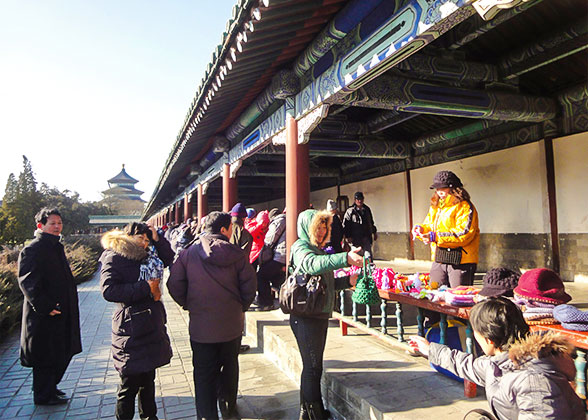 | | People Resting in Long Corridor | |
Today, the corridor is also a lively public space. It's a popular spot where residents practice calligraphy, paint, or play traditional Chinese instruments. Additionally, flower exhibitions are frequently held here. The beautiful blooms of chrysanthemums and roses set against the classic red pillars and green tiles create a picturesque scene you won't want to miss.
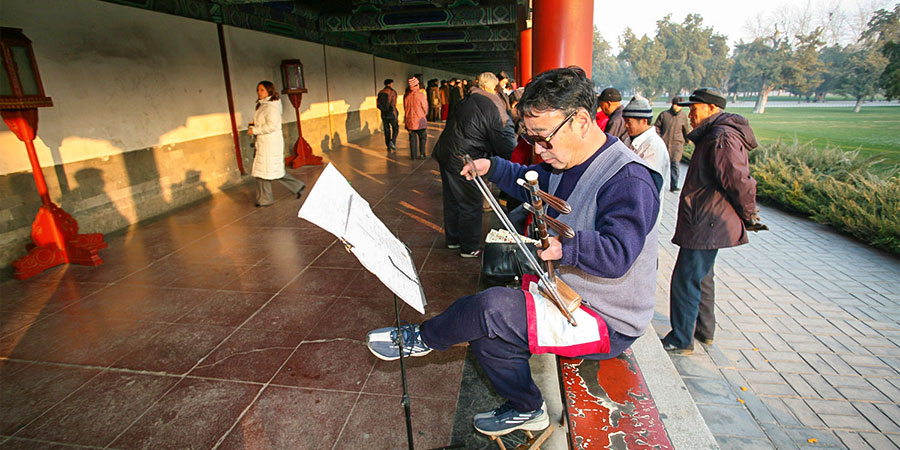 |
| A Local Playing Traditional Instrument Erhu |
Why 72 Rooms? A Legend of Balance
Originally built with 75 rooms, the Long Corridor was rebuilt in 1752 to contain 72 rooms, a change driven by a legend concerning spiritual protection and cosmic balance.
According to folk tales, long ago, the Temple of Heaven was "restless" at night. The spirits of the ritual offerings were said to haunt the grounds, making the night guards terrified to walk alone.
The emperor summoned a legendary Taoist Master to fix the problem. The Master explained: "The Hall of Prayer for Good Harvests has 36 pillars representing 36 Celestial Spirits. But we are missing the 72 Earthly Spirits to balance the energy. We must invite the protectors to take residence here." Therefore, the corridor was restructured into 72 rooms to serve as "dedicated quarters" for the 72 Earthly Spirits. With these guardians in place, the unrest naturally dissipated.
- Last updated on Jun. 18, 2026 by Jally Zhang -