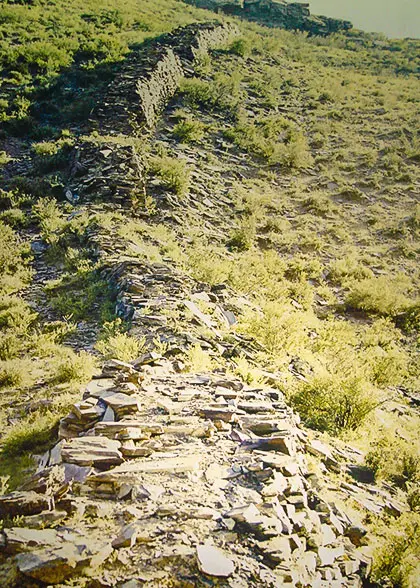
The Qin Great Wall refers to the defensive structure constructed during the reign of
Qin Shi Huang, the first emperor of China in the
Qin Dynasty (221 BC - 207 BC). Stretching over ten thousand li (about 5,000 km), it originated in Lintao (present-day Minxian County, Gansu Province) in the west and terminated in Liaodong (modern-day eastern Liaoning Province) in the east, giving rise to the iconic epithet “Ten-Thousand-Li Great Wall.” Currently, the remains of the Qin Great Wall can only be found in places such as Gansu, Shaanxi and Inner Mongolia.
Why Did the Qin Dynasty Build the Great Wall?
Following his unification of the Six Warring States, Emperor Qin Shi Huang faced persistent harassment, incursions, and threats from the Huns in the north. As the Qin State waged war against the other six states, the Huns tribe grew increasingly formidable. At that time, the Huns’ territories lay a mere few hundred miles from the Qin capital, accessible via horseback in just ten days, posing an imminent peril to the Qin people. Moreover, the Huns were adept equestrians, fierce in temperament, and notorious for their brutal plundering of agricultural communities in the Central Plains. To safeguard territorial integrity, protect civilian lives, and ensure the smooth operation of agricultural production, Emperor Qin Shi Huang ordered an imperial edict for the construction of the Great Wall.
The Two Phases of the Construction of the Qin Great Wall:
1. Restoration and Connection of the Old Great Wall: 221 BC - 215 BC
The first phase involved restoring and linking the northern border walls originally built by the Qin, Zhao, and Yan states during the Warring States Period (475 BC - 221 BC), preceding the Qin’s military campaign against the Huns. These walls, initially constructed to fend off nomadic tribes like the Huns and Donghu, were disjointed and partially dilapidated. They were integrated into a contiguous section aligned with the terrain, with overlapping segments removed and damaged parts repaired, forging a continuous northern defense network that minimized vulnerabilities. The primary objective was to rapidly establish a preliminary defensive system to deter nomadic southward incursions in the short term.
2. Construction of the New Great Wall: 214 BC - 210 BC
The second phase commenced after General Meng Tian successfully repelled the Huns’ forces. To forestall future invasions, Emperor Qin Shi Huang ordered Meng Tian to garrison the frontier and expand the Great Wall, extending it from Lintao in Gansu Province westward to the Liaodong Peninsula eastward. Construction focused on strategic areas unprotected by the original fortifications, establishing a robust barrier against threats emanating from the north and northwest.
The Ruins of the Qin Great Wall
After over two millennia of natural erosion, warfare, and human activity, most sections of the Qin Great Wall have vanished. Nevertheless, several representative sites still remain. Here are a few of them:
The Qin Great Wall Ruins in Lintao, Gansu Province
As the western terminus of the Qin Great Wall, this site preserves approximately 45 kilometers (28 miles) of rammed earth walls, standing 2 to 3 meters (6.5 to 10 feet) tall with distinct layered rammed earth textures still visible. Nearby, ruins of beacon towers and scattered pottery shards have been unearthed - key archaeological evidence confirming the western starting point of the Qin Great Wall.
The Qin Great Wall Ruins in Guyuan, Ningxia
Situated within Guyuan City, Ningxia, this constitutes one of the core sections of the Qin Great Wall’s central segment, spanning roughly 120 kilometers (75 miles). Some portions feature stone-built walls 3 to 5 meters (10 to 16 feet) high, with well-preserved remnants of fortresses and towers.
The Qin Great Wall Ruins in Yulin, Shaanxi Province
Located in northern Yulin City, Shaanxi Province, on the edge of the Mu Us Desert, the ruins primarily consist of rammed earth walls. Affected by desertification, some sections are partially covered by shifting sands. Currently, 357 kilometers (222 miles) of visible wall remnants remain, accompanied by relatively intact beacon tower ruins.
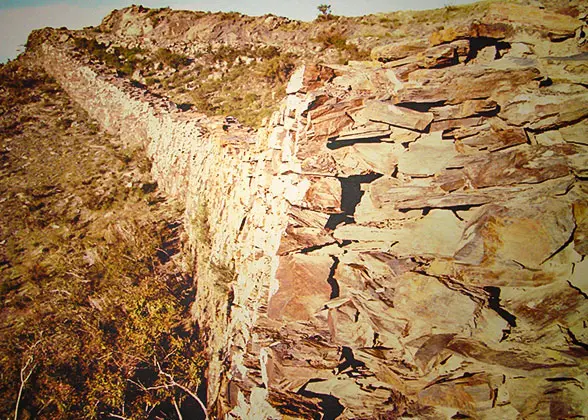 | | Qin Dynasty Wall, Guyang, Inner Mongolia | | 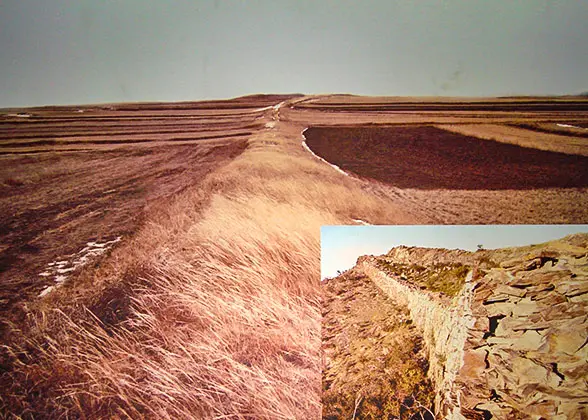 | | Wall Ruins of the Qin, Yulin, Shaanxi | |
The Qin Great Wall Ruins in Baotou, Inner Mongolia
Nestled in Guyang County, Baotou City, Inner Mongolia, this ranks among the best-preserved sections of the Qin Great Wall, stretching approximately 120 kilometers (75 miles). A wealth of Qin Dynasty artifacts, including pottery figurines and arrowheads, have been excavated in the vicinity, confirming the area’s role as a critical military defense zone.
The Qin Great Wall Ruins in Dandong, Liaoning Province
As the easternmost site of the Qin Great Wall, this section was constructed along the banks of the Yalu River. Frequent rainfall in the region has led to partial erosion of the wall by river waters. Today, approximately 108 kilometers (67 miles) of rammed earth walls and beacon tower ruins still exist, providing important physical evidence that the eastern end of the Qin Great Wall was located in Liaodong.
You may like:
Great Wall HistoryGreat Wall ConstructionMing Dynasty Great WallWhich Dynasties Didn't Build the Great Wall?Top 8 Great Wall of China Events in History
- Last updated on Feb. 26, 2026 by Sherry Xia -