Qin Shi Huang (259 BC - 210 BC), also known as Yingzheng, China's first emperor, is best known for two wonderful monuments: the Great Wall and the Terracotta Army. His reign brought about the unification of China for the first time and introduced foundational systems of administration, law, and culture that shaped Chinese history for centuries. However, the strict policies and heavy demands on the people also made him one of the most controversial rulers.
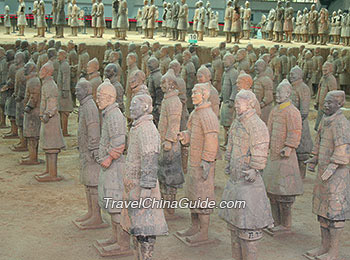
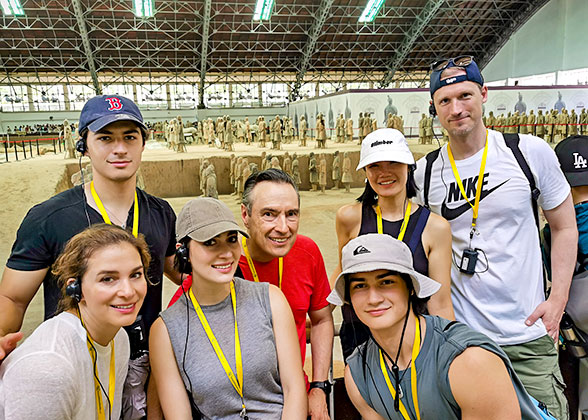
Pit 1 of Terracotta Army
How Did Qin Shi Huang Become Emperor?
In 247 BC, upon his father's death, 13-year-old Ying Zheng inherited the throne of the Qin state. Due to his youth, real power was held by his mother and the chancellor Lü Buwei. It was only at age 22, after suppressing a rebellion and removing Lü Buwei, that he took full control of the state, setting the stage for his ambitious campaign to conquer all rival states.
Emperor Qin Shi Huang's Great Achievements
1. Unify China for the first time
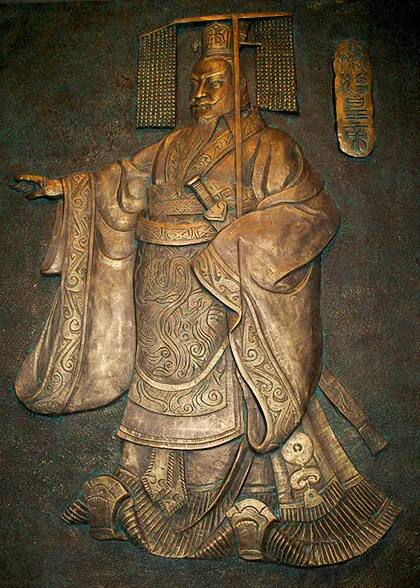
Statue of Emperor Qin Shi Huang
During the Warring States period (475 - 221 BC), China was divided into seven rival states. After consolidating power, Qin Shi Huang conquered the other six states: Han, Zhao, Wei, Chu, Yan, and Qi, one by one within 10 years, putting an end to centuries of division and establishing the first centralized, multi-ethnic state in history.
2. Create the title "Emperor"
After unifying the six states and to mark his unprecedented achievement, based on the titles used by earlier sovereigns, Qin Shi Huang created a new title for himself: "Huangdi," meaning emperor, demonstrating that his authority surpassed that of all previous rulers. This title was then used by subsequent Chinese emperors for over two thousand years.
3. Replace the system of enfeoffment with centralism
Qin Shi Huang abolished the old system of enfeoffment and divided the state into 36 administrative districts called "Jun", similar to today's cities, each subdivided into counties. Besides, the officials were appointed and overseen directly by the central government, strengthening imperial control over the regions and setting a model for later dynasties.
4. Unify the currency and measurement units
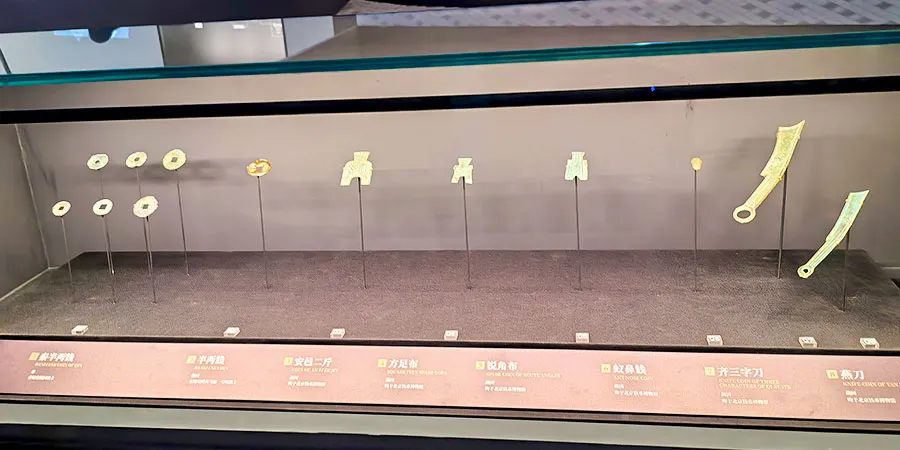
Previously, the different states used coins of different shapes and values, which was unfavorable for economic development. Therefore, Qin Shi Huang ordered that the currency should be minted by the government uniformly, and private currency production was prohibited. He also introduced two uniform currencies: gold as the higher-value currency and round bronze coins with a square hole for daily use.
In addition, based on Qin standards, he unified measurement units for length, weight, and volume. Standard tools were also distributed throughout the state, and officials were appointed to enforce their use. These reforms eliminated regional economic barriers and facilitated nationwide trade and development.
Different Currencies Before Qin Unification
5. Standardize the character
Before unification, Chinese written characters varied significantly from state to state. Therefore, Qin Shi Huang ordered the standardization of the characters based on Qin's official character, which improved administrative efficiency, facilitated communication, and cultural exchange across the country.
6. Establish a unified legal system
Guided by legalist philosophy emphasizing strict governance through codified law, Qin Shi Huang consolidated the laws of the six conquered states and revised the original Qin legal code into a comprehensive national system known as the Qin Laws. Although strict, this legal system provides a framework for state governance that influenced later dynasties.
7. Promote transportation infrastructure
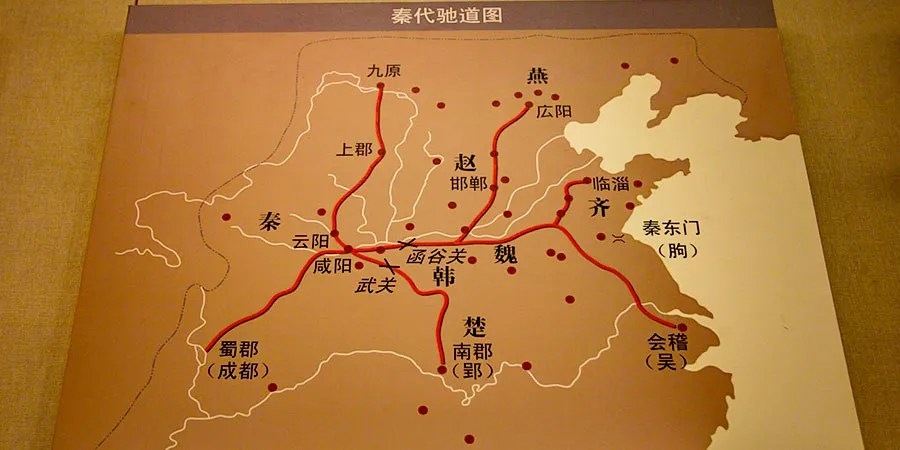
To address the incompatibility of carriage axles across different states, which hindered transportation, trade, and military operations, Qin Shi Huang mandated a uniform axle width standard. Additionally, he ordered the construction of a nationwide network of highways, known as Chi Dao, radiating from the capital Xianyang. These measures significantly improved transportation efficiency, facilitated the flow of goods, and accelerated military movements.
Map of Qin Chi Dao
8. Attach importance to national defense, such as connecting the Great Wall
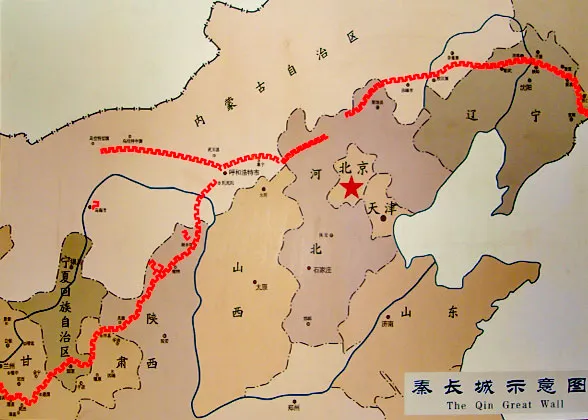
To defend against northern nomadic tribes like the Xiongnu, Qin Shi Huang connected and extended existing frontier walls into a continuous barrier, the early foundation of the Great Wall, thus effectively safeguarding the central plains from invasions. In the south, to consolidate control over southern regions, he commissioned the Lingqu Canal. This project not only provided a reliable transport route for military supplies but also linked the Yangtze River and Pearl River systems, fostering economic and cultural exchange between the central area and southern territories.
Qin Great Wall Map
Nowaday Great Wall at Night
Later Criticisms of Qin Shi Huang
Despite his monumental achievements in unifying China and establishing foundational systems, Qin Shi Huang has also encountered significant criticism throughout history. The negative assessments primarily stem from the following reasons.
1. Massive projects and harsh labor demands
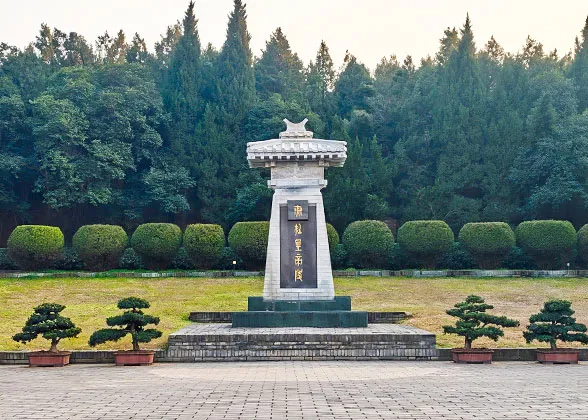
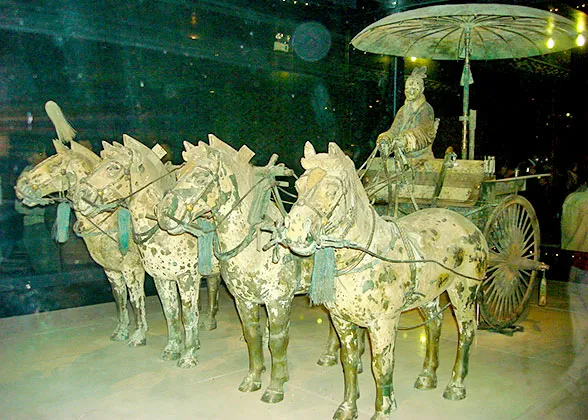
Driven by personal ambition and state construction, Qin Shi Huang conscripted large numbers of laborers for major projects like the Great Wall and his mausoleum, including the Terracotta Army. The heavy conscription and harsh conditions placed a severe burden on the population, leading to widespread suffering and social unrest.
2. Excessive control over thought and culture
To unify the thoughts, Qin Shi Huang ordered the burning of historical records from rival states as well as some privately held classics, restricting intellectual freedom and causing the loss of many invaluable texts. Later, deceived by alchemists who failed to deliver promised elixirs of immortality, he sentenced 460 scholars and alchemists to death, an event known as "burning books and burying scholars." Though intended to consolidate ideology, these actions severely damaged cultural heritage and intellectual life.
The Emperor's Death and Decline of the Qin Dynasty
Qin Shi Huang maintained a diligent work style during his reign, frequently touring to inspect local conditions. Years of overwork and prolonged consumption of possibly toxic elixirs, taken in his pursuit of immortality, gradually weakened his health. Finally, he fell ill and died during the last inspection at the age of 49. Without a designated heir, his death caused close courtiers to forge his will and support his younger son, Hu Hai, as emperor. Internal strife followed, and Hu Hai's harsh rule soon sparked a peasant uprising, accelerating the collapse of Qin Dynasty (221 - 207 BC) within a few years.
 Epang Palace Site