As the first emperor of ancient China, Qin Shi Huang's reign was marked by groundbreaking achievements and strict governance. Not only does his influence endure, but his underground mausoleum, guarded by the famous Terracotta Army, also continues to fascinate archaeologists and visitors. To better understand him, explore these 10 key facts that reveal more about this important yet mysterious ruler.
1. Qin Shi Huang unified China for the first time and became the first emperor of China.
This represents one of the most important achievements in Chinese history. Before Qin Shi Huang, China was split into several warring states ruled by kings. Following the strategy of his chancellor Li Si, he conquered the six other major states: Han, Zhao, Wei, Chu, Yan, and Qi, between 230 and 221 BC, ending more than 500 years of division. To emphasize his unparalleled authority, he created the title "Huangdi," declaring himself the first emperor of a unified China. Although the
Qin Dynasty (221 - 207 BC) was short-lived, the title "Emperor" was adopted by all later dynasties, cementing its legacy as the title for China's highest ruler for over two thousand years.
After unifying China, Qin Shi Huang faced ongoing threats from the Xiongnu nomads in the north. To strengthen frontier defense, he ordered the construction of a continuous wall by connecting the existing walls built by earlier states such as Yan, Zhao, and Qin. Additionally, new sections were added to fill gaps, ultimately creating a vast, connected barrier known as today's Great Wall, which extends for more than 10,000 kilometers (6,000 miles) and remains a lasting symbol of China's ancient engineering.
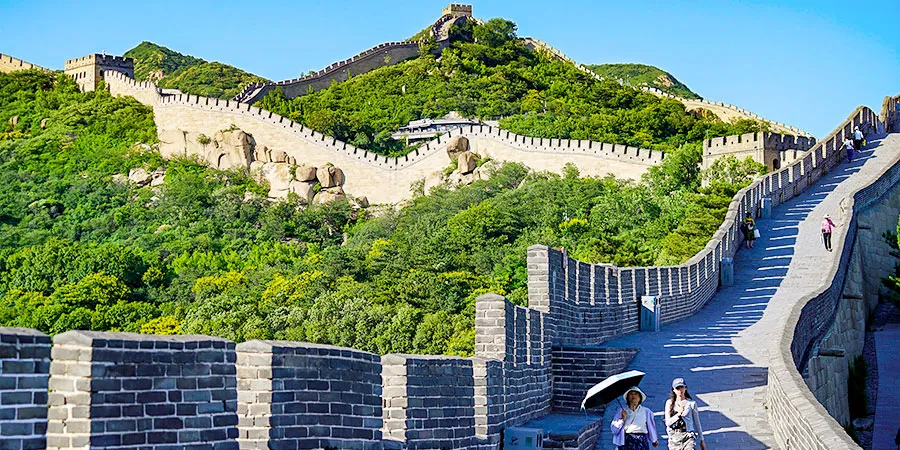 |
| Today's Wonderful Great Wall |
You may like:
Qin Dynasty Great Wall Archaeological discoveries and historical documents confirm that Qin Shi Huang commissioned the Terracotta Army. Based on the belief of "serving the dead as if they were alive," he ordered its construction to protect his tomb in the afterlife and preserve his imperial authority even after death. Each terracotta figure, modeled after real Qin soldiers, was uniquely crafted, symbolizing the military grandeur of his era. This underground army not only demonstrated the dynasty's military strength but also celebrated his achievement of unifying the warring states.
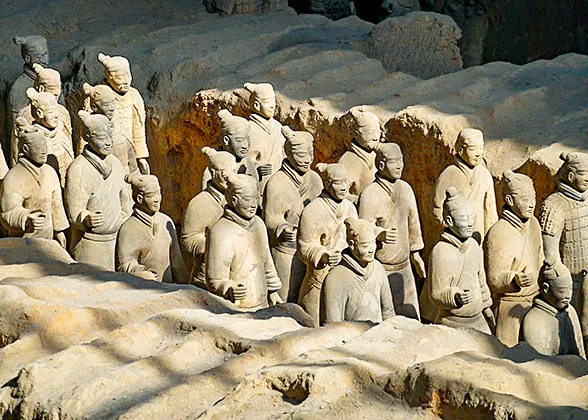 | | Terracotta Warriors in Pit 1 | | 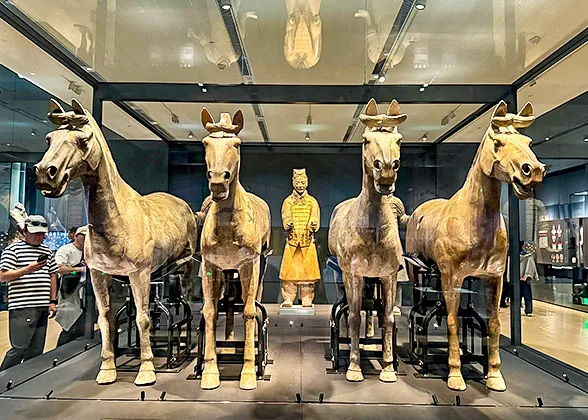 | | Vivid Terracotta Horses | |
Read more:
 Who Built the Terracotta Army? Why was the Terracotta Army built? When was the Terracotta Army Built? Who's the Real Owner of the Terracotta Army?
 4. Qin Shi Huang standardized the law, measurements, currency, characters, and axle length.
To consolidate the unified country, Qin Shi Huang implemented sweeping reforms aimed at integrating the previously fragmented states. He introduced a uniform legal code, standardized measurement units of length, weight, and capacity, and established a single currency system, all of which promoted economic exchange and administrative efficiency. Additionally, he unified the Chinese characters, facilitating communication and strengthening cultural cohesion. Even wagon axles were made to a standard length, ensuring that vehicles could travel smoothly on roads throughout the country. These measures laid a lasting foundation for China's political, economic, and cultural unity.
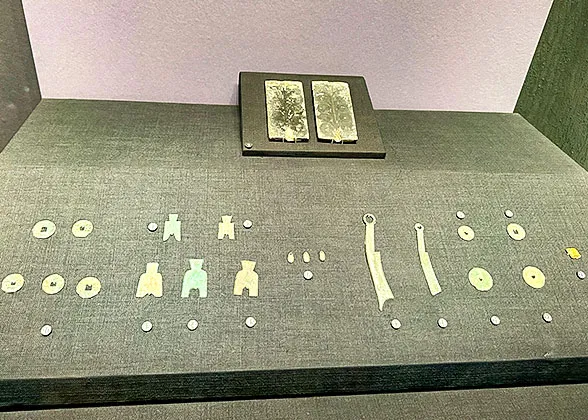 | | Various Currencies before Unification | | 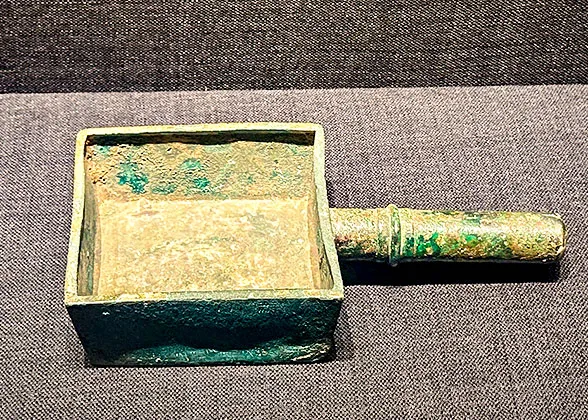 | | Qin Measuring Vessel after Unification | |
5. Qin Shi Huang ordered the construction of the highway and Lingqu canal.
To enhance control over his vast territory and support military campaigns, Qin Shi Huang ordered the construction of an extensive system of highways, known as "Chi Dao," and the Lingqu Canal, a great water conservancy project. The roads improved land transport and communication across the country, while the Lingqu Canal, dug to connect the Xiang River and
Li River, ensured efficient supply routes during the campaign against the southern tribes. Though only 36.4 kilometers (22.6 miles) long, the Lingqu Canal still serves functions in irrigation and flood control today.
6. Qin Shi Huang ascended to the throne at the age of only 13.
In 247 BC, Emperor Qin Shi Huang's father passed away and he succeeded to the throne at the age of only 13. Due to his youth, Ying Zheng was unable to govern directly. State affairs were temporarily managed by his mother, Zhao Ji, and the chancellor Lü Buwei. As he grew older, Qin Shi Huang gradually reclaimed authority, formally taking full control of the government at the age of 22 and consolidating his power as sole ruler.
7. Qin Shi Huang personally ruled the country for only 11 years.
Although he became the emperor at 13, Qin Shi Huang did not govern independently until he was 22. His true personal rule began after he unified the six states and proclaimed himself emperor in 221 BC, lasting until his death in 210 BC, a period of merely 11 years, not the 37 years counted from his initial ascension. Despite this relatively short span, he accomplished a series of political, economic, and cultural reforms, as well as launching major construction projects like the Great Wall.
8. Qin Shi Huang was obsessed with the quest for immortality.
Driven by a strong fear of death and a deep obsession with maintaining power, Qin Shi Huang became increasingly obsessed with achieving immortality. He feared that death would strip him of the absolute authority he had gained, which pushed him to seek out alchemists who promised eternal life. Among them, the most famous was Xu Fu, who claimed that three mystical islands inhabited by immortals with elixirs of immortality were located in the Eastern Sea. Following the emperor's orders, Xu Fu set sail with thousands of young boys and girls in search of the elixir of life. However, these expeditions never succeeded, and Xu Fu himself never returned, leaving Qin Shi Huang's longing for immortality unfulfilled.
9. Qin Shi Huang's mausoleum remains a mystery at present.
The
Mausoleum of Qin Shi Huang remains one of history's greatest mysteries, still undisturbed beneath the earth. Historical records describe the tomb as a treasure-filled underground palace, protected by complex booby traps designed to deter intruders. While this hidden wealth could provide invaluable insights into the Qin Dynasty, archaeologists have avoided excavation. The main reason is the lack of advanced technology needed to preserve the mausoleum and its contents safely. Any premature digging could cause irreversible damage to this unique cultural heritage, keeping its secrets protected for now.
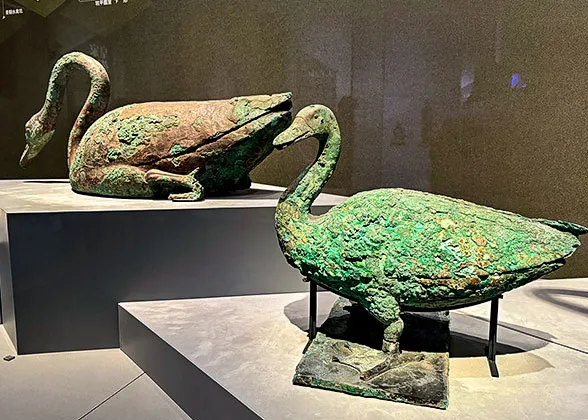 | | Lifelike Bronze Swans | | 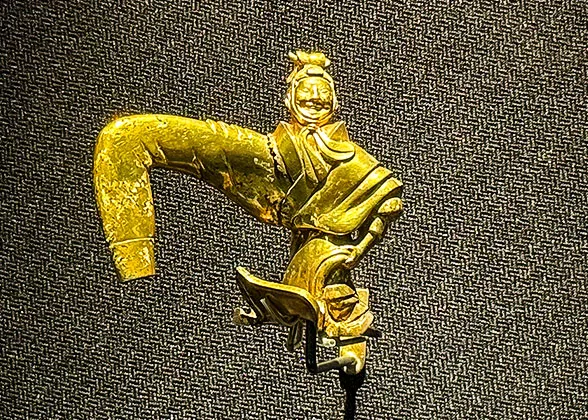 | | Golden Dancer of Qin Shihuang's Mausoleum | |
10. Qin Shi Huang was criticized by historians for his ruthless reign.
While Qin Shi Huang is remembered for his monumental achievements, historians have often criticized him as a ruthless ruler. His reign was marked by the imposition of severe legal codes, which sparked widespread public resentment. Among his most widely criticized acts were the burning of books, primarily various privately held works, especially Confucian classics, and the burial alive of 460 scholars and alchemists. Moreover, he launched multiple massive construction projects simultaneously, including his palace, the Great Wall, and his elaborate mausoleum, which drained state resources and labor, imposing heavy burdens and suffering on the population. Combined with his harsh governance, these excessive endeavors directly contributed to the rapid collapse of the Qin Dynasty shortly after his death.
Further Reading:
Why Don't They Excavate the Qin Shi Huang Mausoleum? What did Qin Shi Huang die from? Mystery about Emperor Qin Shi Huang Underground Palace of Qin Shi Huang Mausoleum 9 Mysteries of Qin Shi Huang Tomb You May Want to Know Epang Palace Site
- Last updated on Feb. 14, 2026 by Gabby Li -