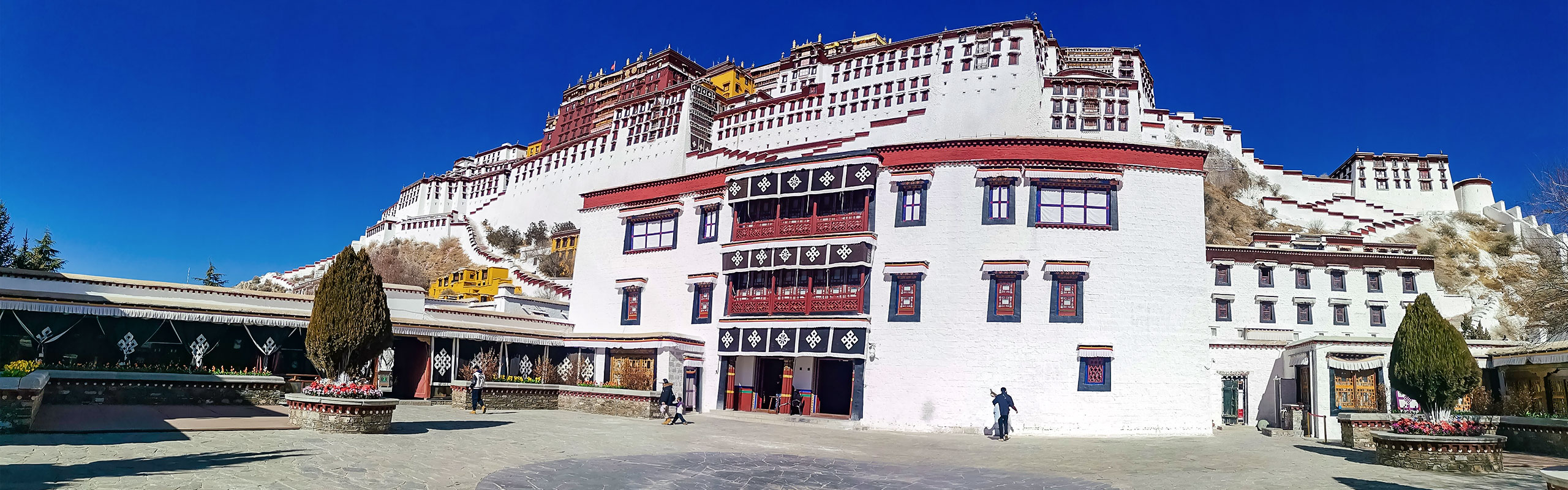
Golden Triangle of Tibet
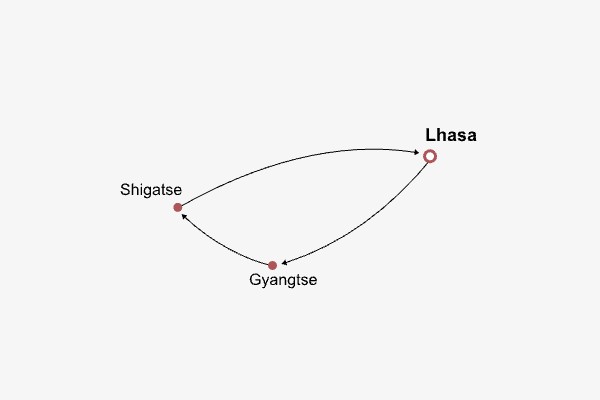
6 Days Lhasa - Gyantse - Shigatse - Lhasa

Trip HighlightsCode: LH02-PrivateCode: LH02-Group
- Explore the world's highest ancient palace-fortress complex, the Potala Palace, standing at 3,700 meters high.
- Visit the most famous Tibetan Buddhist temples in Lhasa: Drepung, Sera, and Jokhang Monasteries.
- Travel by land from Lhasa to Shigatse, taking in azure Yamdrok Yumtso Lake and Karola Glacier.
- Experience the local lifestyle by chilling out in an age-old sweet tea house and visiting a local family.
- Visit the traditional seat of the successive Panchen Lamas, the Tashilhunpo Monastery.
Book with Confidence: Free inquiry, only 10% deposit to confirm, full refund for cancellations up to 15 days prior.
Book with Confidence: Free inquiry, only 10% deposit to confirm, full refund for cancellations up to 30 days prior.
- Itinerary
- Prices
- Accommodation
1 / 12
Expand All
Collapse All
Day 1 Arrive in Lhasa, Airport or Train Station Pick-up
View More Videos
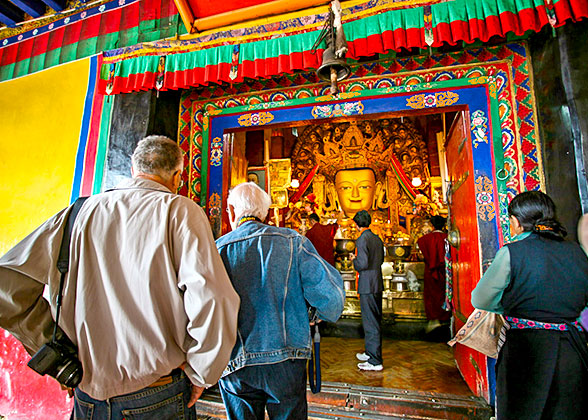
Jokhang Temple, Lhasa
► Note for Group Guests Arriving by Flight:
Our minivan transfers from Lhasa Gonggar Airport to your hotel run at scheduled departure times: 10:00, 13:30, 16:00, and 18:30. If under 3 passengers are arriving together, a public shuttle or taxi will be arranged instead. To minimize waiting, we kindly suggest selecting flights that arrive around these slots.
► Tibet Entry Tips
1. After booking, we will apply for a Tibet Travel Permit for you and send you an electronic version and a paper one before departure.
2. Chengdu and Chongqing offer the most direct flights to Lhasa, while Xi’an also provides several direct options. If you are flying from Beijing, Shanghai, or Guangzhou, the long distance means you’ll typically need to make a stopover. Currently, there are no direct flights from Hong Kong to Lhasa. Consider taking a high-speed train to Guangzhou first, and then catch a flight to Lhasa.
3. Whenever possible, book a daytime flight, which would give you an unforgettable opportunity to capture stunning, close-up aerial views of the snow-capped Himalayan peaks.
► Altitude Sickness Tips
Generally, when arriving at high-altitude areas by plane, the drop in air pressure can easily cause altitude sickness. Please be aware of typical symptoms, including headache, nausea, and insomnia, usually appearing within 6-12 hours. In addition, low temperatures and dry air in winter may worsen symptoms.
1.Prepare preventative medications, such as acetazolamide, dexamethasone, and Rhodiola rosea.
2.Carry a pulse oximeter for monitoring (normal value >80%) and avoid bathing and strenuous activity on the first day of arrival. If you have a history of cardiovascular disease, hypertension, asthma, diabetes, or catch severe colds, it is better to consult your doctor for a risk assessment.
Day 2 Lhasa
Visit Drepung Monastery and Sera Monastery with an impressive monk debate. A welcome dinner for group guests. (B+D)
After breakfast, your guide and driver will pick you up at your hotel lobby and then visit two famous Tibetan Buddhist monasteries to dive into locals’ deep-rooted faiths. The first stop is Drepung Monastery, and let’s first get to the Ganden Potrang, a 3-story hall with white walls and red roofs that highlights the unique charm of Tibetan architecture. Curious about that velvet-textured ochre red decoration around the roof? This is the Bemar grass, a unique building material in Tibet, which not only beautifies the hall but also serves as a symbol of religious supremacy and social hierarchy. Then, pass through a spacious stone-paved square to reach the core sight of the temple, the Coqen Hall, which is supported by an astonishing 183 square columns painted in various bright colors. Inside, it is filled with Thangkas, murals, and Buddha statues, each of which will make you feel the solemnness and holiness of Tibetan Buddhism. After that, leave your footprints in four Zhacangs similar to academies and see how the monks study and teach Buddhism here. Remember to proceed slowly to avoid getting out of breath.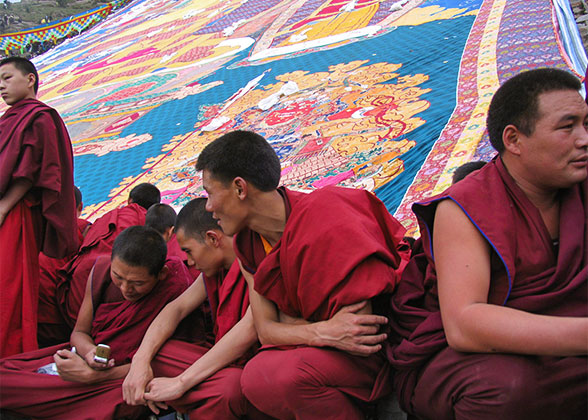
Afterwards, your guide will accompany you to explore the monastery. Walk clockwise uphill along the left side to enjoy panoramic views of Lhasa and perhaps encounter rock paintings and Buddha statues. Finally, your guide and driver will escort you back to your hotel.
 Tips:
Tips:
1.Please remain quiet during the debate. Do not point at the monks or step on the white lines marking the boundary of the debating area.
2.Wear comfortable flat shoes as the gravel ground may be a little slippery.
3.Mobile phone photography is permitted in the debating arena, but please turn off the shutter sound.
► Welcome Dinner for Group Guests
For group guests, we’ve prepared a special welcome dinner at a renowned local restaurant to taste authentic Tibetan food, while private tour guests enjoy the flexibility to dine independently at their leisure and expense.
Meals: Western buffet breakfast (Welcome dinner for group only)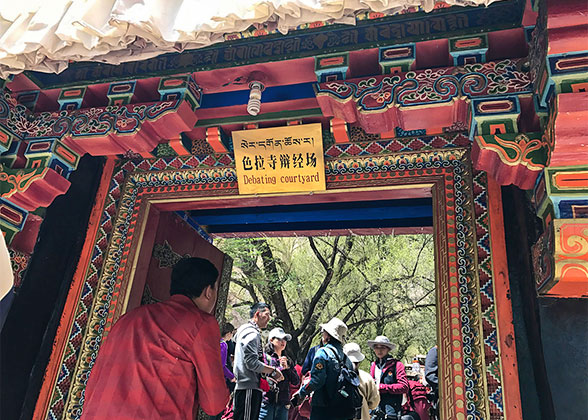
Drepung Monastery, Lhasa
Shoton Festival Kicks off at Drepung Monastery
★ Watch Tibetan Monks Debating at Sera Monastery
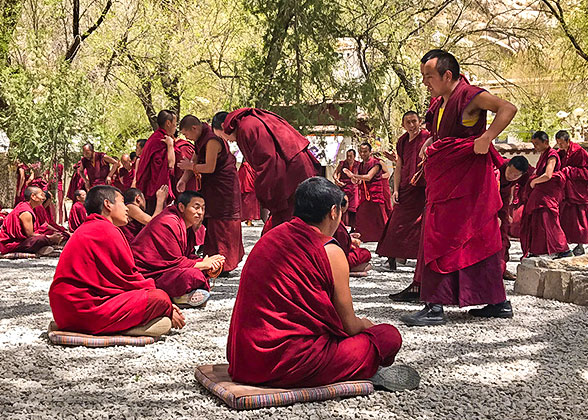
In the afternoon, visit another famous monastery, Sera Monastery, located at the foot of Sera Wuze Mountain in the northern suburbs of Lhasa. It is one of the six major monasteries of the Gelug School. Glimpse the weathered red walls, towering white stupas, and witness the true spirit that forever pulsates on the reddish-brown sandstone debating arena, which boils over at every 3 pm. except on Sundays. Watch monks form circles and debate in pairs: one standing as the "questioner," and another squatting as the "responder." The questioner claps his hands forcefully, raises his right arm high, and steps forward – a sharp shout of "Ha!" exploding like thunder. The responder, with piercing eyes, quotes scripture and dissects logic at a rapid-fire delivery. If he hesitates even slightly, the questioner would deliver a sharp slap again - a reverent inquiry into the truth. You’ll see sweat trickling down the monks’ dark cheeks, but their eyes shine with an astonishing light; this is not an exam, but a struggle to forge wisdom for a lifetime.Afterwards, your guide will accompany you to explore the monastery. Walk clockwise uphill along the left side to enjoy panoramic views of Lhasa and perhaps encounter rock paintings and Buddha statues. Finally, your guide and driver will escort you back to your hotel.
Tips: 1.Please remain quiet during the debate. Do not point at the monks or step on the white lines marking the boundary of the debating area.
2.Wear comfortable flat shoes as the gravel ground may be a little slippery.
3.Mobile phone photography is permitted in the debating arena, but please turn off the shutter sound.
► Welcome Dinner for Group Guests
For group guests, we’ve prepared a special welcome dinner at a renowned local restaurant to taste authentic Tibetan food, while private tour guests enjoy the flexibility to dine independently at their leisure and expense.
Meals: Western buffet breakfast (Welcome dinner for group only)
Monks Enter the Debating Courtyard, Sera Monastery
Monks Debating in Sera Temple, Lhasa
Day 3 Lhasa
Visit Potala Palace, Jokhang Temple, and Barkhor Street. Have a tea break at a sweet tea house. (B)
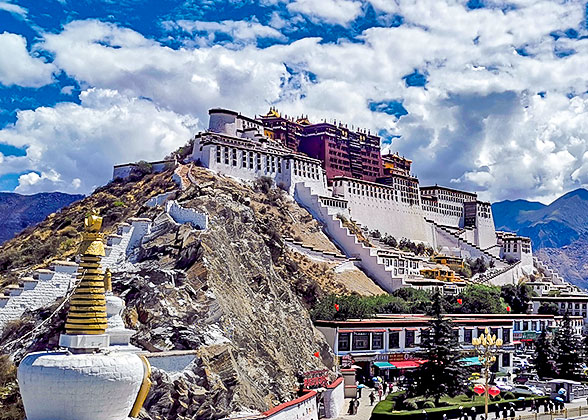
After breakfast, let’s set off to explore the globally acclaimed Potala Palace, a pearl on ‘the roof of the world’. This world cultural heritage site was originally built in the 7th century by a former Tibetan King, Songtsen Gampo, to marry Princess Wencheng. But later, it was almost destroyed in wars with the fall of his reign, and what we see now is the result of constant restoration and expansion since the 17th century. Standing in the Potala Palace Square and looking up at the halls built layer upon layer along the mountain, which look like a ladder reaching all the way to the clouds, you will be awed by its grandeur. On their white walls, the fancy patterns revealing the ingenuity of the Tibetan people can be see everywhere, and the red roofs are covered with golden glazed tiles, making the entire palace appear to be enveloped in golden light. Wind up the steps, and you will come to the heart of the Palace, the Red Palace, a symbol of solemnity and power, where the successive Dalai Lamas handled and held major religious activities. Then pay a visit to the White Palace on both sides of it, representing peace and tranquility, and delve into more intriguing legendary stories about Potala Palace from the guide.
Tips:
1.There are many steps in the palace, and the climb may be challenging. If you feel breathless while climbing, take it slow and carry a small bottle of oxygen for safety.
2.Hats and sunglasses must be removed before entering the halls. Shorts, slippers, or revealing clothing are not allowed; photography is also prohibited inside.
Afterward, you’ll be accompanied to the nearby Dragon King Pool Park to experience the leisure life of locals. Often, Tibetans of all ages, dressed in traditional costumes, hold hands in a circle, reveling in their special Guozhuang dance on the large cultural square here. Just join them and sway along with simple dance moves!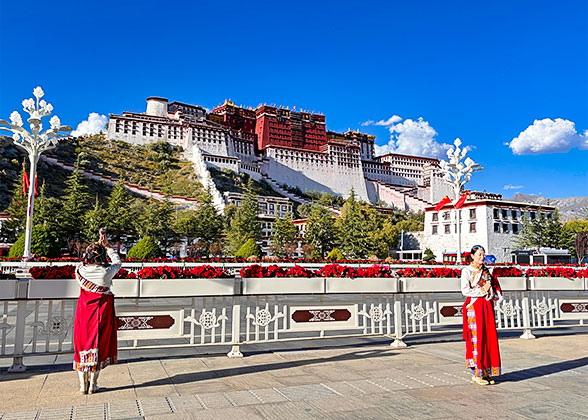
 In the afternoon, head to the Lhasa old town to explore the great Jokhang Temple, originally built during the 7th century to house a statue of Shakyamuni Buddha brought by a Nepalese princess. Now, it enshrines a twelve-year-old life-size statue brought from the Tang Dynasty by Princess Wencheng (628-680 AD), making it the most revered religious site in Tibet. This statue is considered an incarnation of Buddha himself, possessing unparalleled sacredness.
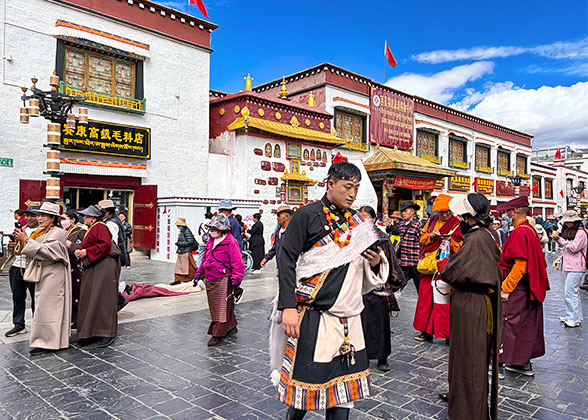
Out of the temple, let’s stroll down Barkhor Street, a circular commercial street trod out by countless pilgrims around the Jokhang Temple over the years. Take your time to shuttle through the alleys interwoven with the soft sound of prayer wheels and the fragrance of Tibetan incense, and feel the bustling atmosphere of the modern market from the hawking of handmade Tibetan carpets, leather wares, or furniture.
Next, top off the day with a cup of specialty tea in a traditional sweet tea house, which is the best venue to learn about the local daily life and social culture. Finally, we’ll escort you back to your hotel.
Meals: Western buffet breakfast, Tea Break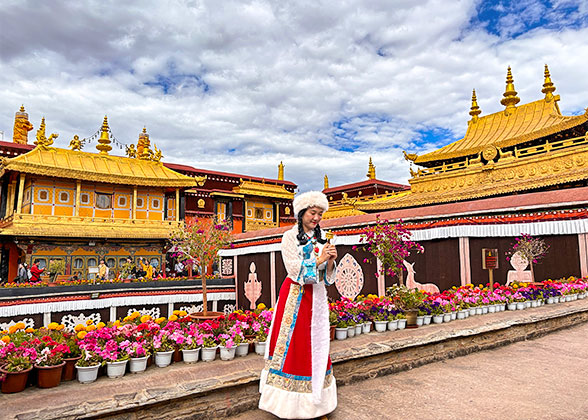
Tips: 1.There are many steps in the palace, and the climb may be challenging. If you feel breathless while climbing, take it slow and carry a small bottle of oxygen for safety.
2.Hats and sunglasses must be removed before entering the halls. Shorts, slippers, or revealing clothing are not allowed; photography is also prohibited inside.
Afterward, you’ll be accompanied to the nearby Dragon King Pool Park to experience the leisure life of locals. Often, Tibetans of all ages, dressed in traditional costumes, hold hands in a circle, reveling in their special Guozhuang dance on the large cultural square here. Just join them and sway along with simple dance moves!
Potala Palace, Lhasa
Climb up the Stairs of Potala Palace, Lhasa
Out of the temple, let’s stroll down Barkhor Street, a circular commercial street trod out by countless pilgrims around the Jokhang Temple over the years. Take your time to shuttle through the alleys interwoven with the soft sound of prayer wheels and the fragrance of Tibetan incense, and feel the bustling atmosphere of the modern market from the hawking of handmade Tibetan carpets, leather wares, or furniture.
Next, top off the day with a cup of specialty tea in a traditional sweet tea house, which is the best venue to learn about the local daily life and social culture. Finally, we’ll escort you back to your hotel.
Meals: Western buffet breakfast, Tea Break
Jokhang Temple, Lhasa
Tibetans Pray along Barkhor Street
Day 4 Lhasa - Yamdrok Yumco Lake - Shigatse
Head to Shigatse and visit Yamdrok Yumco Lake en route. Visit a local family, drive past Karola Glacier and barley farmland to reach Shigatse. (B+L)
Today, we’ll drive westward from Lhasa to the next destination, Shigatse. On the way, stop to visit the Yamdrok Yumtso Lake, one of the Great Three Holy Lakes of Tibet. As you walk along the lakeside, you may notice that the color of the water changes with the variations of light and angle. Sometimes, it is a deep azure blue, exuding an air of mystery, and sometimes, it turns into a fresh light blue, just like a huge sapphire. When looking down from the Gampala Pass Platform, the most popular viewing deck among photographers, it is also like a blue silk ribbon winding among the undulating snow-capped mountains, so beautiful that you cannot help but press the shutter at every moment.
Then, let’s go into a hospitable Tibetan local family’s house to observe their folk residence. The host will warmly greet you with butter tea, local snacks such as tsampa and cheese. Chat with the locals and learn about their lives and customs, and your guide will assist with translation.
After lunch, continue our journey to the Karola Glacier. As it is only about 300 meters (984 feet) away from the highway, we can enjoy its full view and even the clear cracks and caves in some parts without taking a long tramp or climbing to a peak. Its ice tongue, the centerpiece of the landscape, stretches out from the front for hundreds of meters, emitting a faint blue radiance under the sun, just like a fantasy wonderland. In local legend, the glacier is regarded as a place where deities reside, so you can also worship and pray for peace and happiness here like other believers who come from afar. The stunning scene of barley farmland at the foot of the Karola Glacier is also unmissable. The vast and boundless fields are like a green ocean, with ‘waves’ rising and falling when the gentle breeze blows, which will give you a sense of serenity and vitality.
After arriving in Shigatse, your guide will help you check in at a local hotel for a one-night stay.
Meals: Western buffet breakfast, Lunch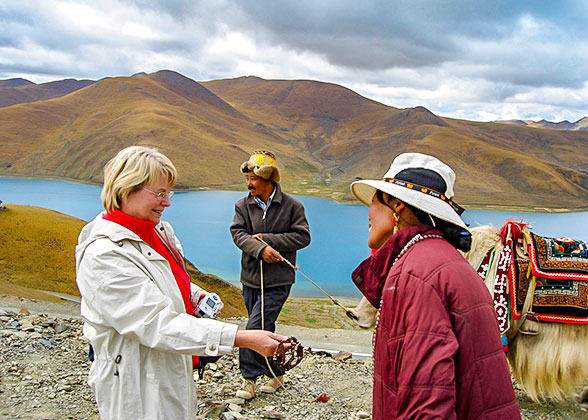
Then, let’s go into a hospitable Tibetan local family’s house to observe their folk residence. The host will warmly greet you with butter tea, local snacks such as tsampa and cheese. Chat with the locals and learn about their lives and customs, and your guide will assist with translation.
After lunch, continue our journey to the Karola Glacier. As it is only about 300 meters (984 feet) away from the highway, we can enjoy its full view and even the clear cracks and caves in some parts without taking a long tramp or climbing to a peak. Its ice tongue, the centerpiece of the landscape, stretches out from the front for hundreds of meters, emitting a faint blue radiance under the sun, just like a fantasy wonderland. In local legend, the glacier is regarded as a place where deities reside, so you can also worship and pray for peace and happiness here like other believers who come from afar. The stunning scene of barley farmland at the foot of the Karola Glacier is also unmissable. The vast and boundless fields are like a green ocean, with ‘waves’ rising and falling when the gentle breeze blows, which will give you a sense of serenity and vitality.
After arriving in Shigatse, your guide will help you check in at a local hotel for a one-night stay.
Meals: Western buffet breakfast, Lunch
Our Guests at Yamdrok Yumtso Lake
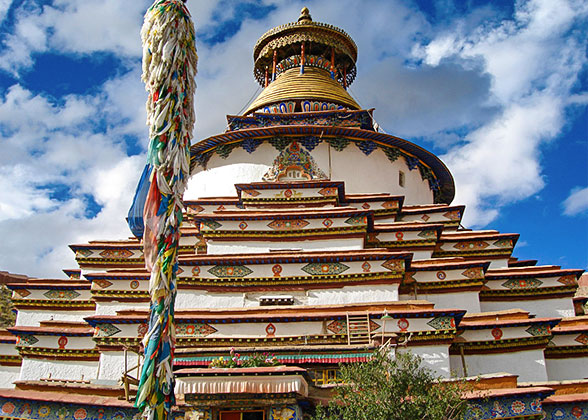
Beautiful Stupa in Tibet
Day 5 Shigatse - Lhasa
Visit Tashilhunpo Monastery and Samdruptse Old Market in Shigatse. Return to Lhasa. (B)
This morning, let’s walk around the Tashihunpo Monastery with local Tibetan worshippers for a pilgrimage. After more than 5 centuries of vicissitudes, this second-largest temple in Tibet, which has also been the residence of successive Panchen Lamas, still stands firmly here. Pay homage to the world’s largest 26-meter-tall (85-foot-tall) glided copper statue of Maitreya Buddha in the Maitreya Chapel, marvel at the luxury and dignity of the Stupa-tomb of the Tenth Panchen Lama, which is wrapped in 614 kilograms of pure gold and embellished with over 20,000 brilliant jewels, and admire the Buddhists in red robes sitting around in the Kelsang Temple to study scriptures. Also, ascend the mountain to overlook the fascinating panoramic view of Tashilhunpo Monastery and the entire Shigatse City.
To immerse yourself in the strong Tibetan flavor, we’ll accompany you to the most distinguishing Samdruptse Old Market, where mellow butter tea, sweet barley wine, tender yak meat, and a variety of handicrafts will treat all your senses well.
After the visit, we’ll escort you on a scenic road trip back to Lhasa. Along the way, expect to be awestruck by the magnificent canyon scenery along the world-renowned Yarlung Tsangpo River, which originates from the glaciers in the northern foothills of the world’s highest Himalayas.
Meals: Western buffet breakfast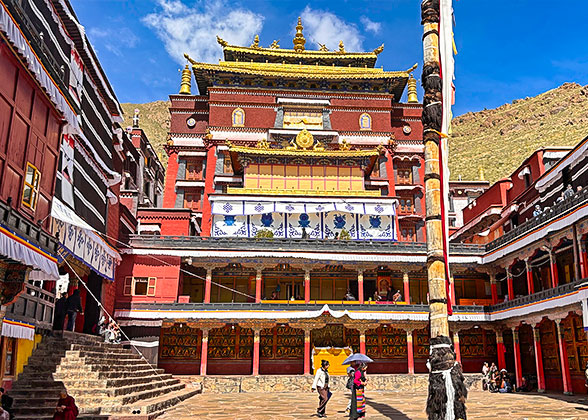
To immerse yourself in the strong Tibetan flavor, we’ll accompany you to the most distinguishing Samdruptse Old Market, where mellow butter tea, sweet barley wine, tender yak meat, and a variety of handicrafts will treat all your senses well.
After the visit, we’ll escort you on a scenic road trip back to Lhasa. Along the way, expect to be awestruck by the magnificent canyon scenery along the world-renowned Yarlung Tsangpo River, which originates from the glaciers in the northern foothills of the world’s highest Himalayas.
Meals: Western buffet breakfast
Tashilhunpo Monastery
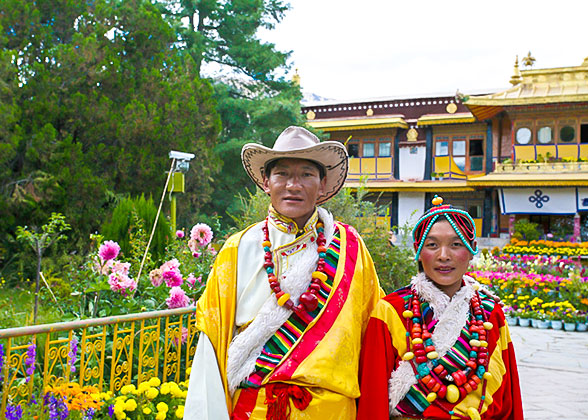
Local People at Norbulingka Park, Lhasa
Day 6 Departure from Lhasa
Transfer to the airport or train station and see you off. Wish you a pleasant onward trip! (B)
Today is the last day of your trip, and your guide will escort you to the airport or train station for your homeward trip. Bon Voyage!
► A warm reminder for group guests with flights: group drop-off transfers to the airport are scheduled for 6:30, 8:00, and 12:00. Please ensure you set aside at least 2 hours before your flight’s departure. If you need a flexible transfer at a different time, please contact us and we can arrange a private vehicle at an additional cost.
Meals: Western buffet breakfast
► A warm reminder for group guests with flights: group drop-off transfers to the airport are scheduled for 6:30, 8:00, and 12:00. Please ensure you set aside at least 2 hours before your flight’s departure. If you need a flexible transfer at a different time, please contact us and we can arrange a private vehicle at an additional cost.
Meals: Western buffet breakfast
B - Breakfast L - Lunch D - Dinner
Expand All
Collapse All
| Prices with 4 Stars Hotels | Prices with 5 Stars Hotels | ||
|---|---|---|---|
| 2-3 travelers | 4-5 travelers | 2-3 travelers | 4-5 travelers |
USD1499
|
USD1219
|
USD2119
|
USD1729
|
| Prices with 4 Stars Hotels | |
|---|---|
| 2-3 travelers | 4-5 travelers |
USD1499
|
USD1219
|
| Prices with 5 Stars Hotels | |
|---|---|
| 2-3 travelers | 4-5 travelers |
USD2119
|
USD1729
|
- Prices are per person based on twin sharing. Currency Converter
Similar Tour Options
8 Days Lhasa - Gyangtse - Shigatse - Dingri - Everest Base Camp - Shigatse - Lhasa
View Details
From
USD979
4 Days Best Lhasa Tour
View Details
From
USD539
11 Days Beijing - Xi'an - Lhasa - Shanghai
View Details
From
USD2979
USD2621
Similar Tour Options
8 Days Lhasa - Gyangtse - Shigatse - Dingri - Everest Base Camp - Shigatse - Lhasa View Details
From
USD979
4 Days Best Lhasa Tour View Details
From
USD539
11 Days Beijing - Xi'an - Lhasa - Shanghai View Details
From
USD2979
USD2621
Price Includes
- Lhasa airport/train station pickup and drop-off
- Hotel accommodation with breakfasts
- Meals as itinerary specifies
- Excellent Tibetan English-speaking guide
- Experienced driver & air-conditioned vehicle
- Entrance fees to tourist sites
- On-board oxygen supply for travel in high-altitude areas
- Tibet Travel Permit
Price Excludes
- Arrival and departure flights or trains
- Single room supplement for solo travelers who require single room
- China visa fee if applicable
- Gratuities
