Self-guided Yunnan High-speed Train Travel
TT06: 10 Days Kunming - Dali - Lijiang - Shangri-La - Kunming
This trip can be customized to meet your individual needs!
Prices are upon request
Free Inquiry- Itinerary
- Reviews
Expand All
Collapse All
Day 1 Arrive in Kunming, Yunnan
Upon arrival at Kunming Changshui Airport, first get to the suggested Holiday Inn Express Kunming West. You can take Subway Line 6 to East Bus Station, transfer to Line 3 to Liangjiahe Station (Exit A), and walk westward for 10 minutes to the hotel. The trip costs CNY 7 (USD 1) and takes around 1 hour. If you travel with heavy luggage, taking a taxi will be easier and the cost is about CNY 100 (USD 14).
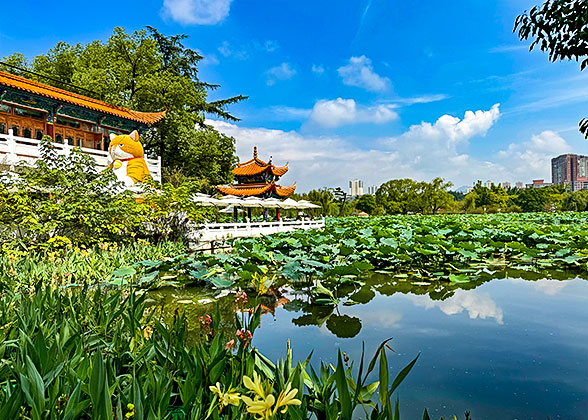
For the rest of the day, you can have a good rest in the hotel to relieve yourself from the jet lag, or get out to feel the smell of the vibrant city. Grand View Park, which can be easily reached by bus no.104 from your hotel, is highly recommended for a leisurely afternoon walk. Located by the peaceful Dianchi Lake, it is one of the largest parks in Kunming, famous for housing the historic Grand View Pavilion.
► Packing Tips for Visiting Yunnan:
Generally, there is no clear distinction of the four seasons in Kunming. The temperature and weather are usually mild and favorable for outdoor activities all year round. As for Shangri-La, Dali and Lijiang, due to the high altitude and dry and rainy seasons, the temperature varies greatly throughout the day, so you are recommended to bring warm coat and trousers, and carry suntan lotion, a sun hat and sunglasses with you.
Accommodation Suggestion: Holiday Inn Express Kunming West (3 stars)
For the rest of the day, you can have a good rest in the hotel to relieve yourself from the jet lag, or get out to feel the smell of the vibrant city. Grand View Park, which can be easily reached by bus no.104 from your hotel, is highly recommended for a leisurely afternoon walk. Located by the peaceful Dianchi Lake, it is one of the largest parks in Kunming, famous for housing the historic Grand View Pavilion.
► Packing Tips for Visiting Yunnan:
Generally, there is no clear distinction of the four seasons in Kunming. The temperature and weather are usually mild and favorable for outdoor activities all year round. As for Shangri-La, Dali and Lijiang, due to the high altitude and dry and rainy seasons, the temperature varies greatly throughout the day, so you are recommended to bring warm coat and trousers, and carry suntan lotion, a sun hat and sunglasses with you.
Accommodation Suggestion: Holiday Inn Express Kunming West (3 stars)
Local Park in Kunming
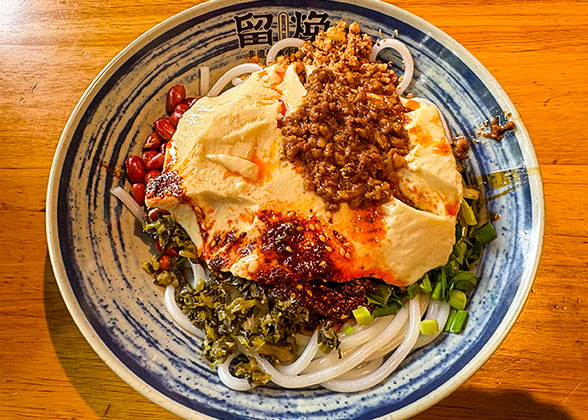
Taste the Local Snack
Day 2 Kunming: Stone Forest, Golden Horse and Jade Rooster Archways
Today, you are recommended to start your exploration with the Stone Forest, the most iconic natural wonder in Kunming. From the hotel, you could first take Subway Line 3 to East Bus Station, and then take a Kunming-Stone Forest direct bus to the scenic area. The bus is available from 8:00 to 18:00, operating at an interval of 30 to 40 minutes. The ride is about 2 hours, and the ticket fare is CNY 34 (USD 5) per person.
Stone Forest, entirely formed by the karst environment, is a vast sea of towering grey stone pillars with green bushes and grass among them, resembling a natural-made Chinese-style garden. As early as 800,000 years ago, there were already human living in the Stone Forest, and the Yi people here have developed an ethnic culture represented by their romantic epic poem “Miss Ashima”. You can spend 3 to 4 hours to discover the scenery and culture of the Stone Forest. After that, take the same bus back to Kunming downtown area.
Upon arrival at East Bus Station, you can take Subway Line 3 back to the hotel for a break, or head to Wuyi Road Station (Exit B) to visit the Golden Horse and Jade Rooster Archways. You may stroll around to admire the two beautiful golden arches and explore the quaint stores that selling tea, souvenirs, silverware, etc. The archway area comes alive when food stands flooding in around evening, and you can savor some authentic Kunming food such as the flower cakes and rice noodles.
Accommodation Suggestion: Holiday Inn Express Kunming West (3 stars)
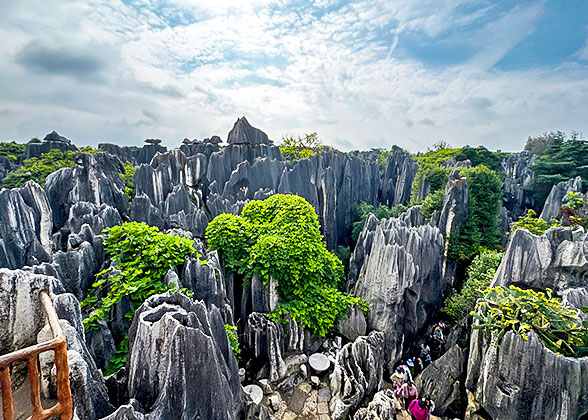
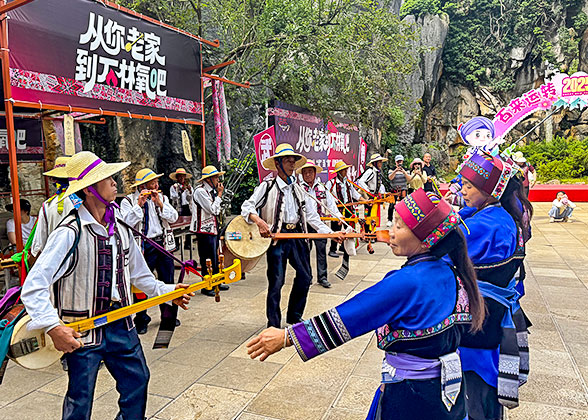
Stone Forest, entirely formed by the karst environment, is a vast sea of towering grey stone pillars with green bushes and grass among them, resembling a natural-made Chinese-style garden. As early as 800,000 years ago, there were already human living in the Stone Forest, and the Yi people here have developed an ethnic culture represented by their romantic epic poem “Miss Ashima”. You can spend 3 to 4 hours to discover the scenery and culture of the Stone Forest. After that, take the same bus back to Kunming downtown area.
Upon arrival at East Bus Station, you can take Subway Line 3 back to the hotel for a break, or head to Wuyi Road Station (Exit B) to visit the Golden Horse and Jade Rooster Archways. You may stroll around to admire the two beautiful golden arches and explore the quaint stores that selling tea, souvenirs, silverware, etc. The archway area comes alive when food stands flooding in around evening, and you can savor some authentic Kunming food such as the flower cakes and rice noodles.
Accommodation Suggestion: Holiday Inn Express Kunming West (3 stars)
Stone Forest, Kunming
Local People in Kunming
Day 3 Kunming to Dali by High-speed Train, Visit Dali Ancient City
Dali Ancient City
► Warm Tips:
1. There are a lot of trains running from Kunming to Dali daily, taking about 2.5 hours one way. We suggest you take a train departing between 8:00 and 9:00 am, such as D8710, C9502, D8554 or D8668, so that you can arrive in Dali by 12:00 noon. A second-class seat usually costs CNY 145 (USD 20.5).
2. In China, you can purchase a train ticket as early as 15 days in advance. And it’s highly recommended to book a ticket in advance if it’s during peak seasons like Chinese New Year in January or February, National Day in October, Labor Day in May and summer holidays in July and August.
After arrival at Dali Railway Station, we suggest you stay at the 4-star Landscape Hotel Dali. To get there, you can take bus no.4 for an hour to Sanyue Street Station costing CNY 3 (40 US cents), and walk east for 10 minutes after getting off, or take a taxi for an hour at a cost of around CNY 80 (USD 11).
The hotel is located in the heart of Dali Ancient City, so you can explore the surrounding streets after a short rest. The history of the town could date back to the 4th century BC. Once a prosperous ancient capital in south China, Dali was one of the birthplaces of the Bai ethnic culture, boasting beautiful Bai architecture with gray tiles and white walls. Wuhua Tower, which stands 21.5 meters tall (70.5 ft.), is the city’s highest point. You could ascend the tower for panoramic views of Dali as well as Erhai Lake and Cangshan Mountain. Despite the relatively heavy commercialization of Dali Ancient City now, the “Foreigner Street” is still worth a visit. Flanked by stylish cafes, handicraft shops, and western restaurants, it’s a great place for you to quickly get into the local atmosphere. Many visitors believe that the ancient town reveals its true beauty after dark. When the crowds fade away, you may stroll through the bluestone-paved streets, find a quiet bar, and immerse yourself in the oriental charm.
Accommodation Suggestion: Landscape Hotel Dali (4 stars)
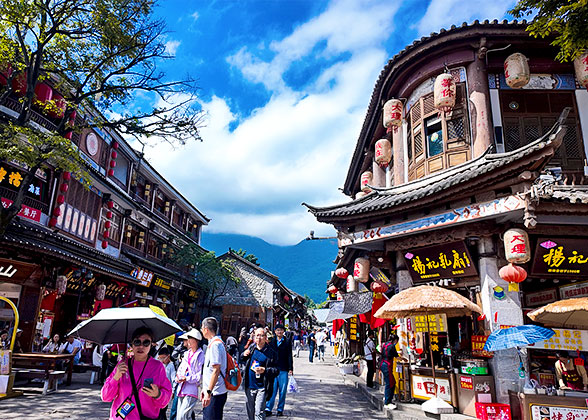
Dali Ancient City
Erhai Lake, Dali
Day 4 Dali: Three Pagodas, Yan’s Compound of Bai Minority, Erhai Lake
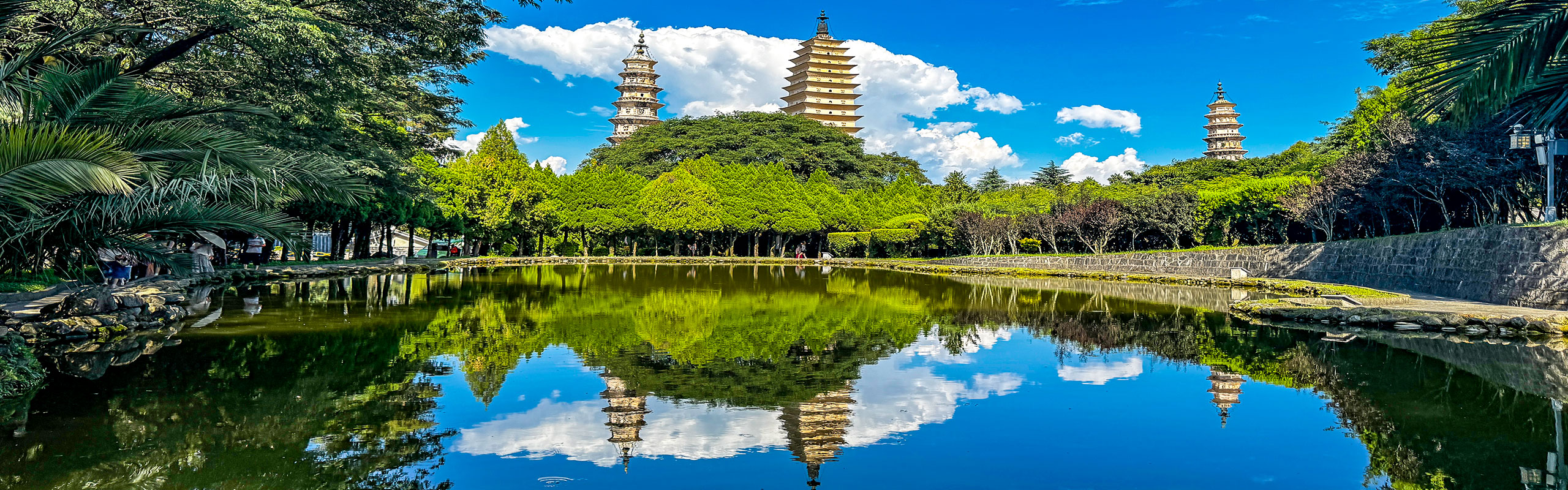
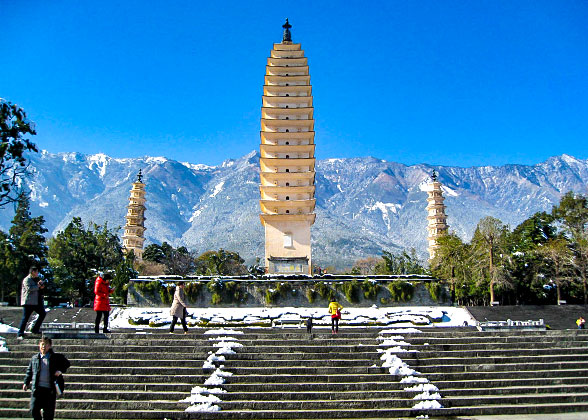
Today, start your Dali adventure from the Three Pagodas of Chongsheng Temple. Take bus no.C10 from Fuxing Road Intersection Station near the suggested hotel, and get off at Three Pagodas Park Station. The bus fare is CNY 2 (30 US cents). Chongsheng Temple is one of the most significant Buddhist temples in Yunnan. Of the three iconic pagodas, the middle one, Qianxun Pagoda, is 69.13 meters high (227 ft.) with 16 levels, and the other two pagodas in the north and south are 42 meters high (140 ft.). They were all built more than 1,000 years ago, showing the high level of architectural skills of ancient China.
Next, we suggest you take a taxi for about 40 minutes to visit Yan’s Compound of Bai Minority in Xizhou Ancient Town. The taxi fare is about CNY 70 (USD 10). The owner of the compound was Yan Zizhen (1870-1941 AD), who rose from humble origins to great wealth through his talent and business acumen. This typical Bai-style complex was built by Yan in the 1920s AD. It is a living museum of the Bai culture and architectural art, featuring many interesting details such as the white screen wall that reflects sunlight to the houses, and marble paintings designed based on their natural texture. Get an insight into Bai people’s exquisite craftsmanship of wood carvings, stone carvings, and clay sculptures.
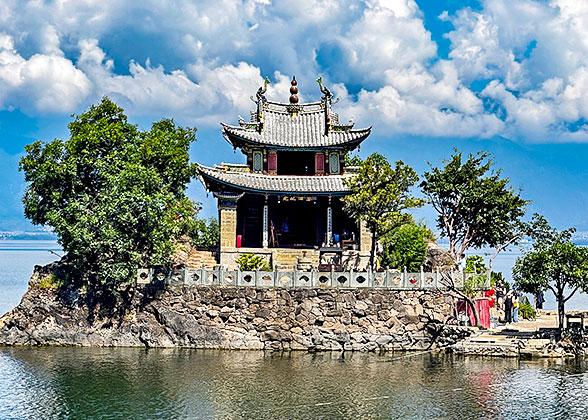
Later, you can take a taxi or a tricycle from Xizhou Ancient Town to Haishe Park at a cost of around CNY 20 (USD 3). From there, you can rent a bicycle or e-bike to cycle along the Erhai Lake Ecological Corridor for sightseeing. Erhai Lake, Yunnan’s second-largest highland freshwater lake, sits at approximately 1,900 meters (6,233 ft.) above sea level. The name is literally “ear-shaped sea” in Chinese. Yunnan is so far from sea that many locals have never seen a real sea in their lives, so they are used to calling a vast lake a sea, and they take Erhai Lake as the “Mother Lake”. The Ecological Corridor surrounds the lake, stretching 129 kilometers (80 mi.). You can cycle from north to south, and return the bicycle or e-bike at Caicun Wharf or Longkan Wharf, from which you can get back to Dali Ancient City by a short taxi ride.
Accommodation Suggestion: Landscape Hotel Dali (4 stars)
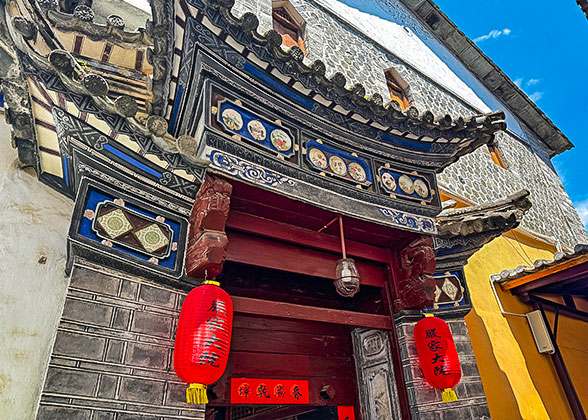
Next, we suggest you take a taxi for about 40 minutes to visit Yan’s Compound of Bai Minority in Xizhou Ancient Town. The taxi fare is about CNY 70 (USD 10). The owner of the compound was Yan Zizhen (1870-1941 AD), who rose from humble origins to great wealth through his talent and business acumen. This typical Bai-style complex was built by Yan in the 1920s AD. It is a living museum of the Bai culture and architectural art, featuring many interesting details such as the white screen wall that reflects sunlight to the houses, and marble paintings designed based on their natural texture. Get an insight into Bai people’s exquisite craftsmanship of wood carvings, stone carvings, and clay sculptures.
Later, you can take a taxi or a tricycle from Xizhou Ancient Town to Haishe Park at a cost of around CNY 20 (USD 3). From there, you can rent a bicycle or e-bike to cycle along the Erhai Lake Ecological Corridor for sightseeing. Erhai Lake, Yunnan’s second-largest highland freshwater lake, sits at approximately 1,900 meters (6,233 ft.) above sea level. The name is literally “ear-shaped sea” in Chinese. Yunnan is so far from sea that many locals have never seen a real sea in their lives, so they are used to calling a vast lake a sea, and they take Erhai Lake as the “Mother Lake”. The Ecological Corridor surrounds the lake, stretching 129 kilometers (80 mi.). You can cycle from north to south, and return the bicycle or e-bike at Caicun Wharf or Longkan Wharf, from which you can get back to Dali Ancient City by a short taxi ride.
Accommodation Suggestion: Landscape Hotel Dali (4 stars)
Three Pagodas, Dali
Yan’s Compound
Day 5 Dali to Lijiang by High-speed Train, Visit Lijiang Old Town
This morning, you are advised to take a high-speed train to Lijiang. From the hotel, you can either take bus no.4 or a taxi back to Dali Railway Station. There are several direct high-speed trains running from Dali to Lijiang. You could take train C373 (09:13/11:29) or C985 (07:45/09:35) to Lijiang Railway Station, which costs CNY 80 (USD 11) for a second-class seat. After a 2.5-hour train journey, you can take bus no.105 from Lijiang Railway Station to Nanmen Street Station to get to the suggested hotel in an hour. The bus fare is CNY 5 (70 US cents). Taking a taxi to the hotel costs about CNY 40 (USD 6).
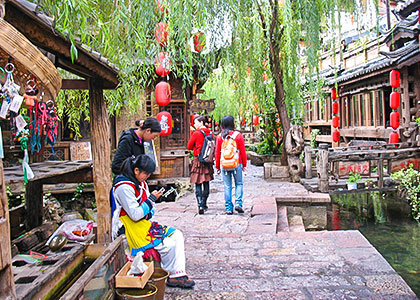
The hotel is located next to the south gate of Lijiang Old Town. After settling down, you can take a walk into the old town. With three World Heritage designations, Lijiang Old Town has a history of over 800 years. There are no city walls, and the Mu’s Mansion, the former seat of power, is not located in the center, both of which make Lijiang Old Town one of the most special ancient cities in China. Furthermore, strolling around the town, you may find it hard to see a single straight, wide alley. It looks more like a water town of southern China, dotted with bridges and winding streams. Walking to the heart of the ancient city, you’ll arrive at Square Street (Sifang Street), a commercial center in northwestern Yunnan for centuries and the busiest hub on the Ancient Tea Horse Road. Every bluestone slab here bears the footprints of merchants and the hoofprints of horses. North of the Square Street is Xinhua Street, the popular bar street which is lined with various bars and cafes and comes alive after dark. Find yourself a quiet, intimate or a boisterous pub, meet with new friends and try some local beers while enjoying the relaxing vibe.
Accommodation Suggestion: Duofu Resort Lijiang (4 stars)
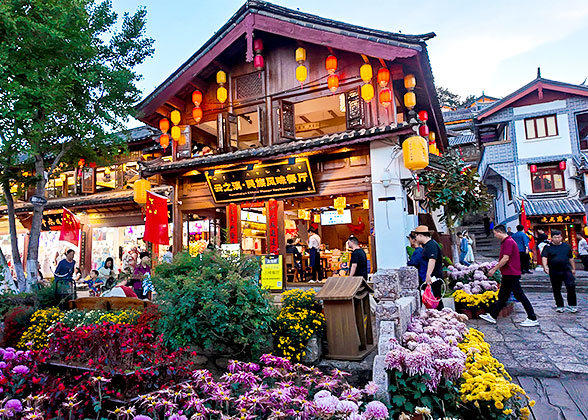
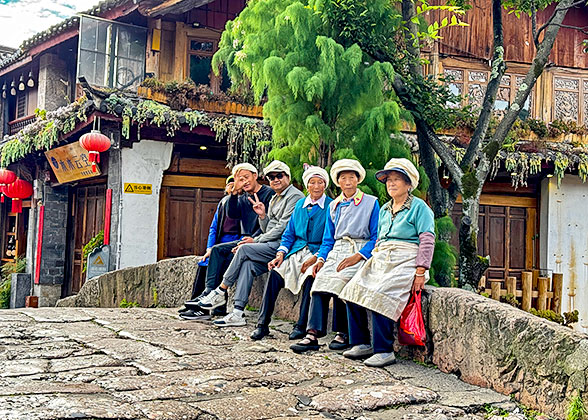
The hotel is located next to the south gate of Lijiang Old Town. After settling down, you can take a walk into the old town. With three World Heritage designations, Lijiang Old Town has a history of over 800 years. There are no city walls, and the Mu’s Mansion, the former seat of power, is not located in the center, both of which make Lijiang Old Town one of the most special ancient cities in China. Furthermore, strolling around the town, you may find it hard to see a single straight, wide alley. It looks more like a water town of southern China, dotted with bridges and winding streams. Walking to the heart of the ancient city, you’ll arrive at Square Street (Sifang Street), a commercial center in northwestern Yunnan for centuries and the busiest hub on the Ancient Tea Horse Road. Every bluestone slab here bears the footprints of merchants and the hoofprints of horses. North of the Square Street is Xinhua Street, the popular bar street which is lined with various bars and cafes and comes alive after dark. Find yourself a quiet, intimate or a boisterous pub, meet with new friends and try some local beers while enjoying the relaxing vibe.
Accommodation Suggestion: Duofu Resort Lijiang (4 stars)
Lijiang Old Town
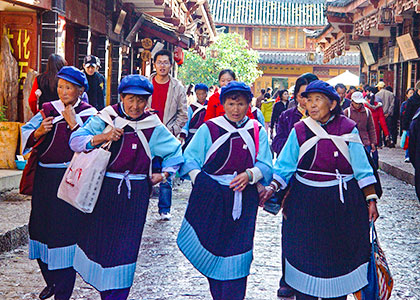
Local People in Lijiang
Day 6 Lijiang: Jade Dragon Snow Mountain
Today, we recommend you to visit the Jade Dragon Snow Mountain, the southernmost snow-capped mountain in China and even in Eurasia. It’s hard not to notice this huge mountain with the highest point of 5,590 meters (18,340 ft.) when you are in Lijiang Old Town. From the hotel, you could walk west for 10 minutes to Zhongyi Market Station, from which you can take bus no.101 to the scenic area at a cost of CNY 15 (USD 2), taking about 1.5 hours. The following is a suggested itinerary for your reference.
Upon arrival, first take the Big Ropeway to Glacier Park. It will take you to an elevation of 4,506 meters (14,783 ft.) within 30 minutes. After that, you can hike to an altitude of 4,680 meters (15,354 ft.), where you’ll find a stone tablet that is a popular photo spot. From the viewing platform, you can enjoy a panoramic view of the stunning snow-capped Jade Dragon Snow Mountain, which is revered as a sacred mountain by the local Naxi people. Next, go back for the Big Ropeway to descend the mountain, and take an eco-bus of the scenic area for the Small Ropeway to Spruce Meadow, or the Middle Ropeway to Yak Meadow. Both of the two scenic areas have vast alpine meadows and beautiful primeval forests. You can choose to visit either of them according to your time. Later, take an eco-bus to the Blue Moon Valley, which sits at the foot of the mountain. It is a true natural masterpiece formed by glacier meltwater, featuring intoxicating blue or turquoise water which varies with the weather. Afterward, you could continue to the Tourist Center by the eco-bus. From there, take bus no.101 to return to the old town area.
► Visiting Tips:
1. It’s better to book an entrance ticket and cable car tickets at least 7 days in advance, especially during peak seasons like summer from June to August and national holidays. You may use WeChat mini program - Lijiang Tourism Group to book tickets (only Chinese version available).
2. The best time to visit Jade Dragon Snow Mountain is from November to April if you look forward to admiring the snowy peaks. Besides, summer is the rainy season, during which the mountain is quite possible to be enveloped in clouds and mist.
3. The temperature difference between the mountain and its foot can be very large, so we suggest you dress in layers. Warm clothes like windproof jacket and down jacket are necessary.
4. Due to the high altitude, you are recommended to take oxygen canisters and avoid intense exercise on the mountain.
Accommodation Suggestion: Duofu Resort Lijiang (4 stars)

Upon arrival, first take the Big Ropeway to Glacier Park. It will take you to an elevation of 4,506 meters (14,783 ft.) within 30 minutes. After that, you can hike to an altitude of 4,680 meters (15,354 ft.), where you’ll find a stone tablet that is a popular photo spot. From the viewing platform, you can enjoy a panoramic view of the stunning snow-capped Jade Dragon Snow Mountain, which is revered as a sacred mountain by the local Naxi people. Next, go back for the Big Ropeway to descend the mountain, and take an eco-bus of the scenic area for the Small Ropeway to Spruce Meadow, or the Middle Ropeway to Yak Meadow. Both of the two scenic areas have vast alpine meadows and beautiful primeval forests. You can choose to visit either of them according to your time. Later, take an eco-bus to the Blue Moon Valley, which sits at the foot of the mountain. It is a true natural masterpiece formed by glacier meltwater, featuring intoxicating blue or turquoise water which varies with the weather. Afterward, you could continue to the Tourist Center by the eco-bus. From there, take bus no.101 to return to the old town area.
► Visiting Tips:
1. It’s better to book an entrance ticket and cable car tickets at least 7 days in advance, especially during peak seasons like summer from June to August and national holidays. You may use WeChat mini program - Lijiang Tourism Group to book tickets (only Chinese version available).
2. The best time to visit Jade Dragon Snow Mountain is from November to April if you look forward to admiring the snowy peaks. Besides, summer is the rainy season, during which the mountain is quite possible to be enveloped in clouds and mist.
3. The temperature difference between the mountain and its foot can be very large, so we suggest you dress in layers. Warm clothes like windproof jacket and down jacket are necessary.
4. Due to the high altitude, you are recommended to take oxygen canisters and avoid intense exercise on the mountain.
Accommodation Suggestion: Duofu Resort Lijiang (4 stars)
Jade Dragon Snow Mountain
Black Dragon Pool Park
Day 7 Visit Black Dragon Pool Park; Lijiang to Shangri-La by High-speed Train
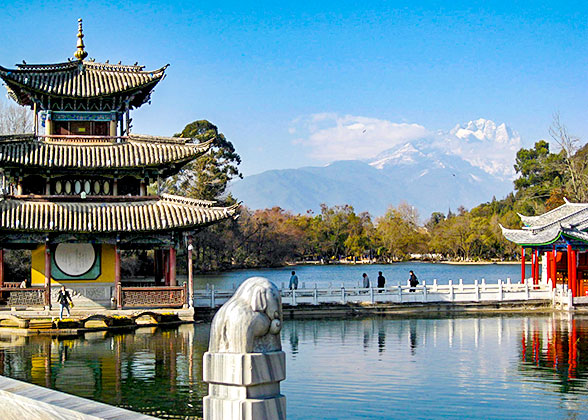
Today, further explore the Old Town of Lijiang, or visit the nearby Black Dragon Pool Park, aka Jade Spring Park. From the hotel, you can take bus no.3 to the park in 30 minutes, costing CNY 2 (30 US cents). Situated at the foot of the Elephant Hill, the park is a tranquil escape from the bustling old town. It has not only natural scenery but also classical architecture like the Dragon God Temple. From the Suocui Bridge by the Black Dragon Pool, you can easily capture an image of the elegant Moon-Embracing Pavilion against the backdrop of the blue sky, white clouds, and snow-capped Jade Dragon Snow Mountain, with clear reflections especially when it’s sunny. If time permits, you can climb up the Elephant Hill for a panoramic view of the park and the old town. Dongba Culture Museum in the park is also worth a visit to gain some knowledge of the local ethnic culture.
In the afternoon, we suggest you head to Lijiang Railway Station for the high-speed train to Shangri-La. From the hotel, take bus no.105 or hail a taxi to the railway station. It is recommended to choose train C377 (14:23/15:49) or C123 (17:03/18:22). The cost for second class is about CNY 70 (USD 10). You will arrive at Shangri-La Railway Station after a 1.5-hour ride, then you could take bus no.1 to Prefecture Ethnic Middle School Station to reach the suggested Hilton Garden Inn, which takes about 40 minutes and costs CNY 2 (30 US cents). The fare is around CNY 40 (USD 6) if taking a taxi.
Accommodation Suggestion: Hilton Garden Inn Shangri-La (4 stars)
In the afternoon, we suggest you head to Lijiang Railway Station for the high-speed train to Shangri-La. From the hotel, take bus no.105 or hail a taxi to the railway station. It is recommended to choose train C377 (14:23/15:49) or C123 (17:03/18:22). The cost for second class is about CNY 70 (USD 10). You will arrive at Shangri-La Railway Station after a 1.5-hour ride, then you could take bus no.1 to Prefecture Ethnic Middle School Station to reach the suggested Hilton Garden Inn, which takes about 40 minutes and costs CNY 2 (30 US cents). The fare is around CNY 40 (USD 6) if taking a taxi.
Accommodation Suggestion: Hilton Garden Inn Shangri-La (4 stars)
Day 8 Shangri-La: Potatso National Park
Whether you’ve been to China or not, you’ve probably heard of Shangri-La. Originally mentioned by James Hilton (1900-1954) in his novel Lost Horizon, this place has long been considered a synonym for utopia. Today, you are suggested to spend a whole day to enjoy the enchanting views in Potatso National Park.
Potatso National Park, with its rich biodiversity and unspoiled highland lakes, forests and meadows, is a representative part of the World Natural Heritage Site “Three Parallel Rivers of Yunnan Protected Areas”. The park includes three picturesque areas: Shudu Lake, Bitahai Lake, and Militang Alpine Pasture. You can take sightseeing buses from the park entrance and get off at any designed spots that you want to explore further. First, take a bus to Youyou Eco-Trail for a 1.5-hour hike, enjoying the fresh air along the streams and discovering mushrooms in the forests. Then, proceed to Shudu Lake by a 15-minute bus ride. At an elevation of 3,700 meters (12,140 ft.), it is one of the largest highland lakes in Shangri-La. You can explore it by hiking, cycling, or boat cruising. It’s more recommended to take a hike along the lakeside walkway to see the hills and trees reflect in the water, and encounter wild animals like waterfowls and squirrels. Later, continue to Bitahai Lake, a serene lake with sapphire blue water, embraced by dense spruce forests. Every spring, the lake is surrounded by seas of blooming flowers, and the vast meadow is dotted with grazing yaks and sheep. Thereafter, return to the entrance by sightseeing bus and get back to your hotel.
► How to Get There:
1. By bus: Take bus no.1 to Shangri-La Coach Station for CNY 2 (30 US cents), where there is one scenic shuttle bus to Potatso National Park, leaving at 9:30 am and returning at 15:00 pm every day. A one-way bus ticket is CNY 15 (USD 2) and the bus ride is about 30 minutes.
2. By taxi: A single trip costs around CNY 80 (USD 11), and it’s recommended to arrange a return time with the driver and have his/her contact information in case you can’t get a taxi after the tour.
► Friendly Tips:
1. Bring food and drinking water with you to replenish energy. Sun protection is important as well.
2. Wear comfortable shoes and warm clothes. If it’s during the rainy season (June to August), remember to carry a waterproof jacket or an umbrella.
3. Slow your pace while hiking to protect yourself from severe altitude sickness. Also, you can take bottled oxygen with you.
4. Keep distance with the wild animals, especially the boars and yaks, and do not feed them.
Accommodation Suggestion: Hilton Garden Inn Shangri-La (4 stars)
Potatso National Park, with its rich biodiversity and unspoiled highland lakes, forests and meadows, is a representative part of the World Natural Heritage Site “Three Parallel Rivers of Yunnan Protected Areas”. The park includes three picturesque areas: Shudu Lake, Bitahai Lake, and Militang Alpine Pasture. You can take sightseeing buses from the park entrance and get off at any designed spots that you want to explore further. First, take a bus to Youyou Eco-Trail for a 1.5-hour hike, enjoying the fresh air along the streams and discovering mushrooms in the forests. Then, proceed to Shudu Lake by a 15-minute bus ride. At an elevation of 3,700 meters (12,140 ft.), it is one of the largest highland lakes in Shangri-La. You can explore it by hiking, cycling, or boat cruising. It’s more recommended to take a hike along the lakeside walkway to see the hills and trees reflect in the water, and encounter wild animals like waterfowls and squirrels. Later, continue to Bitahai Lake, a serene lake with sapphire blue water, embraced by dense spruce forests. Every spring, the lake is surrounded by seas of blooming flowers, and the vast meadow is dotted with grazing yaks and sheep. Thereafter, return to the entrance by sightseeing bus and get back to your hotel.
► How to Get There:
1. By bus: Take bus no.1 to Shangri-La Coach Station for CNY 2 (30 US cents), where there is one scenic shuttle bus to Potatso National Park, leaving at 9:30 am and returning at 15:00 pm every day. A one-way bus ticket is CNY 15 (USD 2) and the bus ride is about 30 minutes.
2. By taxi: A single trip costs around CNY 80 (USD 11), and it’s recommended to arrange a return time with the driver and have his/her contact information in case you can’t get a taxi after the tour.
► Friendly Tips:
1. Bring food and drinking water with you to replenish energy. Sun protection is important as well.
2. Wear comfortable shoes and warm clothes. If it’s during the rainy season (June to August), remember to carry a waterproof jacket or an umbrella.
3. Slow your pace while hiking to protect yourself from severe altitude sickness. Also, you can take bottled oxygen with you.
4. Keep distance with the wild animals, especially the boars and yaks, and do not feed them.
Accommodation Suggestion: Hilton Garden Inn Shangri-La (4 stars)
Day 9 Shangri-La: Songzanlin Monastery & Dukezong Ancient Town; Take High-speed Train to Kunming
This morning, you are suggested to go to Songzanlin Monastery. Walk north for 5 minutes from the hotel to the Prefecture Health Bureau Station, where you can take bus no.16 to the monastery in 40 minutes, costing CNY 2 (30 US cents). Or, if you choose to go there by taxi, the fare will be around CNY 25 (USD 3.5).
Songzanlin Monastery, founded in 1681 AD, is the largest Tibetan Buddhist monastery in Yunnan, nestled among mountains and situated by Lamu Yangcuo Lake. The architecture of Songzanlin Monastery rises in tiers, with two majestic main halls surrounded by eight colleges and other buildings, resembling stars surrounding the moon. With Tibetan-style golden roofs and white and yellow walls gleaming brilliantly in the sunlight, the monastery is given the nickname “Little Potala Palace”. After the tour, you could also enjoy some leisurely time walking along Lamu Yangcuo Lake, seeing the panorama of the monastery and its reflection in the lake.
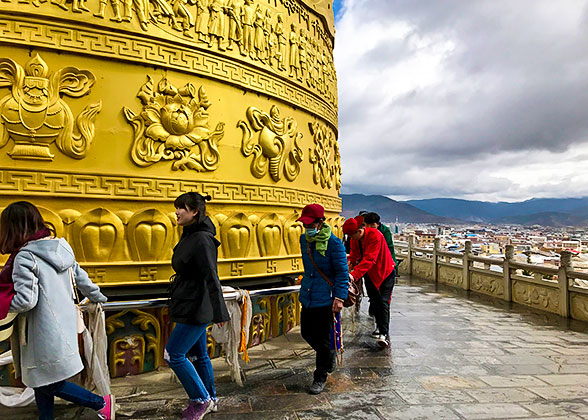
Later, you may continue to visit Dukezong Ancient Town by taking bus no.3 from the monastery. The ride takes an hour and costs CNY 2 (30 US cents). Dukezong Ancient Town, meaning “Moonlight City” in Tibetan, has a history of over 1,300 years and is one of the best-preserved and largest Tibetan residential areas in China. From the summit of Guishan Park, you could overlook the entire town, and try to spin the world’s largest 21-meter-tall (70 ft.) prayer wheel with people from different countries. Sample some authentic Tibetan food such as butter tea and Tsampa at the lively teahouses and food stalls in the ancient town.
Late in the afternoon, get your luggage at the hotel and head to Shangri-La Railway Station by bus no.1 costing CNY 2 (30 US cents) or by taxi costing CNY 40 (USD 6). Then, we suggest taking high-speed train C88 (17:25/22:04) back to Kunming. Upon arrival, since buses have stopped operating, you are advised to take a 30-minute taxi to Holiday Inn Express Kunming West at a cost of around CNY 40 (USD 6).
Accommodation Suggestion: Holiday Inn Express Kunming West (3 stars)
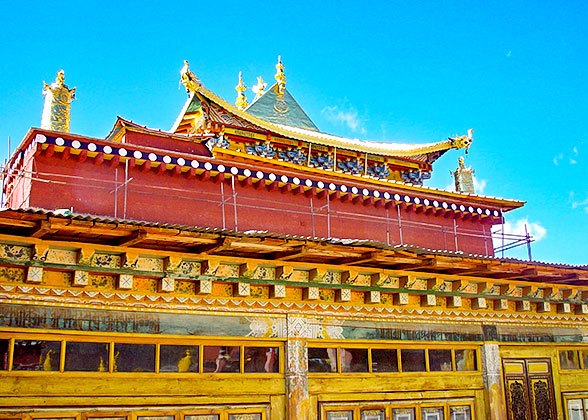
Songzanlin Monastery, founded in 1681 AD, is the largest Tibetan Buddhist monastery in Yunnan, nestled among mountains and situated by Lamu Yangcuo Lake. The architecture of Songzanlin Monastery rises in tiers, with two majestic main halls surrounded by eight colleges and other buildings, resembling stars surrounding the moon. With Tibetan-style golden roofs and white and yellow walls gleaming brilliantly in the sunlight, the monastery is given the nickname “Little Potala Palace”. After the tour, you could also enjoy some leisurely time walking along Lamu Yangcuo Lake, seeing the panorama of the monastery and its reflection in the lake.
Later, you may continue to visit Dukezong Ancient Town by taking bus no.3 from the monastery. The ride takes an hour and costs CNY 2 (30 US cents). Dukezong Ancient Town, meaning “Moonlight City” in Tibetan, has a history of over 1,300 years and is one of the best-preserved and largest Tibetan residential areas in China. From the summit of Guishan Park, you could overlook the entire town, and try to spin the world’s largest 21-meter-tall (70 ft.) prayer wheel with people from different countries. Sample some authentic Tibetan food such as butter tea and Tsampa at the lively teahouses and food stalls in the ancient town.
Late in the afternoon, get your luggage at the hotel and head to Shangri-La Railway Station by bus no.1 costing CNY 2 (30 US cents) or by taxi costing CNY 40 (USD 6). Then, we suggest taking high-speed train C88 (17:25/22:04) back to Kunming. Upon arrival, since buses have stopped operating, you are advised to take a 30-minute taxi to Holiday Inn Express Kunming West at a cost of around CNY 40 (USD 6).
Accommodation Suggestion: Holiday Inn Express Kunming West (3 stars)
Songzanlin Monastery
Dukezong Ancient Town
Day 10 Kunming Departure
Your 11-day China budget train tour comes to an end today. From the hotel to Kunming Airport, you could take Subway Line 3 and transfer to Line 6 at East Bus Station, costing CNY 7 (USD 1), which takes one hour in total. If taking a taxi, the cost will be around CNY 100 (USD 14). We wish you a safe journey home!
Expand All
Collapse All
This trip can be customized to meet your individual needs!
Itineraries you may also like: