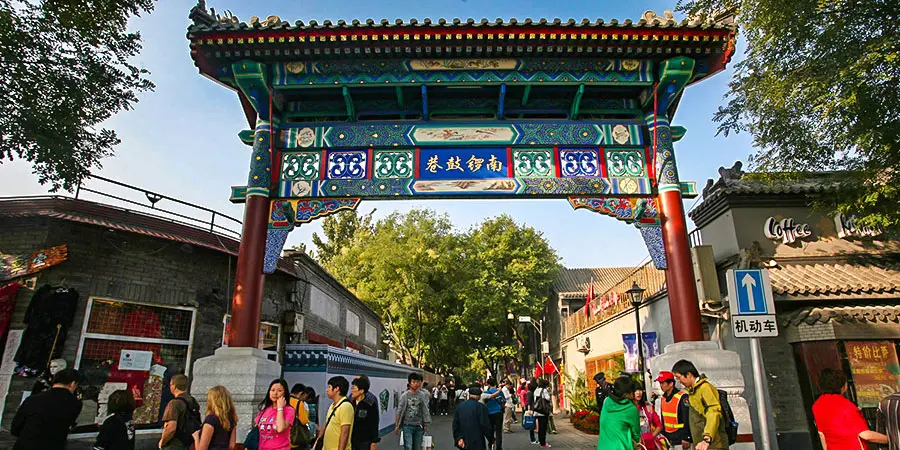
South Gong and Drum Lane is a historic neighborhood renowned for its old Beijing charm. It boasts a grand collection of well-reserved traditional quadrangle courtyard houses, making it a top destination for visitors seeking local life immersion. As the capital's most internet-famous alleyway, it boasts various boutiques and art studios, attracting young travelers and art enthusiasts. Some Chinese historical figures' dwellings here are also hidden gems.
When & Why Built - South Gong and Drum Lane History
South Gong and Drum Lane is one of Beijing's oldest neighborhoods, first established around 1276 alongside the founding of the Yuan Dynasty (1271-1368) capital. Its original layout has been well-preserved: a north-south axis with sixteen hutongs, eight on the east and eight on the west. Viewed from above, the entire district resembles a centipede, hence its nickname Centipede Street. The lane's terrain, higher in the center and sloping down to the north and south, resembles a hunchback, which led to its original name, Hunchback Lane. In 1750, it was renamed South Gong and Drum Lane.
Initially a residential area for commoners, the neighborhood was predominantly composed of quadrangle courtyard housing single-story homes on all four sides. From the late 13th to the early 20th century, its proximity to the Forbidden City transformed it into an affluent enclave, home to numerous officials and nobility.
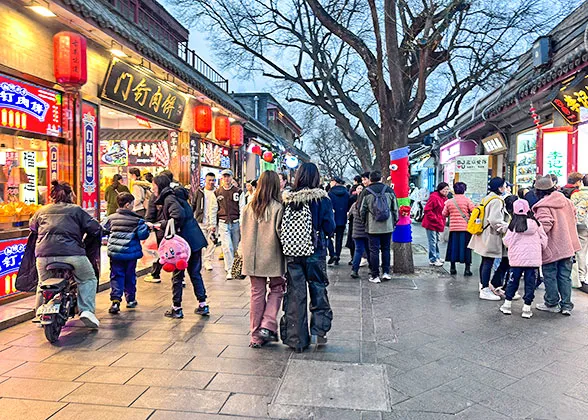
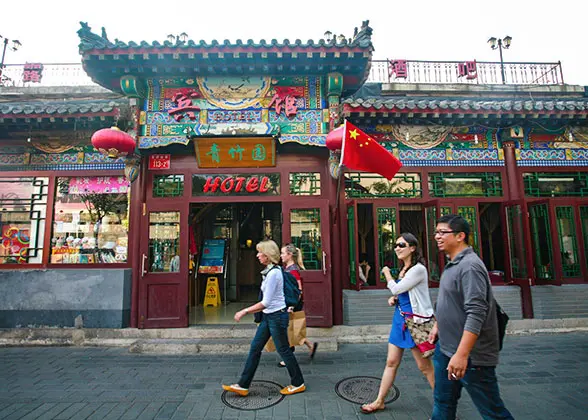
Busy Main Street
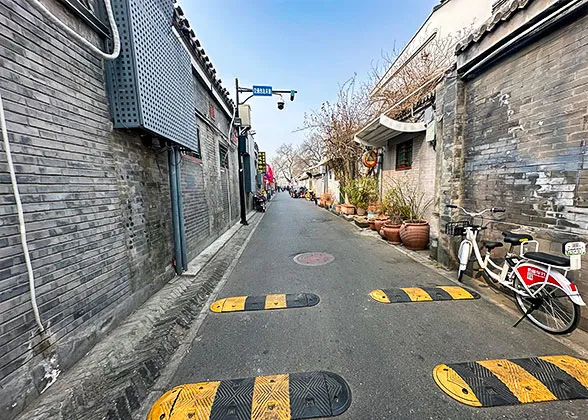
Quieter Side Street
After the mid-20th century, more residents moved in, leading to shared courtyards where multiple families cohabited and used communal kitchens and bathrooms. This shared lifestyle of its residents has continued to this day in some courtyards.
Starting in 1978, a variety of shops covering daily needs began to emerge. Subsequently, the Lane developed into a cultural and tourism destination, blending authentic residential life with commercial vitality.
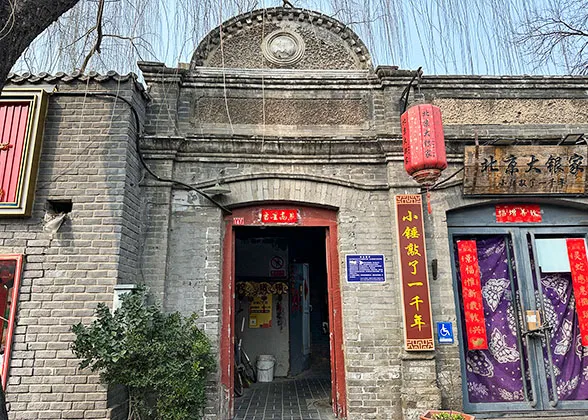
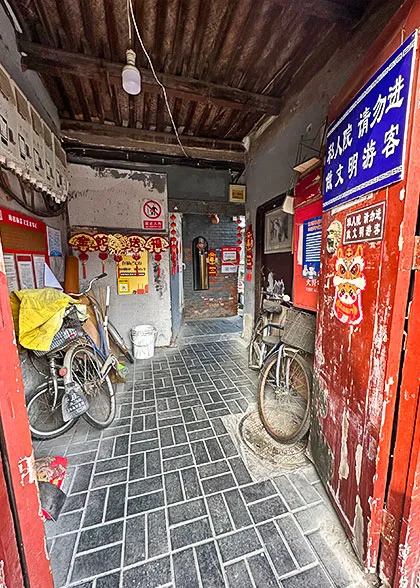
A Folk House at the Lane
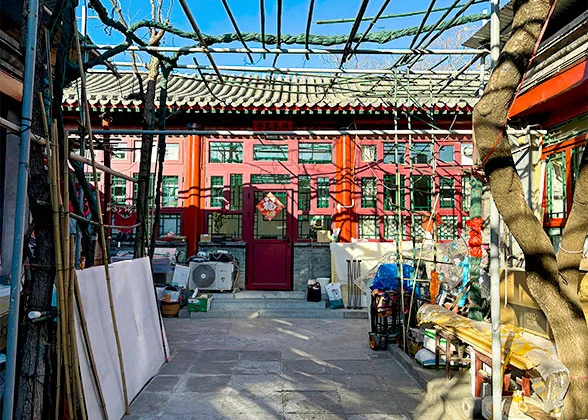
A Quadrangle Courtyard
What to See in South Gong and Drum Lane?
The heart of the South Gong and Drum Lane experience lies in discovering authentic old Beijing scenes, tucked away in the quieter side alleys branching from the main street.
At around 7:00 to 8:00, you will witness the most genuine and lively scenes of local life: elderly men in pajamas strolling with birdcages, and neighbors gathering at shared water taps to wash up and collect water. The air fills with the mixed aromas of local breakfast staples like fermented mung bean milk and fried dough rings, while the crisp sound of bicycle bells cuts through the morning mist.
As the sun rises higher, life here slows down. Under the trees, elders gather around small tables for chess and card games, with the sound of Peking Opera drifting from a radio. Doorsteps are often occupied by seniors basking in the sun, sorting vegetables, or reading newspapers. Overhead, colorful laundry flutter on clotheslines, and windowsills are adorned with potted green plants, composing the most vivid portraits of everyday alley life.
Back on the main street, the atmosphere shifts to lively energy.
A Cafe on the Lane
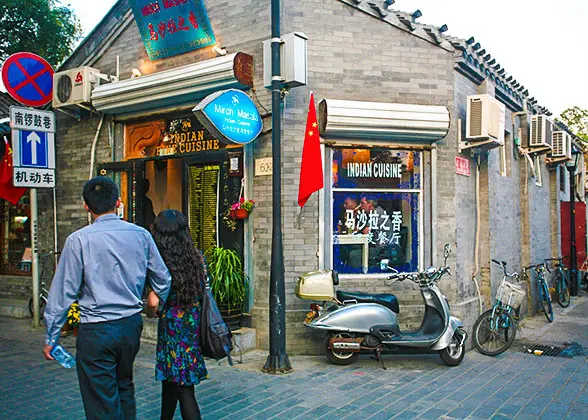
Mirch Masala, an Indian Restaurant
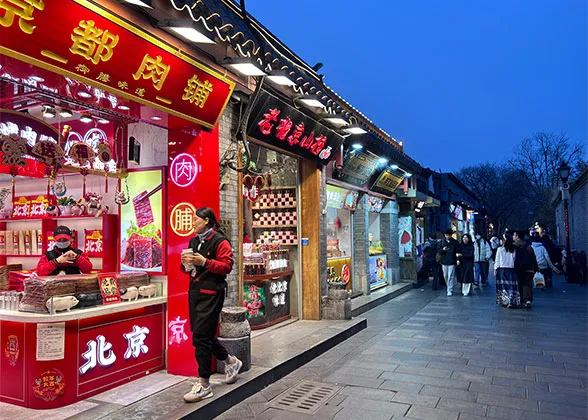
The bustling main street is filled with tourists from around the world, lined with the trendiest shops. Fashion boutiques by independent designers, craft studios, niche bookshops, and specialty bars sit side by side with traditional snack vendors and craft stores, bringing dynamism to this old alley.
Inside a Local's House
As you sip lattes in the cozy courtyard cafés and gaze at the grey-tiled rooftops through the modern glass walls, you can hear the Beijing dialect mingled with languages from all over the globe. It feels like you're wandering through a world that blends time and space.
There are also some former residences of Chinese historical figures worth visiting.
Numbers 35 and 37 Mao'er Hutong were the family home of China’s last empress Wanrong (1906-1946), who left through this very gate in 1922 to enter the Forbidden City as the emperor’s bride. While interior access is not permitted, its tall walls, deep courtyards, red lacquered gates, and stone lion door posts are well worth a pause and a closer look.
In Ju'er Hutong, a group of multi-story buildings from a renovation project in the 1980s stands out. These new buildings, featuring grey bricks and red-tiled eaves, provide a comfortable living space while preserving traditional courtyard elements such as goldfish ponds and ancient trees. Being both authentic and highly livable, it earned the prestigious "World Habitat Award" from the United Nations in 1993.
The Qi Baishi Memorial Hall, located at 13 Yu'er Hutong, preserves the a three-section quadrangle courtyard with hanging flower gate and spirit screen, ideal for exploring traditional Chinese dwellings. Inside are replicas of artworks and personal items belonging to Qi Baishi (1864-1957), one of China's most renowned painters, allowing insights into concepts of "freehand brushwork" and "negative space" in Eastern aesthetics.
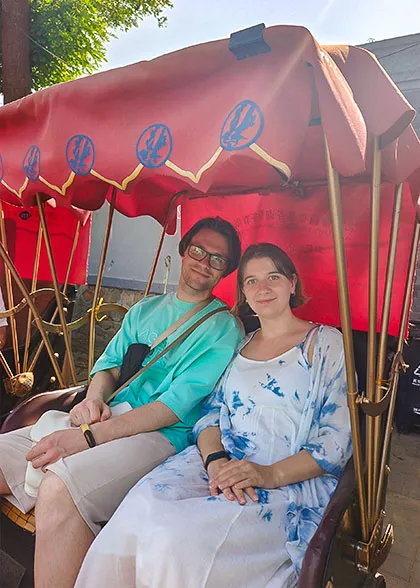
Try Rickshaw Here
Practical Tips for Visiting South Gong and Drum Lane
Getting There
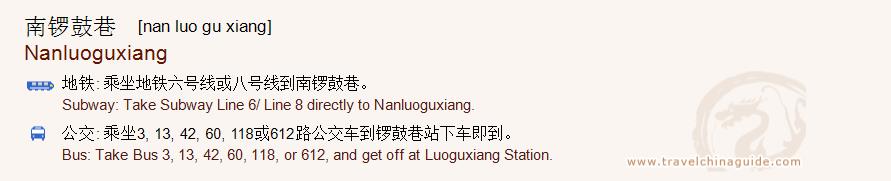
The easiest way to reach the lane is by subway. Take Line 6 or Line 8 and get off at Nanluoguxiang Station; Exit E leads directly to the alley.
Buses that stop at "Nanluoguxiang" include routes 3, 4, 13, 42, 60, 118, 612, and Sightseeing Route 3. Alternatively, buses 82, 107, 124, and 135 stop at "Baocao Hutong”, from which it's just a 3-minute walk.
Where to Eat
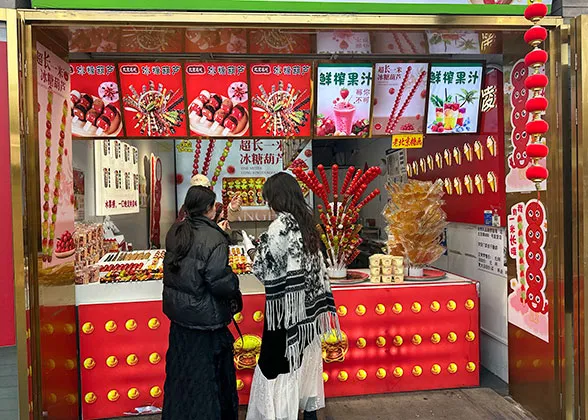
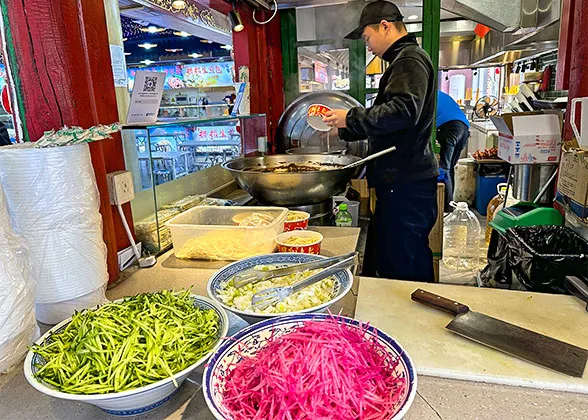
Dining options abound throughout the main street and surrounding lanes, with plenty of affordable choices averaging CNY20–50 per person. Sample authentic Beijing dishes like noodles with soybean paste, or visit long-standing vendors serving specialties such as imperial-style dairy pudding. To avoid crowds, try dining before or after the 18:00–19:00 peak hour.
Sugar Coated Haws, Snack Bar
Beijing Noodles with Soybean Paste Stall
Best Time to Visit
South Gong and Drum Lane is open 24/7 and free to enter, making it accessible at any time, but timing your visit can greatly enhance the experience.
South Gong and Drum Lane at Night
The area is at its most peaceful in before 11:00, ideal for photography, quiet walks, and observing local life as residents start their day. Late afternoon to early evening, from around 16:00 to 19:00, offers a lively yet comfortable ambiance as shop lights come on and the lanes gently fill with visitors. For a more laid-back, intimate experience, consider visiting after 20:00, when the crowds have thinned and the illuminated alleyways create a soft glow. A leisurely tour typically takes about 2 to 3 hours.
To avoid congestion, steer clear of weekends and holidays between 11:00 and 16:00, when the main street becomes heavily packed.
 South Gong and Drum Lane Pictures