Still belonging to winter, Inner Mongolia weather in February is cold overall, mildly in its west part and freezing in the east. The temperature rises slightly, but the trend is quite fluctuating. February climate also features dryness as the precipitation is quite low which may be in forms of both snow and rain. Daylength keeps increasing, but still insufficient for day trips. Although the weather condition is not favorable, visitors can experience festival atmosphere throughout Inner Mongolia because Chinese New Year is usually celebrated in this month, and the snowy landscape in its east is magnificent.
Mildly Cold West Inner Mongolia, Frigid East
Western part sees the daytime high temperatures swing between -5 and 8 degrees Celsius (23 -46 degrees Fahrenheit) and the low degrees between -16 and -6°C (3 - 21°F), so the western Inner Mongolia climate in February is free from severe coldness. In about 15 days, the daily highs exceed 0°C (32°F), when the snow starts to melt.
However, the situation is quite different in the east. With high values ranging from -19 and -7°C (-2 - 19°F) and night lows from -33 to -21°C (-27 - -6°F), the weather of eastern Inner Mongolia in February remains bitterly cold that your skin exposed to the air gets numb quickly.
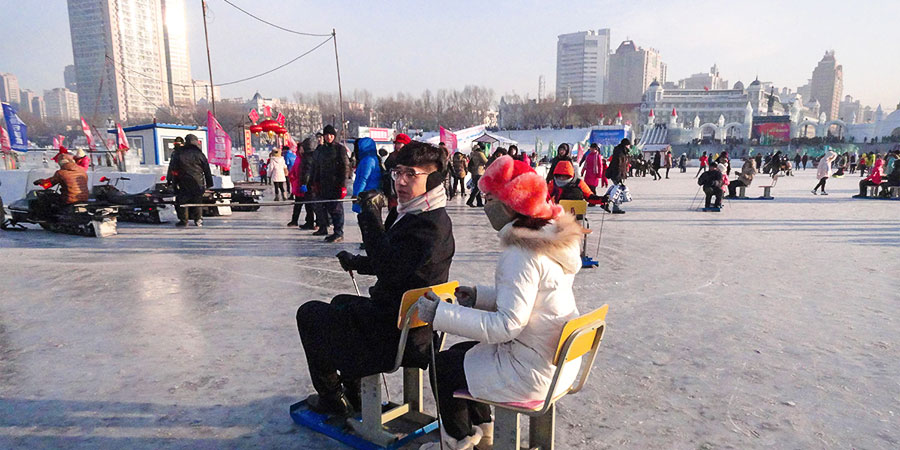 |
| Visitors in Heavy Clothes During February |
The temperature trend in this month is generally upward, but it fluctuates drastically and sudden temperature drops often happen. On occasions, the max temperatures may plunge to around -13°C (9°F) in the west and -24°C (11°F) in the other parts. In addition, winds also make the perceived temperature lower especially in its east where strong winds are more frequent.
Low Precipitation & Dry Air
From the west Inner Mongolia to the east, the average monthly precipitation increases gradually from 3 to 10 mm (0.12 - 0.39 in), which falls as snow drizzles or light rain distributed over 3 days about. Rainy or snowy condition lasting for the whole day is particularly occasional, thus causing little disruptions on the travel schedule. It also means the low precipitation could far from improve the dry climate of Inner Mongolia in February. However, with more snowfall and lower temperatures, eastern Inner Mongolia still boasts large-scaled snow views in this month, which has not melted away yet.
Insufficient but Increasing Daylight Hours
During February, sunrise time in the eastmost city Hulunbuir gradually advances from around 7:30 to 6:40; the sunset time becomes increasingly later at 17:00 - 17: 40. Similarly, for the west, the sun rises at 8:15 - 7:40 and sets at 18:30 - 19:00 approximately. Across the whole Inner Mongolia, the daylength shows a gradual increase from about 9.5 to 11 hours, remaining less sufficient for visits of the vast land. But the sunlight duration averages about 7 hours per day, a generally abundant level. The snow-covered Ulan Butung Grasslands of
Chifeng city and forested trees glittering under bright sunlight are big feasts to eyes; when sun sets, you can see captivating sky colored by blue, pink and golden.
 |
| Wonderful Sunset in Inner Mongolia |
Is February a Good Time to Visit Inner Mongolia?
To be honest, in despite of the cold weather, February is not a bad time to visit Inner Mongolia. From the perspective of natural scenery, eastern Inner Mongolia is more recommended for visitors, including cities of
Hulunbuir,
Higgan and
Xilingol since charming snow scenery and characteristic activities unique to winter are available there in February. Local ice festivals are held as well so that you can play distinctive winter games.
 |
| Lion Dancing Performances |
For cultural experiences, the whole province suits to pay a visit and the southwestern cities like Hohhot, Baotou and Ordos with relatively higher temperatures and plenty of historical attractions are more recommended. In addition, Chinese New Year which falls on February 6 in 2027 is a good chance to engage in the Chinese grandest tradition. About one week around the date, the streets are decorated with red couplets and lanterns, while celebration activities are conducted, such as lion dancing, traditional opera shows and etc.
What to Wear in Inner Mongolia in February?
Be sure that your tops are convenient for temporarily taking off and on since there exist large temperature differences between indoors and outdoors.

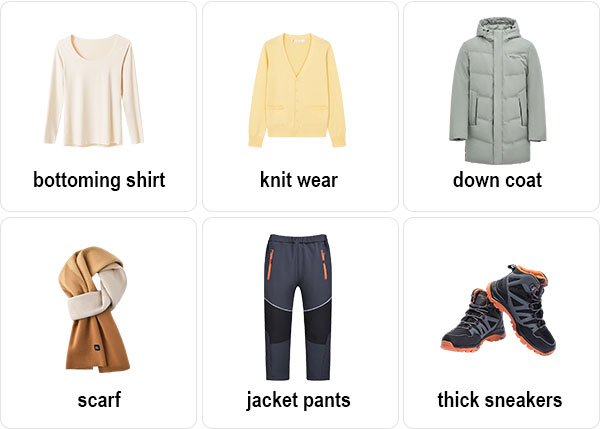
Clothes for Eastern Part: Being windproof and water-resistant is the essential standard of outer layers so that you can play ice and snow without much worry about getting wet or cold. For example, down coats and fleece-lined jacket pants for upper and lower body respectively. As for inner layers, thick thermal underwear with padded hoodies are good matches; wool long johns are also important to preserve heat.
Clothes for Western Part: You can wear thin inner layers like bottoming shirts with knit wear or blouses; then, choose from 3-in-1 windbreakers, down jackets and fleece-lined leather coats. For lower body, it is suggested to wear normal long johns topped with padded jeans or fleece sweatpants.
Shoes: High-top snow boots suit eastern Inner Mongolia, but too warm for the west. Padded sneakers and walking boots are suitable for both if wearing socks of different thickness.
Others: Considering the dry climate, skin-care products like body lotion, lip balms and hand cream are necessary to keep your skin moisturized. To deal with the generally cold weather, you should prepare warm accessories like hats, scarves and gloves; heat patches are also very helpful during eastern Inner Mongolia trip. Don’t forget to pack sunglass to protect against UV damage when admiring snowy scenery.
Travel Tips for Inner Mongolia in February
 |
| Lantern Shows During Festival |
1. During Chinese New Year, some attractions in Inner Mongolia might shorten their opening time or be closed for several days such as Inner Mongolia Museum in Hohhot. Small restaurants may also be closed. Therefore, you had better make a phone call to know the service time before you head for them.
2. You are suggested to avoid visiting Inner Mongolia during Chinese New Year holiday which in 2027 is Feb. 4 - 12 because domestic travelers and travel costs soar. Don’t worry you will miss the festival celebrations; they usually last till the Lantern Festival, on Feb. 20 in 2027. But if you insist, please do book air flights and train tickets across cities as early as possible since it is exceptionally difficult to get them during the travel rush.
3. Due to the changing temperatures and wide span of Inner Mongolia, be sure to check the forecast of your specific destinations frequently so as to make adjustment in time.
- Last updated on Jun. 12, 2026 by Charlotte Qiu -