Considering the vast areas and various landforms of Inner Mongolia, best time to visit it varies among specific destinations and due to personal preference. But generally speaking, June to September is commonly recognized as an ideal time to visit almost the whole region for the following reasons.
Pleasant Weather
Favorable weather condition is the primary contributing factor of listing June - September as the best time to visit Inner Mongolia. It enjoys pleasant temperatures and moderate humidity overall. Even in hottest July, the highest temperatures in warmer western parts rarely exceed 38 degrees Celsius (100 degrees Fahrenheit) and you only sweat a little around midday. Most time of this period sees almost no extreme weather, but abundant sunshine.
Stunning Natural Scenery – Best Time for Grassland Tour
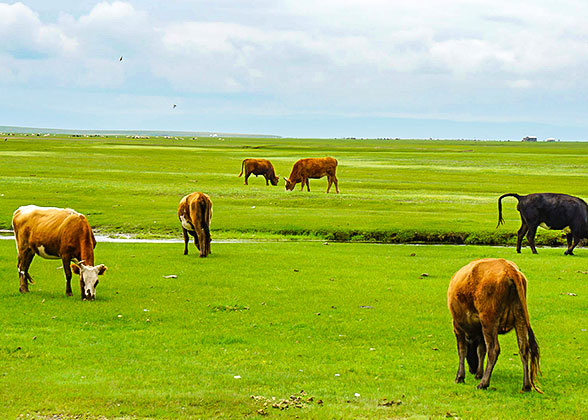
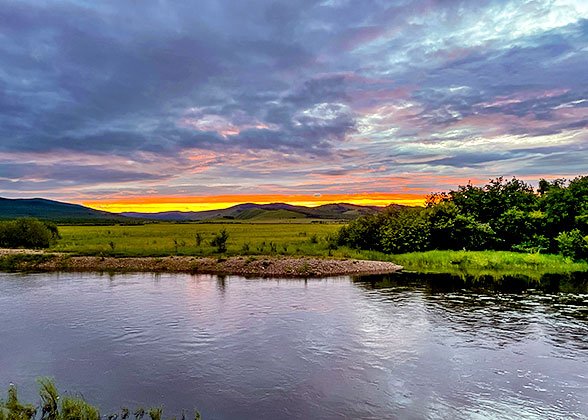
Natural views present their most attractive appearances for visitors. From June to August, you can see blossoming wild flowers in
Hulunbuir Prairie, vibrant grasslands like
Xilingol Grassland and lush forests in Ergun Wetlands; by September, colorful autumn scenery starts to reveal gradually and every period is of unique charms. Other landforms like rivers, lakes, deserts and volcano are stunning as well.
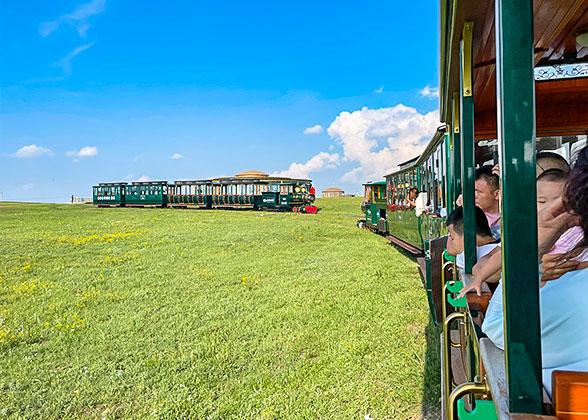 | | Appealing Hulun Prairie | |  | | Horse Riding Performances | |
Rich Activities
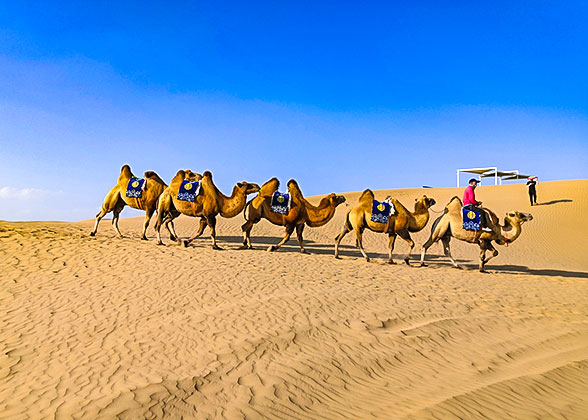
During this period, there provide plenty of wonderful tourist activities. Normally, you can take a camel ride in
Singing Sand Ravine, have a grass sliding on
Xilamuren Grassland, go hiking across
Tengger Desert and etc. during daytime. When night falls, campfire party and stars observation become available. Besides, in July, Naadam Fairs are held where you can appreciate exciting competitions and performances such as wrestling, horse racing and archery. The related celebrations could last for weeks and some cities might hold mini-Naadam in August.
Best Time for Deserts Adventures
May - June and September - October are the best periods to appreciate desert scenery in Inner Mongolia. As its most deserts are located in the western and southern part, the weather has become generally warm in May and remains pleasant in October. During this time, visitors feel neither scorching hot around noon nor harshly cold at night, suitable for appreciating the lakes in various colors scattered in
Badain Jaran Desert like gems. Meanwhile, the two periods are the shoulder season of Inner Mongolia travel, which means you can have a relatively serene and economical trip.
 |
| Badain Jaran Desert |
However, sand storm caused by strong winds are possible and you should check forecast frequently. No matter when you visit deserts, sunproof measures and protective masks are particularly necessary to prevent strong sunlight and sand.
Best Time for Autumn Views
To appreciate colorful autumn views, it is suggested to visit Inner Mongolia in September and October. Visiting in different periods, you see diverse and distinctive autumn views.
Early September is the transitional period from green to yellow, featured by lingering summer views and hints of autumn. But the golden time following by is of regional differences. For eastern attractions like
Arxan National Park and Ergun National Wetland Park, golden autumn scenery could be seen from middle September to early October at most. While, the west Inner Mongolia experiences this situation later. For example, the westmost
Populus Euphratica Forest in Ejina turns completely yellow in late September at earliest and usually lasts for about three weeks. As the trees and grasses have withered gradually since middle October, you can see fall foliage and stepping on the thick leaves is pressure-relieving.
 |
| Colorful Autumn in Inner Mongolia |
But you should know that the above transition trend is just for references as the real-time situation might be of slight differences every year.
Best Time for Winter Fun
 |
| Winter Activities |
December to February is the best time for tourists who love snow scenery. During this period, the whole region receives snowfall, light but hardly melts, thus vast snow views can be seen. For northeastern cities like Hulunbuir, vast white landscape could last to March. Besides, due to the low temperatures, Moergele River and
Hulun Lake have frozen thick enough for skating and ice fishing. You can also admire frosted trees in mist, go rafting in the unfrozen river, go skiing, visit snow-covered town nearby Russia and enjoy a hot spring.
In view of the frigid weather in winter, be sure to wear multiple layers of clothes to keep warm and keep every inch of skin from cold air. You should also keep close eyes on snowstorm warning and avoid outdoor sightseeing when it hits.
Most Expensive and Crowded Time
Throughout the year, some periods witness exceptionally high prices especially in air flights and hotels as well as a large number of visitors. Long queues and much waiting time are common. If you plan to go during these periods, please make reservations in advance to get relatively low prices and ensure a smooth trip.
Peak Travel Season
 |
| ZhaoJun Tomb in Peak Travel Season |
July to August is the peak travel season. Except the contributing factors of weather and scenery mentioned above, China’s summer holiday is also an important reason. During these two months, many students, parents and teachers visit Inner Mongolia to enjoy their holiday and escape summer heat.
China's Public Holidays
The crowded situation during holidays is usually more serious than the peak travel season. For long holidays such as Chinese New Year holiday during Feb. 4 - 12, 2027 and May Day holiday from May 1 - 5, 2027, the cultural and historical attractions see quite large numbers of local visitors for example in
Five-Pagoda Temple,
Zhaojun Museum and
Wudangzhao Monastery; while, the vast desserts and grasslands are less crowded. However, you had better avoid China's National Day holiday on October 1 - 7, 2026 when there is a sea of people in almost every scenic spot.
- Last updated on Jun. 12, 2026 by Charlotte Qiu -