May, the last month of spring in Inner Mongolia, experiences obvious rises in temperatures and sunlight intensity. Generally, Inner Mongolia weather in May is warm, alternated with several hot days, but it turns chilly and cold when night falls. Visitors should mind the large temperature differences between day and night. The total precipitation is low and makes dry air. As everything comes back to life and the land begins to be covered by vegetation, the dusty days become less frequently in May, though sand storm might hit occasionally.

See also:
Hohhot Weather in May Overall Warm, Occasional Hot
In the transitional period from spring to early summer, Inner Mongolia climate in May is mostly warm and pleasant during daytime, and turns a little hot sometimes. However, the temperature gaps between day and night are as huge as 15 - 20 degrees Celsius (59 - 68 degrees Fahrenheit).
In the western Inner Mongolia, the daily highs usually lie between 21 and 29°C (70 - 84°F), seldomly drop below 20°C (68°F) except when it blows or rains. For several days, it rises to 33°C (91°F) around and visitors might sweat a little after long-time walking under sunshine. At night, the temperatures dip to 5 - 16°C (41 - 61°F), a generally cool and pleasant level.
While in the east, the temperatures are about 8°C (46°F) lower than the west, with the high degrees around 12 - 22°C (54 - 72°F) and low ones 1 - 9°C (34 - 48°F). In most time, it has cozy daytime and chilly night; but on occasions, the min temperatures are below freezing and the night becomes rather cold.
Low Precipitation, but Unpredictable
The precipitation in May is low, mostly falling in the central and southern Inner Mongolia. For example, the capital city Hohhot only receives monthly average rainfall about 27 mm (1.06 in) distributed over 6 days, not to mention the western and northern parts. Therefore, the climate of Inner Mongolia in May is quite dry.
 |
| Rainy May |
But the precipitation forms and intensity are of regional variations and hard to forecast. Normally, short-time rainfall in moderate intensity tends to happen in central and southern parts; light rain is commonly seen in the west and east. While, sleet even snowfall is also possible for central and eastern parts, though usually light and short-lived.
Long Sunlight Duration, High UV Index
Throughout May, sunrise time in eastern Inner Mongolia is as early as 4:30 - 4:00 and the sun sets at 19:20 - 20:00; the west sees later sunrise and sunset at around 6:00 - 5:40 and 20:00 - 20:30 respectively. In consequence, from the beginning to the end of this month, the daylength is extended to exceptionally long, around 14 to 16 hours.
Moreover, since the weather of Inner Mongolia in May is mostly sunny, it receives the average sunshine duration around 10 hours per day which accounts for about two thirds of the daytime. At the same time, the sunlight is so strong with a very high UV index of 8. If exposing your skin to the sun for too long, you may feel painful like being prickled by needles. Don’t slack on sun protection even on gloomy days.
Is May a Good Time to Visit Inner Mongolia?
Well, it depends. You can give your own answer according to the following advantages and disadvantages.
Advantages
Pleasant temperature is the most favorable factor of travelling to Inner Mongolia especially the western parts in May. In most time, visitors feel neither too cold nor very hot. It is a good time to visit deserts including
Singing Sand Ravine in Ordos,
Badain Jaran Desert and
Tengger Desert in Alxa, the third and fourth largest desert in China respectively, as well as cultural attractions like
Dazhao Temple in Hohhot and
Wudangzhao Monastery in Baotou. In addition, most time in May receives a small number of visitors, so you can enjoy a serene trip in lower prices than in peak travel season.
 | | Singing Sand Ravine | |  | | Lightly Green Grassland | |
Disadvantages
As the grass just starts to sprout in early May, most grasslands have not revived vibrantly green throughout the month especially those in eastern and northern Inner Mongolia where the temperatures are relatively lower. Or, the grass is not high enough and sparsely spread, looking like stubbles of the earth. Besides, the weather in May is a little changeable and extreme weather conditions like sudden snow, strong winds and sand storm might occur.
What to Wear in Inner Mongolia in May?
Upper Body: T-shirts and long-sleeved ones are suitable for most regions in most time. Normally, you can wear them alone; if staying for a long time under sunshine, be sure to wear thin sunscreen coats or cooling arm sleeves to prevent direct strong sunlight. In the early morning and late evening, you need to put on jackets, trench coats even thin down coats in less warm areas.
Lower Body: Long trousers are the most suggested for different regions, for example jeans, sweatpants and thin jacket pants. Shorts and dress are also good choices for urban explorations in western Inner Mongolia. However, you had better prepare long johns or thermal leggings in case of temperature drops.
Shoes: You can wear light-weight sneakers or hiking boots for various destinations. While for deserts, do not choose mesh shoes since the sand easily gets in; or, bring shoes covers.
Others: Sunscreen products including sunproof cream, sunglasses and sunhats are indispensable to protect you from sunburn and heat stroke. Masks are useful to prevent both sand and wind. You also need moisturizing cream and lip balms to increase comfort in the dry climate.
Tips for Inner Mongolia Trip in May
1. In early May, most grasslands see only a hint of green. It’s not until middle May that you can see generally green grasslands, but there are scattered barren land still. By late May, the grass has become high and vibrant enough. In view of the large west-east span of Inner Mongolia, this situation is not totally synchronized. Grasslands in the south like
Xilamuren Grassland in Baotou and
Gegentala Grassland around Hohhot become green about a week earlier than those in northern and eastern parts such as
Xilingol Grassland and
Hulunbuir Prairie.
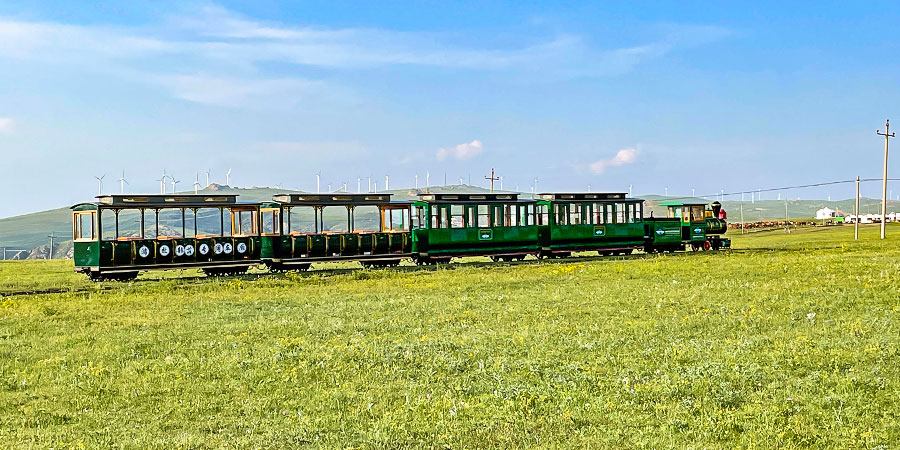 |
| Vibrant Grassland in Late May |
2. If traveling to Inner Mongolia in May 2027, you are suggested to avoid the first week when many Chinese people enjoy their 5-day holiday traveling. During this time, the prices of hotels and flights surge; almost every scenic spot is crowed with a large number of local visitors.
3. May is also the flower blossoming period of Inner Mongolia. If you have an allergy to pollen or fluffy willow catkins, be sure to wear masks when going out and prepare relevant medicines just in case.
- Last updated on Jun. 12, 2026 by Charlotte Qiu -