Sichuan Weather
Sichuan, a south-western inland region in China, has a varied weather pattern due to its complex terrain conditions.
Temperature
Here are temperature patterns in Sichuan:
1. Obvious Regional Differences: Western Sichuan with much higher altitude is noticeably colder than the east. For example, Ganzi, an autonomous prefecture in the northwest of Sichuan, experiences a relatively lower temperature throughout the year, averaging about -11-22°C (12-72°F). There’s actually no summer season here, but a long and cold winter. In contrast, Chengdu, in eastern Sichuan, has temperature averaging from 3-30°C (37-86°F) in a year. Southwestern valleys experience a relatively warm temperature year round, hovering between 15-20°C (59-68°F), while the surrounding mountains stay cooler at 5-15°C (41-59°F) on average.
2. Large Day-night Differences: High-altitude areas, especially the northwest region, see dramatic temperature swings. In Hongyuan, Aba Prefecture, a record of 38 degrees Celsius (100 degrees Fahrenheit) difference was once observed - with daytime highs of 14°C (57°F) and nighttime lows of -24°C (-11°F). By comparison, the Sichuan Basin has more acceptable changes, though differences of around 10°C (50°F) still happen sometimes.
3. Distinct Vertical Climate Variation: Especially in the northwest region, with average elevation of about 3,500 meters (11,500 feet), travelers may experience all four seasons in a single day.
4. Monsoon Influence: The monsoon climate affects many places in Sichuan, bringing warm and humid air, particularly in Sichuan Basin.
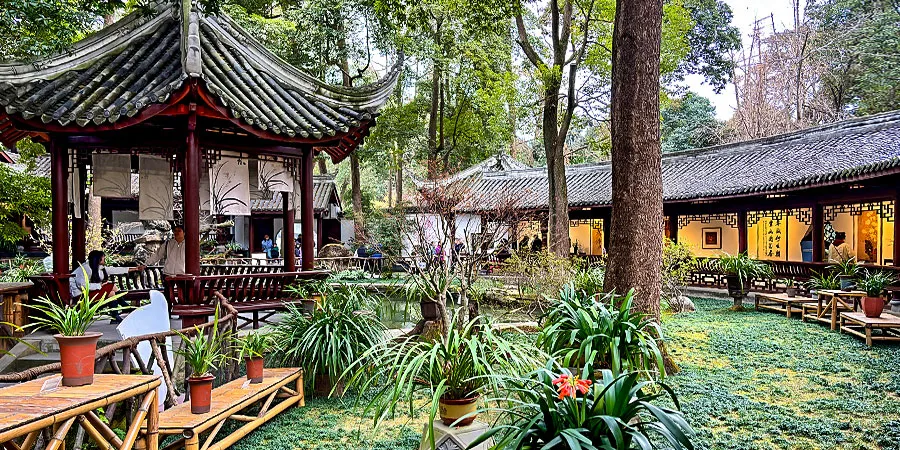 |
| Thatched Cottage of Du Fu |
Precipitation:
Rainfall in Sichuan varies significantly by region:
1. Northwestern plateau and mountains: Most places in this area see slight rainfall throughout the year, with the annual precipitation of 600-700 mm (24-28 inches). Influenced by the monsoon, the rainy season is generally from June to September, possessing 70%-90% of the annual rainfall. Outside the wet period, the region is quite dry.
2. Southwestern valleys and mountains: This region has distinct wet and dry seasons, with 900-1,200 mm (47 inches) of annual rainfall. Around 86% of precipitation falls in June to October, leaving a seven-month dry season. A unique feature here is the “night rain” phenomenon: in cities like Panzhihua, rainfall often occurs around midnight to 3:00 and seldom drops in the late afternoon.
3. Sichuan Basin: It receives an annual average rainfall of around 900-1,200 mm (35-57 inches), concentrated in July and August, influenced by the monsoon wind. And it often comes in the form of thunderstorms or heavy showers.
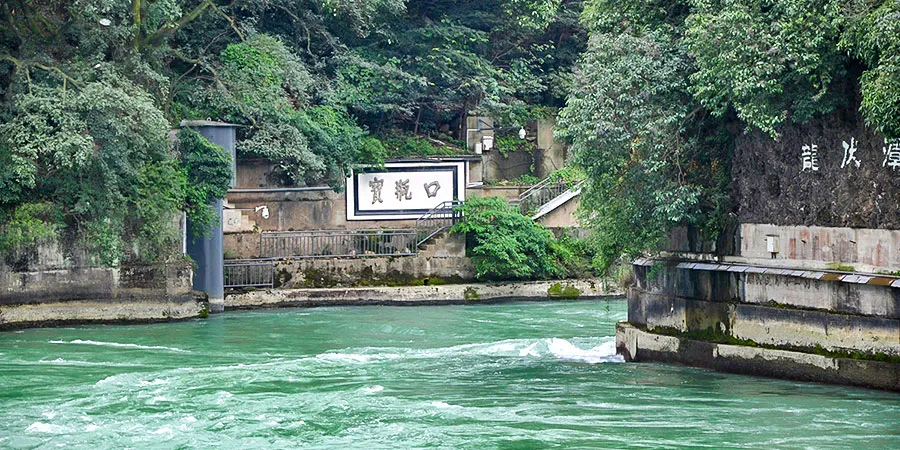 |
| Dujiangyan Irrigation System |
Humidity
Humidity levels also differ greatly across Sichuan:
1. Northwestern plateau and mountains: During the rainy season, you would feel pleasantly comfortable, with the average humidity level of around 70 %. However, the dry weather in other months might crack your lips, with a humidity level of only about 20 %.
2. Southwestern valleys: The humidity in this region is moderate, with the annual humidity level of 59 %. In the rainy season, it reaches as high as about 70 %, but still lower than that of Sichuan Basin.
3. Sichuan Basin: It is humid year round, with the humidity averaging 70-81% and spiking higher during the monsoon season when cloudy and rainy days dominate.
Daylight and Sunshine Hours
Sichuan Province experiences 10-14 hours of daylight in 2026, with longer daytime hours in summer and shorter in winter.
Sunshine hours vary significantly across regions due to Sichuan’s complex geography:
1. Northwestern Region: Sunshine is abundant, with 1,600-2,600 hours annually. The high altitude means thinner air and much stronger UV radiation: 30 %-50 % stronger than in the lowlands. Between 10:00 and 16:00 in summer, the UV index often stays at 6-8, making physical and chemical sun protection essential.
2. Southwestern Region: This area enjoys 2,300-2,700 hours of sunshine per year. Although the elevation is a bit lower than the northwestern plateau, summer UV intensity remains strong and shouldn’t be underestimated.
3. Sichuan Basin: In contrast, the basin is known for its cloudy and misty weather, with the annual sunshine of only 900-1,600 hours. The UV index is relatively weak, averaging just 2-5, the lowest in Sichuan.
Annual Weather Facts of Major Cities
Chengdu Weather Averages
- High Temp: 34~36℃ (93~97℉)
- Low Temp: 1~3℃ (34~37℉)
- Humidity: 71%
- Rainfall: 871mm
3-Day Chengdu Weather Forecast
- Details of Chengdu Weather
Jiuzhaigou Weather Averages
- High Temp: 27~29℃ (81~84℉)
- Low Temp: -2~0℃ (28~32℉)
- Humidity: 64%
- Rainfall: 536 mm
3-Day Jiuzhaigou Weather Forecast
- Details of Jiuzhaigou Weather
Sichuan Climate by Region
Northwestern Region:
Weather Overview:
Consisting of highlands and mountains, it experiences a subtropical plateau and mountain climate, with limited rainfall and abundant sunshine.
The winter is quite dry and long, from November to March. January is the coldest month, with the daytime lows reaching -27°C (-17°F) in Daocheng. Despite the severe cold, there are many sunny days, so daytime outdoor activities are manageable. But nights can be freezing. Heavy snowfall in January and February often leads to mountain closures and transportation interruptions.
Due to high altitudes, there’s actually no summer season, with the highest daytime temperatures no more than 27°C (81°F) in July, the hottest month. Influenced by monsoon winds, the rainy season lasts from June to September, which might result in natural disasters, such as mudslides and floods. Plus, during these months, a sudden drop in temperature and unpredictable sunny and rainy days are very common.
Best Time to Visit:
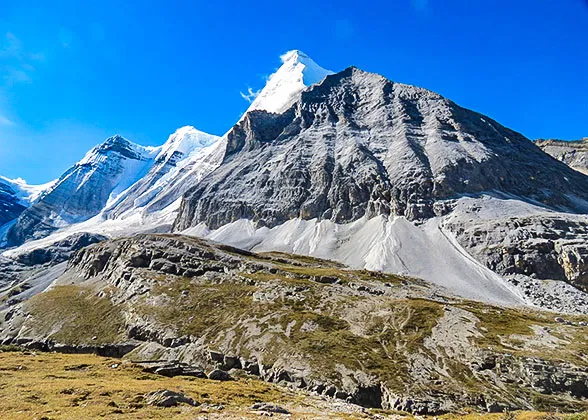
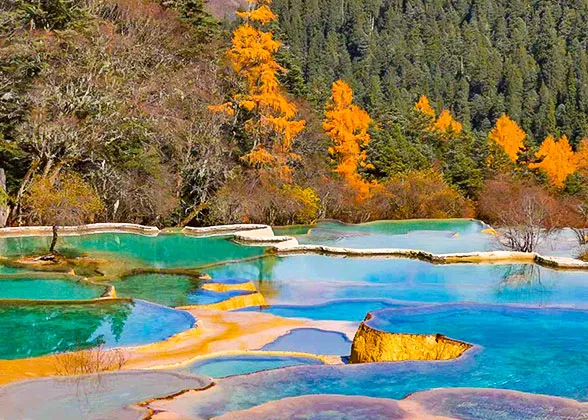
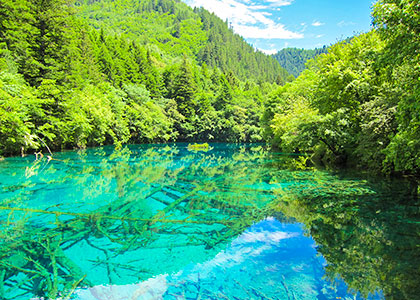
You are highly recommended to visit this area in spring from April to June, and in autumn from September to October. In spring, melting snow gives way to blooming flowers and fresh grasslands, but the snow-capped view still exists. Plus, spring is considered the shoulder season, so you’ll have a peaceful and enjoyable hiking tour in Jiuzhaigou, Mount Siguniangshan and Daocheng. Autumn is the most popular season to visit the place: the weather is cool and dry, offering an excellent chance to embrace dark red grassland, golden fall foliage, and pure snow mountain all together at Jiuzhaigou.
See More: Best Time to Visit Sichuan
|
|
Southwestern Valleys:
Weather Overview:
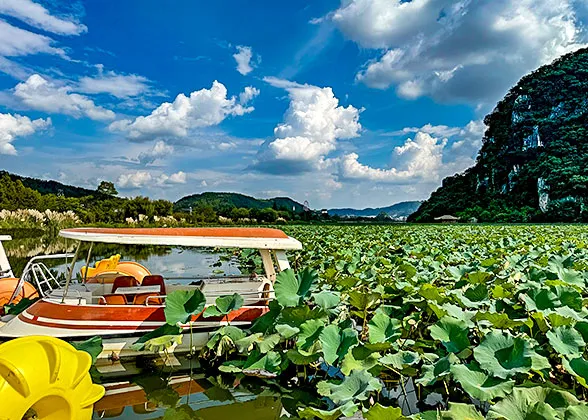
Surrounded by forests and mountains, the area has a subtropical dry-hot valley climate, with obvious wet and dry seasons and abundant sunshine hours. There’s no severally cold temperature here, averaging from 6-30°C (43-86°F) annually, so someone says the winter season doesn’t exist here. The spring is warm and dry, from March to May. The summer is long and humid, from June to October. The heat in summer is not as hot as you imagine, as frequent downpours help to cool things down a bit, with daytime highs ranging from 27-32°C (81-90°F). The autumn season falls from November to February, with temperatures ranging from 6 to 16°C (43-61°F) and limited rainfall.
Best Time to Visit:
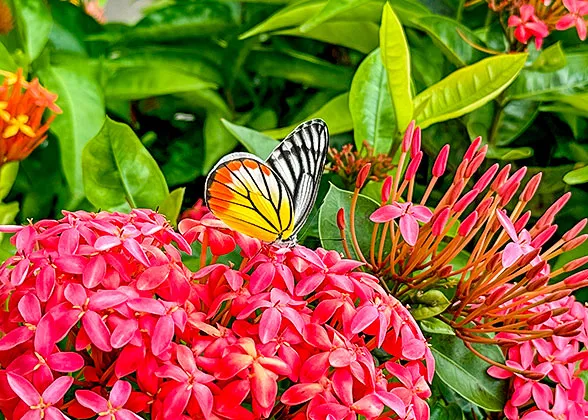
Spring, from March to May and autumn, from September to November, are the best months to visit this area. You can enjoy blooming jacarandas and flamboyant trees alongside the streets in Panzhihua. The warm and dry climate also makes it perfect to soak in Luojishan Hot Spring Waterfalls in Xichang. During the autumn season, this region has a spectacular fall foliage view. Plus, you won’t feel any coldness, making it ideal for a winter escape from other places.
|
|
Eastern Sichuan
Weather Overview:
Centered on the Sichuan Basin, it features a subtropical monsoon climate, experiencing four distinct seasons and relatively high precipitation. In spring, from March to May, you’ll experience a mild temperature and relatively dry weather. Summers, from June to August, impacted by the monsoon weather, are characterized by high temperatures and precipitation. July is the hottest and wettest month in the Sichuan Basin. The weather in autumn, from September to November, is comfortably cool and dry. This area in winter receives the least rainfall of the year, but it’s still quite humid due to persistent overcast skies. Thus, the perceived temperature tends to be 3-5°C (37-41°F) colder than the thermometer suggests. January is the coldest month here.
Best Time to Visit:
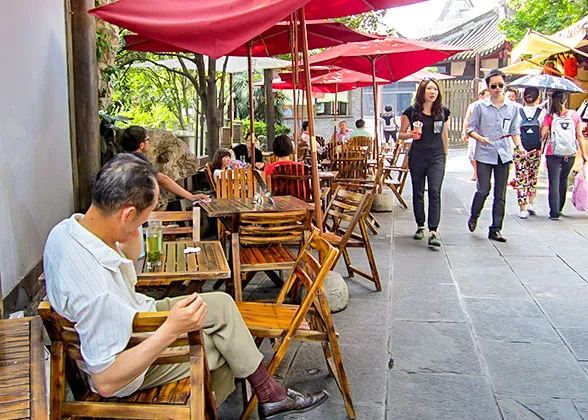
Spring and autumn are the two best seasons to visit eastern Sichuan. It’s a good idea to explore Chengdu’s iconic scenic spots like Dujiangyan Irrigation System, Mount Emei and Chengdu Giant Panda Base, where the mild spring weather and relatively fewer tourists make outdoor sightseeing especially pleasant. Besides, with favorable and dry climate in autumn, visit cultural attractions like Wuhou Temple and Thatched Cottage of Du Fu, so you can include the historical building and stunning golden leaves at once.
|
|

Sichuan Weather by Month:
Recommended Tours


- Last updated on Dec. 31, 2025 by Rachel Hou -