Leshan Weather
Leshan has a typical humid subtropical monsoon climate. The city has four distinct seasons and the hottest period of the year is also the rainiest. Specifically, it experiences cozily warm or cool spring from March to May and autumn from September to November, hot and humid summer from June to August, and not very cold winter from December to February with the lowest precipitation. Moreover, the city has high humidity all year round and the sunshine is not very abundant.
Leshan experiences not very large temperature fluctuations throughout the year. Specifically, spring and autumn are pleasantly warm or cool, with the daily temperature typically ranging between 15 and 25 degrees Celsius (59-77 degrees Fahrenheit). Summer tends to be hot, with daily highs generally fluctuating around 25 and 38°C (77-100°F) and lows between 20 and 25°C (68-77°F). Winter is generally not very cold, with the daytime temperature of 10-20°C (50-68°F), and even at night, the temperature generally stays between 5 and 15°C (41-59°F). Overall, the weather of Leshan is milder than that of many other cities in China, like Beijing.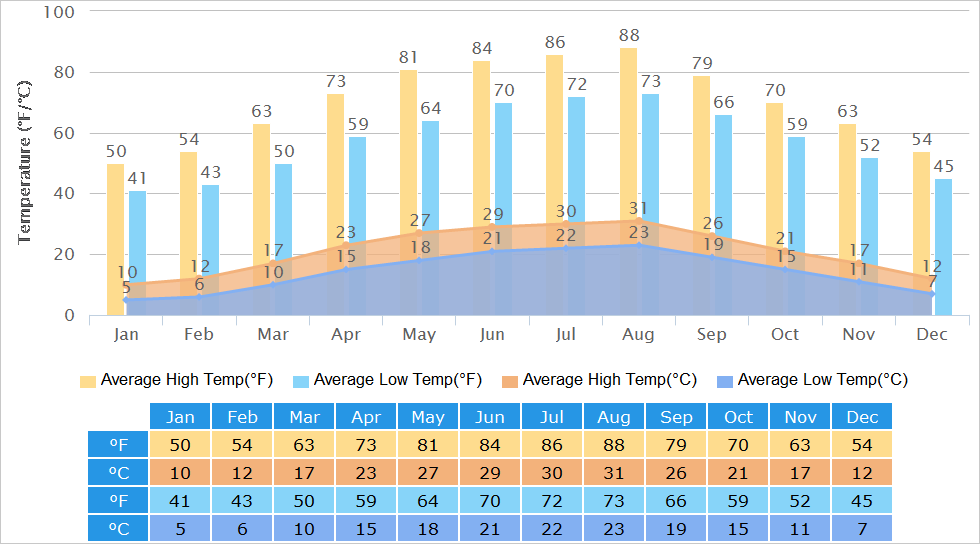
January is the coldest month in Leshan, but it generally doesn’t feel very cold. Daily lows range from around 5 to 10°C (41-50°F), while daily highs range from around 10 to 15°C (50-59°F). The temperature rarely drops below freezing.
The summer months of July and August are the hottest months of the year. Generally speaking, during these two months, daily lows hover around 20-25°C (68-77°F), while daily highs fluctuate between 28 and 38°C (82-100°F). Moreover, in recent years, it tends to get hotter and hotter. The highest temperature ever recorded in Leshan during this period was 41°C (106°F), which happened in 2022.
Although Mount Emei is only about 30 kilometers (19 miles) away from downtown Leshan as the crow flies, the significant difference in elevation results in a stark difference in temperature.
Specifically, at the base of Mount Emei, where the elevation is roughly the same as that of Leshan downtown, the temperature is also similar to that of the city. However, at the summit of the Mount, which stands at an elevation of 3,079 meters (10,101 feet), the temperature difference with Leshan downtown can reach about 10-15°C (18-27°F). In July and August, when the temperature of Leshan’s urban areas frequently exceeds 30°C (86°F), the temperature in mountainous regions above 2,000 meters (6,562 feet) remains around 20°C (68°F). In the coldest month of January, Golden Summit, the main peak of Mount Emei, has a daily temperature of approximately -15-5°C (5-41°F), with a historical record low of -20°C (-4°F).
Leshan receives abundant precipitation, but it is uneven in terms of seasonal and spatial distribution.
Overall, Leshan’s annual average precipitation ranges from 1,100 to 1,394 mm, with rain or snow falling on approximately 180-200 days throughout the year.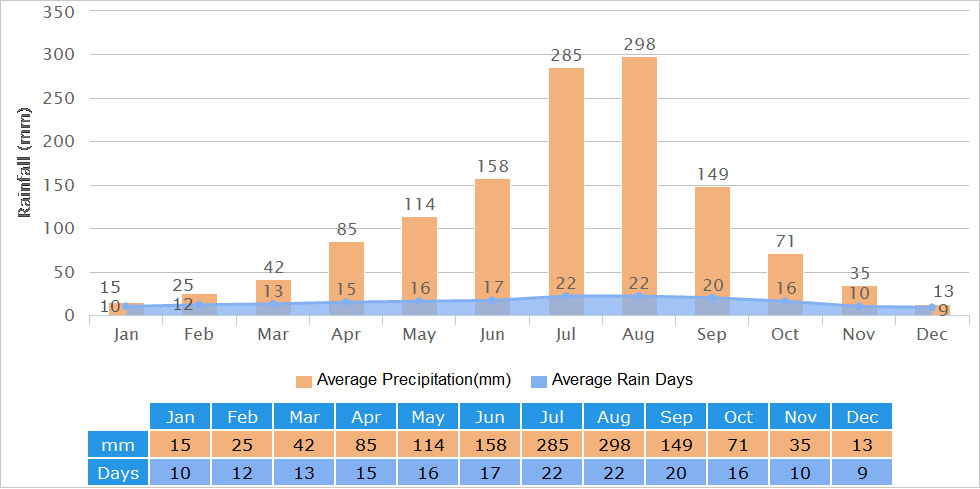
Seasonally, precipitation in Leshan is highly concentrated in the summer months from June to August, which accounts for 60% of the annual total. During this period, heavy rains are frequent, though fortunately, most of the rain falls at night. Winter, on the other hand, is the season with the lowest precipitation in Leshan.
Spatially, while the precipitation difference between the foothills of Mount Emei and the city center of Leshan is not particularly significant, the annual precipitation at the Golden Summit of Mount Emei reaches approximately 1,800-2,200 mm, about 1.5 to 2 times that of the city center, with rain and snow occurring on about 240 days.
Leshan’s average annual humidity hovers around 79%, so coming here feels like stepping into a room that never quite dries. May and June are the driest months of the year, yet humidity still exceeds 60%; September and October are the wettest, with humidity levels surpassing 80%. Such high humidity makes the city prone to radiation fog, especially in winter and spring, and it has an average of approximately 37 to 50 foggy days year round.
Humidity at the summit of Mount Emei is even higher, and the average number of foggy days up there exceeds 320 per year on average.
Moreover, in summer, combined with high temperatures, the weather becomes sticky; in winter, high humidity creates a damp and chilly sensation.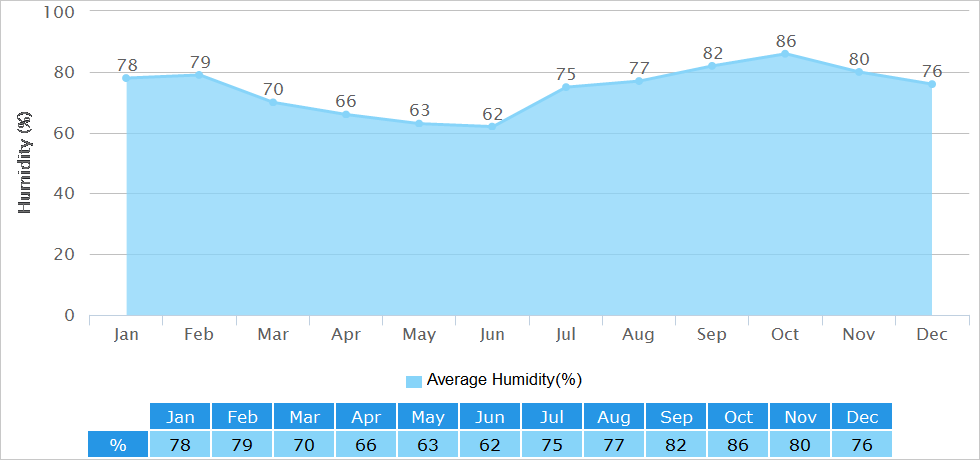
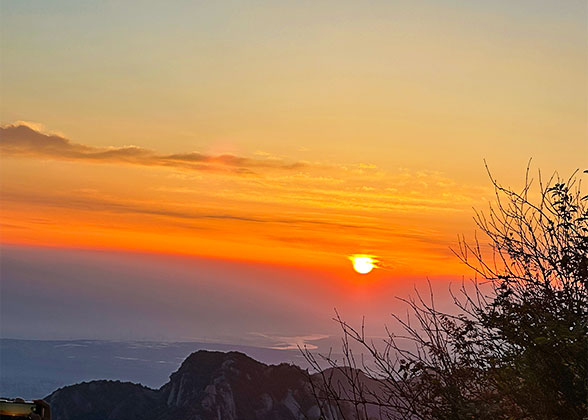
In Leshan, a place often shrouded in mist and fog due to its basin topography and high humidity, sunshine is a rarity: there are only about 40 to 60 sunny days a year, with the rest mostly being cloudy, rainy, or foggy. On average, the annual sunshine duration ranges from 1,000 to 1,200 hours, while the average daily sunshine duration is only about 3 hours. As a result, solar radiation in Leshan is generally weak. Even in summer, the UV index is around 6 the highest, which is considered a moderate level.
The Golden Summit area of Mount Emei receives slightly more sunlight and stronger UV rays because the region is often above the cloud layer, because of its high altitude.
The best times to visit Leshan are in the spring and autumn, specifically March through May and September through November. These are the periods when Leshan is at its most beautiful and pleasant.
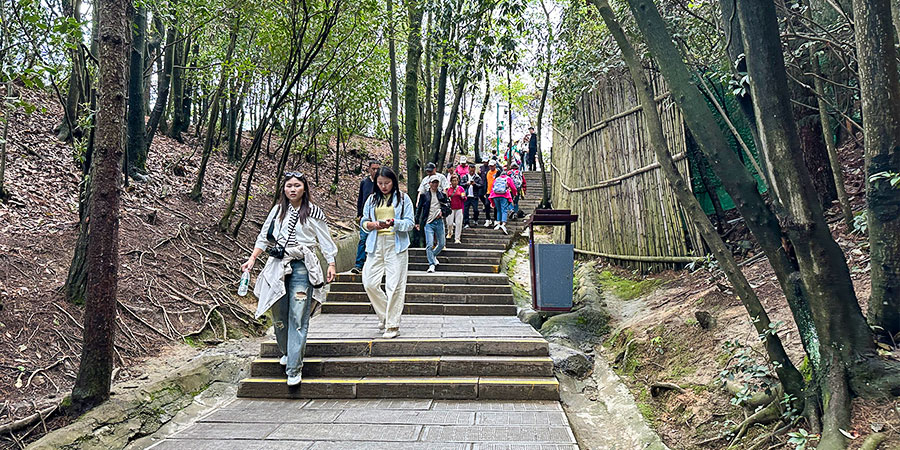
In the spring, the weather of Leshan is warm, making it ideal for hiking and mountain climbing. Besides, flowers like azaleas, cherry blossoms, and peach blossoms are blooming in succession in downtown Leshan and on Mount Emei. In the autumn, the climate of Leshan is cool and fresh. As for the scenery, autumn in Leshan offers not only beautiful autumn foliage but is also the perfect time to visit Mount Emei to witness the stunning sea of clouds, sunrises, and its iconic spectacle “Buddha Rays”, that is, the sunlight shining through the mist and clouds, refracting into a colorful halo.
Weather: Throughout the spring, the temperature in downtown Leshan is very pleasant, making it an ideal time for outdoor excursions.
In March, the daily high rises to around 20°C (68°F), while evenings remain a bit cold at around 10°C (50°F). By April, the temperature climbs rapidly, delivering a quite warm climate in Leshan. However, rainfall increases a little. May serves as a prelude to the sweltering and humid summer, with the daytime high reaching 25-30°C (77-86°F) and above-average rainfall. It is worth mentioning that spring rains here are typically light, causing a little disruption to travel plans.
Please be aware that due to the increase in elevation, you may experience a temperature shift from warm spring to early winter as you ascend from the base of Mount Emei to its summit.
Spring Temperature at Various Altitudes on Mount Emei:
Clothes: For downtown Leshan, you will need to wear long-sleeve T-shirts or shirts along with slightly heavier outerwear such as trench coats or leather jackets in March, and short-sleeve or long-sleeve T-shirts paired with shirts or light jackets by April and May. If you plan to hike Mount Emei, be sure to bring a three-in-one jacket.
Recommendations and Tips:
1. Spring is the perfect season for flower viewing. From late March to late May, the alpine rhododendrons on Mount Emei are must-sees.
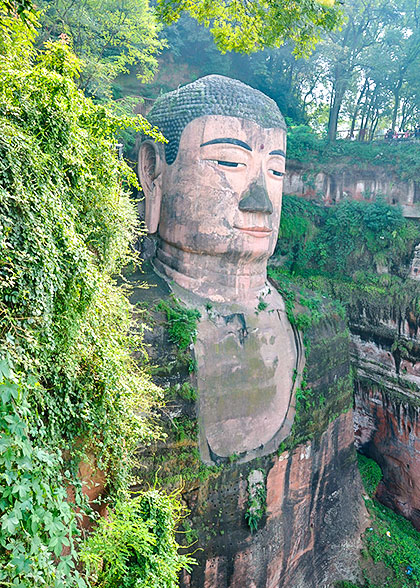
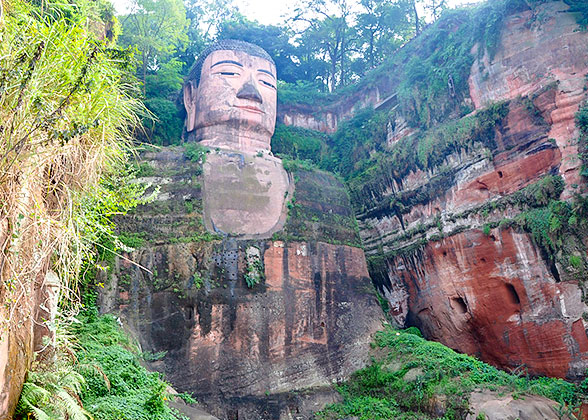
2. Leshan tends to be crowded on weekends and during holidays such as Qingming and May Day holidays, so it’s best to avoid these times. If you can’t avoid them, get an early start when visiting popular attractions like the Leshan Giant Buddha.
3. In spring, cold and warm air masses frequently collide, resulting in changeable weather, especially in mountainous areas. Therefore, be sure to check the weather forecast regularly and pack plenty of warm clothing.
Weather: According to data of past years, the daily high temperature in Leshan during the summer typically ranges from 25 to 35°C (77-95°F), though it can occasionally reach 37-40°C (99-104°F); the daily low is usually around 25°C (77°F). Furthermore, this is the rainiest time of the year, with thunderstorms and brief downpours occurring very frequently. Fortunately, it usually rains at night and is sunny during the day. Overall, the defining characteristics of summer in downtown Leshan are hot and humid, creating a sauna-like weather that makes you sweat.
In stark contrast to the sweltering climate in the city, Mount Emei is like a “natural air-conditioned room” in summer: at the Golden Summit, the daily high is around 15-20°C (59-68°F). Even in the height of summer, you will need a thin jacket to stay warm.
Summer Temperature at Various Altitudes on Mount Emei
Clothes: You are recommended to bring short-sleeve T-shirts, shorts, thin long pants, skirts, dresses, thin sun-protective jackets, and an umbrella for downtown Leshan; and a waterproof windbreaker and slip-resistant sneakers for Mount Emei.
Recommendations and Tips:
1. As mentioned above, it gets very hot in downtown Leshan. If you plan to visit attractions in the city center, it’s best to avoid the hours between 12:00 and 14:00 and instead choose the relatively cooler times of morning, late afternoon, and evening.
2. Heavy rain is common in Leshan during the summer, which may lead to temporary suspension of the Leshan Giant Buddha boat tours. Additionally, if the daytime temperature reaches 38°C (100°F) or higher, the visit route around the Buddha’s feet may be temporarily closed. Therefore, keep an eye on the weather forecast and adjust your itinerary accordingly.
3. Since Mount Emei experiences frequent rain and fog in the summer, you are very likely to fail to see the sunrise, sea of clouds, and Buddha Rays.
Weather: From September to November, the temperature in downtown Leshan transitions from the mild warmth of early autumn to the coolness of late autumn. Daytime highs drop steadily from around 30°C (86°F) in September to about 17°C (63°F) in November, and the chill at night becomes more pronounced. Precipitation is still a bit high in September, with an average of about 20 rainy days, but it drops significantly in October and November.
As for Mount Emei, the higher you go, the lower the temperature than in Leshan downtown, with snowfall possible as early as in late October.
Autumn Temperature at Various Altitudes on Mount Emei
Clothes: If you visit Leshan in early autumn, short-sleeved T-shirts, lightweight pants, and light long-sleeved shirts are ideal for the downtown area, and an extra 3-in-1 jacket is needed for Mount Emei. In late autumn, you will need hoodies, jeans, and leather jackets for downtown Leshan. Of course, when visiting Mount Emei, you’d better wear a down jacket.
Recommendations and Tips:
1. The first week of October marks China’s National Day holiday, during which many cities, including Leshan, are flooded with domestic tourists. Hotel prices also skyrocket during this time. Therefore, you are recommended to avoid a visit to Leshan during this period in 2026 if possible.
2. Leshan offers unique scenery in the autumn: from late October to early November each year, the autumn scenery of Mount Emei reaches its peak. From the mountain’s foot to the Golden Summit, maple leaves and cypress trees gradually change color, creating a vibrant and colorful landscape.
3. Autumn is one of the times when you have the highest chance of seeing a sea of clouds and the Buddha Rays on Mount Emei.
Weather: In winter, the daily high temperature in Leshan hovers between 10°C and 15°C (50-59°F), while the daily low drops to between 5°C and 10°C (41-50°F). Generally speaking, you will find the weather only a bit damp and chilly. Precipitation also drops significantly, with a monthly average typically ranging from 13 to 25 mm. Because temperatures in the city are not particularly low, even in the coldest month of January, you’ll usually see only light rain rather than snow. However, low precipitation doesn’t mean the city enjoys plenty of sunshine in winter: during this period, Leshan is mostly cloudy and foggy, and sunny days are considered rare treats.
When you travel from downtown Leshan to Mount Emei, you’ll find that the temperature plummets. The massive difference in elevation results in a temperature gap of about 20°C (36°F) between the summit and the base. Besides, snow is quite common here. Below is an overview of winter temperatures in different areas of Mount Emei, which will help you better visualize this contrast:
Winter Temperature at Various Altitudes on Mount Emei
Clothes: For the base layer, choose quick-drying thermal underwear; for the mid-layer, wear a hoodie or sweater; and for the outer layer, be sure to wear a windproof and waterproof 3-in-1jacket or a thick down jacket to withstand the cold air. In addition, a hat, scarf, gloves, thick socks, and fleece-lined and waterproof boots are the perfect combination for braving the cold, especially when visiting Mount Emei, where temperatures are lower.
Recommendations and Tips:
1. Winter is the off-season in Leshan, so you won’t have to wait in line at popular attractions like the Leshan Giant Buddha. Hotel rates and other prices are also more affordable.
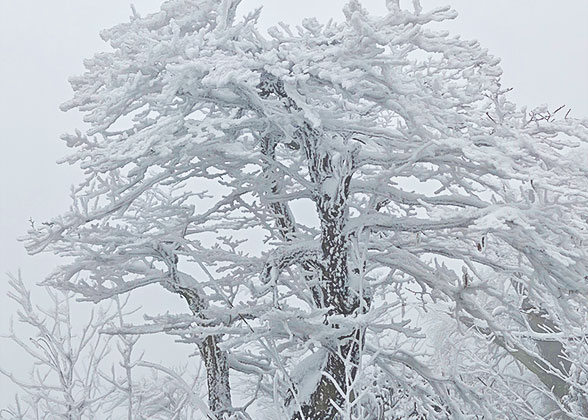
2. Mount Emei is particularly captivating in winter: rime ice on the mountain slopes coats the tree branches in white, the Golden Summit is blanketed in snow, and the sea of clouds and the Buddha Rays are easier to spot.
3. Be sure to check the operating hours of scenic areas in advance during winter, when daylight hours are shorter. For example, Leshan Giant Buddha’s opening hours are shortened to 08:00 to 17:30 at this time.
Temperature Features of Leshan
Average High/Low Temperatures of Leshan
The Coldest Months & The Hottest Months of Leshan
 |
| Leshan Snowy Scene at Mount Emei |
The summer months of July and August are the hottest months of the year. Generally speaking, during these two months, daily lows hover around 20-25°C (68-77°F), while daily highs fluctuate between 28 and 38°C (82-100°F). Moreover, in recent years, it tends to get hotter and hotter. The highest temperature ever recorded in Leshan during this period was 41°C (106°F), which happened in 2022.
Temperature of Mount Emei
Specifically, at the base of Mount Emei, where the elevation is roughly the same as that of Leshan downtown, the temperature is also similar to that of the city. However, at the summit of the Mount, which stands at an elevation of 3,079 meters (10,101 feet), the temperature difference with Leshan downtown can reach about 10-15°C (18-27°F). In July and August, when the temperature of Leshan’s urban areas frequently exceeds 30°C (86°F), the temperature in mountainous regions above 2,000 meters (6,562 feet) remains around 20°C (68°F). In the coldest month of January, Golden Summit, the main peak of Mount Emei, has a daily temperature of approximately -15-5°C (5-41°F), with a historical record low of -20°C (-4°F).
Precipitation Features of Leshan
Overall, Leshan’s annual average precipitation ranges from 1,100 to 1,394 mm, with rain or snow falling on approximately 180-200 days throughout the year.
Average Precipitation of Leshan
Seasonally, precipitation in Leshan is highly concentrated in the summer months from June to August, which accounts for 60% of the annual total. During this period, heavy rains are frequent, though fortunately, most of the rain falls at night. Winter, on the other hand, is the season with the lowest precipitation in Leshan.
Spatially, while the precipitation difference between the foothills of Mount Emei and the city center of Leshan is not particularly significant, the annual precipitation at the Golden Summit of Mount Emei reaches approximately 1,800-2,200 mm, about 1.5 to 2 times that of the city center, with rain and snow occurring on about 240 days.
High Humidity throughout the Year
Humidity at the summit of Mount Emei is even higher, and the average number of foggy days up there exceeds 320 per year on average.
Moreover, in summer, combined with high temperatures, the weather becomes sticky; in winter, high humidity creates a damp and chilly sensation.
Average Humidity of Leshan
Short Sunshine Hours
 |
| Stunning Sunset View |
The Golden Summit area of Mount Emei receives slightly more sunlight and stronger UV rays because the region is often above the cloud layer, because of its high altitude.
The best times to visit Leshan are in the spring and autumn, specifically March through May and September through November. These are the periods when Leshan is at its most beautiful and pleasant.
In the spring, the weather of Leshan is warm, making it ideal for hiking and mountain climbing. Besides, flowers like azaleas, cherry blossoms, and peach blossoms are blooming in succession in downtown Leshan and on Mount Emei. In the autumn, the climate of Leshan is cool and fresh. As for the scenery, autumn in Leshan offers not only beautiful autumn foliage but is also the perfect time to visit Mount Emei to witness the stunning sea of clouds, sunrises, and its iconic spectacle “Buddha Rays”, that is, the sunlight shining through the mist and clouds, refracting into a colorful halo.
 |
| Pedestrain Street in Leshan |
7-Day Leshan Weather Forecast
Leshan Weather by Month
Leshan Climate - Seasons & Travel Recommendations
Spring: March - May
 |
| Leshan Giant Buddha View |
In March, the daily high rises to around 20°C (68°F), while evenings remain a bit cold at around 10°C (50°F). By April, the temperature climbs rapidly, delivering a quite warm climate in Leshan. However, rainfall increases a little. May serves as a prelude to the sweltering and humid summer, with the daytime high reaching 25-30°C (77-86°F) and above-average rainfall. It is worth mentioning that spring rains here are typically light, causing a little disruption to travel plans.
Please be aware that due to the increase in elevation, you may experience a temperature shift from warm spring to early winter as you ascend from the base of Mount Emei to its summit.
Spring Temperature at Various Altitudes on Mount Emei:
| Areas | Altitudes | Temperature Ranges in Spring |
|---|---|---|
| Foot of Mount Emei | 420 Meters (1,378 Feet) | 15-28°C (59-82°F) |
| Halfway up Mount Emei | 1,000-2,000 Meters (3,281-6,562 Feet) | 5-15°C (41-59°F) |
| Golden Summit of Mount Emei | 3,079 Meters (10,101 Feet) | -4-11°C (25-52°F) |
Clothes: For downtown Leshan, you will need to wear long-sleeve T-shirts or shirts along with slightly heavier outerwear such as trench coats or leather jackets in March, and short-sleeve or long-sleeve T-shirts paired with shirts or light jackets by April and May. If you plan to hike Mount Emei, be sure to bring a three-in-one jacket.
Recommendations and Tips:
1. Spring is the perfect season for flower viewing. From late March to late May, the alpine rhododendrons on Mount Emei are must-sees.
2. Leshan tends to be crowded on weekends and during holidays such as Qingming and May Day holidays, so it’s best to avoid these times. If you can’t avoid them, get an early start when visiting popular attractions like the Leshan Giant Buddha.
3. In spring, cold and warm air masses frequently collide, resulting in changeable weather, especially in mountainous areas. Therefore, be sure to check the weather forecast regularly and pack plenty of warm clothing.
Summer: June - August
In stark contrast to the sweltering climate in the city, Mount Emei is like a “natural air-conditioned room” in summer: at the Golden Summit, the daily high is around 15-20°C (59-68°F). Even in the height of summer, you will need a thin jacket to stay warm.
Summer Temperature at Various Altitudes on Mount Emei
| Areas | Altitudes | Temperature Ranges in Summer |
|---|---|---|
| Foot of Mount Emei | 420 Meters (1,378 Feet) | 23-32°C (73-90°F) |
| Halfway up Mount Emei | 1,000-2,000 Meters (3,281-6,562 Feet) | 20-26°C (68-79°F) |
| Golden Summit of Mount Emei | 3,079 Meters (10,101 Feet) | 5-18°C (41-64°F) |
Clothes: You are recommended to bring short-sleeve T-shirts, shorts, thin long pants, skirts, dresses, thin sun-protective jackets, and an umbrella for downtown Leshan; and a waterproof windbreaker and slip-resistant sneakers for Mount Emei.
Recommendations and Tips:
1. As mentioned above, it gets very hot in downtown Leshan. If you plan to visit attractions in the city center, it’s best to avoid the hours between 12:00 and 14:00 and instead choose the relatively cooler times of morning, late afternoon, and evening.
2. Heavy rain is common in Leshan during the summer, which may lead to temporary suspension of the Leshan Giant Buddha boat tours. Additionally, if the daytime temperature reaches 38°C (100°F) or higher, the visit route around the Buddha’s feet may be temporarily closed. Therefore, keep an eye on the weather forecast and adjust your itinerary accordingly.
3. Since Mount Emei experiences frequent rain and fog in the summer, you are very likely to fail to see the sunrise, sea of clouds, and Buddha Rays.
 |
| Outdoor Exploration in Leshan |
Autumn: September - November
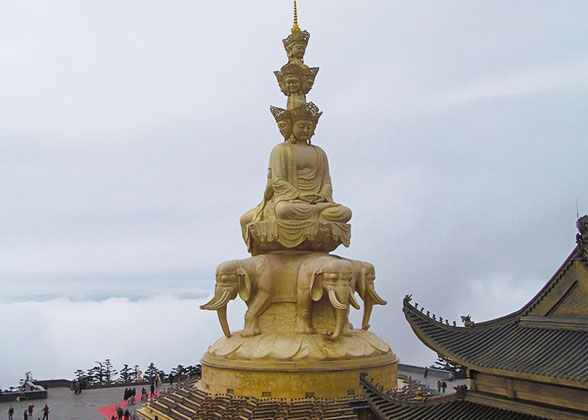 |
| Golden Summit of Mount Emei |
As for Mount Emei, the higher you go, the lower the temperature than in Leshan downtown, with snowfall possible as early as in late October.
Autumn Temperature at Various Altitudes on Mount Emei
| Areas | Altitudes | Temperature Ranges in Autumn |
|---|---|---|
| Foot of Mount Emei | 420 Meters (1,378 Feet) | 12-27°C (54-81°F) |
| Halfway up Mount Emei | 1,000-2,000 Meters (3,281-6,562 Feet) | 2-20°C (36-68°F) |
| Golden Summit of Mount Emei | 3,079 Meters (10,101 Feet) | -3-15°C (27-59°F) |
Clothes: If you visit Leshan in early autumn, short-sleeved T-shirts, lightweight pants, and light long-sleeved shirts are ideal for the downtown area, and an extra 3-in-1 jacket is needed for Mount Emei. In late autumn, you will need hoodies, jeans, and leather jackets for downtown Leshan. Of course, when visiting Mount Emei, you’d better wear a down jacket.
Recommendations and Tips:
1. The first week of October marks China’s National Day holiday, during which many cities, including Leshan, are flooded with domestic tourists. Hotel prices also skyrocket during this time. Therefore, you are recommended to avoid a visit to Leshan during this period in 2026 if possible.
2. Leshan offers unique scenery in the autumn: from late October to early November each year, the autumn scenery of Mount Emei reaches its peak. From the mountain’s foot to the Golden Summit, maple leaves and cypress trees gradually change color, creating a vibrant and colorful landscape.
3. Autumn is one of the times when you have the highest chance of seeing a sea of clouds and the Buddha Rays on Mount Emei.
Winter: December - February
When you travel from downtown Leshan to Mount Emei, you’ll find that the temperature plummets. The massive difference in elevation results in a temperature gap of about 20°C (36°F) between the summit and the base. Besides, snow is quite common here. Below is an overview of winter temperatures in different areas of Mount Emei, which will help you better visualize this contrast:
Winter Temperature at Various Altitudes on Mount Emei
| Areas | Altitudes | Temperature Ranges in Winter |
|---|---|---|
| Foot of Mount Emei | 420 Meters (1,378 Feet) | 5-12°C (41-54°F) |
| Halfway up Mount Emei | 1,000-2,000 Meters (3,281-6,562 Feet) | -5-5°C (23-41°F) |
| Golden Summit of Mount Emei | 3,079 Meters (10,101 Feet) | -15-5°C (5-41°F) |
Clothes: For the base layer, choose quick-drying thermal underwear; for the mid-layer, wear a hoodie or sweater; and for the outer layer, be sure to wear a windproof and waterproof 3-in-1jacket or a thick down jacket to withstand the cold air. In addition, a hat, scarf, gloves, thick socks, and fleece-lined and waterproof boots are the perfect combination for braving the cold, especially when visiting Mount Emei, where temperatures are lower.
Recommendations and Tips:
1. Winter is the off-season in Leshan, so you won’t have to wait in line at popular attractions like the Leshan Giant Buddha. Hotel rates and other prices are also more affordable.
2. Mount Emei is particularly captivating in winter: rime ice on the mountain slopes coats the tree branches in white, the Golden Summit is blanketed in snow, and the sea of clouds and the Buddha Rays are easier to spot.
3. Be sure to check the operating hours of scenic areas in advance during winter, when daylight hours are shorter. For example, Leshan Giant Buddha’s opening hours are shortened to 08:00 to 17:30 at this time.
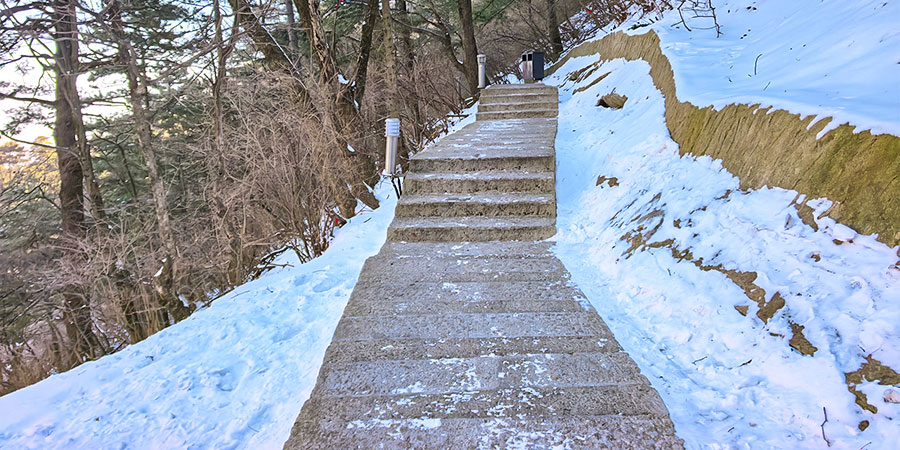 |
| Mountain Trails in Winter in Leshan |
Recommended Tours
- Last updated on Jul. 22, 2026 by Rachel Hou -