Best Time to Visit Leshan
The best times to visit Leshan are in spring, from March to May, and autumn, from September to November. Weatherwise, Leshan enjoys a pleasant climate during these periods, with mild temperatures and acceptable rainfall. More noticeably, seasonal views are exceptionally attractive, with colorful spring blossoms and autumn leaves. Plus, there is a higher chance of spotting the stunning sea of clouds and Buddha Rays on the top of Mount Emei in autumn.
Besides, Leshan is relatively quiet in spring and autumn. Thus, there are fewer tourists, waiting lines in attractions are not very long, and hotel rates and flight ticket prices are reasonable.Leshan in Spring enjoys comfortable temperatures as a whole. During the daytime, the climate feels warm, with daytime highs hovering between 24 and 30 degrees Celsius (75-86 degrees Fahrenheit). Precipitation is light, with monthly rainfall between 85 and 158 mm. Leshan is renowned for its outdoor attractions, such as the Leshan Giant Buddha and Mount Emei, and as mentioned, the spring climate in Leshan is ideal for outdoor sightseeing.
March to May is also the right time when flowers bloom in abundance, making it ideal for flower viewing and photography. In the downtown areas, in March, you can admire peach blossoms and cherry blossoms; in May, jacarandas are visible everywhere along the city streets. From April through June, the alpine rhododendrons on Mount Emei are in full bloom. The area from Leidongping to the Golden Summit is the best area to enjoy the majority of the mountain’s alpine rhododendrons, with over 30 varieties. If the timing, weather, and luck are all just right, you can take in the rhododendrons, sea of clouds, and Buddha’s light all at once.
Leshan’s temperatures can be a bit unstable in fall, but overall, the summer heat has faded out. After September, daily highs do not exceed 30°C (86°F). Mornings and evenings are cool, ranging from 10 to 20°C (50-68°F). As for precipitation, fall is the dry season; apart from September, with slightly higher rainfall at 149 mm, the rainfall is very light in October and November. Thus, outdoor sightseeing is recommended. However, humidity is relatively high, requiring extra preparation.
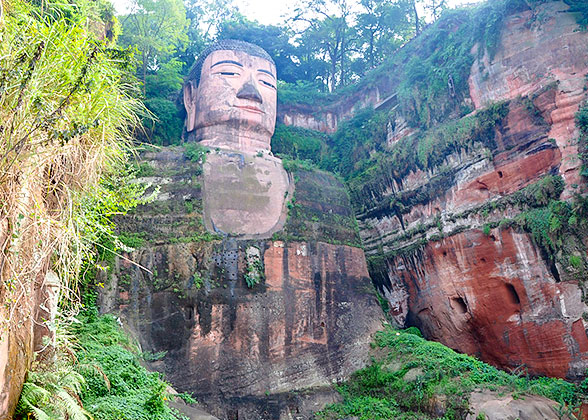
Fall is the season to admire the colorful foliage view, and the best viewing periods run from mid-October to late November. Due to the high elevation, Mount Emei showcases diverse vertical landscapes. Therefore, as you hike, you’ll see leaves in various colors: light yellow, golden yellow, and red. Especially along the stretch from Leidongping to the Golden Summit, the leaves turn completely red. If you prefer a relatively relaxing journey, visit the Leshan Giant Buddha, where there are stunning golden ginkgo leaves.
July and August are China’s summer vacation when most schools are out. Thus, family trips and study tours are exceptionally popular, leading to crowded attractions and skyrocketing hotel rates. Not to mention that Leshan itself is a tourist city, home to summer retreats like Mount Emei, so it gets quite busy during the summer holiday.
Weatherwise, Leshan in July and August is hot, with daytime highs often exceeding 35 degrees Celsius. Combined with humid air, the climate feels very uncomfortable, even muggy. Plus, July and August are Leshan’s peak rainy season. Frequent rainfall is not conducive to sightseeing and other outdoor activities, especially mountain climbing.
Compared with summer holiday, travel during public holidays tends to be much busier, as these are nationwide holidays, not just school breaks.
Based on how popular these holidays are among China’s domestic travelers, here are the ones you should avoid the most.
1. Chinese New Year Holiday, the longest holiday in China: The trickiest thing is that high-speed rail tickets are extremely difficult to come by, known as the Spring Festival travel rush.
2. National Day Holiday and May Day Holiday: These holidays last 7 and 5 days, respectively. The weather is usually nice, making them the best times to travel in most cities. Thus, hotel rates and flight tickets would increase dramatically.
The other three-day short holidays tend to attract tourists taking short trips to nearby destinations, including Qingming Festival – early April, Dragon Boat Festival – mid-June, Mid-Autumn Festival – late September, and New Year’s Day - January 1st, so it’s best to avoid these as well.
If you have to visit Leshan during the peak periods, here are some tips to help you have a relatively better travel experience.
1. It’s highly recommended to book hotel rooms, air tickets, and train tickets as early as possible, so you can save some money.
2. Considering the spiking tourist numbers in Leshan, it’s expected that the tickets for popular attractions can be booked out very quickly. So it’s best to buy admission tickets in advance, too.
Besides, Leshan is relatively quiet in spring and autumn. Thus, there are fewer tourists, waiting lines in attractions are not very long, and hotel rates and flight ticket prices are reasonable.
Spring: From March to May
March to May is also the right time when flowers bloom in abundance, making it ideal for flower viewing and photography. In the downtown areas, in March, you can admire peach blossoms and cherry blossoms; in May, jacarandas are visible everywhere along the city streets. From April through June, the alpine rhododendrons on Mount Emei are in full bloom. The area from Leidongping to the Golden Summit is the best area to enjoy the majority of the mountain’s alpine rhododendrons, with over 30 varieties. If the timing, weather, and luck are all just right, you can take in the rhododendrons, sea of clouds, and Buddha’s light all at once.
|
|


Autumn: From September to November
Fall is the season to admire the colorful foliage view, and the best viewing periods run from mid-October to late November. Due to the high elevation, Mount Emei showcases diverse vertical landscapes. Therefore, as you hike, you’ll see leaves in various colors: light yellow, golden yellow, and red. Especially along the stretch from Leidongping to the Golden Summit, the leaves turn completely red. If you prefer a relatively relaxing journey, visit the Leshan Giant Buddha, where there are stunning golden ginkgo leaves.
|
|


Not Recommended Periods for Travelers
Peak Season: July and August
Weatherwise, Leshan in July and August is hot, with daytime highs often exceeding 35 degrees Celsius. Combined with humid air, the climate feels very uncomfortable, even muggy. Plus, July and August are Leshan’s peak rainy season. Frequent rainfall is not conducive to sightseeing and other outdoor activities, especially mountain climbing.
 |
| Greenery View of Mount Emei |
Chinese Public Holiday
Based on how popular these holidays are among China’s domestic travelers, here are the ones you should avoid the most.
1. Chinese New Year Holiday, the longest holiday in China: The trickiest thing is that high-speed rail tickets are extremely difficult to come by, known as the Spring Festival travel rush.
2. National Day Holiday and May Day Holiday: These holidays last 7 and 5 days, respectively. The weather is usually nice, making them the best times to travel in most cities. Thus, hotel rates and flight tickets would increase dramatically.
The other three-day short holidays tend to attract tourists taking short trips to nearby destinations, including Qingming Festival – early April, Dragon Boat Festival – mid-June, Mid-Autumn Festival – late September, and New Year’s Day - January 1st, so it’s best to avoid these as well.
Tips for Travelers in Leshan
1. It’s highly recommended to book hotel rooms, air tickets, and train tickets as early as possible, so you can save some money.
2. Considering the spiking tourist numbers in Leshan, it’s expected that the tickets for popular attractions can be booked out very quickly. So it’s best to buy admission tickets in advance, too.
7-Day Leshan Weather Forecast
Recommended Tours
- Last updated on Aug. 10, 2026 by Rachel Hou -