China Holidays & Festivals
 |
| The coming China holidays 2026 are Mid-autumn Day holiday in Sep. 25-27 and National Day holiday in Oct.1-7. |
China has seven legal holidays in a year, including New Year’s Day, Chinese New Year (Spring Festival), Qingming Festival (Tomb-sweeping Day), May Day, Dragon Boat Festival, Mid-Autumn Day and National Day. Chinese people enjoy 13 days off in total for these official holidays.
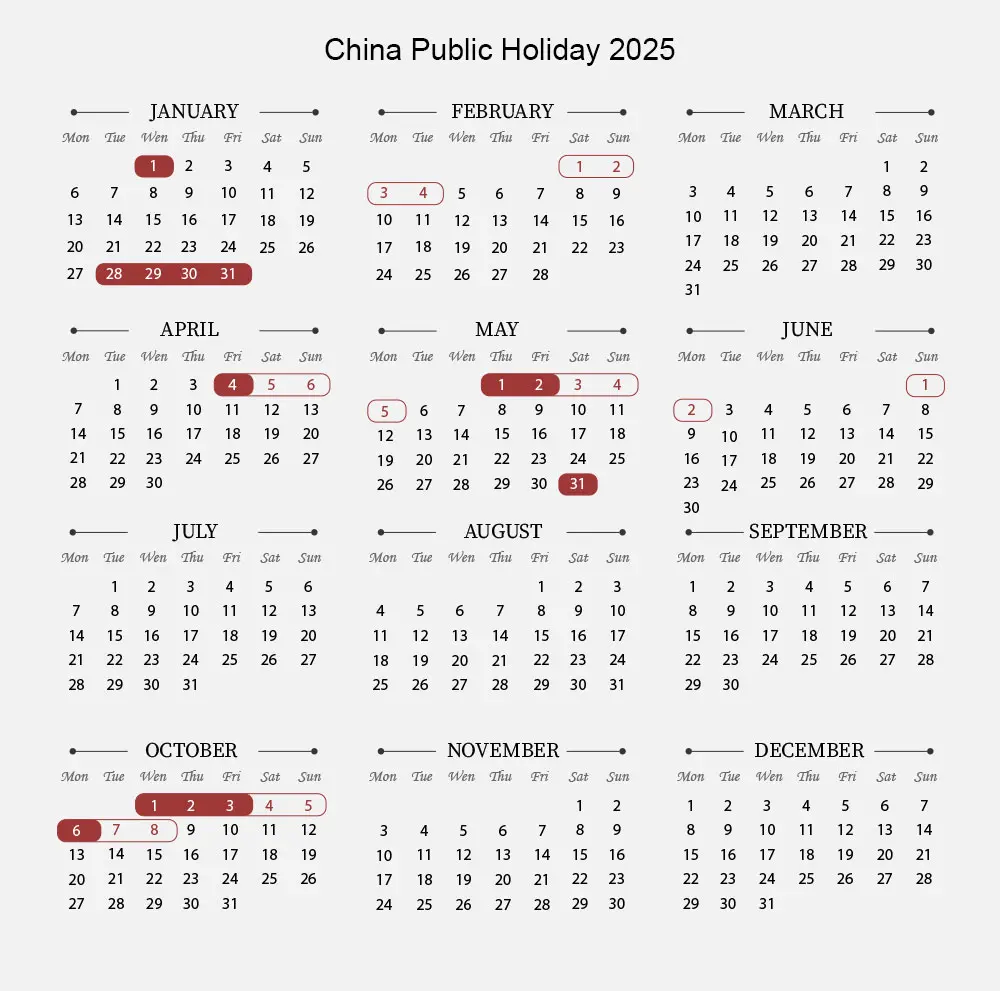
The table below provides a detailed list of 2026 and 2027 public holidays in China. Hope it can help you make a good tour plan.

2026 & 2027 China Public Holiday Calendar
| Holiday Name | 2026 Date | 2026 Holiday | 2027 Date | 2027 Holiday |
|---|---|---|---|---|
| New Year's Day | Jan. 1 | Jan. 1 - 3 | Jan. 1 | Jan. 1 - 3 |
| Chinese New Year | Feb. 17 | Feb. 15 - 23 | Feb. 6 | Feb. 4 - 12 |
| Qingming Festival | Apr. 5 | Apr. 4 - 6 | Apr. 5 | Apr. 3 - 5 |
| May Day | May 1 | May 1 - 5 | May 1 | May 1 - 5 |
| Dragon Boat Festival | Jun. 19 | Jun. 19 - 21 | Jun. 9 | Jun. 9 |
| Mid-Autumn Day | Sep. 25 | Sep. 25 - 27 | Sep. 15 | Sep. 15 |
| National Day | Oct. 1 | Oct. 1 - 7 | Oct. 1 | Oct. 1 - 7 |
 |
| Check China Public Holidays 2026 |
In addition to the above seven festivals, Chinese people celebrate four others on which some people have a half day off - Women’s Day on March 8th, Youth Day on May 4th, Children’s Day on June 1st and Army Day on August 1st.
Many other galas and anniversaries are celebrated without days off, such as Arbor Day on March 12th and Teachers' Day on September 10th, as well as China’s traditional festivals like Lantern Festival, Double Seventh Festival and Winter Solstice.
Please refer to the Detailed 2026 / 2027 / 2028 China Public Holiday Calendar
Seven Public Holidays in China
New Year's Day
It is China’s most important and grandest festival, falling on the first day of the first lunar month, usually between mid- to late January and February. The next Chinese New Year falls on February 6th, 2027.
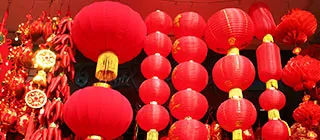
To welcome this day, Chinese people typically start preparing two weeks in advance: city streets are decorated with red lanterns and red Chinese knots, and people do a deep cleaning at home and buy goods for the Chinese New Year. Thus, you can feel a strong festive atmosphere very early.
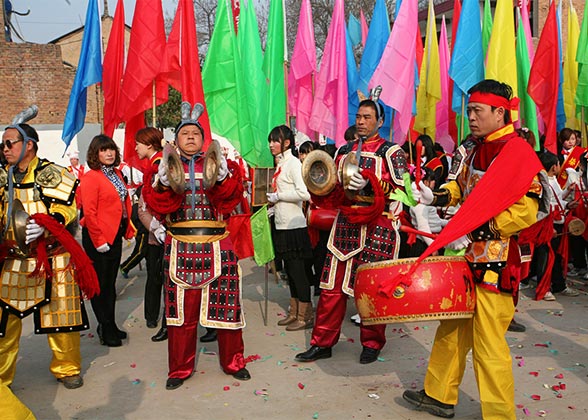
Similar to Christmas, Chinese New Year has a core concept of family reunion. The Chinese New Year holiday lasts 9 days and is China’s longest public holiday. During this period, Chinese people travel great distances to return to their hometowns to reunite with family. Apart from this, many also choose to travel for sightseeing during the holiday, another main source of the Spring Festival Travel Rush.
Another key meaning of the Chinese New Year is to ward off misfortune and make best wishes, so there are the following traditional customs: staying up late on New Year’s Eve, giving Red Envelopes, sending greetings, setting off firecrackers, hanging “Fu” characters, putting up posters of the door gods, and couplets.
|
|
May Day
 |
| Rice Dumplings |
Falling on the 15th day of the 8th lunar month, usually in September, the Mid-Autumn Festival is China’s second most important traditional festival after the Chinese New Year. The Mid-Autumn Holiday generally lasts 3 days and marks a minor travel peak.
One of the core customs is moon appreciation, originally a solemn ritual to express gratitude for the harvest. Around the 15th day of the 8th lunar month, the moon is usually at its fullest and the full moon symbolizes reunion in Chinese culture, so it is also a day for family reunion. Mooncakes resemble the shape of the moon, so eating mooncakes is also a major custom. Other traditions are hanging lanterns, and drinking Osmanthus wine, etc.
 |
| Full Moon View on Mid-Autumn Festival |
 Golden Weeks in China
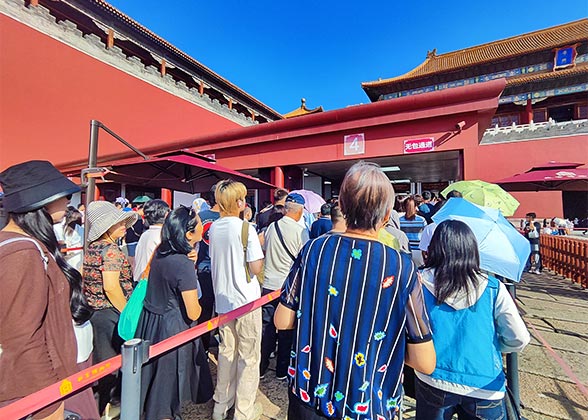
However, it’s worth noting that during these “Golden Weeks”, there is a dramatic increase in tourist numbers; hotel rooms and air tickets will definitely skyrocket; high-speed train tickets are in great demand. So, visiting China during the “Golden Weeks” is not a good idea.
|
|
Traditional Festivals in China
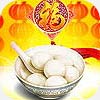
Lantern Festival, falling on the 15th day of the 1st lunar month, is considered the end of the Chinese New Year. Taken literally, the major traditional custom is enjoying beautiful lanterns. Others include solving riddles and eating glutinous rice dumplings.
|
|

Double Seventh Festival
The festival is on the 9th day of the 9th lunar month, usually occurring in October of the Gregorian calendar. It’s also called the Senior’s Day, as the Chinese character for “nine” sounds the same with the word “long” and two “nines” symbolize longevity. Therefore, the core significance of the festival lies in respecting the elderly.
In addition, the festival coincides with the end of the autumn harvest, when people can enjoy more free time. Coupled with crisp, lovely weather, it gives rise to the major custom of mountain climbing. Other traditions include admiring chrysanthemums, drinking chrysanthemum tea or wine, and eating double nines cakes.
|
|


In ancient history, the Winter Solstice marked the beginning of a new year, as from this day on, the sun’s direct rays start to shift northward, and daylight hours gradually lengthen. On this first day of a new year, people in some regions hold ancestor worship ceremonies.
La means the 12th lunar month, and Ba means the number 8, so now you know the festival is on the 8th day of 12th lunar month, usually falling in January in the Gregorian calendar. One major custom is eating Laba Porridge, with a variety of ingredients, including rice, different kinds of beans, red dates, and lotus seeds, symbolizing a fruitful harvest and family reunion. Plus, it also heralds the upcoming Chinese New Year, considering the saying “Once the Laba is over, the Chinese New Year begins”.
See More: Traditional FestivalsSummer Holiday and Winter Holiday in China
 |
| Crowds During Peak Travel Season |
Special Tips for Traveling During China’s Holidays
1. Book train tickets, air tickets, and hotels at least one month earlier. Apart from the soaring prices of hotel rooms and air tickets, the trickiest thing is that train tickets can be sold out in a flash.
See more: Train Travel in China during Holidays 2. Remember to book admission tickets in advance. Many attractions and museums have limited visitor capacity, so you might not get tickets if you buy them on-site.
3. To avoid the main crowds, it’s best to start your journey early, especially if you plan to visit popular scenic spots. Check the exact opening hours and become the first group to arrive. Please note during the busy time, to handle the burst of tourists, many attractions extend their operation hours. Take the example of the Terracotta Army; in the previous National Day Holiday, its opening hours were extended from 08:30-18:30 to 07:30-20:00.
4. Traffic jams are very likely, so leave earlier than usual when heading to the airport or train station.
5. Visitors are advised to visit a few days after the holidays, as the crowds will thin out significantly.
Does Business Run During Chinese Public Holidays?
However, the Chinese New Year Holiday is an exception. During this period, most small restaurants and roadside grocery stores are closed. Supermarkets and shopping malls remain open, but have shorter operating hours. Regarding tourist attractions, their opening hours vary widely, so it’s best to check in advance. For instance, in recent years, the Forbidden City has usually closed on Chinese New Year’s Eve but has remained open as usual on other holiday days.
See Business Hours in China Make-up Workdays
More Festivals in Different Categories
Ethnic Minority Festivals: Water-Splashing, March Fair, Nadam Fair, End of Ramadan, Corban...
Tourism Festivals: Harbin Ice & Snow Gala, Luoyang Peony Fair...
Western Festivals Celebrated in China: Christmas, Halloween, Valentine’s Day…
Further Reading
Recommended Tours

- Last updated on Aug. 21, 2026 by Sule Su -