Half-day Shanghai Cooking Class Tour, No Shopping
Shanghai Family Visit & Hands-on Cooking Class

- Itinerary
- Prices
- Reviews
Trip Highlights
- Explore a Shanghai vegetable market like a local, and discover totally different vegetables and seasonings.
- Follow the hostess’s step-by-step instructions to cook popular Chinese dishes and dim sum according to your tastes.
- Enjoy a hearty self-cooked lunch with unforgettable memories of a hands-on cooking class.
- No commission-based shopping stops! More time will be spent on attractions and you will enjoy a pure sightseeing tour.
- No optional tours! Optional tour is just a tourist trap and will always cost you more with a high markup on price.
This trip can be customized to meet your individual needs!
There’s no better experience for you to soak up the authentic Shanghai flavors than preparing your own feast of local Benbang cuisine in a local family. Follow this itinerary, and bring home the ability to cook light-sweet yet fresh-flavored Shanghai dishes, just to surprise your family and friends! In the morning, your private guide will meet you at your hotel lobby in downtown Shanghai and then accompany you to a local residential compound by public transport.
After arrival, start with a trip to the nearby bustling vegetable market. Vegetable markets are often tucked away in the narrow, small corners of Shanghai, giving way to modern streets and towering buildings, but beyond the modern glamour, these down-to-earth markets best embody the charm of local life. Produce from all over the country is neatly arranged on tidy stalls, exuding a fresh aroma and even forming unique color combinations. Stroll through a panoply of stalls heaves with fresh local produce, including vegetables, seasonings, fruits, and even seafood, and glimpse how locals shop for ingredients and groceries and bargain prices with vendors.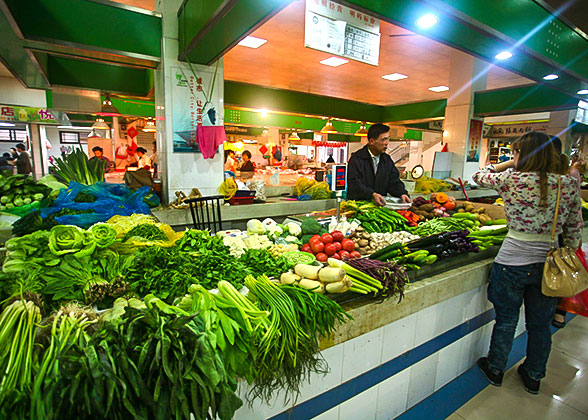
 Although Shanghai is one of China's most economically developed cities with a high cost of living, you'll find that local vegetable prices aren't expensive: pork is CNY 30 (USD 4.3) per kg, beef is about CNY 50 (USD 7.2) per kg, and most vegetables are priced between CNY 4-20 (USD 0.6-2.9) per kg. So why is it so expensive to live in Shanghai? The answer lies in the exorbitant housing prices. According to the latest statistics, the average price of new homes in Shanghai has reached CNY 60,000 (USD 8,680) per square meter, and the prices in the city center exceed CNY 150,000 (USD 21,700) per square meter. It is even higher than that of apartments in downtown New York, which is USD 18,532 per square meter. Meanwhile, the per capita disposable income of urban households in Shanghai is less than CNY 100,000 (USD 1,447). In international comparisons, Shanghai's home-price-to-income ratio has been listed as one of the highest in the world, reaching 30-40 times in core areas, far exceeding the internationally reasonable 3-6 times. Despite struggling with the record-high new home prices, Shanghai locals lead their own pace of life in an optimistic style, and develop a lot of tasty dishes based on traditional Shanghai cuisine.
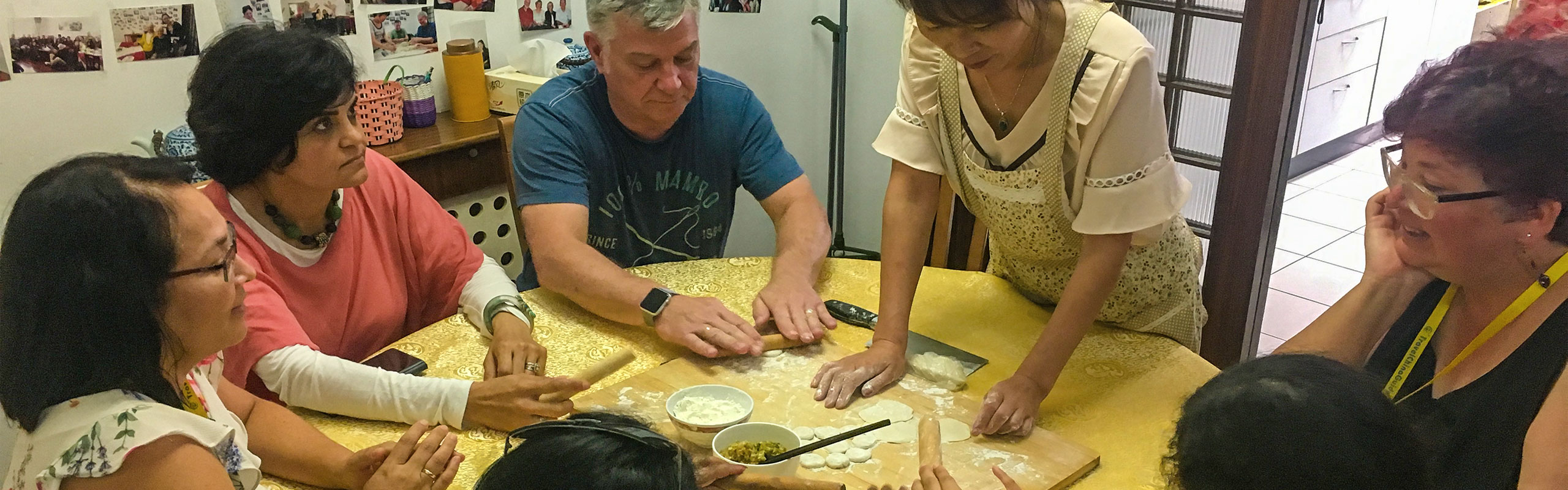
After visiting the vegetable market, follow your guide to step into a local family and start your hands-on cooking class! You’ll receive a menu after the reservation, and the ingredients will be prepared in advance. The skilled hostess will guide you step by step to prepare your favorite Chinese food from scratch and demonstrate how to cut vegetables into proper shapes, the specific amount of seasoning use, and offer some small cooking techniques. The cooking class generally includes two dishes such as kung pao chicken, sweet and sour pork with fruits, and one type of dim sum like dumplings, wontons, and spring rolls. It is interesting to learn to fold dumplings or wrap wontons personally.
If you are interested in any other Chinese dishes beyond the menu, you can also inform us in advance, and add them to your cooking class. After the carefully and interesting cooking, it’s time to enjoy your own-cooked feast for lunch! Later, your private guide will escort you to the nearest metro station or bus stop to return to your hotel. Wish you a pleasant cooking journey!
Meals: Home-cooked Lunch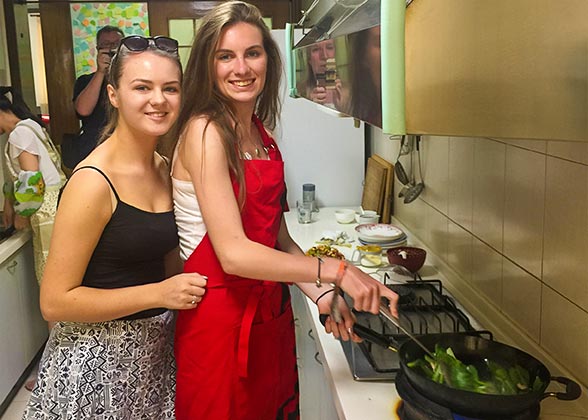
 Below is the popular dishes and snacks on the menu for your reference.
Sweet and Sour Pork with Fruits: An innovative dish uses pork as the main ingredient, deep-fried till crispy, and mixed with thick savory sauce, paired with fresh fruits such as pineapple, mango, and kiwi, creating a unique sweet-sour balance.
Sweet and Sour Spare Ribs: Choose the middle section of spare ribs for a good balance of fat and lean meat, then season with rock sugar, vinegar, and soy sauce to create a traditional sweet-and-sour stir-fried dish.
Stir-fried Shredded Potatoes with Green Peppers: Cut the potatoes into matchstick pieces, and then soak them in water to remove starch and prevent discoloration. Stir-fry them with shredded green peppers, add vinegar for flavor, and the key is to control the heat to maintain a crisp, tender texture.
Fish-fragrant Eggplant: Though name contains fish, there is no fish at all. As a classic Sichuan dish, known for its sweet, sour, garlicky, and slightly spicy flavor. However, the Shanghai home-style version subtly increases the sugar content, softens the vinegar's sourness, and significantly reduces the spiciness.
Tomato and Egg Stir-fry: It is undoubtedly a popular dish frequented on Chinese home tables. Featuring a slightly sour taste with a hint of sweetness, the delicious dish is easily cooked in just a few minutes, but a perfect balance of sweet and sour flavor with rich sauce requires some skills.
Scallion Oil Noodles: It is one of Shanghai's signature dishes but simple to cook, featuring a fresh, slightly sweet, and savory flavor. The preparation involves three steps: making scallion oil, preparing the sauce, and cooking the noodles.
Wontons: Take a thin wrapper in your palm, scoop a spoonful of filling and gently spread it in the center, moisten the edges with a little water, fold it in half and pinch it closed, and then fold the two ends towards the center and press firmly. Shanghainese people often shape wontons into ‘ingots’, symbolizing wealth and prosperity.
Dumplings: A must-eat traditional food during the Chinese New Year in northern China.
Spring Rolls: A must-eat food for Shanghainese during Chinese New Year, including both sweet and savory flavors. Sweet spring rolls are filled with red bean paste, while savory spring rolls are typically filled with cabbage, mushrooms, and shredded pork.
Potstickers: These crescent-shaped, thin-skinned dumplings are first pan-fried and then simmered in water, forming crispy bottoms, and juicy and flavorful fillings.
Scallion Pancakes: Made with flour, chopped scallions, and lard, these pancakes are characterized by their bright yellow color, fragrant scallion aroma, oily texture, and crispy exterior and soft interior.
After arrival, start with a trip to the nearby bustling vegetable market. Vegetable markets are often tucked away in the narrow, small corners of Shanghai, giving way to modern streets and towering buildings, but beyond the modern glamour, these down-to-earth markets best embody the charm of local life. Produce from all over the country is neatly arranged on tidy stalls, exuding a fresh aroma and even forming unique color combinations. Stroll through a panoply of stalls heaves with fresh local produce, including vegetables, seasonings, fruits, and even seafood, and glimpse how locals shop for ingredients and groceries and bargain prices with vendors.
Visit a Vegetable Market
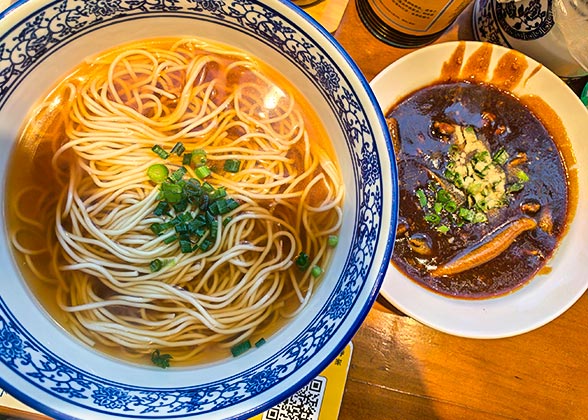
Spring Noodle Soup of Shanghai
After visiting the vegetable market, follow your guide to step into a local family and start your hands-on cooking class! You’ll receive a menu after the reservation, and the ingredients will be prepared in advance. The skilled hostess will guide you step by step to prepare your favorite Chinese food from scratch and demonstrate how to cut vegetables into proper shapes, the specific amount of seasoning use, and offer some small cooking techniques. The cooking class generally includes two dishes such as kung pao chicken, sweet and sour pork with fruits, and one type of dim sum like dumplings, wontons, and spring rolls. It is interesting to learn to fold dumplings or wrap wontons personally.
If you are interested in any other Chinese dishes beyond the menu, you can also inform us in advance, and add them to your cooking class. After the carefully and interesting cooking, it’s time to enjoy your own-cooked feast for lunch! Later, your private guide will escort you to the nearest metro station or bus stop to return to your hotel. Wish you a pleasant cooking journey!
Meals: Home-cooked Lunch
Our Guests Learn to Cook a Local Dish
Learn to Make Chinese Dumplings
Main Dishes:
Kung Pao Chicken: Made primarily with marinated chicken, it is then stir-fried quickly with peanuts, chili peppers, and other ingredients over high heat. The original version is spicy, while the improved version emphasizes a sweet and sour flavor.Sweet and Sour Pork with Fruits: An innovative dish uses pork as the main ingredient, deep-fried till crispy, and mixed with thick savory sauce, paired with fresh fruits such as pineapple, mango, and kiwi, creating a unique sweet-sour balance.
Sweet and Sour Spare Ribs: Choose the middle section of spare ribs for a good balance of fat and lean meat, then season with rock sugar, vinegar, and soy sauce to create a traditional sweet-and-sour stir-fried dish.
Stir-fried Shredded Potatoes with Green Peppers: Cut the potatoes into matchstick pieces, and then soak them in water to remove starch and prevent discoloration. Stir-fry them with shredded green peppers, add vinegar for flavor, and the key is to control the heat to maintain a crisp, tender texture.
Fish-fragrant Eggplant: Though name contains fish, there is no fish at all. As a classic Sichuan dish, known for its sweet, sour, garlicky, and slightly spicy flavor. However, the Shanghai home-style version subtly increases the sugar content, softens the vinegar's sourness, and significantly reduces the spiciness.
Tomato and Egg Stir-fry: It is undoubtedly a popular dish frequented on Chinese home tables. Featuring a slightly sour taste with a hint of sweetness, the delicious dish is easily cooked in just a few minutes, but a perfect balance of sweet and sour flavor with rich sauce requires some skills.
Dim Sum:
Shanghai Fried Noodles: A popular Shanghai staple food, made with thick and chewy noodles, stir-fried with shredded pork, bok choy, mushrooms with soy sauce.Scallion Oil Noodles: It is one of Shanghai's signature dishes but simple to cook, featuring a fresh, slightly sweet, and savory flavor. The preparation involves three steps: making scallion oil, preparing the sauce, and cooking the noodles.
Wontons: Take a thin wrapper in your palm, scoop a spoonful of filling and gently spread it in the center, moisten the edges with a little water, fold it in half and pinch it closed, and then fold the two ends towards the center and press firmly. Shanghainese people often shape wontons into ‘ingots’, symbolizing wealth and prosperity.
Dumplings: A must-eat traditional food during the Chinese New Year in northern China.
Spring Rolls: A must-eat food for Shanghainese during Chinese New Year, including both sweet and savory flavors. Sweet spring rolls are filled with red bean paste, while savory spring rolls are typically filled with cabbage, mushrooms, and shredded pork.
Potstickers: These crescent-shaped, thin-skinned dumplings are first pan-fried and then simmered in water, forming crispy bottoms, and juicy and flavorful fillings.
Scallion Pancakes: Made with flour, chopped scallions, and lard, these pancakes are characterized by their bright yellow color, fragrant scallion aroma, oily texture, and crispy exterior and soft interior.
Tour Prices 2027 & 2028
| 1 traveler | 2-3 travelers | 4-5 travelers |
|---|---|---|
USD199 | USD119 | USD89 |
- Above prices are per person.
Price Includes
- Private English-speaking guide
- Public transportation to Caoyang Huayuan Residential Compound
- Lunch
Price Excludes
- Hotel accommodation with breakfasts
- Transportation back to your hotel
- Tips or gratuities for guide
Itineraries you may also like: