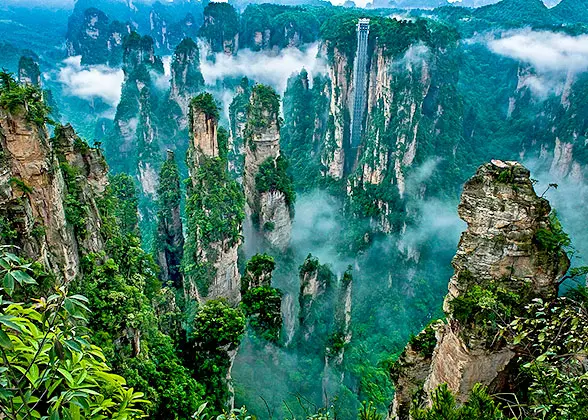
Hallelujah Mountain, or Floating Mountain, is the inviolable holy area for the Na’vi People in the science fiction film Avatar. Are the Hallelujah Mountains real? The answer is “Yes”. The prototype is located in
Zhangjiajie National Forest Park, Hunan Province in central China. Once called Qiankun Column, meaning a stone pillar standing firm on the ground and almost reaching to the sky, it is one of the most famous attractions there. With the raging popularity of Avatar, the column was renamed Hallelujah Mountain in 2010.
Qiankun Column in Zhangjiajie, China: Hallelujah Mountain in Real
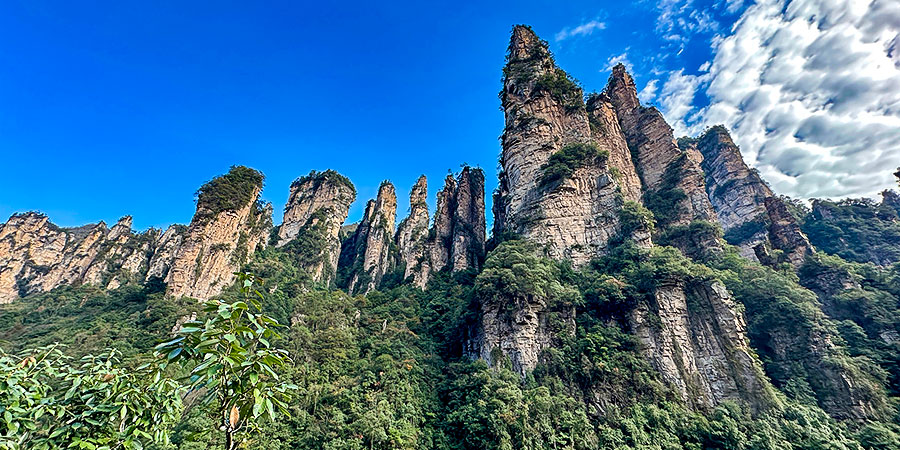
Hallelujah Mountain is a 150-meter-tall (490 feet) sandstone pillar at an altitude of 1,074 meters (3,524 feet) in
Yuanjiajie Scenic Area in Zhangjiajie Forest Park. It rises straight from the deep valley, with the top covered by lush trees and a sharp side as if it had been chopped by an axe. There are many other tall or low pillars surrounding, but none of them touch this one, leaving it to stand independently. The pillar is thick at its top and thin at the bottom, with a slender rock neck connecting to the base, looking like a glass beer bottle placed upside down.
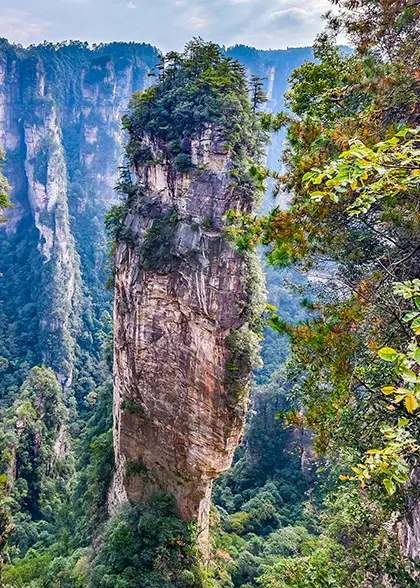 | | Hallelujah Mountain Standing Independenly | | 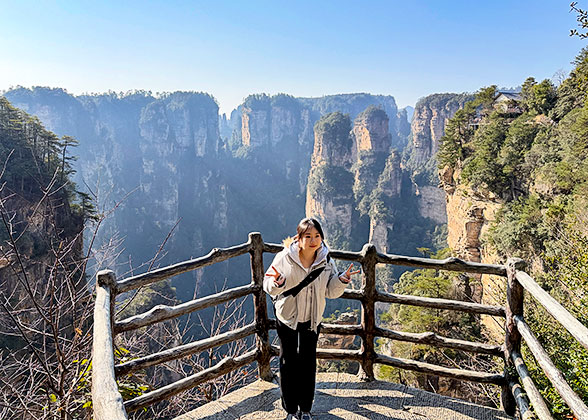 | | Take a Photo with Hallelujah Mountain | |
How Qiankun Column inspired Cameron: Hallelujah Mountain in Avatar
In the early morning after rain, the rising water vapor at the bottom of the valley condenses when it cools, filling the canyon with clouds and mist. It precisely covers the thin rock neck of Qiankun Column; as a result, the pillar seems to be hovering above the sea of clouds, free from gravity.
It was this spectacle that moved director Cameron, who transformed the floating pillar in Zhangjiajie into flying mountains on Pandora: their tops are relatively flat and covered with lush vegetation, while the cliffs are sharp, just like the scenery you can see in the park. Rivers flow from their top and down along the cliff, forming magnificent waterfalls in the air.
How was Zhangjiajie’s Floating Mountain formed?
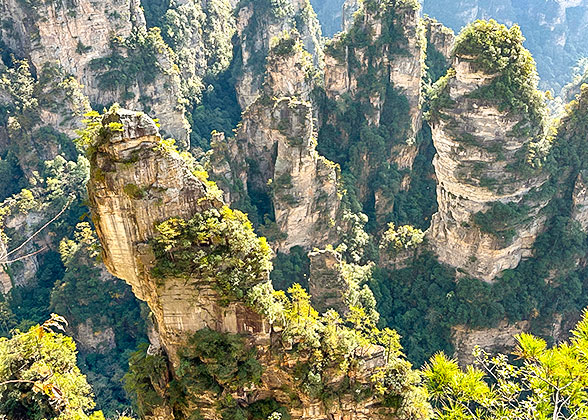
There are so many similar stone peaks standing in Zhangjiajie National Forest Park, actually, in the shape of human figures, animals, and other objects. They are formed by the joint efforts of crustal movement, water flow, and wind erosion.
Billions of years ago, the earth’s crust in Zhangjiajie experienced countless rises and falls. Under the effects of water flow and wind, the soft rocks on the surface experienced accelerated dissolution. Consequently, hard quartz sandstones began to emerge upward, gradually evolving from sandstone walls to independent pillars. At the same time, water and wind left their traces when passing by the rocks, which made the pattern or shape of each peak different from the others. Now, those stone pillars are still bearing the force of nature and will eventually disappear one day.

Weapon of Monkey King in Legend
It is said that the peak is formed by the weapon, golden cudgel, of Monkey King, a main character in one of the four classic Chinese novels, Journey to the West. He inserted the golden cudgel from the Heavenly Palace all the way to the earth, which formed a huge peak, showcasing his great magic power.
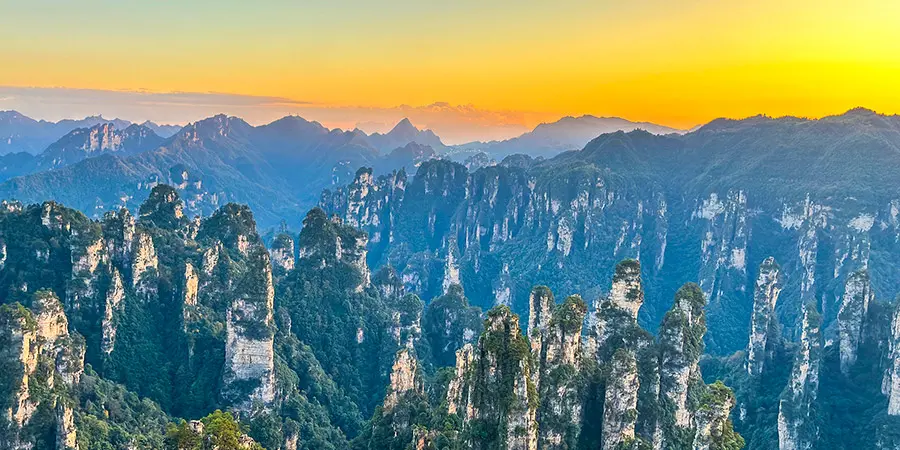 |
| Vast Peak Forest in Zhangjiajie Forest Park |
How do I Get to Hallelujah Mountain
Upon arrival at the East Gate of Zhangjiajie National Forest Park by tourist bus from downtown Zhangjiajie, enter from Tourist Line B, and then get on the eco-bus heading towards
Bailong Elevator, which takes you to Yuanjiajie summit in 1.5 minutes. At the upper station of Bailong Elevator, ride an eco-bus towards Enchanting Terrace, and walk along the boardwalk on the cliff to find the Hallelujah Mountain after getting off.
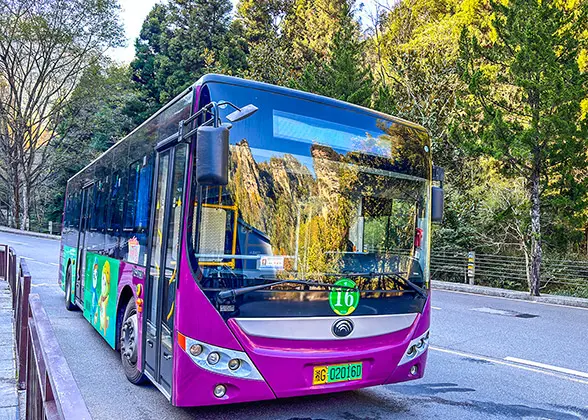 |
| Eco-bus towards Bailong Elevator |
It’s worth noting that the straight independent Hallelujah Mountain cannot be climbed up. Tourists can only view from a distance at:
1. Heart to Heart Bridge for a close-up view of its front.
2. No.1 Stone Bridge in the World, to watch the side profile of Hallelujah Mountain.
3. Enchanting Terrace to capture both Floating Mountain and surrounding pillars.
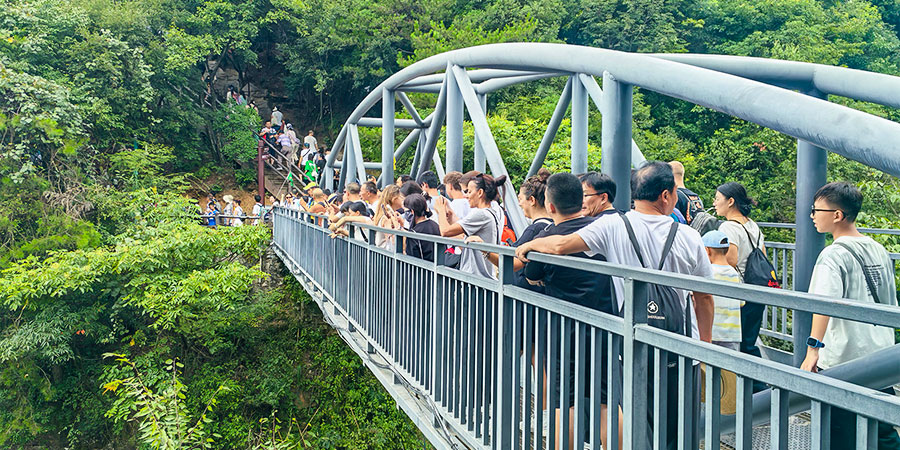 |
| Heart to Heart Bridge |
Best Months to Watch Hallelujah Mountain
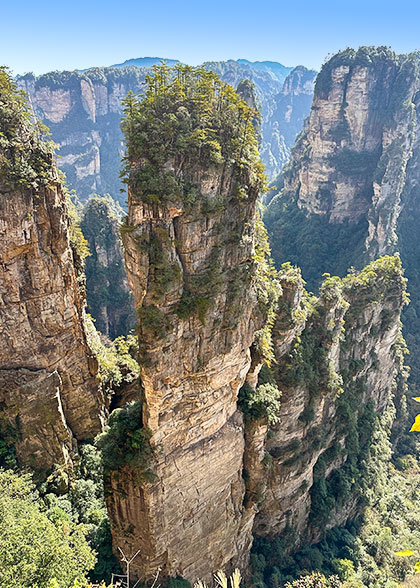 |
| Hallelujah Mountain Side View |
April, May, September, and October with a moderate climate. Although the former two belong to the rainy season of Zhangjiajie, it’s a good time to view the suspension effect with clouds.
How Popular is Hallelujah Mountain: Advice to Beat the Crowds
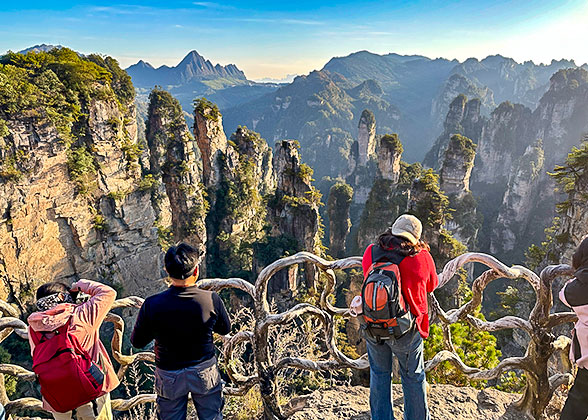
Hallelujah Mountain is the reason why many tourists come to Zhangjiajie and has become their primary destination in Zhangjiajie National Forest Park. The sightseeing platforms are often bustling with crowds, making it time-consuming to take clear photos: selfie sticks and travel group flags are frequently visible in the background. Besides, the primary transportation to Hallelujah Mountain of Yuanjiajie - Bailong Elevator, often sees long queues at its entrance during high season. It’s common that you wait for 1 - 2 hours in line.
To dodge crowds, you are advised to
1. Arrive early. It would be best to reach the entrance at the same time as the staff and strive to be the first person to go up the mountain. Then, you can see the amazingly floating Hallelujah Mountain in clouds in the early morning without disturbance. 10 am – 3 pm are peak hours that you need to avoid.
2. Head towards Hallelujah Mountain after noon to go against the tourist flow.
3. Choose weekdays rather than holidays, particularly those peak tourist seasons, including
Chinese New Year holiday in January or February, May Day holiday from May 1 to 5,
National Day holiday from October 1 to 10, and summer vacation in July to August.
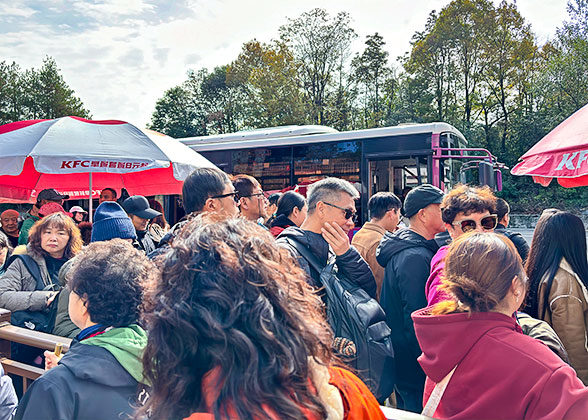 | | Crowds at Eco-bus Station | | 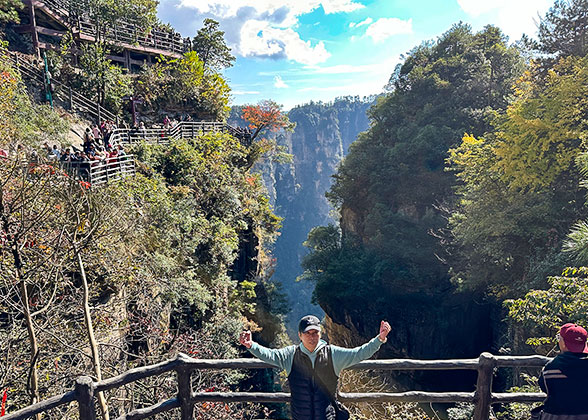 | | Viewing Platforms on Cliff | |
Tips for Visiting Hallelujah Mountain in Zhangjiajie
1. The sunny day after rain is the best time to capture the floating effect, with clouds and mist lingering in the valley. Heavy foggy days are not advised, when you may not be able to see anything.
2. Be careful on viewing platforms of Hallelujah Mountain, and particularly take care of children and seniors. Those platforms are built on cliffs, with limited space for unlimited tourists. Do not approach the edge or climb over the guardrail to pursue photographing angles.
3. The trails leading to Hallelujah Mountain on Yuanjiajie mountaintop are mostly flat, without a high demand for physical strength, allowing most tourists, including seniors and children, to enjoy themselves fully.
 | | Food Stalls near the Viewing Platform | | 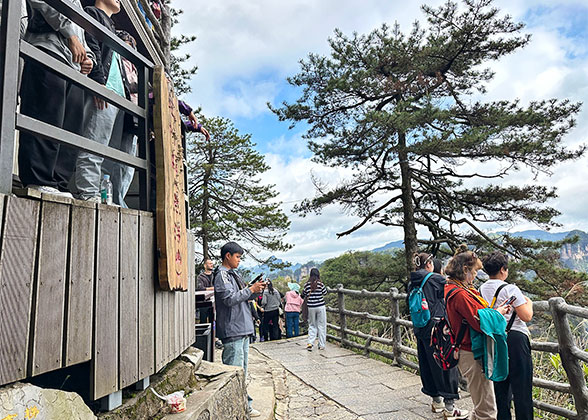 | | Visit Hallelujah Mountain in Sunny Weather | |
Among over 90 attractions in Zhangjiajie National Forest Park, 10 are the filming locations for Avatar, like Generals In Formation in Suoxi Valley, Imperial Brush Peak in
Tianzi Mountain, Star Picking Stand in
Huangshi Village, Prince Xiang Reading Books in
Ten Miles Gallery, etc. You can fully explore along an Avatar-themed route or other one-day or two-day circle itineraries.
 |
| Generals In Formation |
Hallelujah Mountain Ticket
Included in the entrance ticket of Zhangjiajie National Forest Park
Book Zhangjiajie National Forest Park Entrance Ticket Hallelujah Mountain Opening Hours
7:00 – 17:00 all year round, same as the opening hours of Zhangjiajie National Forest Park

You May Need:
Top 10 Things to Do in Zhangjiajie National Forest ParkTop FAQs about Zhangjiajie National Forest ParkHow to visit Zhangjiajie National Forest ParkHow to get to Zhangjiajie National Forest ParkFacts about Hiking in Zhangjiajie National Forest ParkBest Hiking Trails in Zhangjiajie National Forest Park
- Last updated on Jun. 08, 2026 by Grace Yang -