Time-honored history and brilliant Chinese civilization endow the country with numerous historical and cultural relics. Vast field gives birth to many beautiful mountains and rivers. This was an old and rich country sending an air of mystery. Nowadays, great treasures are greatly appreciated by tourist from all over the globe to explore.
Historical Relics
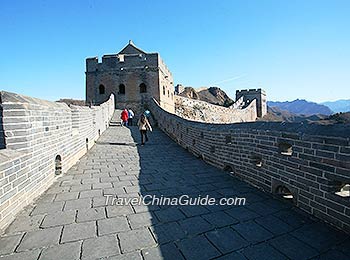
Numerous historic relics from China's long history have been preserved. Among them, the Great Wall of China is the icon of the Chinese nation and the most popular attraction. The excavation of Yin Xu (Yin Ruins) in Anyang City of Henan let the world know Oracles which have been proved to be the earliest written character of human beings. Potala Palace in holy Lhasa is a splendid and complicated building complex on the Red Hill, being the political center of Tibet.
Another place gathering multitudes of historical and culture relics should be the Silk Road, a vital trading route that traversed Asia and Europe. The prosperity of the past has gone. But communications in commodity, religion and ideology between the west and the east have been vividly engraved in places along the road and continue to inspire vigor in new era.
Beijing and Xian will occur to one's mind at the mention of ancient cities with profound cultural accumulations. Undoubtedly, Museum of Terra Cotta Warriors can best represent the city which was the capital of the first feudal dynasty, Qin (221BC-206BC). While Beijing is most highlighted by the Forbidden City, the imperial palace of the Qing dynasty which symbolized the peak hours of Chinese feudal society and where the imperial power completely faded out of the country.
Nature Scenery
Mountains and waters often occur in literary works to express great breadth of mind or yearning for nature. They usually hold more than what their facial beauty can convey.
Mountains
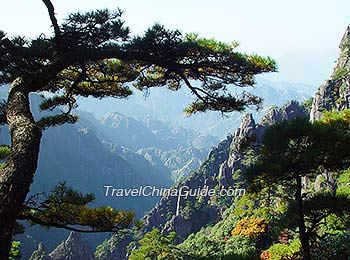
A mountain has its unique character - magnificent, imposing or elegant. The Five Most Famous Mountains can be the representative of all mountains in China. Mount Taishan in Shandong is the most revered; Shaolin Temple brought worldwide fame to the Song Mountain in Henan; Mt Huashan in Shaanxi is precipitous; Hengshan in Shanxi has jagged ranges and Mt. Hengshan in Hunan is elegant in appearance.
Many mountains epitomize different religions and cultures. Mt. Jiuhua in Anhui, Mt. Emei in Sichuan, Mt. Putuoshan in Zhejiang and Mt. Wutai in Shanxi are the most noted Buddhist holy mountains. While Mt. Huangshan in Anhui, Mt. Laoshan in Shandong, Wudang Mountain in Hubei, Mount Wuyi in Fujian, Mt. Qingcheng in Sichuan and Dragon and Tiger Mountain in Jiangxi are well-known Taoist holy mountains. Mt. Huangshan seems to enjoy exceptionally high reputation. It is said to boast of combining the masculine grandeur of Mount Taishan, the mist and clouds of Hengshan in Hunan, and the grotesque splendor of Mt. Huashan. That's why the old saying goes as having no wish to see any of the five most famous mountains if having seen Mt. Huangshan.
Waters
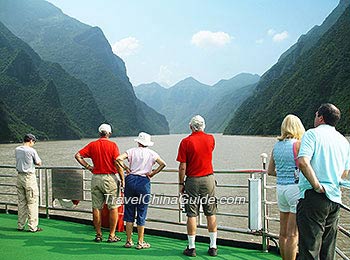
If joined together, the natural rivers of China reach a total length 10.5 times greater than the length of the Earth's equator. Among all the rivers, the Yellow River is affectionately known as the mother river of Chinese nation. The Yangtze River, the world third longest, enjoys great fame because of the numerous historic relics found along its banks and the beautiful legends about this vital waterway. Holding enchanting riverside scenery, Li River gathers the most astonishing natural beauty of northeast Guangxi by connecting Guilin and Yangshuo.
Poyang, Dongting and Taihu Lakes are the top three freshwater lakes in China, which fertilize the fields around and make them towns of rice and fish. West Lake, the golden name card of Hangzhou and Thousand Islets Lake (Qian Dao Hu), the resplendent pearl of the city are hot scenic spots. Qinghai Lake, the largest inland salt lake in China, has the Bird Island as its most charming part, attracting lots of tourists.
In addition, Beidaihe Scenic Spot, Qingdao Seashore Scenic Area, Beihai Silver Beach and Asian Dragon Bay (Yalong Wan) have top beaches for summer holiday.
Scenic Areas and Natural Reserves
Scenic areas and natural reserves are built to better protect the intactness and original flavor of some sights from damage of tourists. Jiuzhaigou Valley and Huanglong scenic and historic interest area are the most popular destinations especially famous for the beauty of colorful lakes. If willing to walk among luxury forests, Zhangjiajie and Wulingyuan scenic spots are wonderful options. Moreover, Qiannan area of Guizhou boasts the most splendid subtropical karst ecosystem within the Maolan Karst Forest Nature Conservation. The Stone Forest formed by water erosion is a masterpiece by nature with countless labyrinthine vistas, being one of the most famous attractions of Yunnan.
Ethnic Group Flavors
If you are interested in the culture and life styles of Chinese 56 ethnic groups, especially the 55 ethnic minorities, villages and buildings introduced here best show you their distinctive flavors. Guangxi, Yunnan and Guizhou have the richest resource of this kind. Baimian Yao Village, Yinshui Dong Village and Ethnic Relics Center in Guangxi are all worth visiting. China Folk Culture Villages in Guangdong and Xishuangbanna Nationality Culture Park in Yunnan are comprehensive scenic areas to gather flavors of many ethnic groups together in one place.
Ancient Towns and Local Resident Houses
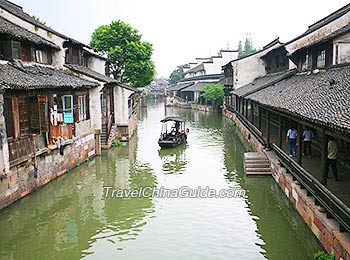
Ancient cities, towns and villages are treasures for visitors to understand China. Zhouzhuang in Suzhou is known as the number one water town in China. In the same city, Tongli is regarded as the oriental Venice. In Zhejiang Wuzhen, you will find waterside pavilions which are seldom seen in ancient water towns in southern China. Now the town is a fine base for movies and televisions.
Ancient City of Pingyao in Shanxi is characterized by the city wall and the ancient compounds of rich families. Xidi and Hongcun Ancient Villages have typical local residences in southern Anhui Province. Lijiang Old Town and Dali Ancient City in Yunnan have delicate residential houses, lanes and streams. In addition, Beijing's courtyards, earth towers of the Hakkas in Fuzhou, Huizhou local residences in Anhui and the farmers' caves in Shaanxi are outstanding representatives of local residences in different areas of China.
Gardens, Temples and Monasteries
The history of gardens in China extends for over 3,000 years. Those in northern China are mainly imperial gardens such as Summer Palace and Mountain Resort of Chengde; while those in southern China are mainly private ones such as the classical gardens of Suzhou.
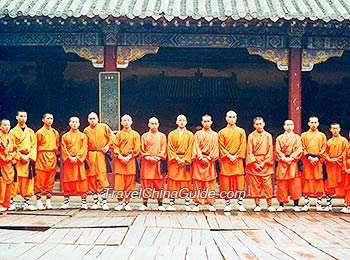
Temples and monasteries are emblems of China's long history. Shaolin Temple is the number one temple under heaven. White Horse Temple is the oldest temple and the cradle of Buddhism in China. Jokhang Temple, Labrang Monastery and Ta'er Monastery are famous Tibetan Buddhist shrines. As to Confucianism, there are several Temples of Confucius (Kong Miao) in many cities.
Mausoleums
Emperors throughout Chinese history reveled in the building of mausoleums. Mausoleum of Qinshihuang with Qin Terra Cotta Warriors and Horses in Lintong of Xian should be the most famous one. Those built during the Tang (Qian Mausoleum), Ming (Ming Tombs) and Qing (Fuling Tomb and Eastern Qing Tombs) Dynasties are the most impressive.
Towers and Pagodas
Towers and pagodas are regarded as the outstanding high architecture of ancient China, adding luster to mountains and temples. Yellow Crane Tower, Tengwang Pavilion and Yueyang Pavilion are the three famous towers in South China. Additionally, Big Wild Goose Pagoda in Xian, Six Harmonies Pagoda in Hangzhou, Wooden Pagoda in Yingxian County and the Three Pagodas in Dali are very famous Buddhist towers.
Grottoes and Caves
Grottoes and caves fully reflect the Buddhist art of the Wei, Jin, Northern and Southern, Sui, and Tang dynasties. The most distinguished are the greatest three grottoes of China: Mogao Caves in Gansu, Yungang Grottoes in Shanxi and Longmen Grottoes in Henan. Leshan Giant Buddha and Dazu Rock Carvings in Sichuan are also treasure of stone carving art. Gansu Province is famed for grotto art. Maiji Caves and Binglingsi Thousand Buddha Caves are major ones along the ancient Silk Road in Gansu. As the road extends westward, Kizil Thousand-Buddha Caves found in Aksu Region of Xinjiang also retains fine carving art.
Travelers' Voices on Major Categories of China Attractions
1.
Jun. 22,2009 01:13 Reply
Mr.cosly(America) said:
seeing silk road and the wall, towers would be amazing
2.
Jun. 22,2009 01:12 Reply
Mr.lass(idonesia) said:
i would like to see the towers and beijing
3.
May. 8,2009 15:48 Reply
Mr.Churro(America) said:
Wow i want to see the great wall and the terracotta warriors=]
4.
Feb. 5,2009 22:02 Reply
Ms.foxrider(Canada) said:
i don't know about you guys but what about the religion? the budhism temples? ever think about that? sure seeing the great wall of china would be amazing and the mountains but the culture is what matters the most
5.
Dec. 4,2008 16:04 Reply
Ms.KINY(europe) said:
I LIKE TO SEE EVERY THING IN THE CHINA PLACE
Dec. 12,2008 16:13
Ms.traveler replied:
hi ms.KINY!! I would also like to see that too!!!
Jan. 7,2009 21:23
Ms.capistran(Mexico) replied:
umm in the others i put tx please ignore..
I WANNA SEE CHINA AS WELL!!! =00000000
6.
Jan. 7,2009 21:20 Reply
Ms.Capistran(texas) said:
aw china beautiful delicious and a fun adventure to expirience, i am only 15 but i may some day go traveling while the world is still standing , i would love to see it in person, someday, someday...
mariel capistran!
wanting to become a singer!!
7.
Dec. 4,2008 16:02 Reply
Ms.Santana(USA) said:
I WOULS LOVE TO SEE THE GREAT WALL OF CHINA!!
Dec. 11,2008 14:57
Mrs.thao(north america) replied:
that's true i do want to see the great wall of china to see how it reallt look like. i alwaise see picture of it but i want to go to china to see how long is the wall of china....
8.
Dec. 11,2008 14:56 Reply
Mrs.Thao(North America) said:
what about the mountains?