Beijing Hutong
Hutongs are the ancient narrow lanes of Beijing, lined with grey-brick courtyards where generations have lived and continue to live. Together, they form a living maze of authentic community life, a place where every turn tells a story. To explore a Hutong is to connect with the oldest heart and most authentic character of Beijing. It offers a deeper, more intimate cultural journey, one that feels uniquely yours to discover.
More than mere streets, Hutongs are the very texture of Beijing's memory. While the area has been inhabited for millennia, the Hutongs took shape in the 13th century in the Yuan Dynasty. Mongol rulers built their capital, Dadu, on a grand chessboard plan. The lanes between orderly rows of courtyards called siheyuan became the first Hutongs. Fascinatingly, the word "Hutong" itself likely comes from the Mongolian word for "water well", a vital resource for any community.
During the Ming and Qing Dynasties (1368–1911), the city expanded, and more Hutongs were arranged along the majestic central axis, a design that cemented Beijing's iconic symmetrical layout. From just 29 named lanes in the Yuan era, they multiplied into thousands, weaving a dense, vibrant urban web.
A profound transformation began in the 1950s, following Beijing's re-establishment as the national capital. This period saw massive migration into the city. Numerous traditional courtyards were subdivided into shared living spaces, and the Hutongs evolved into densely populated, tight-knit neighborhoods, complete with their own schools, shops, and public facilities like bathhouses.
By the late 20th century, these historic lanes faced immense pressure from rapid modernization. The turning point was a city-wide movement to preserve Beijing's unique character. This led to a preservation campaign that not only restored everything from cramped courtyards to elegant former residences of famous figures but also upgraded living conditions of Hutong dwellers by reinforcing structures and adding modern plumbing and heating.
This careful balance of preservation and adaptation has shaped today's hutongs. They are best described as authentic, layered communities. In the morning, you might see elders taking their caged birds for a stroll or neighbors chatting over fresh groceries. By afternoon, the air hums with the sound of radios and conversation from doorsteps. As evening falls, the scent of home-cooked meals wafts through the lanes.
Yet hutong life is not always idyllic. It is marked by sharp contrasts of wealth and poverty, serving as a microcosm of China's broader social divides.
Because of the rapid population growth around mid-20th century, a large portion of courtyards in Hutongs were split into cramped shared compounds known as “dazayuan”. Even today, it’s common to see five or six families share one courtyard. In these spaces, the per-capita living area can be less than five square meters (about 54 sq ft), with residents relying on shared water taps and public toilets. Daily life is far from convenience. Courtyards are cluttered with belongings, gateways badly decay, and the residents are often elders or ordinary workers like delivery persons.
On the other hand, a small number of hutong residences are worth tens of millions of yuan, which are genuinely the "luxury mansions". These are the rare houses that survived the dazayuan era intact, occupied by a single family. Most have been renovated, well-maintained, and beautifully decorated, offering spacious living conditions, standing in stark contrast to the crowded compounds just next door.
For the classic experience, start with the well-known and best-preserved lanes around South Gong and Drum Lane, Tobacco Pouch Slant Street, and Shichahai lake area. This is where you'll see the classic grey-brick courtyards, maze-like alleys, time-honored shops, and a huge variety of street food.
Tip: For a more peaceful tour, it's best to avoid the busiest time for hutong visiting on weekends and holidays between 11:00 and 16:00.
Guozijian Street is just named after Guozijian, China's highest academy in old times. Next to it, is the Confucius Temple, dedicated to Confucius, a famous educator in China history. For those interested in China's traditional examination and education systems, Guozijian Street is the most rewarding hutong to explore.
If you're curious about what ancient Chinese scholars used, head to Liulichang Cultural Street, where you can browse or hunt for classical stationery such as writing brushes and inkstones, or simply admire calligraphy works and seals.
Dongjiaomin Lane and Xijiaomin Lane feature Western-style buildings alongside traditional walls, because this area once served as the concession and banking district in the early 20th century. You'll find the spired Gothic architecture of St. Michael's Church, alongside grand bank buildings supported by towering Roman style columns.
For a laid-back stroll that blends quiet charm with understated style, head to Yangmeizhu Xiejie, Wudaoying Hutong, or Baochao Hutong. Pop into a cozy coffee shop, linger over a drink in a sun-drenched courtyard, or browse the wares in a discreet design studio. The vibe here is relaxing, unpretentiously stylish, and pleasantly off the beaten track.
For the most authentic local life, explore Fusuijing Hutong in Xicheng District, Liuhai Hutong near Shichahai, or the side hutongs around Dashilar. These lanes are lined entirely with single-story courtyard homes, many of which remain traditional shared compounds without commercial development or lavish celebrity residences. Here you'll witness the real life traces: quilts airing in the sun, neighbors chatting at doorways, queues at the public restroom, and people riding a bicycle through narrow passageways.
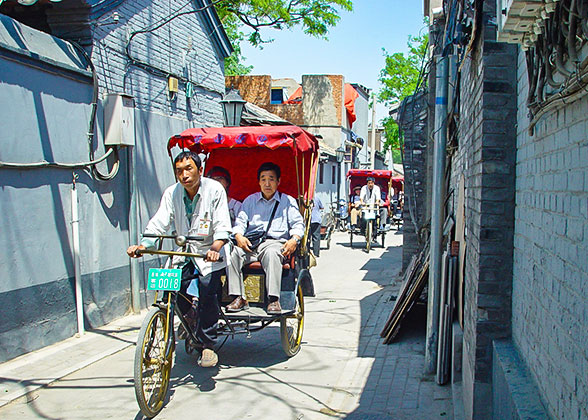
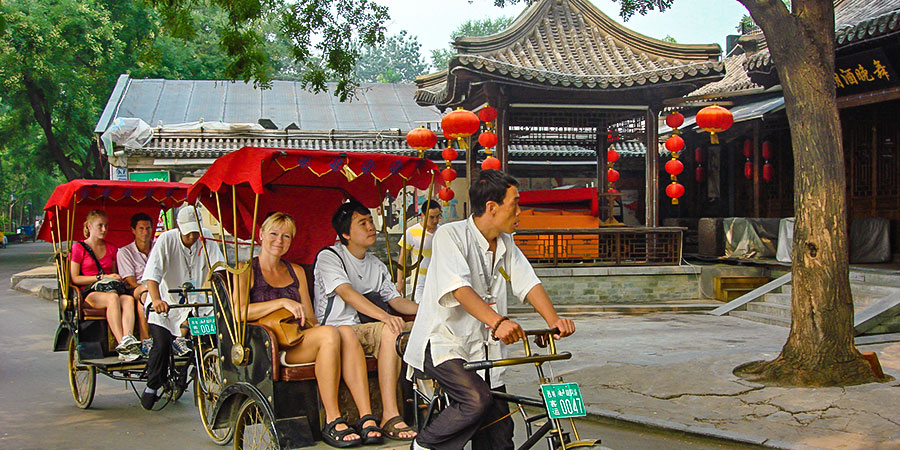
 See more:This is the best way to soak up the atmosphere of old Beijing. Back in the 1920s and 30s, rickshaws were everywhere. Being light and nimble, they slipped easily through the narrow hutongs. Today, sitting back in one lets you enjoy the unhurried rhythm of hutong life without worrying about navigation.
To fully connect with the details and daily rhythm of the hutongs, walking is essential. Many famous lanes, like Wudaoying Hutong or Yandaixiejie, are narrow, pedestrian-friendly, and best appreciated at a stroll's pace. Walking lets you pause to admire a carved doorway, peek into a local workshop, or simply follow your curiosity down a quiet side alley.
If you'd like to cover more ground while staying immersed in the local scenery, cycling is a wonderful option. It's ideal for linking sights that are a bit farther apart, like the Bell and Drum Towers, Shichahai, and the Confucius Temple area. An evening ride, as the hutongs grow quieter and the lights begin to glow, can be particularly memorable. Do keep in mind that some lanes are quite narrow, so ride attentively and at a gentle pace.
Weekday mornings before 9:00 offer the most authentic glimpse. This is when the elders practice tai chi, residents queue for breakfast, and the streets fill with the gentle buzz of bicycles as people head to work or school. The atmosphere is vivid and local, with few other visitors around, perfect for photography and quietly observing daily life.
Late afternoons around 16:00–18:00 are another window. The light softens, the crowds in popular spots begin to thin, and life returns as residents come home, children play after school, and the scent of home cooking fills the air.
In terms of seasons, spring (April–May) and autumn (September–October) are ideal. The weather is mild and pleasant, and the skies are often clear, making it perfect for long, comfortable walks.
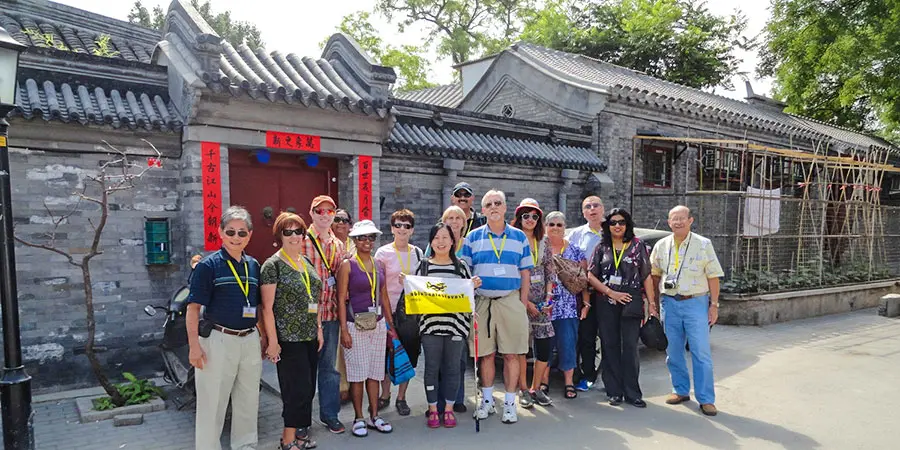
The hutongs are active residential neighborhoods. While many courtyard gates are left open, this does not mean visitors are welcome to enter. Please do not walk into a courtyard home without permission. If you're curious, a polite request at the door is the way to go. Some courtyards operate as cafes, shops, or galleries and are open to the public, which are usually clearly marked.
The lanes can be a delightful labyrinth. Having existed for centuries, the layout of many hutongs is far from the orderly modern city planning. They twist and turn in unexpected ways, and it's easy to find the path simply stops. That's why Chinese has a specific phrase for this: "死胡同", literally "dead hutong". Over time, the expression evolved to describe any situation where you've reached an impasse, much like the English term "dead end".
It's a good idea to note the name of a main street as a reference point or use your phone's map. If you do get lost, don't worry. The local shop owners and residents are usually friendly and happy to point you in the right direction.
Along Beijing's hutongs, roughly every 200 meters (220 yards), you'll find public restrooms, usually marked by a blue sign reading "Public Toilet" (公共卫生间).
These facilities are maintained daily and are generally clean and tidy. However, they often lack the partitions or stalls for privacy. It's not unusual to see a man using a urinal while chatting with another squatting next to him. If you'd prefer more privacy, restrooms in cafes and restaurants are generally accessible options.
It helps to remember that the "hutongs" are not a single destination, but a vast network of lanes spreading across Beijing's urban area. The best approach is to first decide which hutong you'd like to explore.
Beijing's extensive subway system is often the fastest and most reliable way to reach the general vicinity of most hutongs, avoiding traffic. A few classic hutong areas and their easiest metro routes:
Shichahai Hutong: Take Subway Line 8 to Shichahai Station, Exit A2 out; or ride Subway Line 6 to Beihai Bei Station, Exit B out.
South Gong & Drum Lane: Take Subway Line 6 / Line 8 to Nanluoguxiang Station. Get out from Line 8 Exit E, you stand right at the south entrance.
Dashilar Hutong: Qianmen Station on Subway Line 2 or Line 8 is closeby. From Exit I, walk south along Qianmen Street for about 5 minutes to the Dashilan archway; or from Exit C walk south also for about 5 minutes.
|
|
 More
More 
During the Ming and Qing Dynasties (1368–1911), the city expanded, and more Hutongs were arranged along the majestic central axis, a design that cemented Beijing's iconic symmetrical layout. From just 29 named lanes in the Yuan era, they multiplied into thousands, weaving a dense, vibrant urban web.
A profound transformation began in the 1950s, following Beijing's re-establishment as the national capital. This period saw massive migration into the city. Numerous traditional courtyards were subdivided into shared living spaces, and the Hutongs evolved into densely populated, tight-knit neighborhoods, complete with their own schools, shops, and public facilities like bathhouses.
By the late 20th century, these historic lanes faced immense pressure from rapid modernization. The turning point was a city-wide movement to preserve Beijing's unique character. This led to a preservation campaign that not only restored everything from cramped courtyards to elegant former residences of famous figures but also upgraded living conditions of Hutong dwellers by reinforcing structures and adding modern plumbing and heating.
Beijing's Hutongs Today
|
|
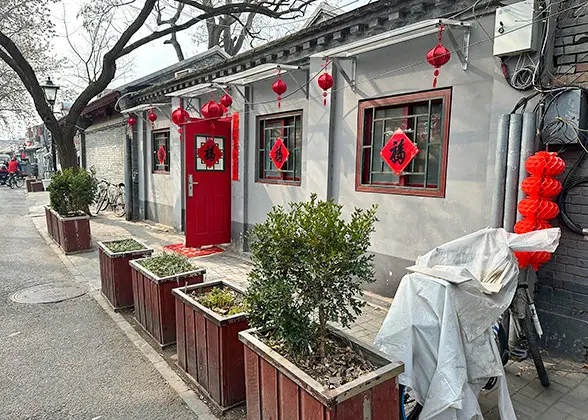
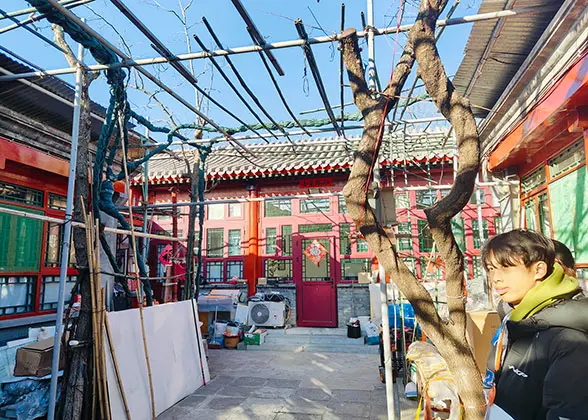
Yet hutong life is not always idyllic. It is marked by sharp contrasts of wealth and poverty, serving as a microcosm of China's broader social divides.
Because of the rapid population growth around mid-20th century, a large portion of courtyards in Hutongs were split into cramped shared compounds known as “dazayuan”. Even today, it’s common to see five or six families share one courtyard. In these spaces, the per-capita living area can be less than five square meters (about 54 sq ft), with residents relying on shared water taps and public toilets. Daily life is far from convenience. Courtyards are cluttered with belongings, gateways badly decay, and the residents are often elders or ordinary workers like delivery persons.
On the other hand, a small number of hutong residences are worth tens of millions of yuan, which are genuinely the "luxury mansions". These are the rare houses that survived the dazayuan era intact, occupied by a single family. Most have been renovated, well-maintained, and beautifully decorated, offering spacious living conditions, standing in stark contrast to the crowded compounds just next door.
Which Hutong to Visit in Beijing?
Most Popular Yet Most Touristry Hutongs
Tip: For a more peaceful tour, it's best to avoid the busiest time for hutong visiting on weekends and holidays between 11:00 and 16:00.
Most Scholarly Hutongs
If you're curious about what ancient Chinese scholars used, head to Liulichang Cultural Street, where you can browse or hunt for classical stationery such as writing brushes and inkstones, or simply admire calligraphy works and seals.
Most Western-Style Hutongs
Modern and Refined Hutongs with Relaxed Vibe
Most Authentic Local Life
See more:
How to Explore Beijing's Hutongs?
Take a Rickshaw Tour
|
|
Explore on Foot
Ride a Bicycle
Best Time to Visit the Hutongs
Late afternoons around 16:00–18:00 are another window. The light softens, the crowds in popular spots begin to thin, and life returns as residents come home, children play after school, and the scent of home cooking fills the air.
In terms of seasons, spring (April–May) and autumn (September–October) are ideal. The weather is mild and pleasant, and the skies are often clear, making it perfect for long, comfortable walks.
Visitor Tips for Hutong Tour
Respect Privacy
Navigate the Maze
It's a good idea to note the name of a main street as a reference point or use your phone's map. If you do get lost, don't worry. The local shop owners and residents are usually friendly and happy to point you in the right direction.
Restrooms
These facilities are maintained daily and are generally clean and tidy. However, they often lack the partitions or stalls for privacy. It's not unusual to see a man using a urinal while chatting with another squatting next to him. If you'd prefer more privacy, restrooms in cafes and restaurants are generally accessible options.
 |
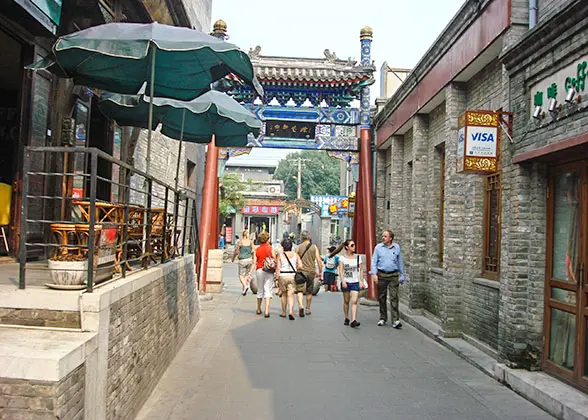
| Tourists in Beijing Hutong |
How to Get to the Hutongs
Beijing's extensive subway system is often the fastest and most reliable way to reach the general vicinity of most hutongs, avoiding traffic. A few classic hutong areas and their easiest metro routes:
Shichahai Hutong: Take Subway Line 8 to Shichahai Station, Exit A2 out; or ride Subway Line 6 to Beihai Bei Station, Exit B out. South Gong & Drum Lane: Take Subway Line 6 / Line 8 to Nanluoguxiang Station. Get out from Line 8 Exit E, you stand right at the south entrance. Dashilar Hutong: Qianmen Station on Subway Line 2 or Line 8 is closeby. From Exit I, walk south along Qianmen Street for about 5 minutes to the Dashilan archway; or from Exit C walk south also for about 5 minutes.
- Last updated on Sep. 18, 2026 by Brenda Lian -