Chongqing serves as a pivotal transportation hub in southwest China, boasting a highly developed and accessible transport network. Whether you travel directly to Chongqing from overseas or make a transfer via other Chinese cities, efficient and convenient travel routes are always available. Urban transportation within Chongqing is also well-rounded, fully catering to the diverse travel needs of tourists from all over the world.
How to Get to Chongqing?
If Chongqing is your first destination, flying to the city is the fastest option.
Chongqing Jiangbei International Airport acts as the city’s main aviation gateway, operating direct flights to 34 international destinations including Seattle, London, Paris, Rome, Madrid, Singapore, Jakarta, Bangkok and Chiang Mai, as well as over 130 cities across China.
Chengdu, merely a two-hour high-speed rail journey away from Chongqing, also offers abundant international flight resources. Alternatively, you can fly to Beijing, Shanghai or Shenzhen first, then take a connecting flight to Chongqing. These major cities run up to 30 daily flights to Jiangbei International Airport, with a flight duration of roughly 2 to 3 hours.
High-speed rail stands as the optimal choice for travelers departing from Chengdu, Xi’an or Zhangjiajie, with travel times of just 1.5 hours, 5 hours and 2.5 hours respectively. Furthermore, high-speed railway stations are generally closer to urban centers than airports, enabling more seamless transfers and greater travel convenience. That said, high-speed rail trips from Beijing and Shanghai to Chongqing take more than eight hours, making them less recommended.
Chongqing North Railway Station and
Chongqing West Railway Station are the city’s two major rail hubs. Chongqing North Railway Station enjoys a more central location, only a 20-minute subway ride from popular attractions such as
Hongya Cave. It is thus the preferred arrival station for most tourists.
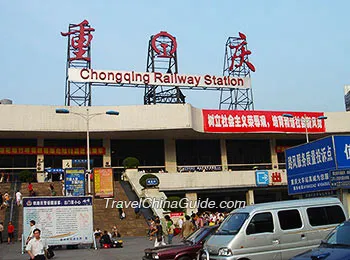 | | Chongqing North Railway Station | | 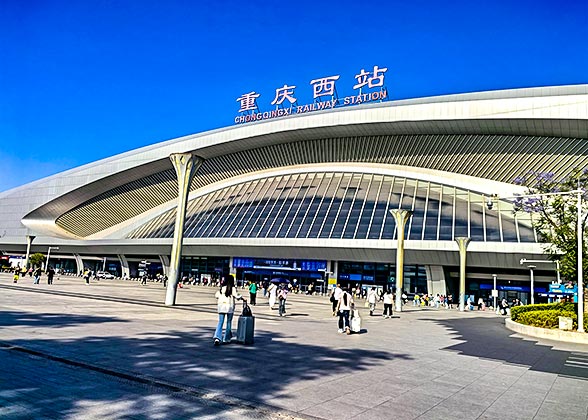 | | Chongqing West Railway Station | |
Nestled at the confluence of the
Yangtze River and Jialing River, Chongqing is easily accessible by water routes. For travelers seeking a leisurely river journey to admire the stunning scenery along the Yangtze River, a cruise from Yichang or Shanghai to Chongqing is an ideal pick.
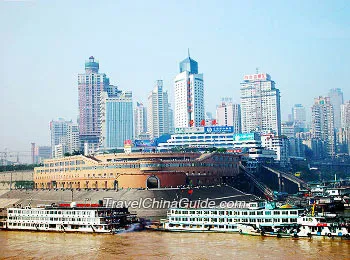 |
| Chaotianmen Dock |
How to Get Around in Chongqing?
Shaped by its unique hilly terrain, Chongqing’s urban transportation network is relatively intricate. Fortunately, a full kind of transport options - including metros, buses, ferries, cable cars and taxis - is available to satisfy most sightseeing and travel demands. Metros and taxis are highly recommended for urban travel. Walking between scenic spots is not advised, as short map distances of several hundred meters often involve endless stair climbing and winding detours.
1. Metro - Highly Recommended
The metro is the most efficient and hassle-free way to travel around Chongqing, effectively avoiding urban traffic congestion. Currently, 13 metro lines are in operation, seamlessly connecting major tourist attractions, the airport and key railway stations.
Line 1 and
Line 2 cover over 70 percent of popular scenic spots, including Hongya Cave,
Jiefangbei CBD and Chongqing Eighteen Stairs.
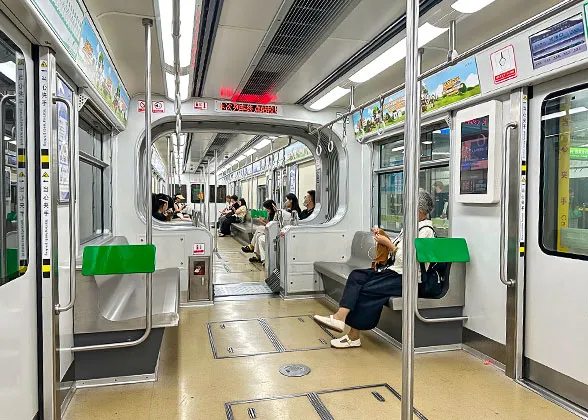 | | Chongqing Metro Carriage | | 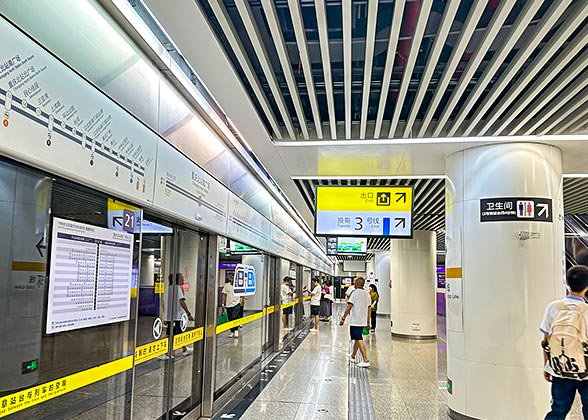 | | Chongqing Metro Station | |
Metro services run from 6:30 to 23:00, covering the daily travel schedule of most visitors. Uniquely, Chongqing’s rail transit winds through mountains and urban buildings, creating one-of-a-kind travel scenery. The iconic Liziba Station on Line 2 offers a spectacular view of light rail trains passing directly through residential buildings, showcasing the city’s magical charm.
 |
| Chongqing Taxi |
Taxis are the best option for travelers with luggage or family groups. Locally nicknamed the “Yellow Ferraris”, Chongqing taxi drivers possess unparalleled familiarity with the city’s winding road networks and always take the shortest and fastest routes. Taxi fares are also reasonably priced, with one-way trips between downtown attractions generally costing CNY 10 to 30.
However, hailing taxis near bustling scenic areas such as Hongya Cave and Liziba is not recommended. These areas often suffer from severe traffic congestion, and passengers may need to walk a long distance for pick-up and drop-off.
3. Buses
Chongqing features a diverse bus system comprising city buses, sightseeing buses, tourist buses, and long-distance buses to suit varied travel needs.
City buses: They cover every corner of the city and work best as a supplement to the rail transit system, especially for destinations far from metro stations. Note that Chongqing’s mountainous roads are winding and rugged, and buses often make sudden stops and sharp turns, which may cause discomfort for travelers prone to motion sickness.
Sightseeing buses: If you want to explore Chongqing’s iconic landmarks and city streets in one go, the sightseeing bus is the perfect choice, saving you the hassle of planning transportation between attractions. Chongqing offers a variety of sightseeing bus routes, with the most popular being: the T480 Classic Landmark Route passing Jiefangbei CBD, Huguang Guild Hall, Yangtze River Cableway and Hongya Cave; the T032 Panda-themed Route covering major city landmarks and
Chongqing Zoo; and the T041 Night Tour Route showcasing the stunning night views of Xiahaoli Old Street and Hongya Cave.
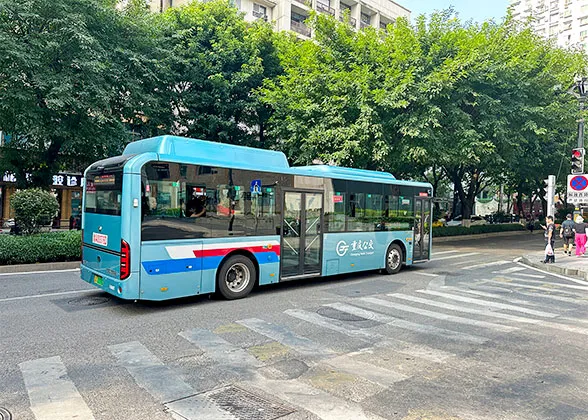 | | Chongqing City Bus | | 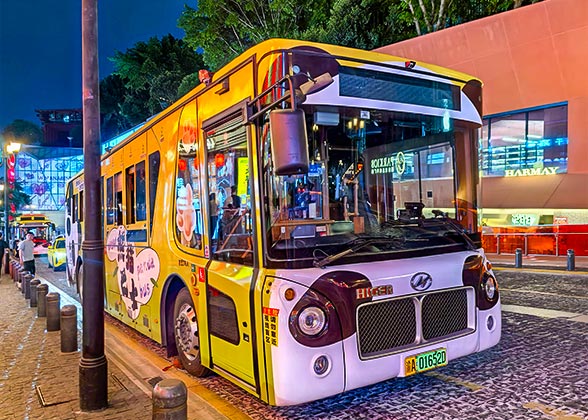 | | Panda-themed Sightseeing Bus | |
Tourist bus: If you’re planning a day trip to remote areas such as Wulong Karst or Dazu Rock Carvings, the Tourist Bus is the most convenient option, offering direct service from the city center straight to the entrance of each scenic area. Buses to
Wulong Karst and
Dazu Rock Carvings depart from Jiefangbei CBD at 7:30 and 8:00 respectively, returning to Jiefangbei CBD in the evening after your visit.
Long-distance bus: Connects to various districts and counties in Chongqing, as well as neighboring cities including Chengdu and Guang’an. They are perfect for in-depth tours of Chongqing’s suburban towns and serve as a practical alternative when train tickets to nearby cities are unavailable.
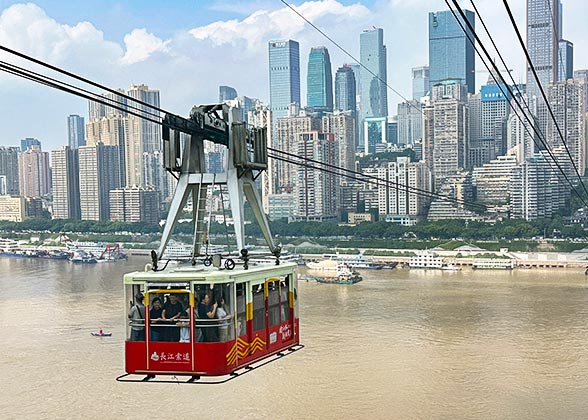 |
| Yangtze River Cableway |
The Yangtze River Cableway and urban ferries are far more than simple cross-river transport tools - they are signature sightseeing experiences in Chongqing. Riding the cable car, visitors can overlook the rushing Yangtze River, with clusters of skyscrapers and residential buildings lining both banks, fully embodying the city’s extraordinary 8D urban landscape. The Two Rivers Ferry is equally wonderful, especially for evening rides, where passengers can enjoy gentle river breezes and breathtaking night views of Chongqing.
The Crown Escalator is another unique transportation feature of this magical mountain city. As Asia’s second-longest escalator, it saves travelers great physical effort by quickly transporting passengers from the foot to the top of the hill. Visitors can experience this tunnel-like escalator ride by taking Metro Line 1 or
Line 3 to Lianglukou Station.
How to Pay for Public Transportation in Chongqing?
1. Cash
Cash is universally accepted for public transport. Metro tickets can be purchased directly at station counters, and city buses accept coin payments. Standard city bus fares are CNY 2 per trip with no change provided, so please prepare exact cash in advance.
2. Day Pass
For short-term tourists, the metro day pass is the most convenient option, granting unlimited rides on all metro lines. Chongqing Metro currently offers 1-day, 3-day, and 5-day passes priced at CNY 18, CNY45, and CNY 70 respectively, with validity periods of 24 hours, 72 hours, and 120 hours. These passes can be purchased at the service counters in metro stations.
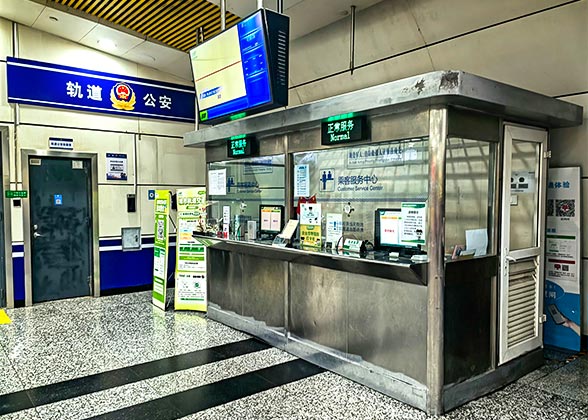 | | Service counter in metro station | | 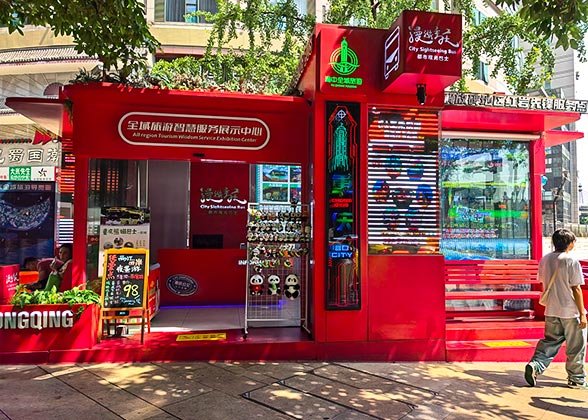 | | Red Booth Near Lailongxiang Bus Stop | |
Additionally, if you plan to take multiple sightseeing bus routes, you can purchase a one-day, two-day, or three-day pass priced at CNY 58, CNY 68, and CNY 78 respectively. These passes can be bought at the red booth near Lailongxiang Bus Stop in Jiefangbei CBD or via the WeChat mini-program Chongqing Tourist Sightseeing Bus. They entitle holders to unlimited rides on sightseeing buses, regular city buses and airport express lines. Note that exclusive routes including night sightseeing buses and panda-themed buses require separate tickets.
3. Alipay/WeChat QR Code for Riding
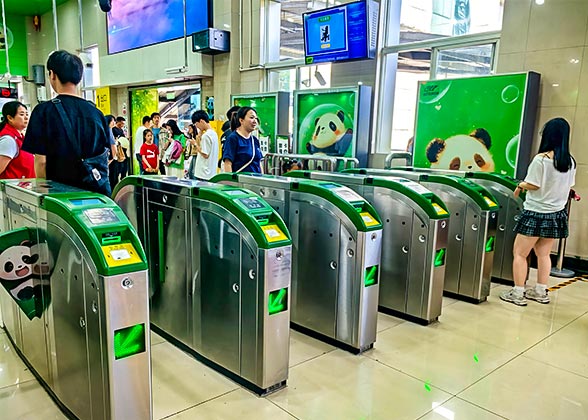 |
| Ticket gate of Chongqing Metro |
If you have already enabled Alipay or WeChat Pay, this will be the easiest method. Simply activate Chongqing’s transit QR code in the travel section of either app for instant scan-and-ride access. Please note that metro and bus services use separate QR codes, requiring manual switching during travel.
4. Mobile Phone NFC
For NFC-enabled smartphones, users can add a Chongqing Payeasy Card or China T-Union Card to their mobile digital wallet. After topping up the card, you can tap your phone directly to pay for metro and bus rides across Chongqing.
Transportation to Other Cities
- Last updated on Aug. 25, 2026 by Sherry Xia -