Chongqing Travel Guide
In recent years, Chongqing has risen to worldwide online fame with iconic monikers including the “Cyberpunk” and “8D Magic City”. Light rail trains gliding through residential buildings, the mesmerizing night scenery of Hongya Cave reminiscent of scenes from Hayao Miyazaki’s animated classic Spirited Away, and its intricate layered network of overpasses and pedestrian walkways endow the city with a striking futuristic and sci-fi aesthetic. Beneath these surreal urban landscapes lies Chongqing’s distinctive rugged topography. Nestled amid rolling hills at the confluence of the Yangtze and Jialing Rivers, the city features steep slopes, towering cliffs and winding waterways, crafting a one-of-a-kind three-dimensional urban landscape with dramatic elevation variations.
Boasting a time-honored and profound cultural heritage, Chongqing preserves countless historical tales within its ancient stone staircases and old alleyways. Its history stretches back to the ancient Ba Kingdom (1122 BC - 316 BC), followed by its official naming as “Chongqing” in the Southern Song Dynasty (1127 - 1279), and it later served as the wartime capital during the Chinese People’s War of Resistance Against Japanese Aggression.
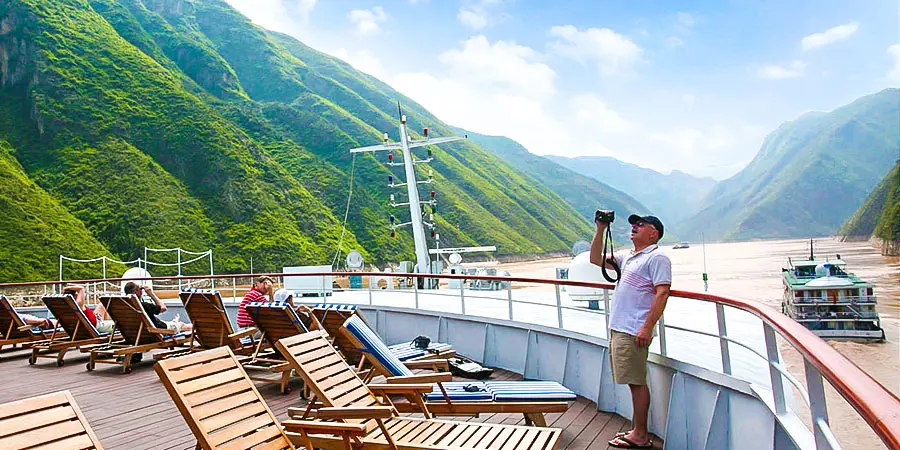
As the pivotal departure point for Yangtze River cruises, Chongqing’s Chaotianmen Dock welcomes travelers from across the globe, who embark on downstream voyages to explore the breathtaking gorges. Today, this former industrial hub has embraced remarkable modern transformation, where sleek contemporary skyscrapers stand in perfect harmony with traditional stilted dwellings, cementing its status as one of China’s most coveted travel destinations.
You may like:
Top 10 Things to Do in Chongqing
 |
| Yangtze River Cruise |
Boasting a time-honored and profound cultural heritage, Chongqing preserves countless historical tales within its ancient stone staircases and old alleyways. Its history stretches back to the ancient Ba Kingdom (1122 BC - 316 BC), followed by its official naming as “Chongqing” in the Southern Song Dynasty (1127 - 1279), and it later served as the wartime capital during the Chinese People’s War of Resistance Against Japanese Aggression.
As the pivotal departure point for Yangtze River cruises, Chongqing’s Chaotianmen Dock welcomes travelers from across the globe, who embark on downstream voyages to explore the breathtaking gorges. Today, this former industrial hub has embraced remarkable modern transformation, where sleek contemporary skyscrapers stand in perfect harmony with traditional stilted dwellings, cementing its status as one of China’s most coveted travel destinations.
You may like:
Top 10 Things to Do in Chongqing
Attractions
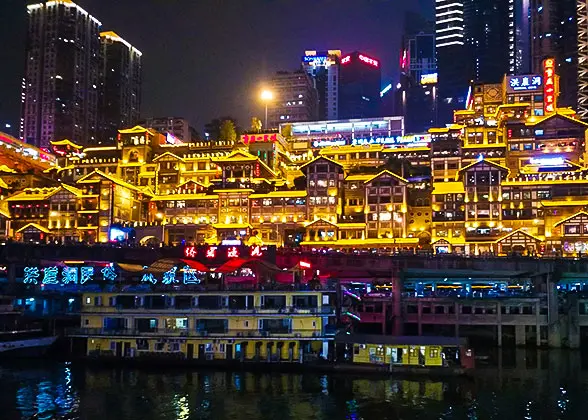
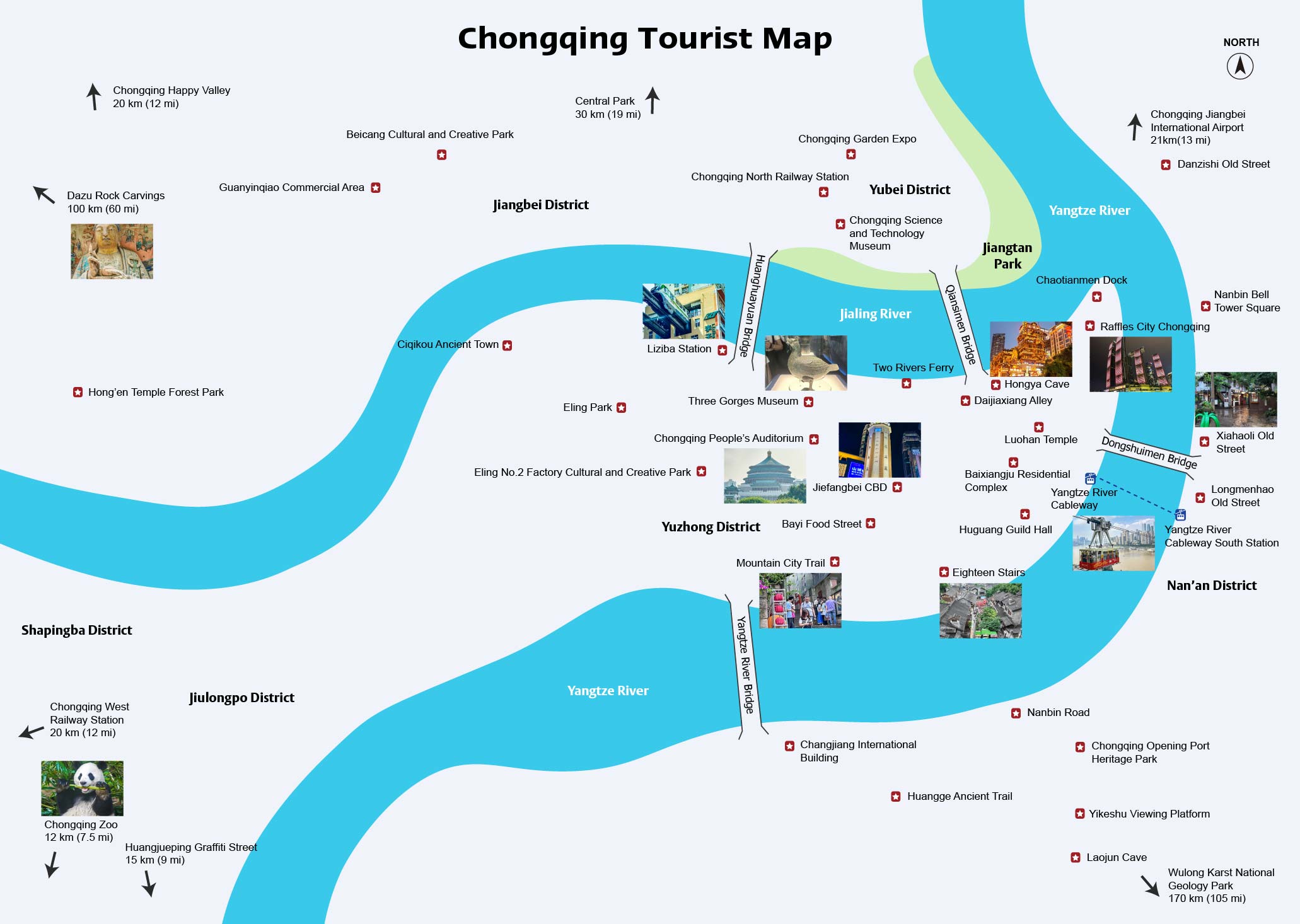
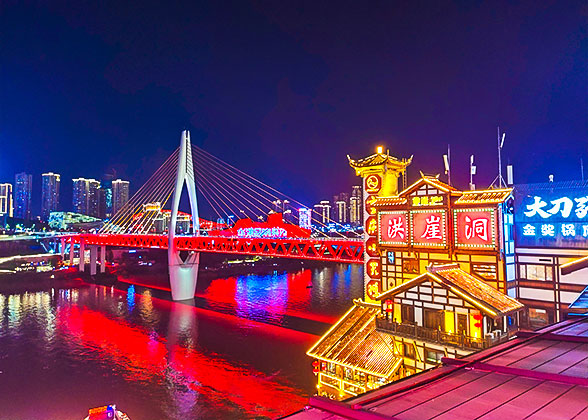
Mirroring its diverse terrain, Chongqing’s tourist attractions feature unique layering and striking contrasts. Hongya Cave stands as an unmissable landmark, a sprawling complex of cliffside stilted buildings. By day, it showcases the exquisite charm of traditional Ba-Yu architectural aesthetics; after nightfall, illuminated by dazzling lights, it transforms into a fairy-tale “sky city”, serving as a perfect backdrop for cyberpunk-style photography and filming. A ride on the Yangtze River Cableway soars above the rushing river waters, offering panoramic views of juxtaposed old and new architecture lining both banks, allowing visitors to soak in Chongqing’s three-dimensional urban allure in mere minutes. For an immersive experience of the city’s surreal charm, a visit to Liziba Light Rail Station is essential, where visitors can witness the spectacular sight of light rail trains traversing residential buildings.
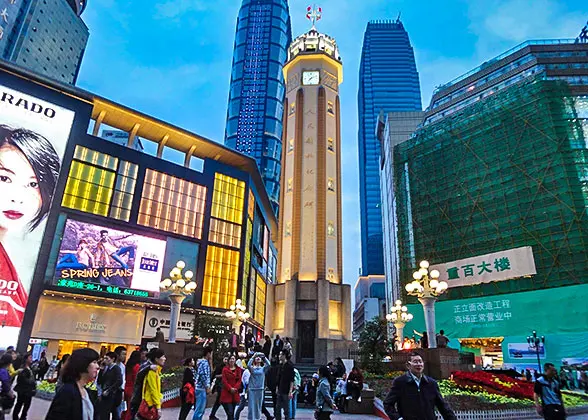
As the bustling heart of Chongqing, Jiefangbei boasts a skyline of towering high-rises evoking the vibrancy of New York’s Times Square. Adorned with shimmering neon lights day and night, it is the city’s premier hub for shopping, entertainment and cutting-edge urban experiences. To delve deep into Ba-Yu culture and the legacy of the Three Gorges Project, the Chongqing China Three Gorges Museum houses abundant and precious historical and cultural relics.
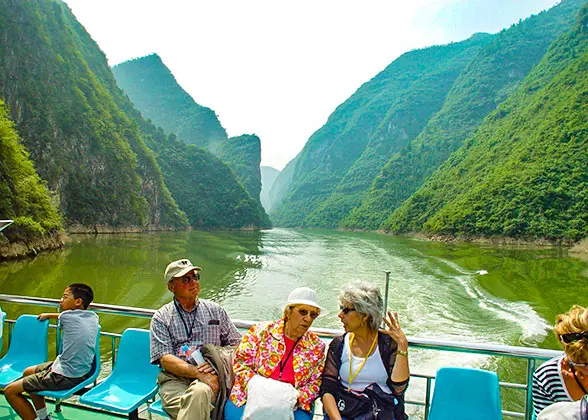
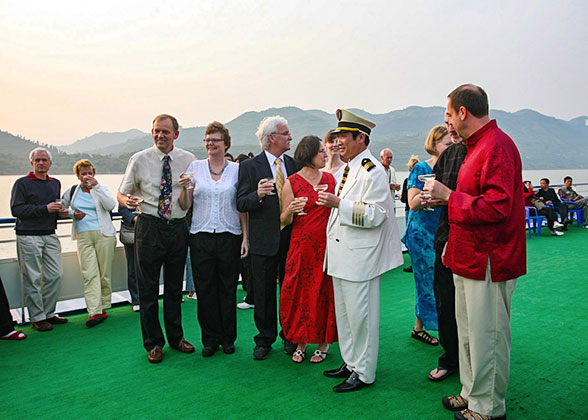
Those yearning to embrace the grandeur of the Three Gorges’ natural scenery can embark on a 4 to 5-day Yangtze River cruise covering Qutang, Wu and Xiling Gorges, experiencing the poetic magnificence of “a light boat glides past ten thousand lofty peaks” amid jagged peaks and emerald waters. Furthermore, two world-renowned scenic spots are not to be overlooked: the stunning landforms of Wulong Karst National Geology Park, and the Dazu Rock Carvings, a pinnacle masterpiece of ancient Chinese stone carving art.

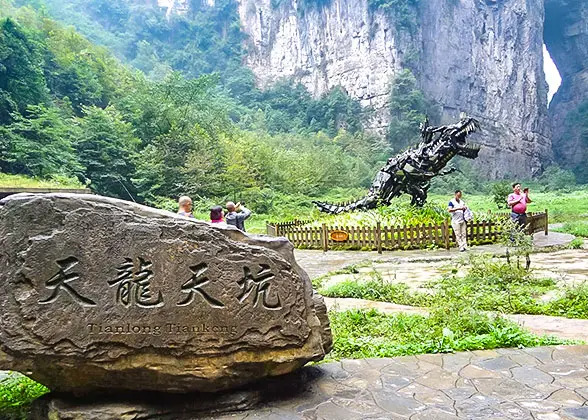
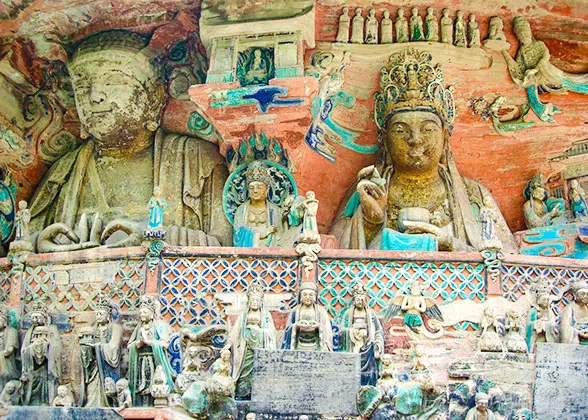
Chongqing serves as a vital transportation hub in southwest China, offering exceptional accessibility for travelers all over the world via direct air routes and high-speed rail networks. Nevertheless, its complex mountainous terrain renders urban transportation rather intricate. Even with navigation applications, first-time visitors can easily lose their way amid the city’s distinctive three-dimensional road system.
How to Get to Chongqing?
How to Get Around in Chongqing?
|
|
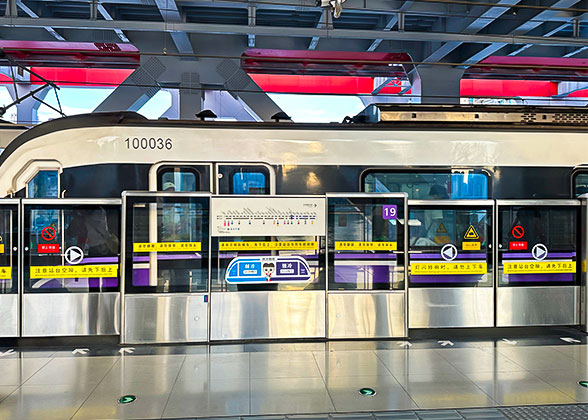
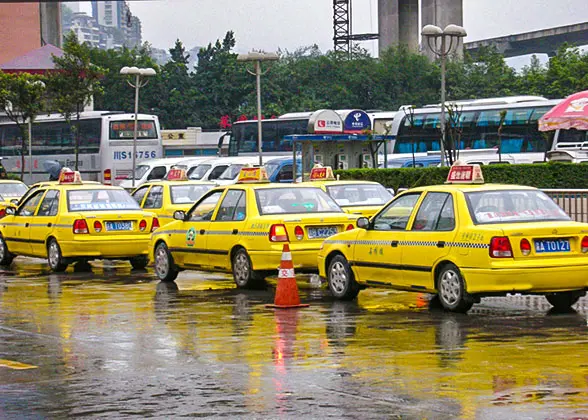
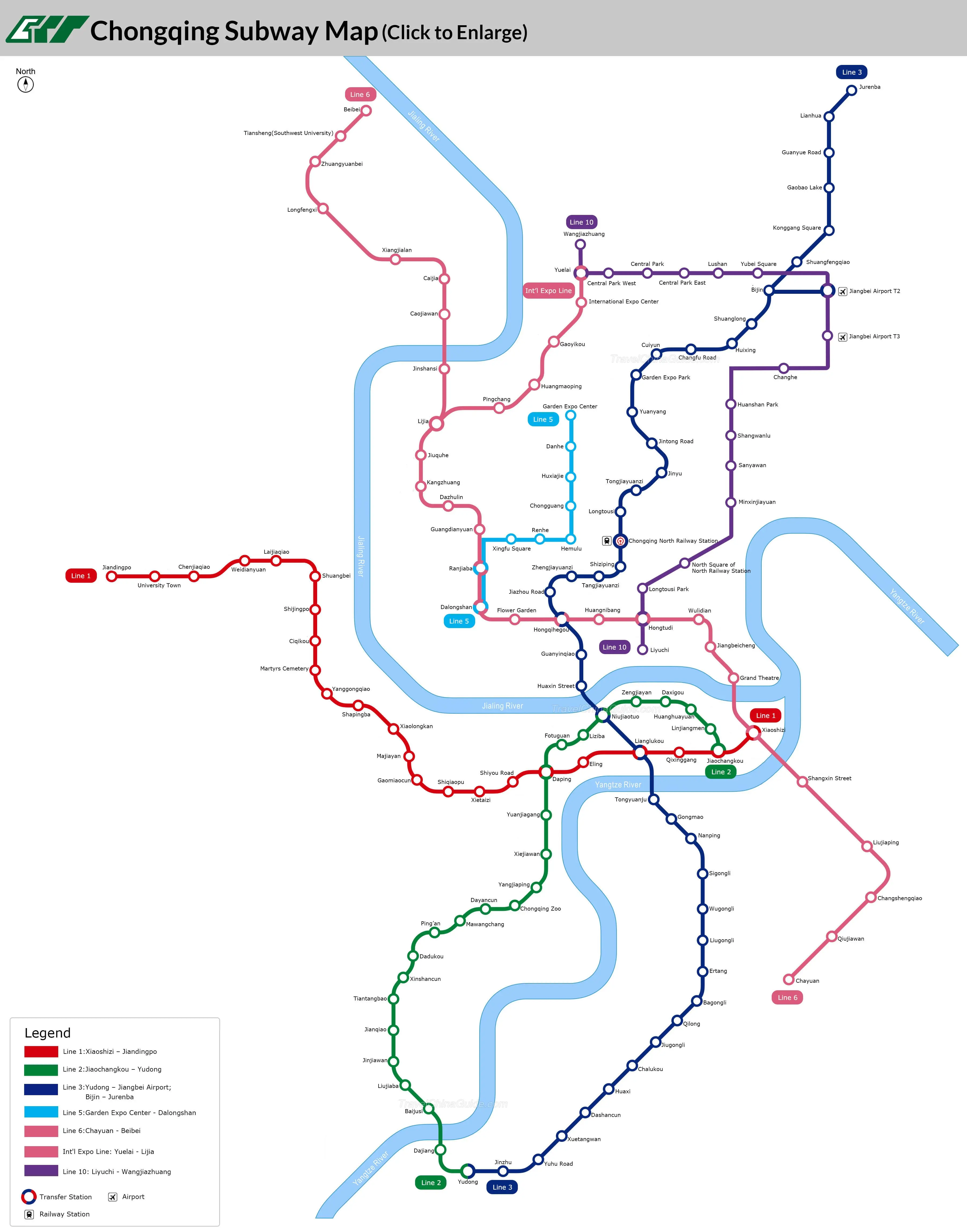
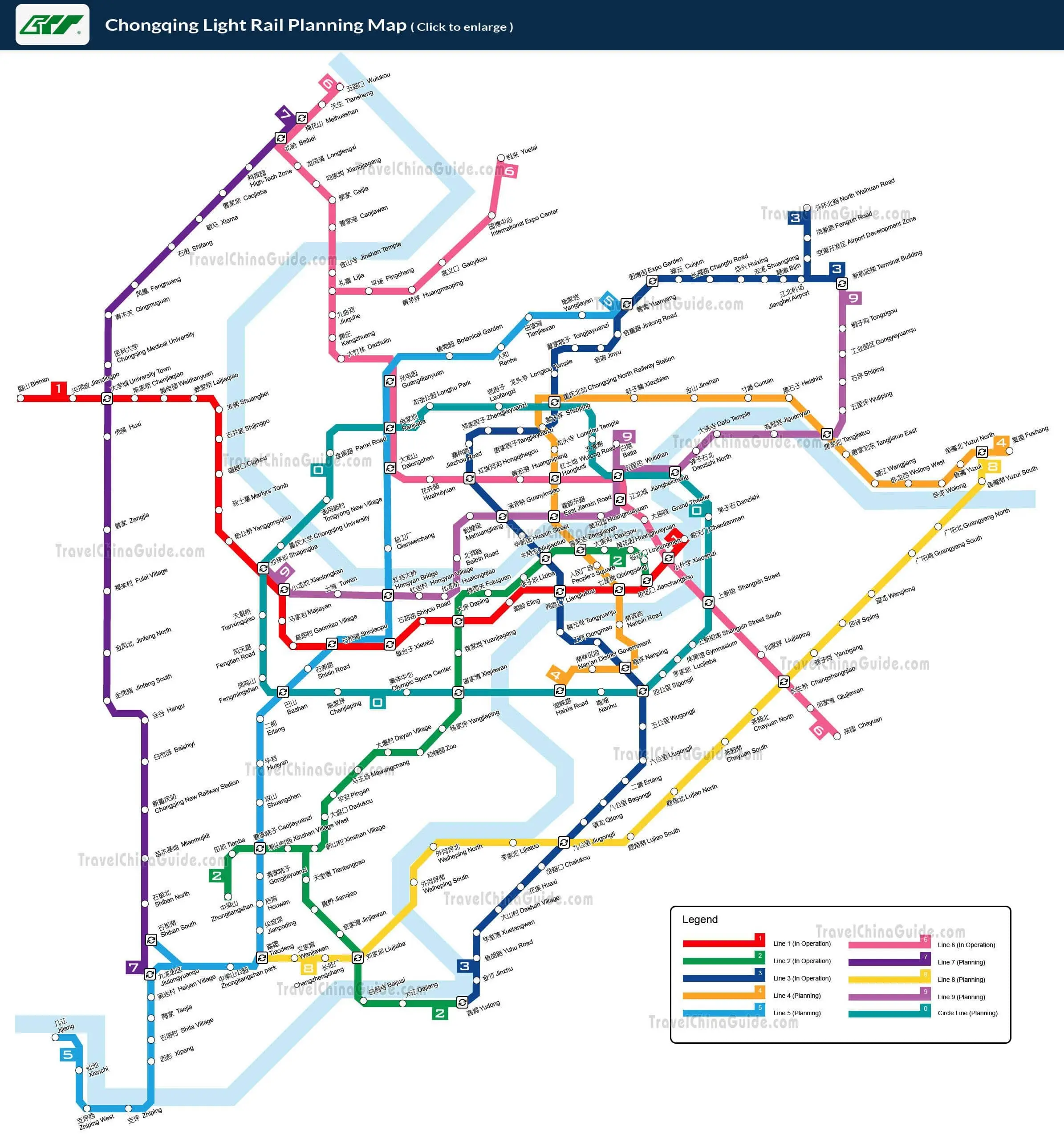
The city is equipped with a comprehensive public transportation system encompassing metro, public buses, taxis, cable cars, scenic escalators and ferries. Considering the physical exertion and time cost brought by its rugged terrain, metro and taxis are highly recommended as the preferred travel options. Cutting through mountains and spanning rivers, the metro bypasses complex ground traffic conditions efficiently, while taxis provide convenient door-to-door travel services.
Chongqing features a subtropical humid monsoon climate with four distinct seasons. January marks its coldest month, with an average minimum temperature of 6°C (43℉), while July and August are the hottest periods, with temperatures soaring up to 40°C (104℉). Shaped by its unique terrain and climatic conditions, the city sees frequent foggy weather, with an annual average of over 100 foggy days.
Spring and autumn constitute the optimal travel seasons, boasting mild and pleasant temperatures. Despite the sweltering heat, summer features fewer foggy days, making it ideal for admiring Chongqing’s spellbinding night vistas.
Chongqing Food
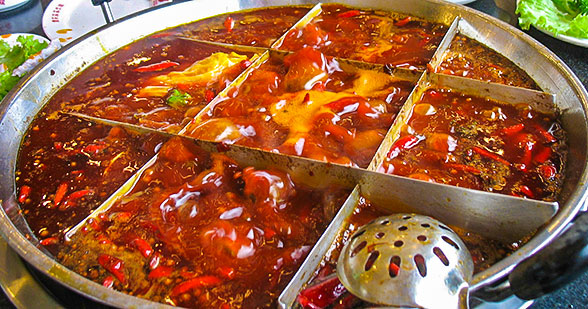 |
| Chongqing Hot Pot |
Where to Eat in Chongqing?
What to Eat in Chongqing?
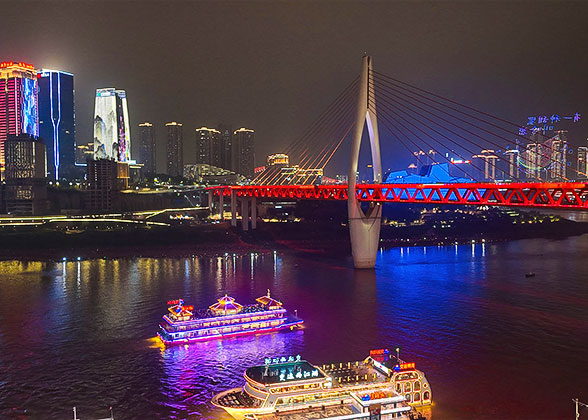
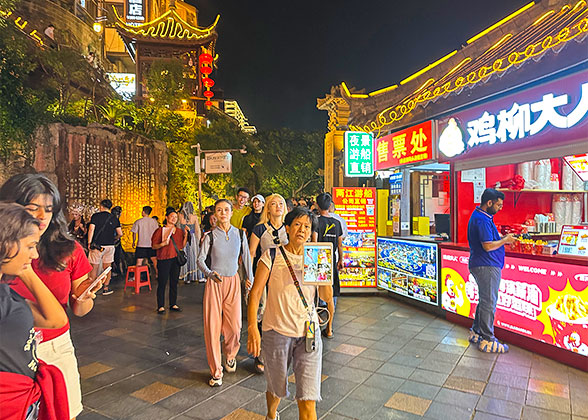
Chongqing’s nocturnal charm far surpasses its daytime beauty. As dusk descends, Hongya Cave and the skyscrapers of the Yuzhong Peninsula light up brilliantly, with their shimmering reflections rippling across the Yangtze and Jialing Rivers. The Two Rivers Night Cruise is a quintessential experience for first-time visitors, offering a unique perspective to appreciate the city’s dazzling riverside light displays from the water. For a tranquil riverside retreat, Nanbin Road is lined with stylish music restaurants, cozy bars and elegant teahouses, fostering a lively yet relaxing ambiance. To experience the vibrant nightlife favored by local youngsters, head to Jiujie Street, a bustling quarter packed with trendy bars, 24-hour hot pot restaurants and casual noodle stalls, integrating dining, drinking and entertainment in one vibrant destination.
|
|
Where is the Best Area to Stay in Chongqing?
How Long to Stay in Chongqing?
Recommended Tours

More to read:
Chongqing Travel Tips
Chongqing History & Culture
- Last updated on Aug. 17, 2026 by Sule Su -