If one word could capture the essence of traveling in Chongqing, it would undoubtedly be “magical.” Once famed merely as a departure point for Yangtze River cruises, the city has since earned global acclaim under two iconic monikers: a cyberpunk city and an 8D magical metropolis. The dramatic interplay between its undulating terrain and layered architecture crafts a striking three-dimensional urban canvas; the riverfront glow along the Yangtze and Jialing Rivers unfolds into dreamlike, spellbinding nightscapes; and distinctive karst geology births breathtaking mountain-and-water vistas. Magic is the beating heart of Chongqing’s scenery. Unlike Beijing and Xi’an - time-honored historic capitals steeped in solemn imperial heritage - Chongqing radiates an unrestrained creativity that constantly defies conventional logic.
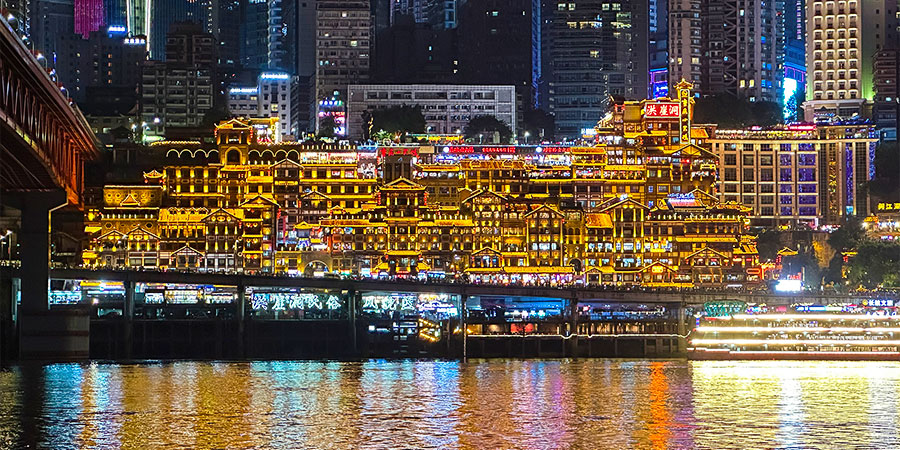
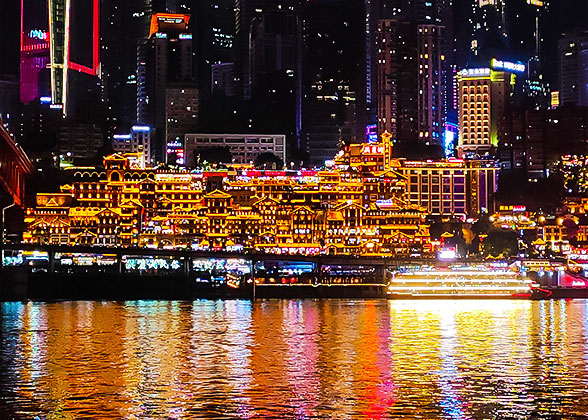
Hongya Cave at night
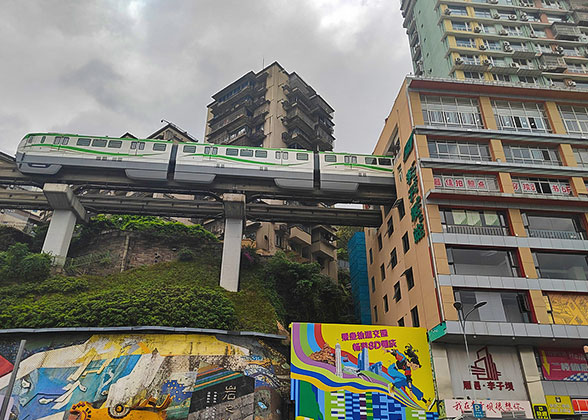
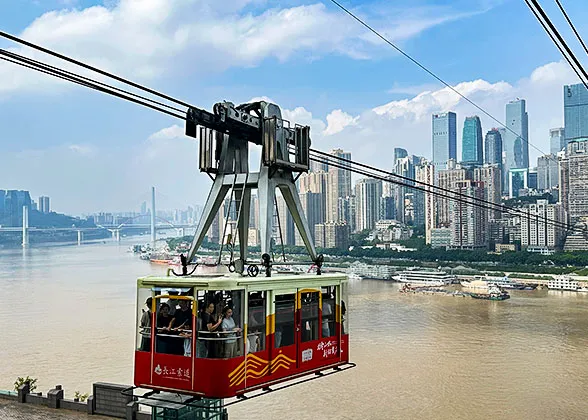
Chongqing’s modern urban fabric itself amounts to a visual odyssey. Flat thoroughfares are virtually nonexistent here; instead, bridges, tunnels and light railways weave the city’s mountains and waterways into a multi-tiered landscape. Light rail carriages glide straight through residential buildings, highways snake across rooftops, and public escalators serve as vital transit links - this is everyday life in the legendary 8D city. To soak in this unparalleled urban topography, ride the Yangtze River Cableway, gliding high above the water to gaze down upon clusters of skyscrapers lining both riverbanks; alternatively, head to Chaotianmen Dock, where the futuristic Chongqing Raffles City juts skyward like a colossal ocean liner at the confluence of the two great rivers.
Chongqing’s historical and cultural heritage is as rich, layered and full-bodied as its signature hot pot. The cradle of millennia-old Ba-Yu civilization, it boasts over 3,000 years of recorded history and once stood as China’s wartime provisional capital during the Anti-Japanese War, leaving an indelible trail of historical relics across its land. Wandering ancient precincts such as Ciqikou and Xiahaoli, visitors will find Ming (1368 - 1644) and Qing (1644 - 1912) stilt houses lining cobblestone lanes alongside bustling specialty shops, with the warm bustle of local daily life emanating from every nook and cranny.
Geographically, Chongqing sits at the transitional zone between the Qinghai-Tibet Plateau and the middle-lower Yangtze Plain, where nature unleashed its full creative prowess to craft extraordinary landscapes. Its one-of-a-kind geographic layout - cities built into mountains, mountains nested within urban sprawl, and rivers winding beneath elevated terrain - forms a naturally breathtaking masterpiece in its own right.
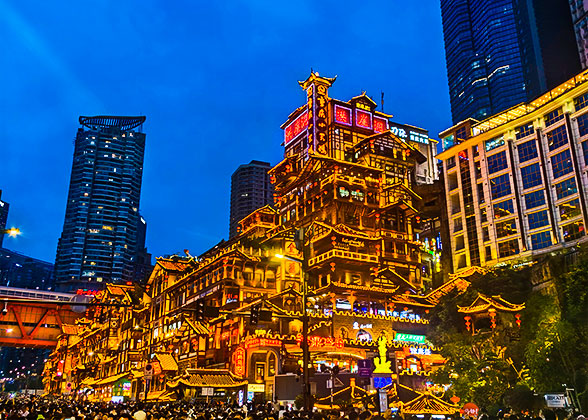
Hongya Cave stands as the crown jewel of Chongqing’s night views and the most vivid embodiment of the city’s whimsical 8D charm. This 11-tier cliffside stilt-house complex rests serenely beside the Jialing River by daylight, yet transforms into a fantastical realm straight out of Spirited Away once dusk falls and its lights flicker to life. Layer upon layer of gilded illumination spills onto the river surface, shimmering in perfect harmony with the bridge spanning the river and sleek modern high-rises in the distance. Inside, an array of stalls serves iconic Chongqing snacks and local handicrafts. Here, visitors can soak in sweeping vistas, browse local wares to their heart’s content, and immerse themselves in a seamless fusion of culture, cuisine and entertainment.
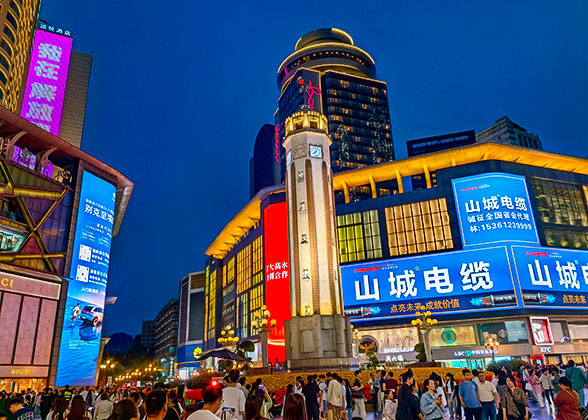
Jiefangbei functions as Chongqing’s central commercial district and an iconic spiritual landmark. At the precinct’s core rises the People’s Liberation Monument, first erected in 1940 and emblazoned with its prominent inscription. It is China’s sole monument dedicated to commemorating the nation’s victory in the War of Resistance against Japanese Aggression. Ringed by glass-clad skyscrapers and luxury flagship boutiques, the district buzzes with contemporary energy by day and blazes with neon luminescence after dark, cultivating an unmistakable cyberpunk ambiance. Conveniently positioned within walking distance of nearly all major city landmarks, it serves as an indispensable starting point for first-time visitors to Chongqing.
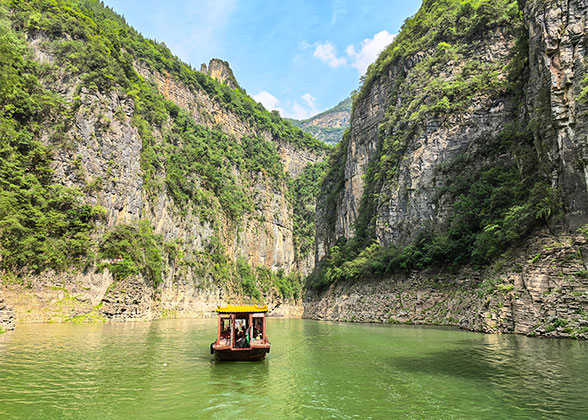
Setting sail from Chaotianmen Dock, a Yangtze River cruise delivers a scenically spectacular, effortlessly tranquil journey. As vessels drift downstream, travelers witness the imposing grandeur of Qutang Gorge, the secluded serenity of Wu Gorge, and the precipitous, rugged beauty of Xiling Gorge unfolding in succession. Leaning against the deck railings, guests behold steep, emerald-hued mountain peaks flanking the water, wispy mist curling between summits - every instant of the voyage resembles a living Chinese landscape scroll. Life onboard unfolds at a gentle, unhurried pace: scenic sightseeing by day, lulled to rest by the river’s soft murmur after dark, offering a rare, restorative escape from the rush of modern travel.
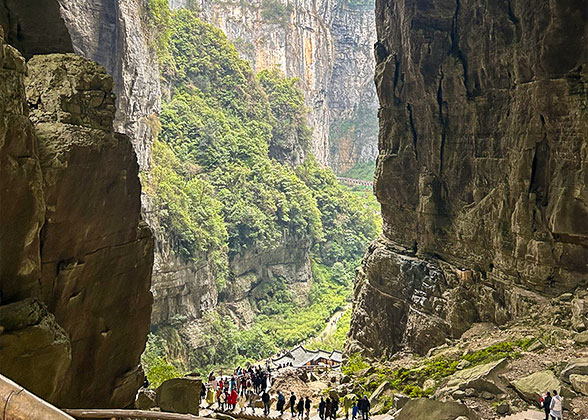
Wulong Karst National Geology Park is hailed as nature’s sculptor’s studio, showcasing the earth’s unparalleled geological craftsmanship. Its massive sinkholes and Three Natural Bridges constitute an exceptionally rare, jaw-dropping natural wonder: sheer collapsed cliff faces, deep chasm basins and cascading waterfalls converge to craft an awe-inspiring panorama. The site featured as a filming backdrop for Transformers: Age of Extinction, and the primeval, monumental grandeur of its karst formations evokes the sensation of stepping onto the geological ruins of an alien world.
5. Light Rail Passing Through a Building
Liziba Light Rail Station has become the most iconic symbol of Chongqing’s surreal 8D urban topography. The mere phrase “light rail passing through a residential building” conjures an almost otherworldly, dreamlike image. Each day, throngs of tourists gather at dedicated viewing platforms, phones raised in anticipation of the iconic sight: a sleek modern train gliding slowly toward an ordinary apartment block before vanishing seamlessly into its structure. This is no contrived sci-fi spectacle, but an ingenious engineering solution forged to adapt to Chongqing’s rugged hilly terrain.
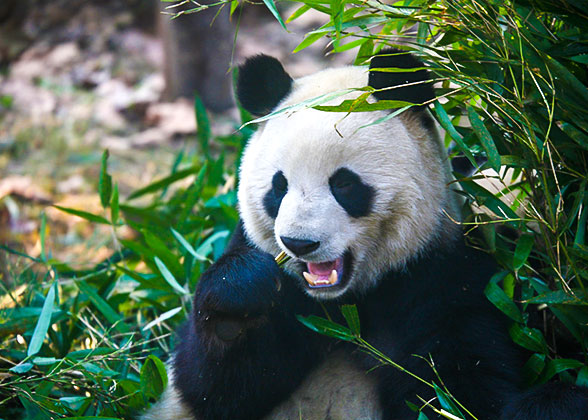
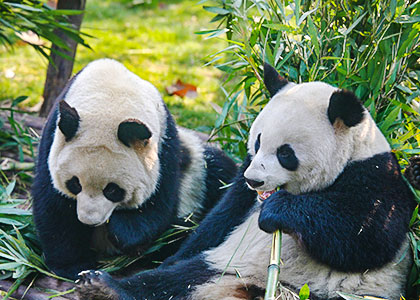
Chongqing Zoo offers an unbeatable opportunity to encounter giant pandas. The panda enclosure is invariably the liveliest corner of the park: guests watch these beloved bears munch contentedly on bamboo, oblivious to onlookers, or tumble and frolic across wooden platforms. Their gentle, carefree demeanor effortlessly melts away travel weariness.
7. Xiahaoli Old Street
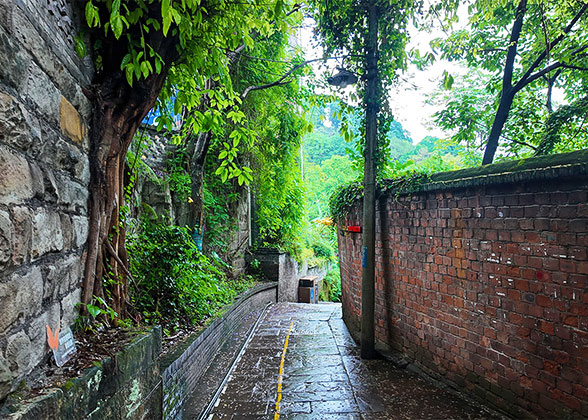
Xiahaoli Old Street, a century-old lane steeped in vintage allure and artistic flair, tops the list for immersive urban walking tours in Chongqing. Historic Western-style trading mansions stand side by side with traditional local dwellings, while winding stone staircases connect an array of artisanal boutiques and cozy cafes. As visitors amble along, the bustling Dongshuimen Bridge stretches overhead, the wide Yangtze River unfurls far below, and ancient cobblestone paths beneath lead through a dreamlike blend of bygone eras and modern life - a distinctly Chongqing experience brimming with everyday warmth, cultural depth and quiet romance.
Xiahaoli Old Street
Yangtze River Cableway View
8. Yangtze River Cableway
The Yangtze River Cableway acts as a suspended time tunnel arching over the river. Once a vital daily transit route for the city’s hillside residents, it has evolved into a quintessential aerial sightseeing ritual. As the cable car departs the station and glides across the broad river expanse, the full breadth of Chongqing unfolds beneath passengers’ feet: on one side, a dense forest of towering skyscrapers covers Yuzhong Peninsula; on the other, low-rise homes nestle amid lush greenery in the southern districts; below, golden ripples shimmer across the water as slow-moving barges drift past. This brief airborne journey distills the city’s three-dimensional topography, surreal whimsy and vibrant local vitality into a single, unforgettable experience.
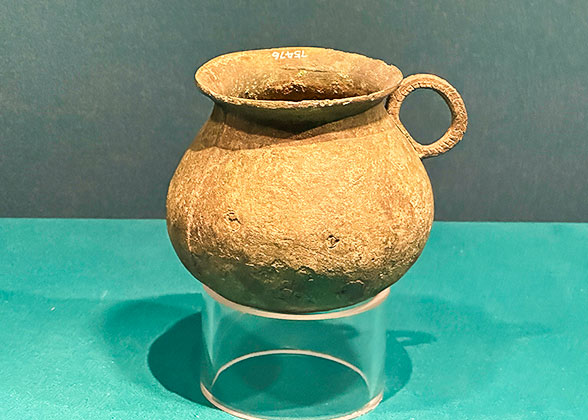
The Three Gorges Museum is an ideal place to gain a deep understanding of the culture of Chongqing and the Three Gorges region. With a collection of 115,000 cultural relics, it brings the area’s rich heritage to life. One of the highlights here is a large-scale model of the Three Gorges, which illustrates how the gorges were formed and showcases the region’s diverse plant and animal life. Complementing the model are remarkable exhibits such as the earliest human fossils, dating back 2.5 million years, and the largest bronze ritual vessel ever unearthed in the Chongqing area, among many other treasures.
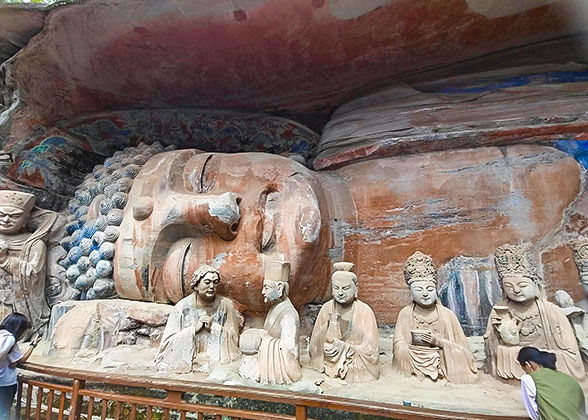
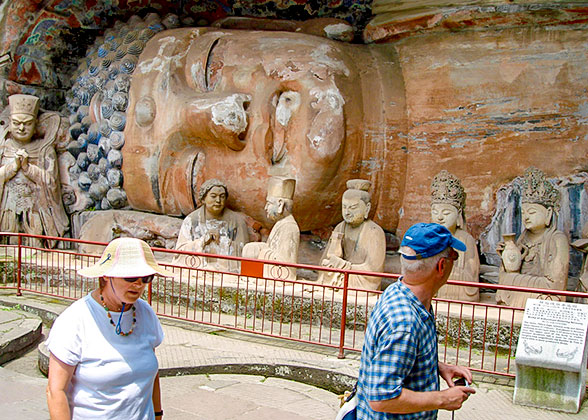
Where Wulong dazzles with natural magic, the Dazu Rock Carvings exude grandeur born of human artistic mastery. A UNESCO World Heritage Site anchored in Buddhist culture, they represent the pinnacle of Chinese cliff carving artistry. These sculpture groups comprise 141 existing sites, containing more than 50,000 stone statues. Distinguished by its down-to-earth, lifelike stylization, Dazu holds a unique position among China’s cave art treasures and is revered as “the crowning masterpiece in the chronicle of Chinese rock carving.” The Thousand-hand Bodhisattva, boasting 830 arms, ranks as China’s largest cliffside statue integrating sculpting, polychrome painting and gilding techniques.