Like a giant dragon, the Great Wall meanders over deserts, grasslands, and mountains until finally arriving at its destination - Bohai Gulf. Zigzagging 21,196 kilometers (13,170 miles) from Jiayuguan Pass in the west to Hushan Mountain in Liaoning in the east, the wall crosses over ten provinces and cities, including Qinghai, Gansu, Ningxia, Shaanxi, Inner Mongolia, Shanxi, Hebei, Beijing, Tianjin, and Liaoning. The wall had witnessed many changes through several thousand years of history, from the Warring States to the Ming Dynasty.
Here lists the famous sections in different areas:
In Beijing, there are many relics of the wall, most of which were built around 1540. The notable sections include: 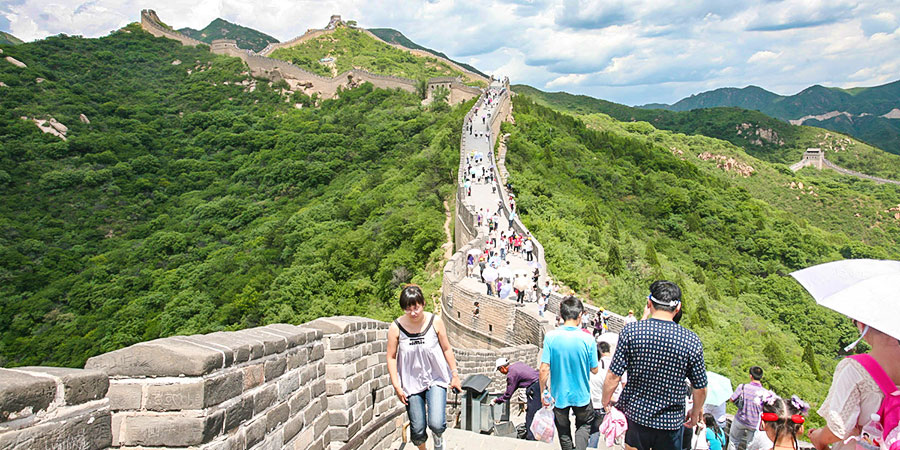 |
| Badaling, Beijing |
In Gansu, numerous cultural relics of the Silk Road can be found, such as the Mogao Caves and Maijishan Grottoes. Also it played a very important role in the ancient military defense. A lot of Great Wall relics have been found in this region. The most famous one is Jiayuguan Pass in Jiayuguan City, which is the western beginning of the Ming wall. Additionally, the Overhanging Wall is worth a visit. 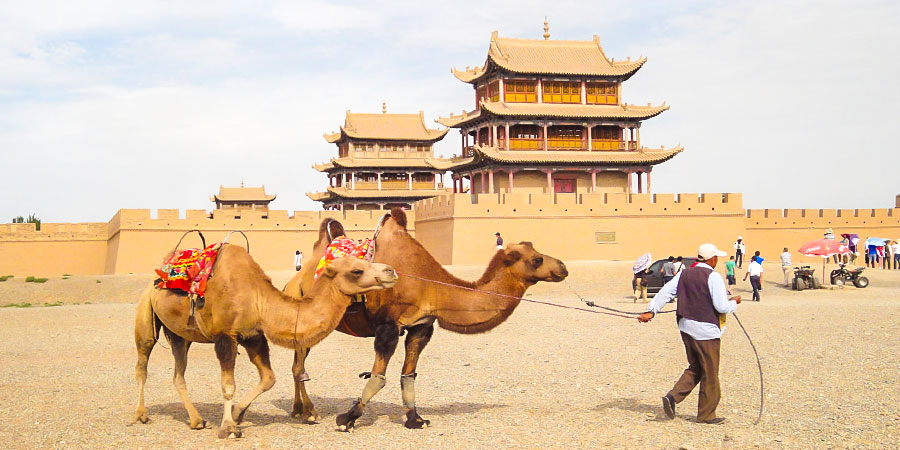 |
| Jiayuguan, Gansu |
There are a large number of Great Wall relics in Hebei Province. Most of them were built in the Ming Dynasty. In the east of Hebei stand the Wall of Laolongtou, Shanhaiguan Pass, Xifengkou & Panjiakou, Zijingguan, Jiaoshan, Qingshankou, Malanguan, etc. In northwestern Hebei, you can see Zhangjiakou, Changyukou and Qingbiankou Great Wall. And in the southwest of Hebei, Wulonggou, Futuyu, and Chajianling can be seen. 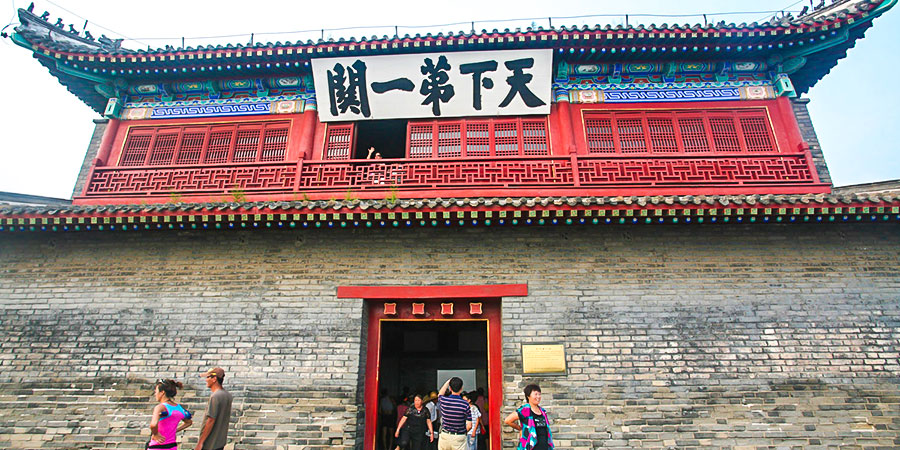 |
| Shanhaiguan, Hebei |
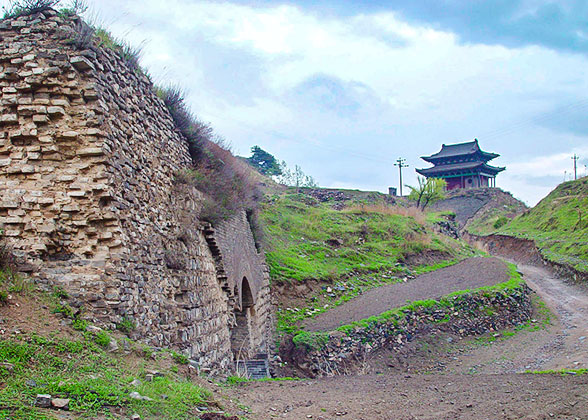
Inner Mongolia boasts the largest number of Great Wall relics. Its total length covers one third of the whole length of China Great Wall. However, a great many remains were destroyed and even some of them have died out. For instance, in the area of Juyanhai Lake, ten fire towers have disappeared.
In Ningxia, the Sanguankou (Three Passes) is highly recommended. In the Ming Dynasty, the Tartar and Wala tribes of Mongolia often came into the northwest China from Sanguankou. For the sake of safety, Sanguankou was built.
- Last updated on Jul. 16, 2026 by Sherry Xia -


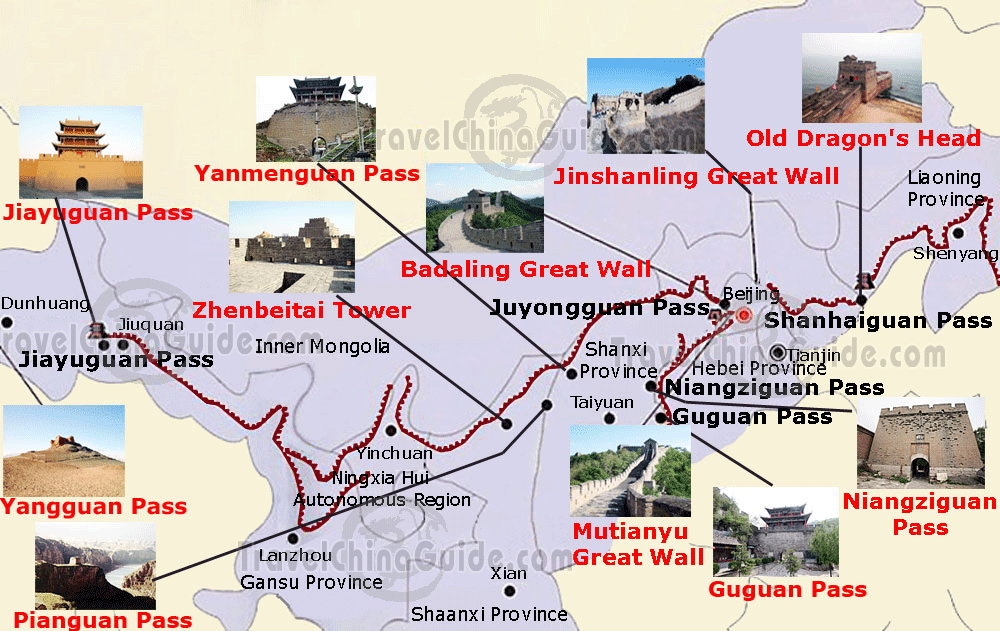
 More Great Wall of China Maps
 Click to choose a section suitable for you: Which Section to Visit?, 6 Best Places to See Great Wall of China