The Terracotta Army's Golden Armor Dilemma: Splendor or Risk?
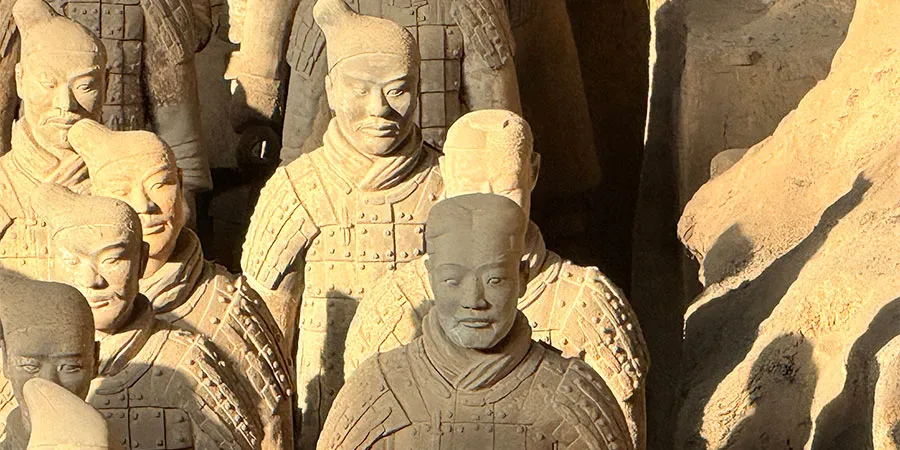
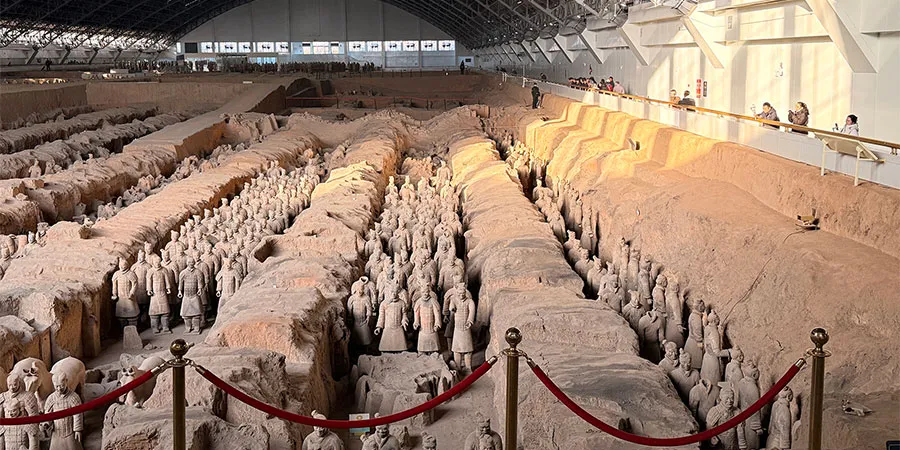
Recently, the sight of the Terracotta Warriors in Pit 1 being cloaked in "golden armors" has once again captured widespread attention. Around the winter solstice each year, sunlight passes through the glass ceiling of the pit and falls directly on the terracotta figures, creating the illusion of golden armor, which is a truly spectacular view. However, behind this beautiful scene, we should consider: could this direct sunlight shining through the glass onto the terracotta warriors cause harm to themselves? In fact, since their excavation and public display, the protection of the Terracotta Army continues to face numerous issues and challenges.
The Current Exhibition Environment Is Not Conducive to the Protection of the Terracotta Warriors.
At present, most of the Terracotta Warriors are displayed directly in the pits, exposed to the air over long periods. Such a mode of exhibition poses multiple risks to their preservation. While obvious changes may not be visible in the short term, it is difficult to imagine what state the figures will be in after centuries.
1. The exhibition environment is not maintained at a constant temperature and humidity.
Pottery relics, such as the Terracotta Warriors, are particularly sensitive to environmental changes. Frequent fluctuations in temperature and humidity can easily cause surface cracking and accelerate weathering. Experts have warned that if the warriors remain in their current environment, details such as their noses and hairstyles may gradually blur over time, and even the arms may detach.
2. Air pollution is slowly eroding the Terracotta Warriors.
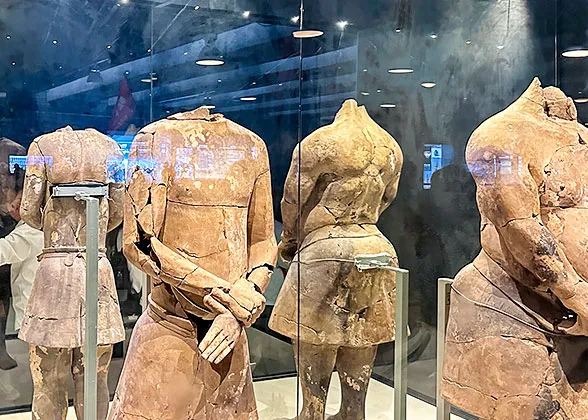
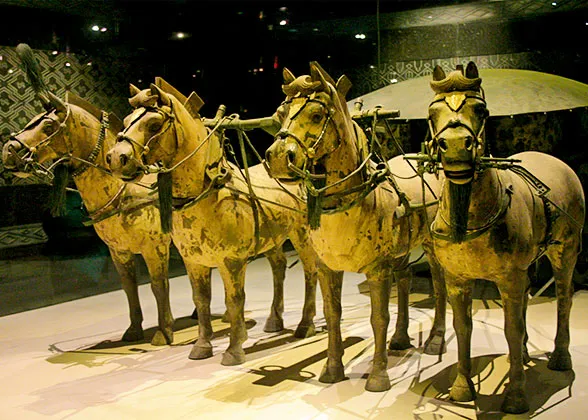
Aside from oxygen, pollutants such as sulfur dioxide and airborne dust can react chemically with the minerals on the figures' surfaces. This not only dulls the warriors' luster but may also gradually penetrate their surfaces, making them more fragile and even leading to localized flaking. An experiment once showed that a clean piece of white paper placed inside the hall was covered with a gray-black dust layer just 24 hours later. It is these particles that gradually erode the surfaces and diminish their luster. Indeed, today we can clearly see that some of the figures displayed for long periods in the pits are already covered with a thick layer of dust.
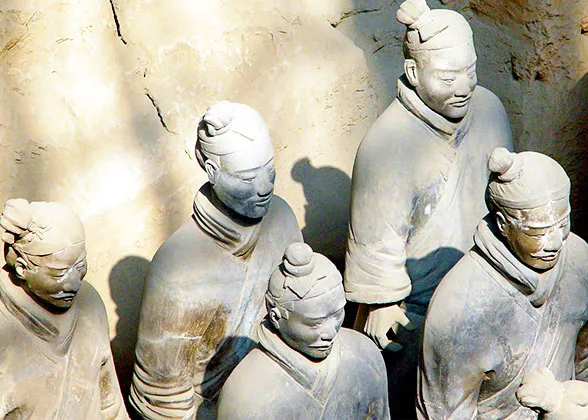
Dust on Surfaces of Terracotta Warriors
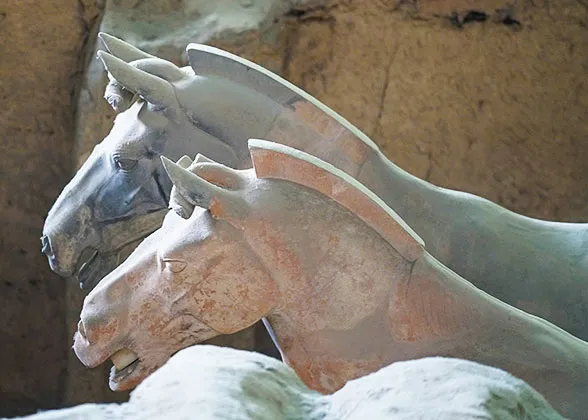
Terracotta Horses Coated with Dust
3. Microorganisms may still be present.
After years of excavation and public display, the soil within the pits has deteriorated to varying degrees, with microorganisms being one of the causes. Previous data have shown that approximately 1,400 terracotta warriors were once affected by fungus. Mold was also found in Pit 2 during the early excavation process, which took conservators nearly three months to eliminate through manual spraying of chemical agents. However, the use of such chemicals may itself damage the relics.
4. Sunlight exposure accelerates the aging of the relics.
The protective canopy over Pit 1 partially uses a glass roof, which provides a relatively bright viewing environment and creates the winter "golden armor" phenomenon, but also exposes the terracotta figures to direct sunlight. Ultraviolet radiation can trigger photochemical reactions on the surfaces of the warriors, causing color fading and material degradation. Additionally, sunlight passing through the glass raises the temperature inside the hall, further disrupting the environment required for the warriors' preservation.
Terracotta Warriors under Direct Sunlight
If the current exhibition environment could be improved by maintaining constant temperature and humidity, enhancing environmental monitoring systems, and minimizing damage from air pollutants, sunlight, and microorganisms, we might better preserve the warriors in their current state.
On-site Protection and Management Are Not Perfect.
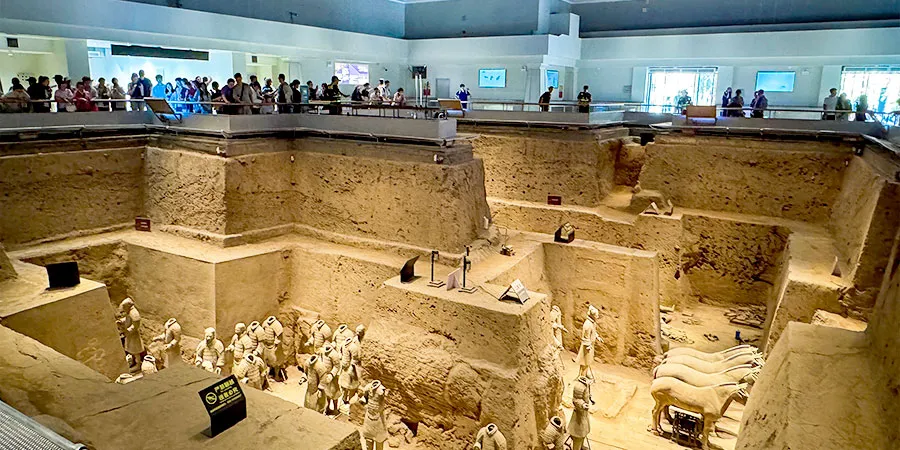
At present, the museum has installed railings around each pit to separate visitors from the relics and posted signs prohibiting flash photography. However, these measures are not entirely effective in preventing risks posed by visitors.
1. In recent years, multiple incidents have occurred in which visitors entered the pits due to crowding, attempts to get a closer look, or unexpected situations. For example, in May 2025, a visitor climbed over the railing and fell into Pit 3, directly damaging two precious second-class national relics, terracotta warriors. In August 2024, a mother jumped into Pit 1 to attract security personnel's attention because her child fell ill, and the crowded hall prevented a quick exit. Even as far back as 2006, a German student, fascinated by the warriors, dressed as one and blended into the formation until noticed by other visitors and removed by security.
Terracotta Army Pit 3
2. The accidental dropping of personal items into the pits is also a frequent occurrence. Statistics show that during the summer vacation of 2025 alone, an average of 12 items fell into the pits each day, including drink bottles, mobile phones, jewelry, selfie sticks, and umbrellas. These objects may directly touch or even damage the warriors, and their retrieval could cause secondary harm.
Railings of Terracotta Army Pit 1
3. Moreover, many visitors still use flash photography. In fact, frequent flash exposure can break down molecules on the terracotta warriors' surfaces, accelerating their fading and aging.
Even if these visitors do not directly touch the warriors, entering the pits damages the compacted earth and the overall site, and using flash causes irreversible harm. Unfortunately, such behavior often does not result in severe penalties afterward. Will such incidents occur again in the future? Could more terracotta warriors be damaged as a result?
If on-site protective measures could be reinforced, such as increasing barriers around the pits, increasing security patrols, especially during peak holiday periods, and placing more prominent auditory or visual reminders against flash photography, the Terracotta Warriors might be better protected for future generations to appreciate.
Why Not Suspend Excavation Until Technology Is Fully Mature?
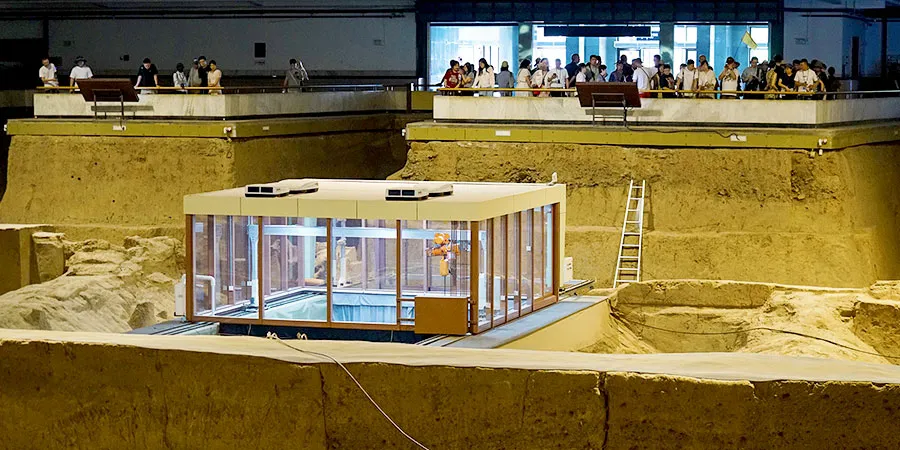
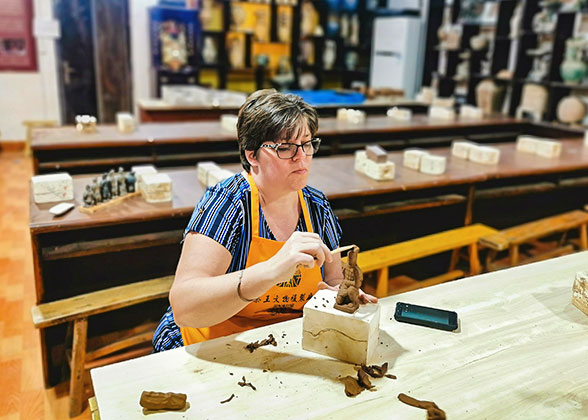
It is well known that the Terracotta Warriors were originally brightly colored, with painted details covering their bodies. However, after excavation, changes in environmental conditions cause these painted layers to flake off rapidly. Although conservators have identified the main reasons and have attempted treatments using consolidants and anti-wrinkle agents, and have even established an on-site conservation and restoration laboratory within the pits to quickly transfer the excavated fragments to the laboratory with constant temperature and humidity. Currently, at least an hour is needed to remove an excavated figure from the pit to the laboratory, during which the painted layers can still be damaged by environmental changes.
On-site Restoration Laboratorty in Pit 2
More challenging is that some painted layers detach along with soil fragments and mix into the pit's yellow earth. Separating these pigment fragments from the soil and reattaching them to the warriors remains an issue without a fully effective solution.
Given this, should excavation be paused until the technical challenges are fully resolved? Perhaps in a few decades, future generations will have mastered painted-layer preservation techniques. By then, resuming excavation would not only offer better protection for the warriors but also represent a form of spiritual and cultural heritage that transcends time.
Originally Colorful Terracotta Warriors
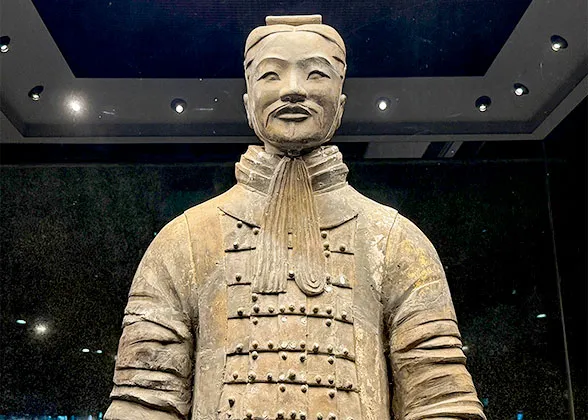
Today's Grey Middle-ranking Officer
Excessive Tourist Numbers Intensify Pressure on Relic Preservation.
The continuous stream of visitors underscores the Terracotta Warriors' appeal, but large crowds also strain their preservation. During holidays, daily visitor numbers often exceed 60,000, more than double the optimal capacity.
During peak times, the museum's monitoring system is overloaded, alarm terminals are overwhelmed, and the risk of damage from uncivilized visitor behavior rises. Moreover, visitors themselves are a significant source of pollution: carbon dioxide from breathing, dust from clothing, sweat, and even rainwater from umbrellas can affect the indoor environment. Over time, this undoubtedly accelerates the aging and deterioration of the warriors.
If reservations and time-slot visits were better implemented to control the number of visitors in the halls, coupled with stronger promotion of the nearby Lishan Garden to encourage visitors to explore these equally remarkable sites, pressure on the Terracotta Warriors might be alleviated while improving the visitor experience.
Acrobatics Figures in Lishan Garden
Bronze Chariot and Horses in Lishan Garden
Application of Modern Technology in Relic Preservation Is Insufficient.
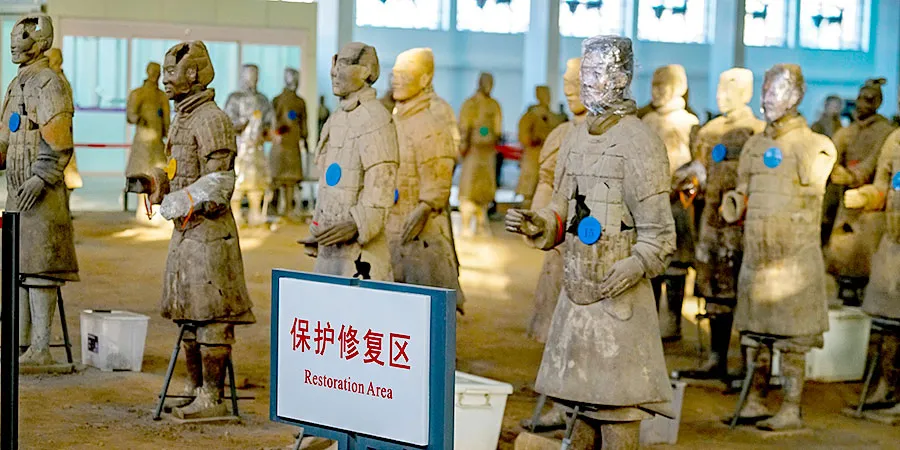
Preservation efforts for the Terracotta Warriors have achieved some results. However, preservation still relies largely on traditional methods such as chemical consolidation and surface sealing, which have limited effectiveness under heavy visitor traffic and complex environments. While technologies such as 3D scanning and VR are already used in displays and education, their application in relic preservation remains limited.
Only about 15% of the relics are equipped with environmental monitoring devices, and data collection and analysis capabilities are insufficient to promptly adjust preservation measures in response to environmental changes. In addition, digital preservation adoption is only about 30%, so most relics still rely on manual inspection and traditional restoration methods, which are less efficient and less precise. It's predicted that if preservation technology is not upgraded by 2027, about 80% of the Terracotta Warriors may show noticeable signs of weathering on their surfaces.
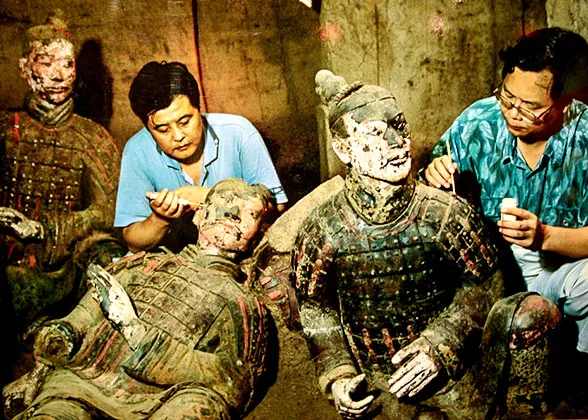
Terracotta Warriors to Be Restored
If technology could be more widely used to monitor relic conditions in real time and to intelligently control the environment, could the Terracotta Warriors be better safeguarded? Additionally, leveraging technologies such as billion-pixel panoramas and AR to develop more immersive online tours might allow more visitors to appreciate the warriors up close from various angles virtually, potentially reducing on-site pressure on relic preservation.
Some Staff Members Lack Sufficient Awareness of Relic Preservation
Preserving the Terracotta Warriors is not just a technical task; it also depends on everyone's commitment. Specialized literacy and preservation awareness similarly affect the long-term conservation of the Terracotta Warriors. For instance, some tour guides do not adequately convey preservation knowledge during their tours. If they could impart more knowledge about protection during their explanations, perhaps tourists would be more conscious of taking care of cultural relics.
The museum has already invested significantly in staff training. If preservation awareness were more deeply integrated into every aspect of daily work, with systematic training strengthened for all personnel, including on-site security, guides, and management staff, to foster better collaboration, the collective effort to protect the warriors would grow stronger.
Protecting cultural relics, especially irreplaceable ones like the Terracotta Warriors, is a long race against time that requires everyone's participation. It is hoped that these issues can be gradually addressed, allowing this precious historical heritage to endure for generations to come, so that our descendants may also witness the marvels of a civilization from over two thousand years ago.
 You may like:
  True Colors of Terracotta Warriors