Terracotta Army Pit 3
 |
Xi'an Terracotta Army Pit 3 Pictures of Terracotta Army Pit 3 Pictures of Terracotta Army Pit 3 |
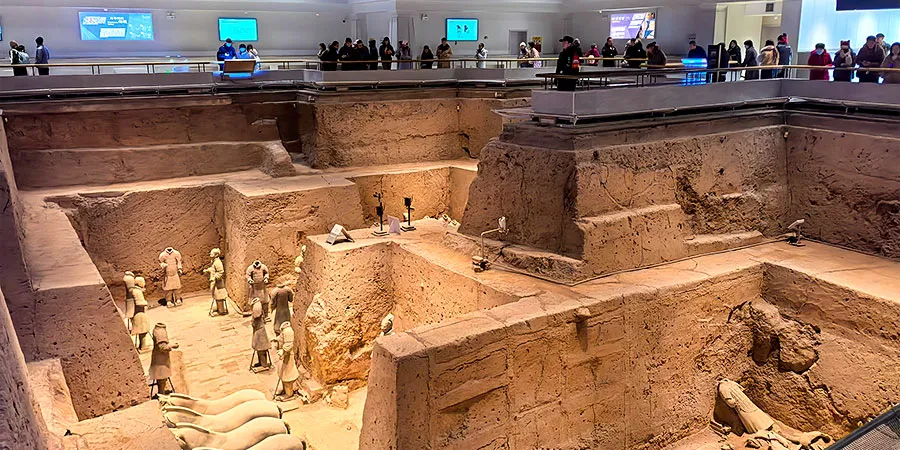
Discovered in May 1976 and opened to the public in September 1989, Pit 3 has been fully excavated by archaeologists. Today, visitors can view the complete ancient command center exactly.
What to See inside the Terracotta Army Pit 3?
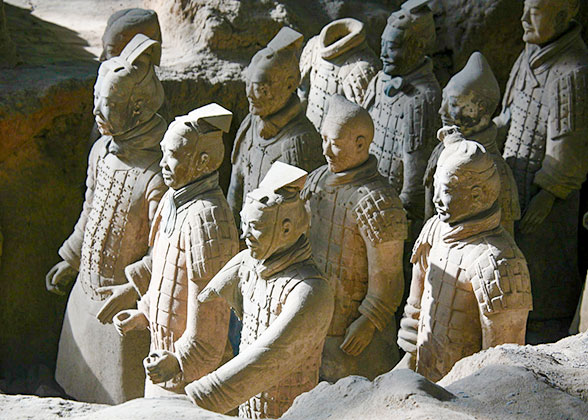
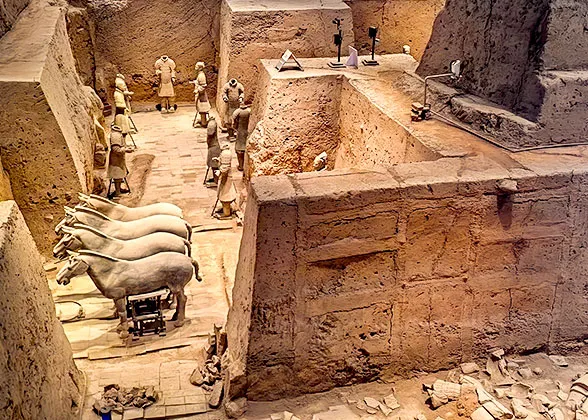
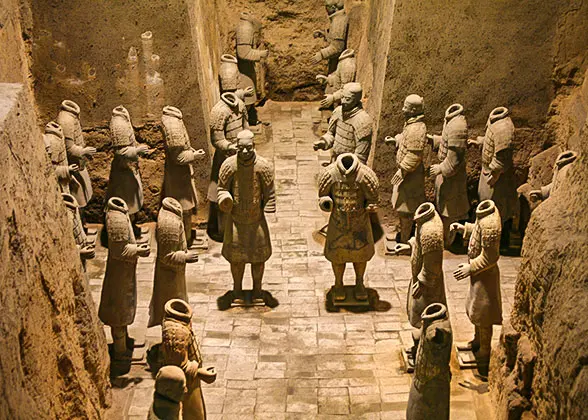
Built in the shape of the Chinese character “凹”, the Terracotta Army Pit 3 measures approximately 28.8 meters (94.5 feet) from east to west and 24.6 meters (80.7 feet) from north to south, with a depth of 5.2 - 5.4 meters 17.1 - 17.7 feet) below ground level. The pit consists of three sections: the southern wing-room, the northern wing-room, and the chariot and horse chamber. A total of 68 terracotta warriors were unearthed in this pit, with 42 from the southern wing-room and 22 from the northern wing-room. Unfortunately, many of them are missing their heads. Archaeologists also discovered well-preserved bronze weapons, as well as ornaments made of gold, stone, and bronze. Additionally, remains of lintels and bronze rings found in the boundaries between sections suggest that curtains might have been hung originally for spatial division.
1. Northern Wing-room
2. Southern Wing-room
3. Chariot and Horse Chamber
|
|
 Read more:
Why are there partition walls in the pit of Terracotta Army?
Terracotta Army Pit 3 - Command Center of Terracotta Army
The Commander-In-Chief is Missing
One puzzling mystery for experts is the absence of a terracotta warrior commander-in-chief in Pit 3. Some experts suggest that the Qin Dynasty’s (221 - 207 BC) highly centralized military system placed full authority in the hands of Emperor Qin Shi Huang, the first emperor of China. While there were many renowned generals in the Qin dynasty, during normal times, no permanent commander was appointed. The emperor would only appoint a general temporarily to lead the troops when war was imminent. Since the terracotta warriors in Pits 1 and 2 are stationed in a non-combat state, the command officer in Pit 3 may have been left vacant, awaiting an appointed leader. Others propose that Emperor Qin Shi Huang himself was the supreme commander. To uphold the emperor's dignity and absolute authority, his image would not be depicted among the terracotta warriors.
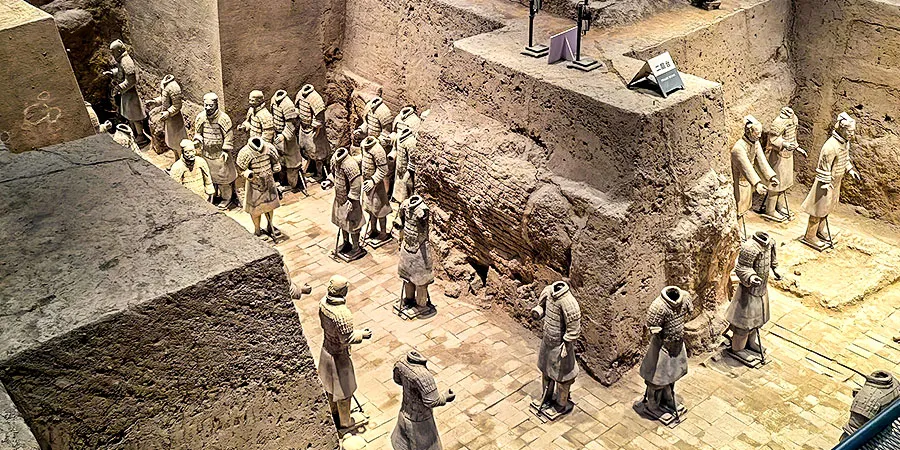 |
| Terracotta Warriors in Pit 3 |
Why Are Many Qin Terracotta Warriors in Pit 3 Headless?
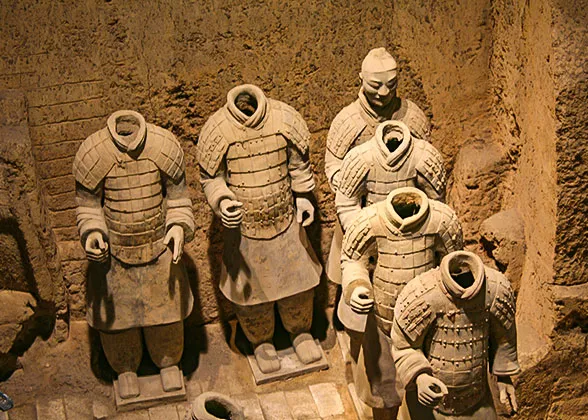 |
| Terracotta Warriors without Heads in Pit 3 |
Research confirms that the terracotta warriors were originally crafted with heads. Excavations revealed numerous small head fragments in this pit, leading archaeologists to speculate that at some point, vandals broke into this pit and deliberately destroyed the warriors. Another compelling piece of evidence came from local villagers, who unearthed half of a terracotta head near the museum’s southern wall. After careful analysis, archaeologists matched it perfectly to a headless warrior's body discovered in Pit 3. This discovery not only verifies that the warriors were complete but also explains their current state, likely damaged by ancient tomb raiders or vandals. Read more:
- How did the Terracotta Army get burnt and destroyed?
- A Little-known Case of Terracotta Warriors Theft in 1987
- Why was the Terracotta Army Built?
- Best Time to Visit Terracotta Army
- How to Visit Terracotta Army - A Comprehensive Visitor's Guide
- The Terracotta Army's Golden Armor Dilemma: Splendor or Risk?
 Next: Pit 4 of Terracotta Army Museum