Guilin has a subtropical climate, characterized by mild and humid conditions throughout the year, with distinct seasonal variations. Spring enjoys comfortable temperatures, but experiences frequent rainy days. Summer brings abundant rainfall, high temperatures, and high humidity. Autumn is cool, with moderate precipitation. Winter is a bit cold, but still milder than most northern cities in China.
Temperature
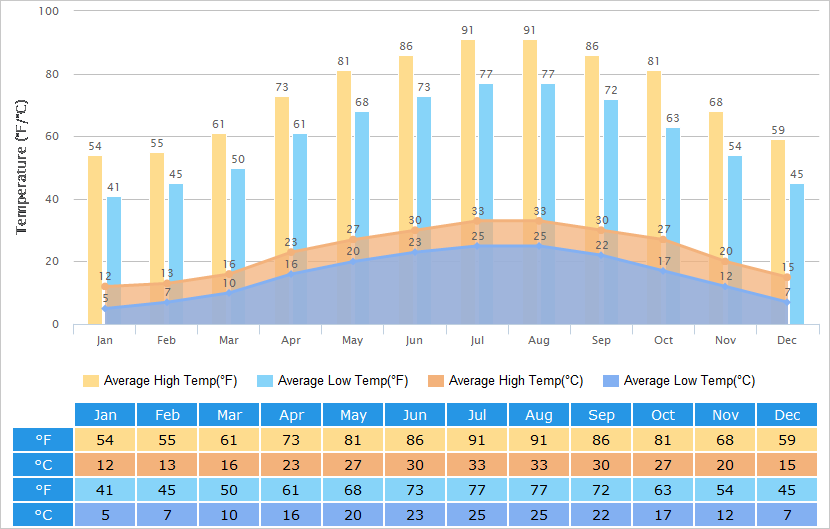
1. Due to its low latitude, Guilin enjoys a mild climate all year round, ranging from 5-33 degrees Celsius (41-91 degrees Fahrenheit), and temperatures rarely drop below freezing in urban areas.
2. The temperature difference between day and night is significant during autumn and winter, often exceeding 10°C (18°F). You’ll feel like experiencing two seasons in one day: midday hours are quite warm like spring, while nights can be a little chilly like winter. The daily temperature variation is less pronounced during spring and summer, typically ranging between 6 and 10°C (10-18°F).
3. The altitude and terrain cause a huge temperature gap in different regions. The urban area sits at an elevation of approximately 150 meters (500 feet), while the surrounding mountainous regions have an elevation exceeding 1,000 meters (3,000 feet), and thus experience temperatures typically 3-5°C (5-9°F) lower than in the city. This makes mountainous areas perfect for escaping the summer heat.
 |
| Guilin East West Alley |
What’s the hottest month in Guilin?
July and August are the hottest months in Guilin, with daytime highs hovering between 32-37°C (90-99°F). Under extreme conditions, the record high temperature even reaches 40°C (104°F). Generally, in these two months, the number of hot days with temperatures exceeding 35°C (95°F) reaches over 30 days in total.
What’s the coldest month in Guilin?
January is the month with the lowest temperature all year round, but the weather of Guilin will not be quite chilly, with daytime highs of 6-16°C (43-61°F) and nighttime lows of 0-8°C (32-46°F). When the cold air masses strike, daytime highs can drop significantly to 2-8°C (36-46°F). Moreover, humid air would make you feel a bit colder than the actual temperatures do.
Precipitation
 |
| A Rainy Day in Huangyao Ancient Town |
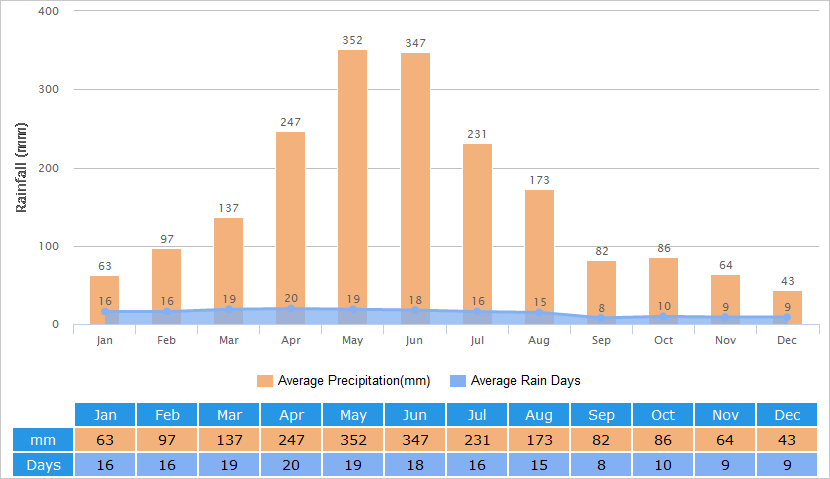
Guilin has a rich annual precipitation, which is about 1,500 – 1,900 mm (60-75 inches) on average. The rainy season falls from April to August, the overall rainfall of which accounts for 70%-75% of the annual total. From April to May, the rain is usually in the form of drizzling rain. The summer rain from June to August is mainly brief but strong downpours and torrential rain, which usually occur at night and rarely impact your daytime travel plans.
The rest of the year is the dry season. On average, the monthly precipitation during this period is from 43 mm to 137 mm.
Due to the barrier formed by the mountain ranges, Guilin does not face typhoons directly and thus is less affected by them. However, to avoid extreme situations, it is still essential to pay close attention to weather warnings during the peak typhoon season from July to September.
Does Guilin Snow?
It rarely snows in the Guilin urban areas. However, when the strong cold air strikes in winter, it’s possible to spot snowfall or sleet in the mountainous areas and northern areas like Ziyuan County, Quanzhou County and Xing’an County, and you may even see icy roads and snow accumulation in these places.
Flood Season, Dry Season, and Optimal River-Viewing Period
From June to August, influenced by the rainy season, the Li River enters its flood season. During and after short bursts of heavy rainfall, the river water will become exceptionally yellow and murky, resulting in poor visual appeal. In the event of torrential downpours, bamboo rafting becomes impossible. It might take several days for the river to turn clear even after the rain.
With the decreasing of rainfall, water levels will also recede from September to March. Then, from mid-November to March, rivers enter their dry season, when the Li River becomes so shallow that you can see pebbles. As a result, your travel navigation becomes restricted, and the water clarity diminishes.
The best time to enjoy the river view ranges from April to May and from September to early November. In April and May, Guilin receives abundant rainfall that mainly occurs in the form of light rain, ensuring ample water volume and crystal-clear visibility most of the time. From September to early November, the water surface is calm; the water levels decrease, but only a bit; and the water quality reaches its clearest state of the year, sometimes revealing the riverbed's sand and stones.
Note: Even during peak viewing months, turbid water and rough waves may cause bamboo rafting tours to temporarily suspend operations.
 |
| Pleasant Li River View |
Humidity
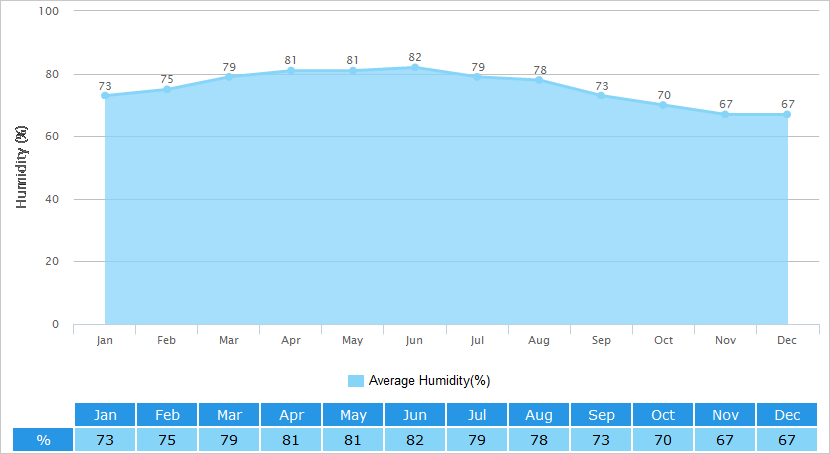
Guilin’s air is quite humid throughout the year, and the average humidity level ranges from 67% to 82%. In spring and summer, the humidity level is the highest, reaching over 80% on average. Winter is relatively drier, with the average humidity maintaining around 73%.
Frequent Foggy Days
 |
| Misty Xianggong Mountain |
Guilin experiences frequent fog throughout the year, seeing approximately 100 to 120 foggy days annually. They are primarily concentrated in autumn, winter, and spring, with less frequent occurrences during the summer months, especially in June and July. The period when the mist most usually envelops the city is after the rain. The fog may indeed significantly lower the visibility sometimes, but at other times, it can create a unique landscape reminiscent of traditional Chinese landscape paintings.
From March to May, fog that forms under calm or windless conditions often lingers stubbornly. Mist over the Li River can even persist from dawn until midday. Winter fog tends to dissipate more quickly.
Considering the weather conditions, scenic quality, and visitor volume, the best times to visit Guilin are March to May of spring and September to November of autumn.
During these months, the climate is comfortably warm or cool, and the rainfall is within acceptable ranges. Thanks to the stable weather and clear and abundant water, it’s the best time to appreciate various scenic spots, such as the Two Rivers and Four Lakes Scenic Spot. Besides, you can also enjoy stunning seasonal views, including spring blossoms and autumn leaves. Last but not least, these months tend to be relatively quieter, so you can avoid crowded attractions and skyrocketing travel prices, as long as you avoid public holidays.
7-Day Guilin Weather Forecast
CityWeather
Guilin Weather by Month
Averages for Guilin Weather
High/Low Temperatures of Guilin
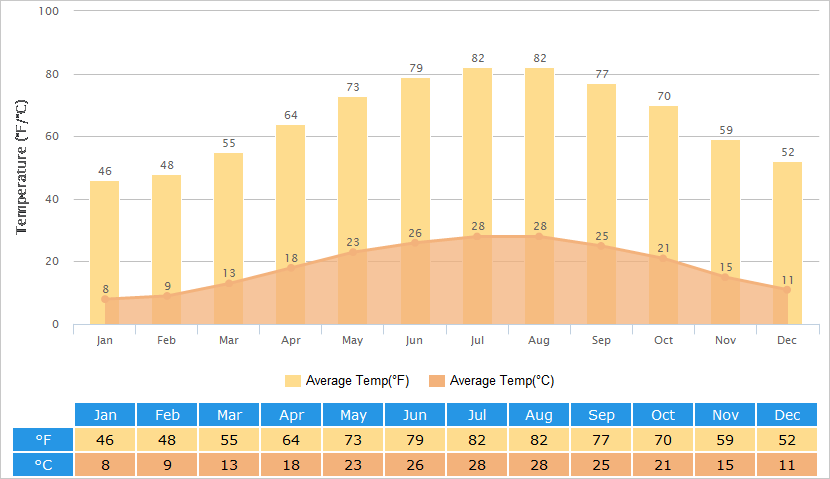
Average Temperatures of Guilin
Humidity Graph of Guilin
Average Rainfall of Guilin
Air Quality of Guilin
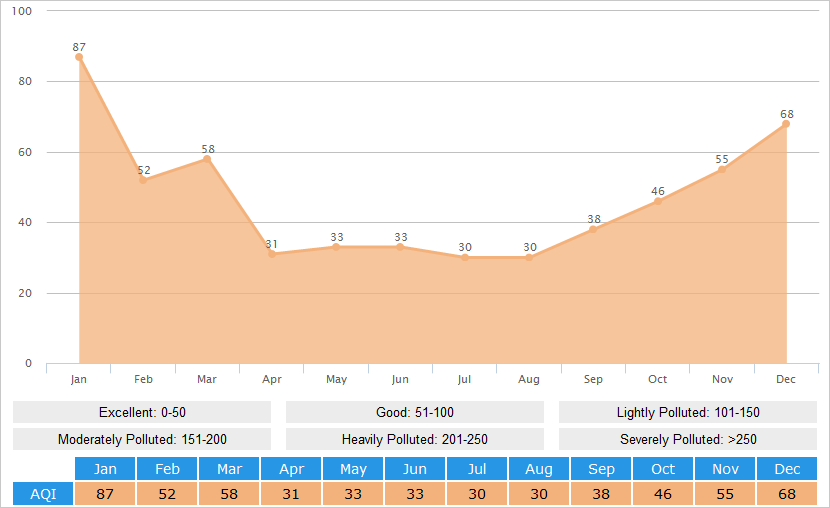
Guilin Climate - Seasons & Travel Advice
Spring: From March to May
 Average Monthly Precipitation: 137 mm - 352 mm
Rainy Days: 19-20 days per month
Weather Overview:
In spring, the rainy season in Guilin begins: The precipitation noticeably increases from April and reaches its peak in May at 352 mm. Rainy and foggy days occur quite frequently during this period, but most of the time in spring, the rain is light and the fog is not thick. Temperatures are still relatively unstable and vary a lot from day to day, but gradually warm up: the daily highs hover between 10°C and 28°C (50-82°F), but mostly remain above 20°C (68°F).
Clothes: T-shirts, thin knitwear, a light trench coat, a windbreaker, jeans, sweatpants, non-slip sneakers, and rain boots.
Travel Recommendations and Tips:
1. Spring Blossoms, including rhododendrons in Guilin Botanical Garden, rape flowers on Zhuangyuan Bridge, colorful rapessed flowers at Xishan Park, hydrangeas and wisteria at Nanxishan Park, are worth admiring.
2. April and May boast quite clear water most of the time, and the water level rises gradually, so you can take a boat on the Li River to enjoy the misty and drizzling landscape. Just remember to pack rain gear.
3. It’s possible to experience a sudden temperature drop in March and April, so don’t forget to check the weather forecast and wear proper clothes.
4. Spring is the shoulder travel season, which allows visitors to enjoy the tranquil natural scenery at a lower cost. However, it’s best to avoid public holidays and weekends, especially the May Day Holiday in early May.
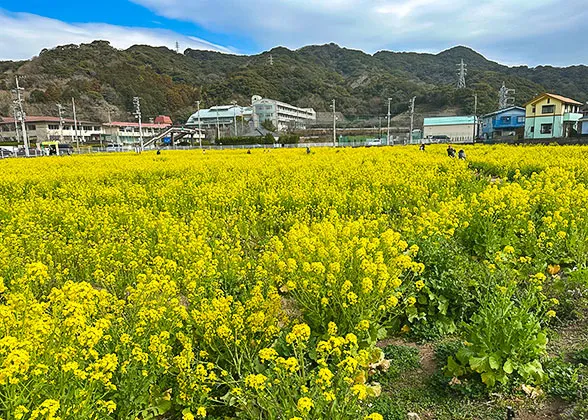 | | Rapeseed Flowers | |  | | Li River View in Spring | |
Summer: From June to August
Average Monthly Precipitation: 173mm - 347 mm
Rainy Days: 15-18 days per month
Weather Overview:
Guilin experiences hot and rainy summers. Daytime temperatures frequently exceed 35°C (95°F), but fortunately, evenings bring relief with temperatures dropping to 25-27°C (77-81°F). Mountain areas enjoy cooler weather, with the daily high sometimes dropping under 30°C(86°F). This season also coincides with the peak rainfall periods: rain is usually heavy and intense, often accompanied by thunderstorms and strong winds. High humidity levels caused by high rainfall intensify the muggy and sticky feeling and make it difficult for clothes to dry. Most importantly, ultraviolet rays are extremely strong, necessitating thorough sun protection, especially when exploring outdoor landscapes.
Clothes: T-shirts, thin shirts, sun-protective jacket, shorts, skirts, light pants, sneakers and rain boots.
Travel Recommendations and Tips:
1. Heavy downpours can cause water levels to rise rapidly, muddy the river water and trigger landslides in the mountainous areas like Longji Terraces. Therefore, it’s always helpful to check the forecast in advance and adjust your travel plans accordingly.
2. Summer in Guilin is the peak travel season, particularly in July and August, due to the summer vacation in China. You’ll witness numerous visitors and skyrocketing travel costs, so it’s best to avoid this period.
3. In the hot summer, why don’t you visit Reed Flute Cave? It’s a karst cave scenic area where the temperature inside remains around 20°C (95°F) year-round, offering a cool and comfortable environment while allowing visitors to admire the colorful stalactites.
 | | Lovely Suburban View in Summer | |  | | Colorful Silver Cave | |
Autumn: From September to November
Average Monthly Precipitation: 64mm-82mm
Rainy Days: 8-10 days per month
Weather Overview:
Guilin’s weather in Autumn is cool and comfortable, with not high rainfall at all and increasing numbers of sunny days. Summer heat still lingers in September, especially early September, with daytime highs often reaching over 30°C (86°F). October and November mark the arrival of autumn, with daily highs of 17-27°C (63-81°F). Nights are cooler and humid, with lows of 15-23°C (59-73°F).
Clothes: long-sleeved shirts, knitwear, hoodies, windproof jackets, jeans, sweatpants, dresses, and waterproof sneakers.
Travel Recommendations:
1. Don’t miss the autumn view in Guilin, and you are recommended to visit Longji Terraces from late September to mid-October, Gudong Waterfall from late November to early November, and Seven Stars Park for the whole season.
2. Considering the clear water and calm river surface, the Li River is a must-visit spot.
3. Autumn is an off-peak travel season, but you are advised to avoid early October when it coincides with one of the most important public holidays. Or you need to plan wisely, including booking hotels, attraction tickets, and transportation tickets as early as possible.
 | | Longji Terrace in Autumn | |  | | Clear Air During the River Cruise | |
Winter: From December to February
Average Monthly Precipitation: 43 mm – 97 mm
Rainy Days: 9-16 days per month
Weather Overview:
Guilin is a bit cold in winter overall. Mid-day hours feel warm on a sunny day with temperatures of 15-20°C (59-68°F), but early mornings and nights can be chilly, when the temperature may dip to around 5-10°C (41-50°F). Rainfall is limited, the air becomes less humid, and fog appears frequently. Note that rain may bring temperature drops sometimes.
Clothes: sweaters, fleece-lined hoodies, windbreakers, light down coats, 3-in-1 jackets, thermal underwear, thick jeans, waterproof pants, and non-slip sneakers.
Travel Recommendations:
1. If you encounter thick fogs during the daytime hours, you can consider having a night cruise tour at the Two Rivers and Four Lakes, where the surrounding buildings are illuminated by lights. You can not only enjoy the stunning night scenery, but also enjoy Guilin’s unique intangible cultural heritage performances and even interact with the performers.
2. Due to the mild temperatures in winter, Guilin offers a great chance to appreciate flowers. For example, you can admire plum blossoms at Seven Stars Park from late January to late February and cherry blossoms at Nanxishan Park in February.
3. It’s best to stay clear of the Chinese New Year Festival Holiday in mid-February if you are not interested in the festival atmosphere, as the travel rush can significantly influence your experience.
 | | The Sun Pagoda and Moon Pagodas | | 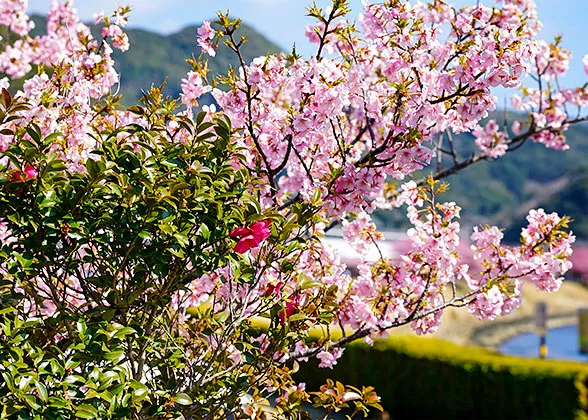 | | Beautiful Cherry Blossoms | |
- Last updated on Mar. 10, 2026 by Rachel Hou -