The terracotta warriors sported a variety of hairstyles and headwear. Did they, like us today, freely choose their own? The answer is no. In fact, their hair and headgear were strict indicators of status and military ranks, serving as "identity codes" etched onto their very heads. The warriors primarily feature two main hairstyles, which were further distinguished by specific headgear like crowns, caps, and hoods to clearly denote rank and type.
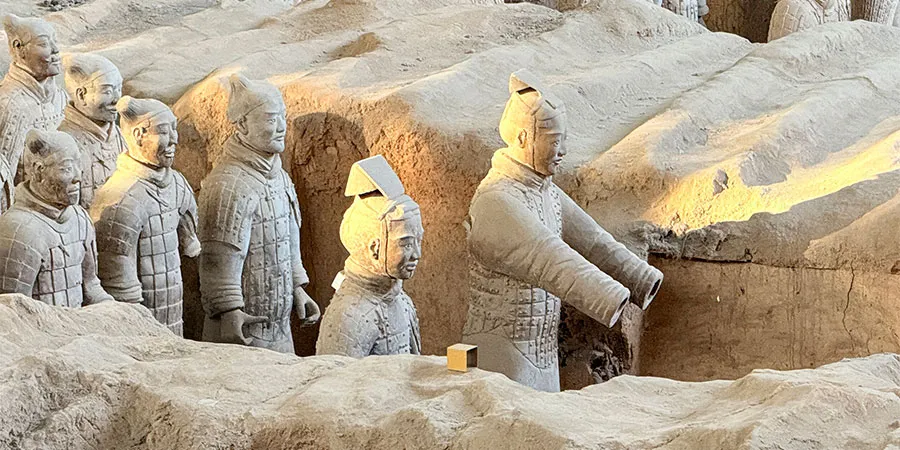 |
| Terracotta Warriors with Different Hairstyles |
Two Primary Hairstyles of Terracotta Warriors
The hairstyle features a cone-shaped knot positioned on the right side of the head. Most styles incorporated a headband and a hair rope. The headbands were typically made of soft material in vermilion red, with ends that often flared or curled in front of the temples in fan-like, cylindrical, or rectangular shapes. The hair rope, usually in vermilion or orange-red hues, was made by twisting two strands together into one. This bun was worn mostly by infantry soldiers, who formed the core of the Qin army's strength. They usually wore no crown, dressed in light robes or simple armor. In
Pit 1, most infantry figures have this right-sided bun. The right-sided placement of the knot may reflect the Qin custom of "honoring the right" and could have aided quick identification on the battlefield.
By observing these buns, experts have identified several braiding methods from the
Qin Dynasty (221 - 207 BC): the process generally involved braiding hair from the back and sides, gathering it at the top-right of the head, and securing it with a band and string to form the distinctive cone shape.
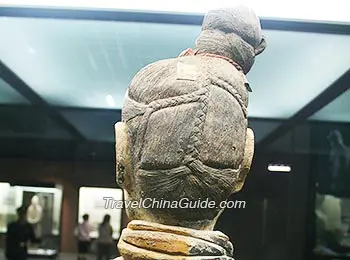 | | Cone Bun of Terracotta Warrior | | 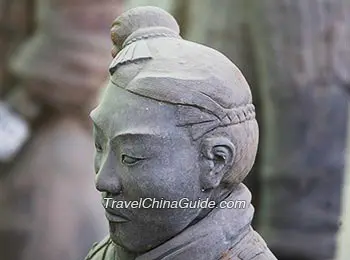 | | Details of Cone Bun | |
This is a flat, board-shaped bun worn at the back of the head, serving as the defining feature for officers, charioteers, and cavalry, the managerial and specialized branches of the Qin army. Its style varied noticeably with rank:
►The Advanced Flat Bun: Worn by high-ranking officers, this style was more elaborate. The hair was combed back, folded upward, and the remaining length was coiled into a small conical bun. This bun was then pinned inside the general's exclusive pheasant-feather crown with a hairpin, completely hidden from view. This hidden detail was a key identifier of a top commander, setting him apart from regular officers.
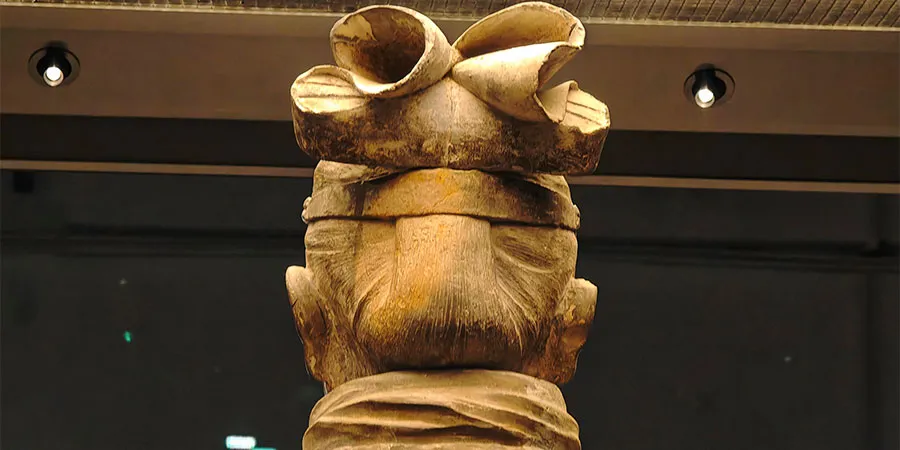 |
| Advanced Flat Bun of Supreme General |
►The Ordinary Flat Bun: All hair was neatly combed back, braided into a wide six-strand plait, folded into a rectangular shape that was wider at the bottom and narrower at the top, and secured to the head with a square bone hairpin. This tight, flat style was designed to fit neatly under headgear such as the long crown or leather cap, distinguishing lower-ranking officers and signifying military rank.
Headgear for Terracotta Warriors of Different Ranks and Types
Pheasant-feather Crown - For Supreme Generals
The pheasant-feather crown, also called the He crown, was the most unique and ornate design and a powerful symbol of high command. Worn by generals, it featured a square front plate and a back divided and shaped like a pheasant's tail, with one side curling like a trumpet and the other into an "S" shape. Made of leather or multi-layered waxed cloth for protection, it was typically a deep ochre or red color and featured two orange bands on the sides in real life. Its supreme status is confirmed by its appearance on the charioteer of a bronze chariot and horses for an inspection tour of Emperor Qin Shi Huang, except for a high-ranking officer.
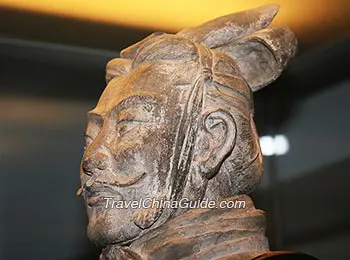 | | He Crown of Terracotta General | | 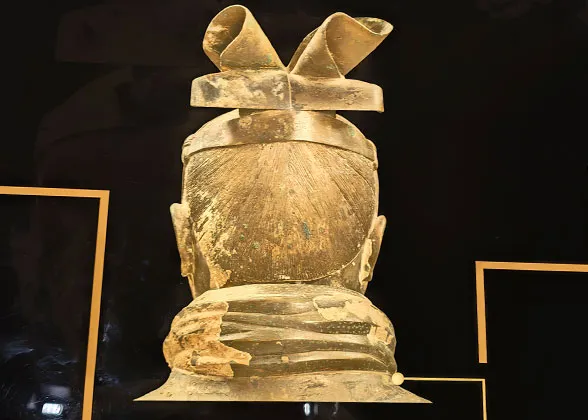 | | Imperial Charioteer with He Crown | |
Double-plate Long Crown - For Middle-ranking Officers
Resembling a trapezoidal board, the double-plate crown featured a front section folded into a double-layered plate and a rear section that curved upward and swept backward. It features a vertical line down its center, indicating it was assembled from two joined plates. This crown was usually worn by middle-ranking officers and some charioteers.
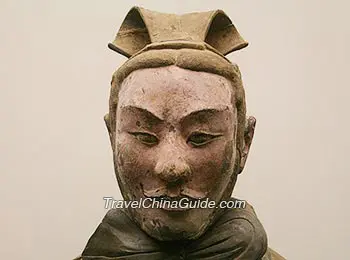 | | Double-plate Crown of Civil Official Figure | | 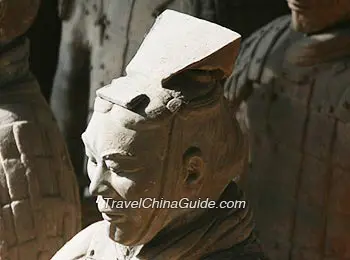 | | Single-plate Crown of Terracotta Warrior | |
Single-plate Long Crown - For Lower-ranking Officers and Specialists
Shaped like a long trapezoidal board, this crown was standard for lower-ranking officers, charioteers, and some guards. It had a straight front and a back piece bent upward at a 45-degree angle, measuring about 15 cm (6 inches) long. Triangular spaces along its sides accommodated the warrior's hair bun. A belt loop connected the front plate to the flat bun at the back, and two bands were tied to secure it firmly. Mostly ochre or vermillion, it also featured two orange bands.
Leather Cap - Specialized Gear for Cavalry Figures
This was a specialized, practical hat for cavalry units. It was a soft, shallow, flat-topped cap made from a single layer of material, tied under the chin with a string. Its practical design perfectly served cavalry needs: it kept hair securely tied to prevent it from obscuring vision during gallops, and its simple profile helped reduce wind resistance.
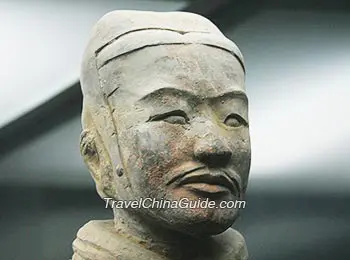 |
| Leather Cap of Cavalry Warrior |
Hood - Practical Hair Wrap for Common Soldiers
The hood was a soft, hat-like headdress that evolved from a headscarf into a cap shape. Resembling a rounded mound, it fully covered the hair and bun, maintaining a neat appearance. Its lower edge reached the hairline, and it had a triangular opening at the back or side, with two straps for fastening. Made from a single layer of soft cloth, usually vermillion, it was worn by many common soldiers with the cone bun, secured to the head with ties, serving both a practical purpose and likely representing part of the standard uniform.
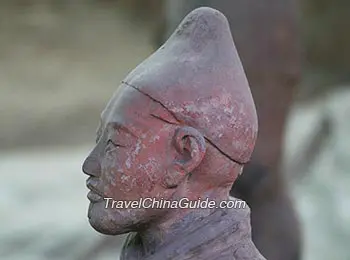 |
| Common Terracotta Warriors Wearing Hoods |
 Further Reading:
 Types of Terracotta Warriors Why didn't the Terracotta Warriors wear helmets? Top 20 FAQs about Terracotta Army How to Visit Terracotta Army - A Perfect One-Day Tour Plan?
- Last updated on Jan. 09, 2026 by Doris Xue -