Guangzhou Weather
Temperature Features
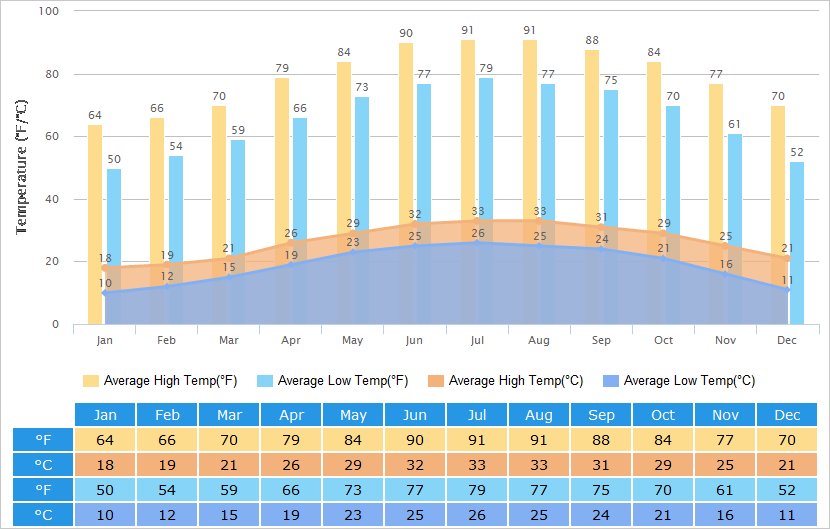
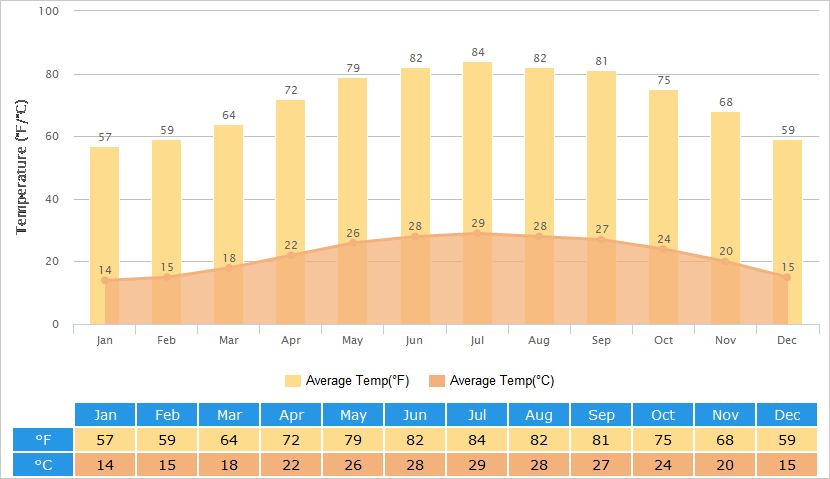
2. In Guangzhou, high temperatures can last up to eight months, from late March to mid-November. Winter here is not distinctively cold: no frost or snow. Spring and autumn are very brief, with slightly greater temperature fluctuations.
3. Guangzhou has a distinct maritime climate: compared with inland cities such as Xi’an, the city experiences a milder temperature difference between day and night. However, in spring and autumn, especially when the weather is relatively dry and sunny, the day-night temperature gap in Guangzhou usually hovers between 10°C and 15°C (18-27°F), which cannot be underestimated. In summer and winter, it tends to range from 4-8°C (7-14°F).
4. In the northern suburbs of Guangzhou, with an altitude of 500-1,000 meters, sub-zero temperatures can occur in January under the influence of strong cold air, sometimes accompanied by frost or freezing conditions.
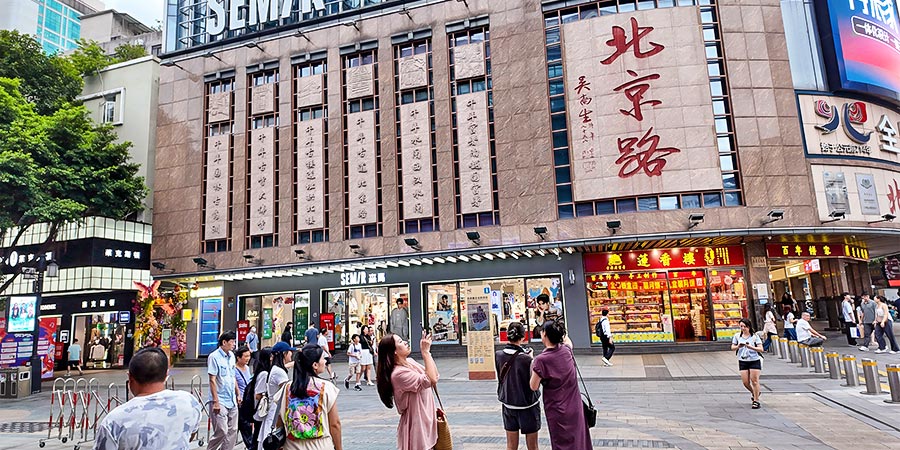 |
| Guangzhou Street View |
The Hottest Month in Guangzhou
The Coldest Month in Guangzhou
It does not seem particularly cold. However, Guangzhou doesn’t adopt central heating system, and the damp air can make people feel chilly. Many visitors from northern China are shocked by this damp coldness when they arrive in Guangzhou and find it very hard to adjust. Some even feel it’s colder than sub-zero temperatures in dry northern cities. So, we strongly recommend that you don’t take this lightly and pack appropriate, warm clothing.
Distinct Rainy Season and Dry Season
April - June: Long-lasting Frontal Rain Dominates
It’s important to note that the rain occurring between May 21 and June 20 is known as the Dragon Boat Rain, coinciding with the Dragon Boat Festival. The rainfall in this period is caused by the onset of the southwest monsoon and frontal activity and also marks the high time of the first phase of the rainy season, bringing frequent and continuous rainfall. It typically occurs from late night through the early morning or during commute rush hours - around 8:00 and around 18:00.
 |
| A Rainy Day at Yongxingfang |
July - September: Typhoon Rainfall and Thundershowers Take the Majority
Apart from typhoon rainfall, convective rainfall also occurs frequently during the second phase. This kind of rainfall is highly unpredictable; the moment when you step out of the hotel, the sky is clear blue, but after walking for just ten or so minutes, it may suddenly start raining out of the blue. This serves as a reminder to visitors to carry rain gear.
 |
| July Downpours at Guangzhou Sacred Heart Cathedral |
October - March: Dry Season
High Humidity Level Year Round
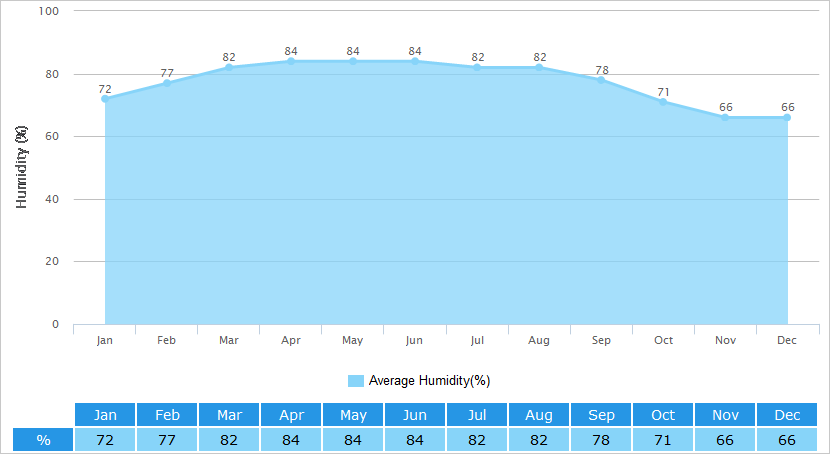
From February to April, Guangzhou experiences its most humid period, with relative humidity reaching as high as 90% to 100%. You may find water droplets form on walls and floors, and it is difficult to air-dry clothes. Summers are hot and rainy, with humidity often exceeding 80%. Autumn and winter are relatively dry, with humidity ranging from 66% to 75%, though it is still significantly more humid than in the northern parts of China.
Sunshine Hours and UV Rays
The average UV index in Guangzhou is very high, so sun protection is necessary year-round. From March to September, the maximum UV index reaches over 11. Even though it’s a rainy day, it’s still necessary to apply sunscreen. From October to February, the UV Rays tend to be lighter, but still should not be underestimated.
The best times to enjoy the charm of Guangzhou are: November to December - autumn season, and March to April - spring season.
The former period is widely considered the most comfortable time to visit Guangzhou. Temperatures are mild and pleasant; humidity drops to a comfortable level; there are more sunny days and clearer skies. Compared with colder regions in northern China, Guangzhou feels especially welcoming during this period, making it ideal for city walks and outdoor sightseeing.
Spring is another good time, especially for nature lovers. Guangzhou in Spring enjoys mild temperatures and moderate rainfall - it rarely disrupts plans significantly if you carry proper rain gear. But you need to prepare well for the humid air. Plus, this season marks the blossoming period, including kapok, cherry blossoms and orchids. During this period, Guangzhou offers various seasonal flower markets and exhibitions.
 |
| Huacheng Square on Sunny Weather |
7-Day Guangzhou Weather Forecast
Guangzhou Weather by Month
Averages for Guangzhou Weather
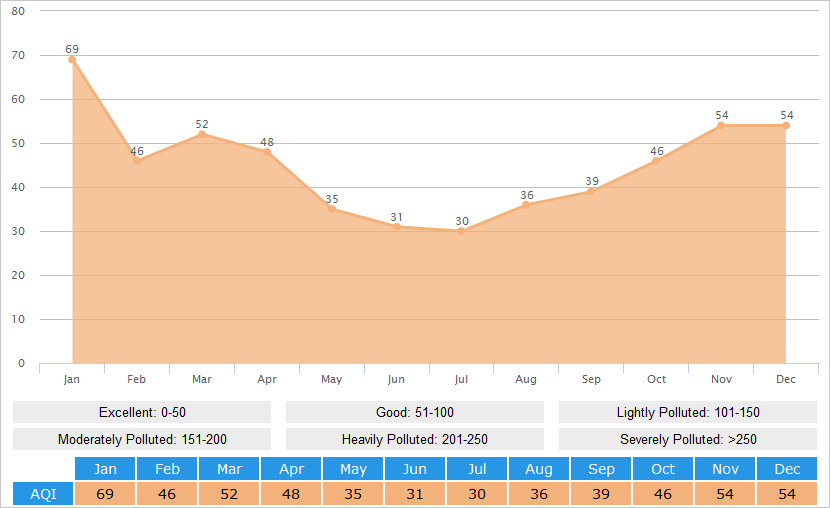
Guangzhou Climate - Seasons & Travel Advice
Spring (Mar. - Apr.)
 |
| Cherry Blossoms in Guangzhou |
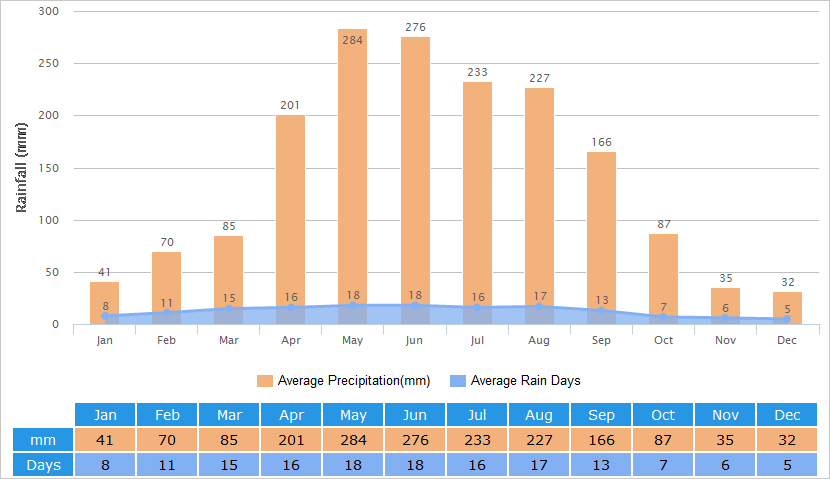
 Precipitation: 85-200 mm Rainy Days: 15-16 rainy days per month Weather Overview: In Spring, Guangzhou enjoys warm days, with daytime highs being 19-28°C (66-82°F) and gradually rising. Early mornings and evenings remain slightly cool, with lows of 10-17°C (50-81°F). It’s possible to experience a sudden temperature drop, with daytime highs dropping below 15°C (59°F). Rainfall is moderate, and short showers are common. The air can be extremely humid, when indoor spaces feel damp. Clothing: For most days in spring, it’s ok to wear T-shirts or long-sleeved shirts paired with a light knitwear, and long pants like jeans. As for shoes, you can opt for breathable sneakers and canvas shoes. If there’s a sudden cold air mass, prepare the following items: fleece-lined hoodie, a windbreaker, waterproof sneakers, a thin down coat, scarves, and a hat. Travel Recommendations and Tips
1. Spring marks the local blooming season, which is perfect for photography and city sightseeing. You can spot cherry blossoms at Haizhu Wetland Park from mid-March to early April; Kapok flowers await you at Sun Yat-sen Memorial Hall in early March, where you can, at the same time, appreciate the building and learn about its history; there is a roughly one-kilometer-long avenue to view golden trumpet tree flowers at Huan Dao Road from late February to April.
2. It’s best to avoid visiting Guangzhou during the Qingming Festival in early April. On the one hand, the city tends to witness continuous downpours, significantly impacting your travel experiences. On the other hand, this festival is a minor travel rush period for local tourists, with crowded attractions and soaring travel costs if it’s not rainy.
Summer (May. - Sep.)
Precipitation: 165-285 mm Rainy Days: 13-18 rainy days per month Weather Overview: Summer in Guangzhou is long, hot, and humid. From May to June, heavy downpours often last for several days. The rain from July to September tends to be influenced by the arrival of typhoons, with frequent thunderstorms. Daytime highs often exceed 35°C (95°F), and high humidity makes it feel even hotter. Even though the sun sets, the weather rarely cools down significantly. Typhoons are likely to land in July to September, bringing heavy downpours, strong winds, and many other natural disasters. Clothing:
Breathable summer clothing is essential: lightweight T-shirts, tank tops, shorts, skirts or light summer pants. Comfortable walking shoes or sandals are important. Don’t forget sun-protective items and rain gear. Travel Recommendations and Tips
1. Considering the high heat during middays, it’s best to visit some indoor sites with air-conditioning, such as the Nanyuewang Museum and the Guangdong Museum.
2. As for outdoor activities, Chimelong Water Park is an obvious option, where you can not only get relief from the summer heat but also enjoy the fun and excitement of the water activities.
3. If you are a nature lover, why don’t you visit Shimen National Forest Park or South China Botanical Garden, where there are valleys, streams, lush vegetation and flowers, with lower temperatures, and fresh air.
4. Due to the unpredictable rainfall, it’s always helpful to carry rain gear with you.
5. July and August are summer holidays in China: if you visit Guangzhou during this period, you’ll experience overcrowded scenic spots, soaring hotel rates and flight tickets. Thus, it’s best to avoid this time period.
 |
| Museum of the Western Han Dynasty Mausoleum of the Nanyue King |
Autumn (Oct. - Dec.)
Precipitation: 32-87 mm Rainy Days: 5-7 rainy days per month Weather Overview: Early October can still be very hot, with daytime highs frequently over 30°C (86°F). After late October, temperatures gradually cool down, with daytime highs of 19-30°C (66-86°F). Nights can be cool, with lows of 9-20°C (48-68°F). The rainfall and humidity also drop significantly, so you’ll see lots of sunny days. Clothing: T-shirts or light long-sleeve shirts are fine for the daytime, while a light jacket or knitwear should be added for cool mornings and evenings. As for bottom clothing, opt for light casual pants, jeans or sweatpants. Rain gear and sunscreen are both necessary. Travel Recommendations and Tips
1. Due to its pleasant weather, less rainfall and fewer tourists, autumn is a perfect season to visit those popular attractions, including Chimelong Wildlife World, Canton Tower, Shamian Island, and Sacred Heart Cathedral.
2. You can also go shopping at Beijing Road, Zhongshan 5th Road, People's Road, or Shangxiajiu Pedestrian Street, where you can get some local products like Cantonese embroidery, Canton enamel and Canton sculptures, with superior quality and at reasonable prices.
3. In general, autumn is the shoulder season, but from October 1 to October 7, the National Day Holiday sees a sharp increase in tourists and travel costs - you’d better avoid it.
|
|


Winter (Jan. - Feb.)
Precipitation: 41-70 mm Rainy Days: 8-11 rainy days per month Weather Overview: Winter in Guangzhou is short and relatively mild, with daytime highs of 10-26°C (50-79°F). During cold waves, daytime highs can drop to 7 degrees Celsius (45 degrees Fahrenheit). Rainfall is limited, sunshine is ample, but the air is kind of damp, making the perceived temperature lower. Clothing: For mild days, try this outfit: long-sleeved shirts, sweaters, a medium-weight coat, and thick jeans. On colder days, add a thin down coat, a scarf and thermal underwear. As for shoes, choose comfortable sneakers. Travel Recommendations and Tips
1. February often coincides with the Chinese New Year Festival. Despite big crowds, you may seize the chance to experience the authentic festival atmosphere, watch firework shows, night light shows, and various cultural performances, such as lion dance.
2. In February, various flower markets and flower shows are held throughout Guangzhou for New Year’s good luck, including the Tulip Show, Hydrangea Show, and Orchid Show.
3. If you are not interested in the Chinese New Year celebrations, it’s best to avoid visiting the city during this holiday. Because the train tickets are extremely hard to buy, flight ticket prices soar, and attractions can be quite crowded.
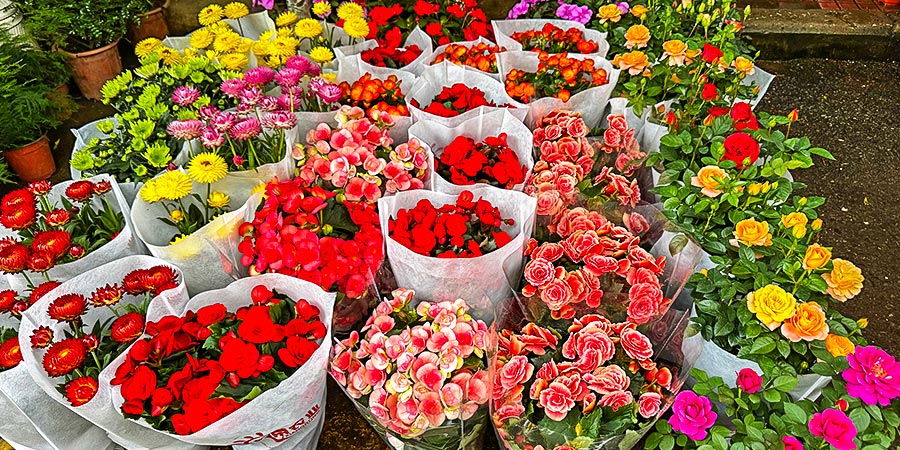 |
| Flower Market during Chinese New Year |
 Further Reading: Guangdong Weather