Face Shapes of Terracotta Warriors
When you step into the Terracotta Army Museum and face this incredible underground army, what stands out most, beyond its massive scale, is the individuality of the warriors' faces. They look like a real army frozen in time, a silent legion where each soldier has a unique face. To this day, among the thousands of figures uncovered from the pits, archaeologists have not found two faces that are exactly alike. Through extensive research, experts have categorized these faces into over 100 different types, which can be generally divided into eight main shapes. These eight categories collectively show the wide variety of facial features of the Chinese people during the Qin Dynasty (221 - 207 BC).
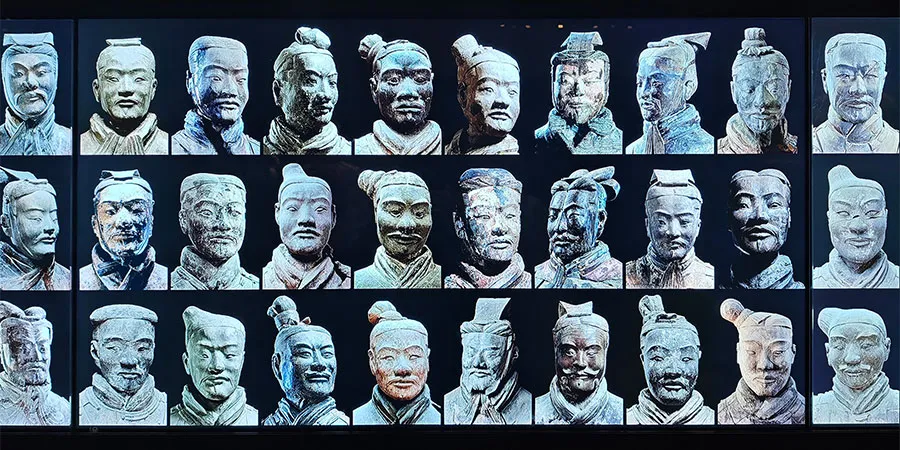 |
| Different Face Shapes of Terracotta Warriors |
8 Main Face Shapes of the Terracotta Warriors
国-shaped Face
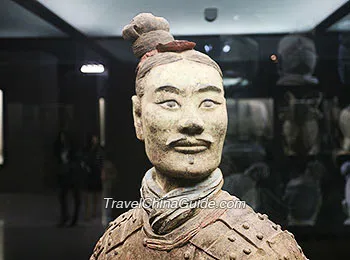
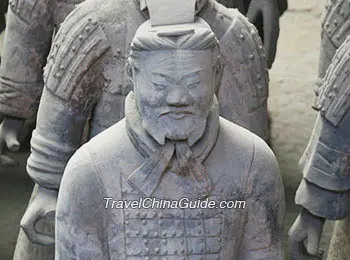
This face is characterized by its rectangular shape, featuring a broad forehead, high and prominent cheekbones, and a strong, firm jawline. The overall features are square and solid, conveying an impression of honesty and rugged strength. It is considered the typical facial structure of the Qin people from the Guanzhong region of Shaanxi Province.
|
|
用-shaped Face
While similar to the 国-shaped face in being an oblong rectangle, this face shape is distinguished by its flatter cheeks and a wider, flatter chin. The overall shape is less sharply defined and lacks the commanding, heroic look of the国-shaped face. This results in a softer, more common appearance that was often seen among the male population of the time.
田-shaped Face
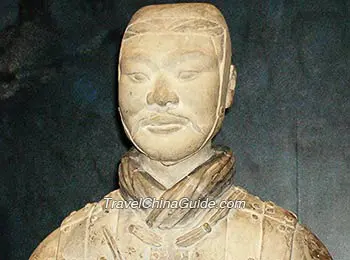
This is a round but square-like face, often colloquially described as a roughly round face. A distinctive feature is that the forehead, tip of the nose, and cheekbones appear to protrude outwards, while the areas around the eyes, nose, and mouth seem slightly sunken in comparison. Warriors with this face shape are typically shorter but have visibly muscular, giving an impression of immense strength.
|
|
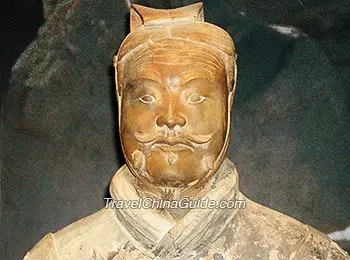
目-shaped Face
This face is notably narrow and long, with relatively small and delicate facial features, such as thin eyebrows and lips. The overall effect is a lean, sharp-featured look that lacks the heavy, solid feel of the broader face shapes.
甲-shaped Face
Wide at the top and narrow at the bottom, with prominent cheekbones and a pointed chin, this face shape is essentially a seed-shaped or "melon seed" face. This is traditionally considered a beautiful shape in Chinese culture and may have been associated with people from the Ba-Shu region, modern Sichuan.
由-shaped Face
申-shaped Face
An oval shape with a wide middle at the cheekbones and narrow ends at the forehead and chin. This shape is rare both in the terracotta army and in real life. Warriors with this face often have curved eyebrows and big eyes, sometimes with a gentle smile.
风-shaped Face
As the name suggests, this face resembles the Chinese character "风". It is characterized by a wide forehead and chin, with slightly narrower cheeks. It is one of the rarest face shapes among the terracotta warriors.
Beyond the Face Shape: How Details Bring the Warriors to Life?
If the basic face shapes are the warriors' "structure," then their expressions are the "soul." The Qin craftsmen understood that a person's inner world is often reflected in their face, especially in their eyes. Although the warriors' eyes are just raised surfaces, subtle differences in shape and position, combined with carved eyelids and brows, created very different personalities. Some warriors look to be smiling with quiet confidence; others glare with fierce authority; still others appear gentle and shy. A few even have finely carved wrinkles, suggesting a life of hardship.
|
|
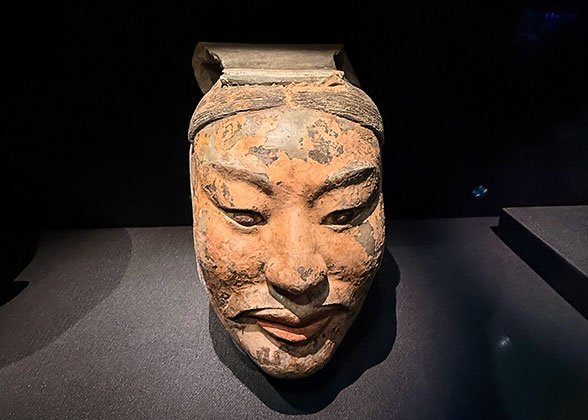
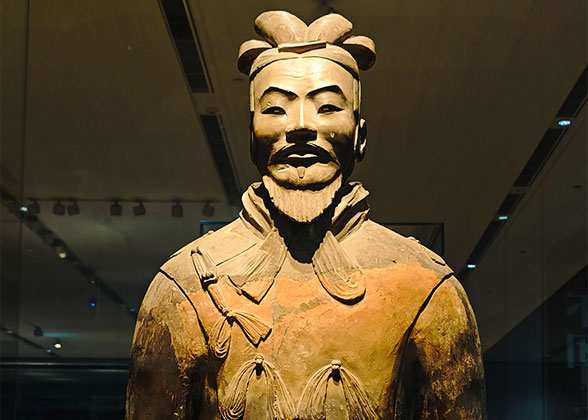
Even more astonishingly, some warrior faces still bear the fingerprints of the craftsmen who shaped them over 2,000 years ago. These traces connect us across time, allowing us to imagine the craftsmen carefully breathing life into clay. A few figures have even been meticulously painted with eyelashes; such careful attention to detail reveals a tender side to these ancient craftsmen. One can easily imagine them bringing that same gentle touch home, perhaps helping their wives apply eyebrow makeup.
 You may like: How the Terracotta Warriors Were Made?
Can You Find "Yourself" in the Terracotta Army?
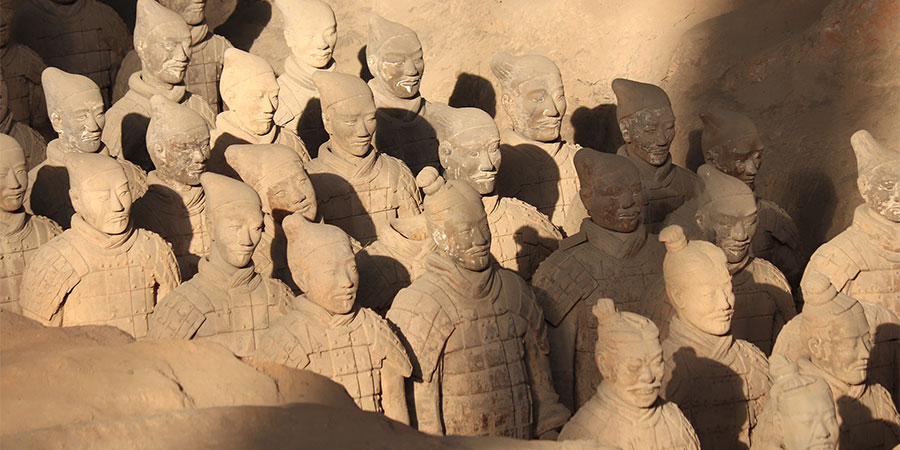 |
| Terracotta Figures with Various Appearances |
The Qin craftsmen, through careful observation of the people around them, captured the most characteristic facial features. Then, using their exceptional skills, they permanently molded these traits in clay. What they created was not just an army to guard Emperor Qin Shi Huang's mausoleum in the afterlife, but also a lively ethnographic record of the Qin dynasty, written in human faces. That is why, two thousand years later, we can still look at this silent army and find one that feels strangely familiar.
You may like:
True Colors of Terracotta Warriors
Types of Terracotta Statues
Terracotta Kneeling Archers
15 Little-Known Facts About the Terracotta Army
History of the Terracotta Army