Green-Faced Terracotta Warrior
|
|
What Does the Green-Faced Terracotta Warrior Look Like?
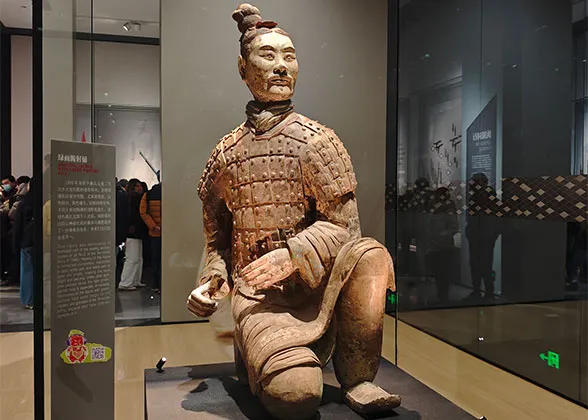
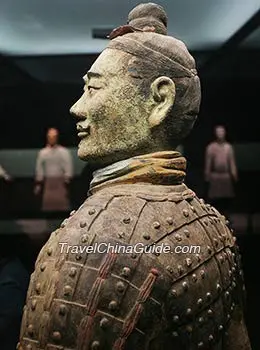
Stepping into the second floor of the exhibition hall next to the Terracotta Army Pit 2, you can find the green-faced terracotta warrior. Generally, visitors may first notice his distinctive kneeling archer posture: his right knee touches the ground, his left leg is bent with the foot flat on the floor, and his body leans slightly forward. Looking up, one sees his hair tied into a bun on the right side of his head, painted ochre, with a bright red hairband. His eyebrows and beard are black, and the whites of his eyes and black pupils remain clearly visible. Then comes the most striking detail: his face, neck and ears are painted a pale green, a stark contrast to the pink or flesh-colored faces of thousands of other warriors. He wears a war robe typical of that time, covered by armor whose painted scales, in red, brown and other colors, are still visible. His hands were originally holding a crossbow, as if ready to shoot, and his focused gaze straight ahead gives him an alert expression.
|
|
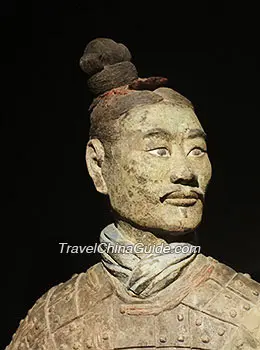
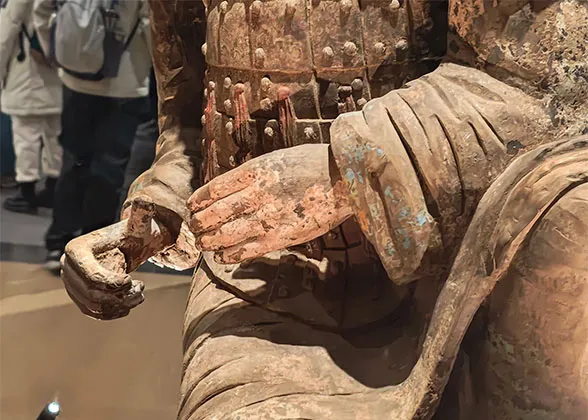
You may like: Hairstyle and Headgear of Terracotta Warriors
Why Is His Face Green? - Six Top Speculations
Over the years, a number of explanations have been discussed. Below are the most representative ones.
1. Representing an Ethnic Minority Soldiers
2. Performing an Exorcism Ceremony
In ancient times, a ritual called Nuo was popular among the army to drive away evil spirits. During the Nuo ceremony, participants would wear fierce masks or paint their faces in unusual colors, such as blue or green, to expel evil and ensure the safety of the troops. Since the Terracotta Army is meant to be a realistic representation of the Qin army, some experts suggest that this green-faced figure was an officer in charge of exorcism, and his face was painted green precisely for that ritual purpose.
3. Frightening the Enemy
During the Warring States Period (475 - 221 BC), some soldiers painted their faces with bright colors to frighten their opponents on the battlefield. A green face might have served a similar psychological purpose. In ancient Chinese warfare, unusual facial colors were believed to make a soldier look less human and more like an unusual being. Green, in particular, could be associated with poison or ghostly figures, all of which would naturally cause fear.
4. Blending in with the Battlefield
Similar to modern special forces using camouflage paint, soldiers in ancient times sometimes painted their faces green when fighting in forests or mountainous areas, which helped them blend in with the surrounding vegetation. Some scholars further note that the kneeling archer posture identifies him as a long-range shooter, similar to a modern sniper. As for why the rest of the body is not green, one suggestion is that the face is the most visible part of a soldier, so painting it green achieved the main effect; alternatively, the face alone may have been painted symbolically.
5. A Craftsman's Prank or Mistake
Another casual explanation suggests that a craftsman might have painted one soldier's face green as a quiet prank, or that a color-blind craftsman mistakenly applied the wrong color. These speculations, though amusing, have no historical or archaeological record. Moreover, the Qin Dynasty (221 - 207 BC) enforced strict quality control over the production of weapons and terracotta figures, with each piece traceable to its maker. Unauthorized changes to standard colors of terracotta warriors would have been virtually impossible.
6. Resulting from Chemical Change of the Paint
It was once proposed that the green color was not intended by the craftsmen but resulted from a chemical change over time. For example, a copper-related pigment turning green under certain burial conditions. However, later experts pointed out that the passage of time can only make pigments lighter or darker, but cannot fundamentally change their hue. Therefore, changing from pink to green is scarcely possible and this speculation has been rejected by most researchers.
More than two thousand years have passed, and the kneeling archer still kneels there silently with his green face. However, to this day, why he has a green face remains unresolved and it seems that the answer awaits future archaeological discoveries and research. Further Reading:
Types of Terracotta Statues
Top 20 FAQs about Terracotta Army
15 Little-Known Facts About the Terracotta Army
How to Visit Terracotta Army - A Perfect One-Day Tour Plan?