Chongqing Weather
Chongqing has a subtropical monsoon climate, characterized by abundant rainfall, limited sunshine hours, humid air and numerous foggy days. There are 4 distinct seasons: spring is warm and comfortable; summer is unbearably hot; autumn is cool and noticeably foggy; winter is cold, but milder than most northern Chinese cities. Therefore, you are advised to visit the city in spring from March to May and autumn from September to November.
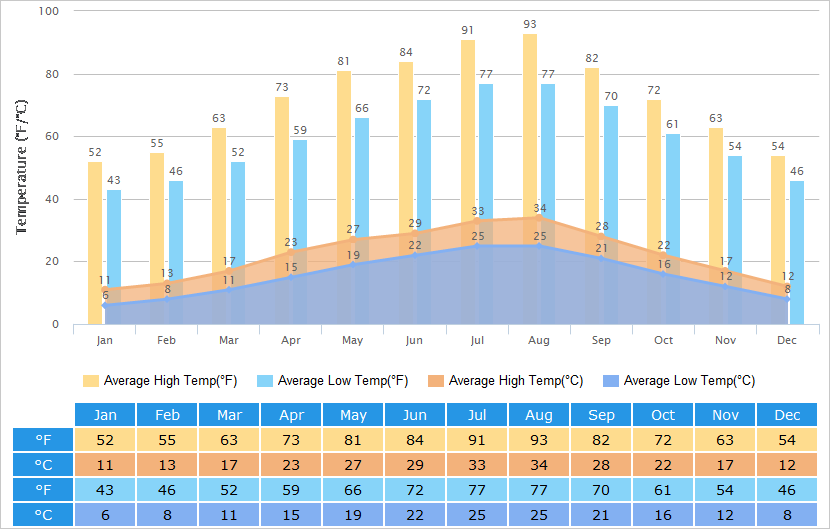
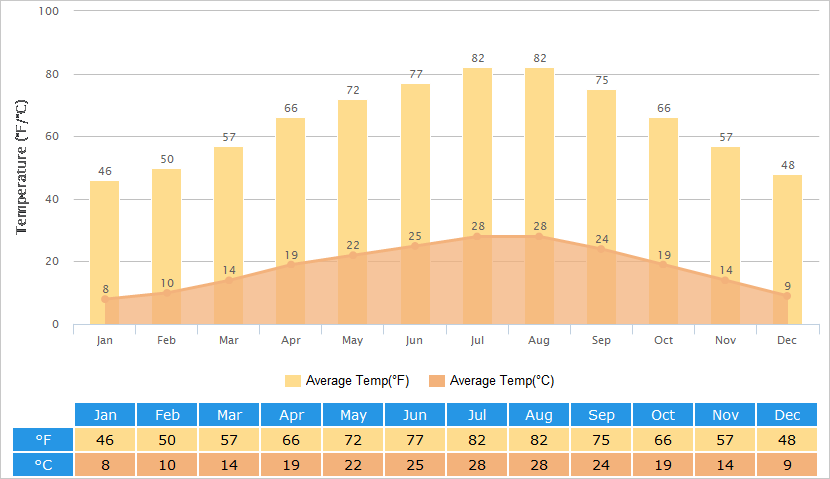
1. Overall, temperatures in Chongqing remain relatively high due to its low latitude, although seasonal temperature variations exist. Even in the winter season, the lowest temperature in the urban area rarely drops below freezing.
2. The temperature varies significantly across Chongqing because of its complex geography: urban districts tend to be warmer, as they sit at lower elevations - roughly 200-400 meters, while northeastern and southeastern regions, sitting higher, have temperatures lower than central urban districts. For example, Wushan County in the northeast, at an altitude of around 1,000 meters, has temperatures approximately 3-5°C (37-41°F) lower than urban districts.
3. Chongqing’s daily temperature difference is relatively mild in winter and summer. In contrast, in spring and autumn, it can be significant, as much as 10-15°C (50-59°F).
4. Also, during spring and autumn, be mindful of sudden temperature changes, and visitors should prepare several layers of clothes.
Due to its low latitude and basin terrain, Chongqing is well known for its prolonged heat. From 1951 to 2024, the city recorded a cumulative total of 149 days with maximum temperatures of 40°C (104°F) or higher, earning it a reputation as “one of the three stoves in China”. August is the hottest month in Chongqing, with extreme highs reaching 39-43°C (102-109°F).
Chongqing in January experiences the lowest temperature, typically 3-5°C (37-41°F). However, due to its quite humid air, the perceived temperature feels much lower, creating a bone-chilling cold. Plus, in high-altitude mountainous areas, the lowest temperature can drop to -8 to -5 degrees Celsius (18-23degrees Fahrenheit).
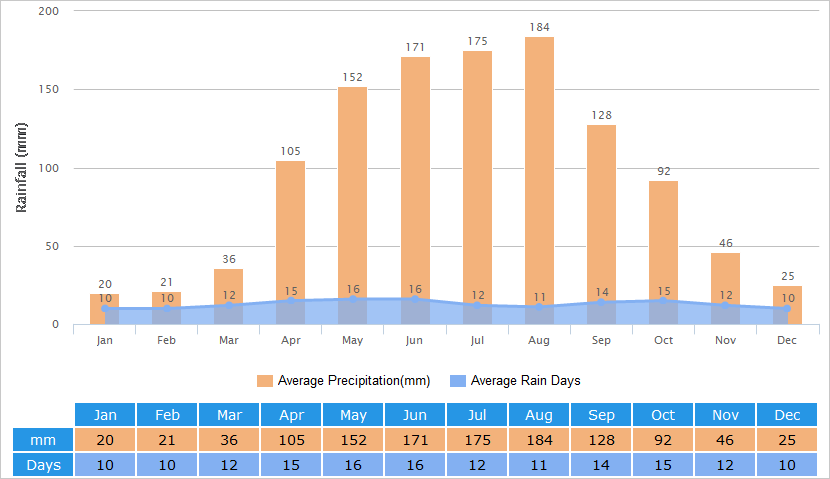
Chongqing receives abundant rainfall, averaging 1,000-1,350 mm (40-53 inches) per year. Influenced by the monsoon, the rainy season lasts from May to September, when the rainfall accounts for about 70% of the annual total. June sees the most rainfall of the year, with the average precipitation of 211 mm and 13 rainy days. Luckily, most rain falls in the evenings and nights.
Interestingly, parts of Chongqing often experience 30 - 50 rainless days in July and August, which leads to drought, due to the competing effects of the Tibetan Plateau airflow and subtropical high pressure.
From November to next February, precipitation is low, averaging 23-56 mm per month. But it doesn’t mean the rainfall is rare. Instead, it often drizzles which may persist for several consecutive days. In addition, it rarely snows in the city center, but you can witness winter snow in the mountainous areas.
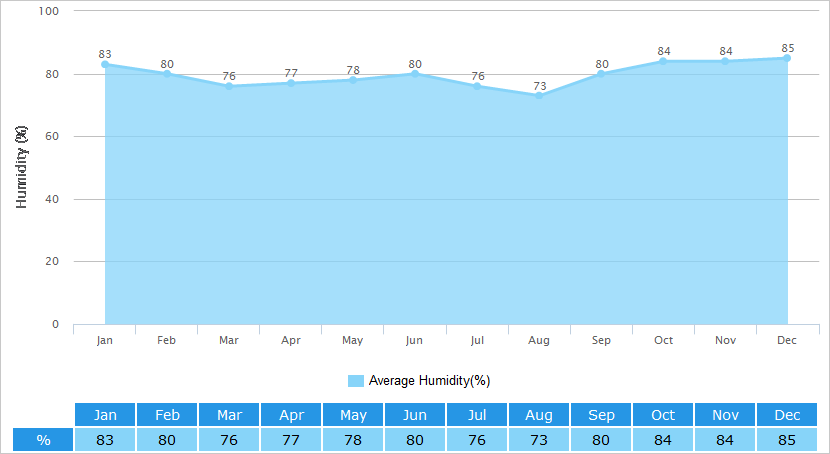
Chongqing ranks among the most humid cities in China, with an average humidity level above 70 %. High humidity level makes the city much hotter in summer, with perceived temperatures often exceeding 40°C (104°F). In winter, the humidity contributes to an uncomfortable, damp chill.
Chongqing is one of the least sunny regions in China, with only about 1,000 hours of annual sunshine. Autumn and winter see especially limited sunlight.
Chongqing also has a well-known nickname, Fog City, as it experiences an average of 104 foggy days per year, even 10 days more than London; and they mostly scatter in autumn and winter.
Spring and autumn are the ideal seasons to explore Chongqing, the 8D city.
In spring, the weather is warm and pleasant, and rainfall is moderate. It’s a prime time to enjoy seasonal flowers, including cherry blossoms, peach blossoms, rapeseed flowers, and jacaranda bloom across the city and suburbs. Both city walks and countryside excursions are nice to do during this period.
In autumn, the oppressive heat of summer fades, and the air becomes cool and refreshing. Autumn colors deepen across the surrounding mountains, making it an excellent season for outdoor exploration. Even if you stay within the city, sightseeing becomes pleasant and relaxing.
Apart from favorable climates and wonderful landscapes during these periods, tourist numbers are relatively low, and hotel prices remain reasonable.
 Weather Overview:
Spring in Chongqing sees an overall rising temperature. March is a transitional month. Its daytime highs climb from around 9°C (48°F) early in the month to 25°C (77°F) by late March. By April and May, spring is in full swing, with daytime highs frequently hovering around 28°C (82°F). However, the weather in spring, especially in early spring is highly changeable; you should notice that a sudden cold snap may arrive, bringing a sharp temperature drop. Rainfall gradually increases as the monsoon approaches, with 6 rainy days in March and 12 days in April and May respectively.
Travel Advice:
1. The best sites to admire spring flowers are Nanshan Botanical Garden and Tieshanping Forest Park, where nearly every kind of flower can be found.
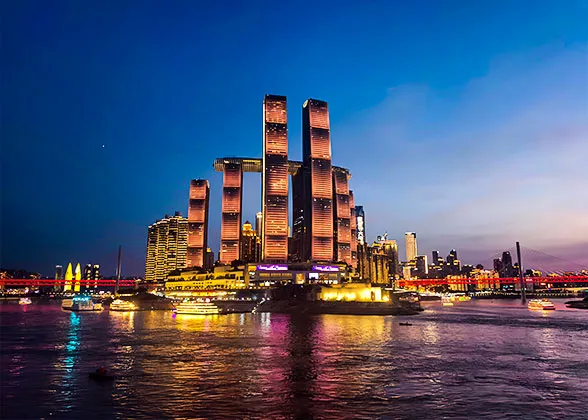
2. The pleasant weather is suitable for various outdoor activities: see the light rail train passing through a building in Liziba Station and appreciate the trendy building in Raffles City Chongqing - don't forget to check it out and snap some photos; visit Hongya Cave for its spectacular night views; you may also enjoy the night views and gentle breeze from Yangtze River on a cruise boat.
3. Tourist numbers increase around the Qingming Festival in early April and the May Day Holiday in early May. It’s best to avoid visiting Chongqing during these busy periods. If not, try to book tickets and hotels at least two weeks earlier.
Weather Overview:
Summer in Chongqing is famously hot. June is comparatively less hot, with daytime highs of 26-35°C (79-95°F). July and August make you feel unbearably hot, with daytime highs frequently reaching 38°C (100°F). Moreover, the average UV index often reaches 12. The season is also the rainy period. Downpours, thunderstorms and strong winds are common.
Travel Advice:
1. Considering the extremely high temperatures in the daytime, indoor attractions become top choices to escape the heat, including the Three Gorges Museum. Don’t forget to taste authentic Chongqing Hotpot at an Air-Raid Shelter, offering a cool and unique experience. Night, when the temperature cools a bit, is a better time for outdoor activities.
2. Mountain areas are the best places to escape the heat and enjoy the summer nature beauty. Recommended attractions include Wulong Karst National Geology Park, Jinfo Mountain and Black Mountain Valley.
3. Chongqing’s heat can be overwhelming for visitors, so keep hydrated and avoid staying outside for extended hours.
4. Hot though it is, July and August are the peak travel season because of China’s summer holiday, so book hotels and train tickets early.
5. When you decide to explore riverside or mountain areas, check the weather forecast and avoid going if there are alerts of flooding and landslides.
Weather Overview:
In autumn, the temperature drops progressively, but September still feels like summer, with daytime highs hovering between 27 and 33°C (81-91°F). October and November experience significantly cooler weather. Nights can be cool, especially in late November, with lows often below 10°C (50°F).
Autumn in Chongqing sees gradually decreasing precipitation, yet rainy and cloudy days remain frequent. Consequently, it is also the season with the highest humidity levels throughout the year.
Travel Advice:
1. Chongqing’s travel highlight in autumn is the colorful fall foliage scenery. In the city center, you are advised to walk through the ginkgo avenue at E’ling Park or appreciate the maple leaves at Tieshanping Forest Park. The surrounding mountainous areas offer even more spectacular views: Wulong Karst National Geology Park is enchantingly beautiful. In Wushan, you can enjoy not only autumn leaves but also a stunning river scene.
2. Autumn is also a harvest season, offering fresh river fish and delicious fruits like oranges and pears.
3. Avoid the peak travel period around early October, which coincides with the China National Day Holiday. If not, try to book everything early.
Weather Overview:
The climate of Chongqing in winter is humid, cold and often foggy. Temperatures are not very low, with lows rarely falling below zero degrees Celsius. But due to its humid and foggy climate, perceived temperatures can be much lower. In high-altitude areas, it can be even colder, usually 8 degrees Celsius (46 degrees Fahrenheit) lower than that of the urban area.
The downtown area sees very little rainfall, with the average precipitation around 24 mm per month. However, when cold air masses strike, mountainous areas experience plenty of snowfall.
Travel Advice:
1. Winter is ideal for hot springs, with several well-known and unique hot spring hotels in the surrounding areas of Chongqing.
2. The abundant snowfall in mountainous areas also provides perfect conditions for snow appreciation and snow sports. Recommended spots include: Fairy Mountain in Wulong and Nantian Lake.
3. You are advised to arrange outdoor explorations after 9:00-10:00, when the fog has dissipated.
4. Due to its foggy weather, expect fog-related delays for flights and poor scenery from the cable car of the Yangtze River.
5. Avoid peak season around the Chinese New Year Holiday, from 15th to 23rd in February 2026, when prices surge and transportation and scenic sites become crowded.
Temperature Features:
2. The temperature varies significantly across Chongqing because of its complex geography: urban districts tend to be warmer, as they sit at lower elevations - roughly 200-400 meters, while northeastern and southeastern regions, sitting higher, have temperatures lower than central urban districts. For example, Wushan County in the northeast, at an altitude of around 1,000 meters, has temperatures approximately 3-5°C (37-41°F) lower than urban districts.
3. Chongqing’s daily temperature difference is relatively mild in winter and summer. In contrast, in spring and autumn, it can be significant, as much as 10-15°C (50-59°F).
4. Also, during spring and autumn, be mindful of sudden temperature changes, and visitors should prepare several layers of clothes.
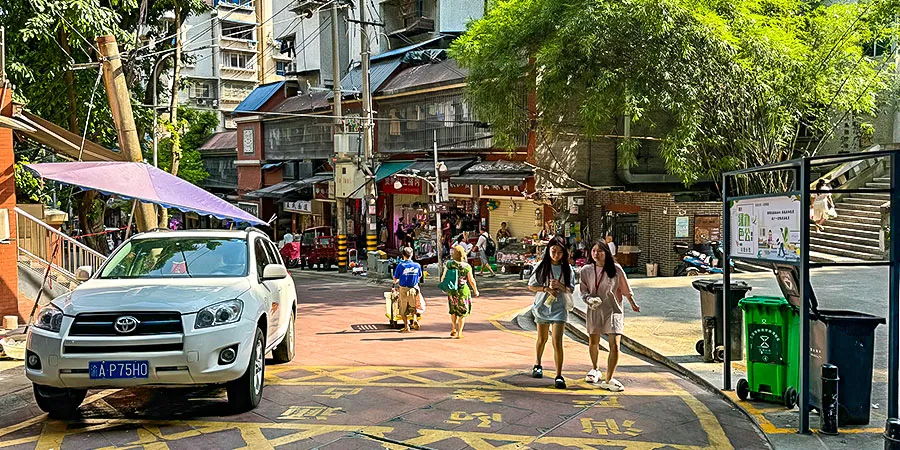 |
| Chongqing Street View |
The Hottest Month in Chongqing:
The Coldest Month in Chongqing:
Precipitation Pattern
Interestingly, parts of Chongqing often experience 30 - 50 rainless days in July and August, which leads to drought, due to the competing effects of the Tibetan Plateau airflow and subtropical high pressure.
From November to next February, precipitation is low, averaging 23-56 mm per month. But it doesn’t mean the rainfall is rare. Instead, it often drizzles which may persist for several consecutive days. In addition, it rarely snows in the city center, but you can witness winter snow in the mountainous areas.
Humid Climate
Short Sunshine Hours and Numerous Foggy Days
Chongqing also has a well-known nickname, Fog City, as it experiences an average of 104 foggy days per year, even 10 days more than London; and they mostly scatter in autumn and winter.
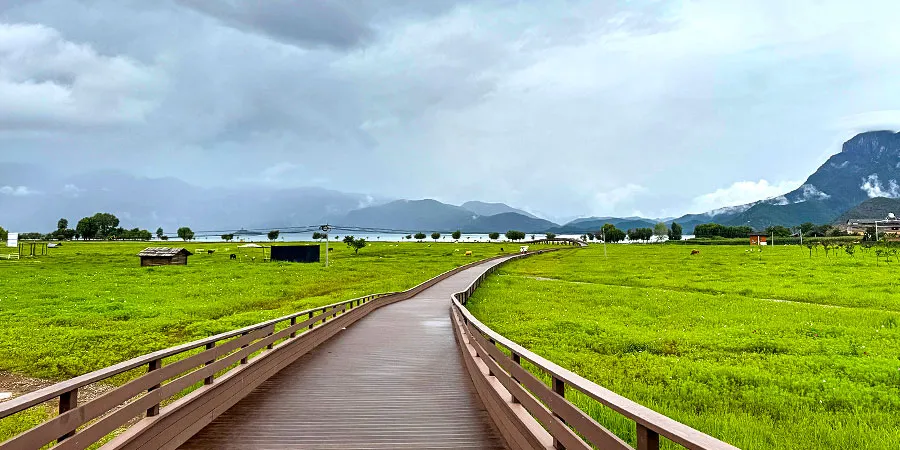 |
| Foggy Days in Chongqing |
In spring, the weather is warm and pleasant, and rainfall is moderate. It’s a prime time to enjoy seasonal flowers, including cherry blossoms, peach blossoms, rapeseed flowers, and jacaranda bloom across the city and suburbs. Both city walks and countryside excursions are nice to do during this period.
In autumn, the oppressive heat of summer fades, and the air becomes cool and refreshing. Autumn colors deepen across the surrounding mountains, making it an excellent season for outdoor exploration. Even if you stay within the city, sightseeing becomes pleasant and relaxing.
Apart from favorable climates and wonderful landscapes during these periods, tourist numbers are relatively low, and hotel prices remain reasonable.
7-Day Chongqing Weather Forecast
Chongqing Weather by Month
Averages for Chongqing Weather
High/Low Temperatures of Chongqing
Average Temperatures of Chongqing
Humidity Graph of Chongqing
Average Rainfall of Chongqing
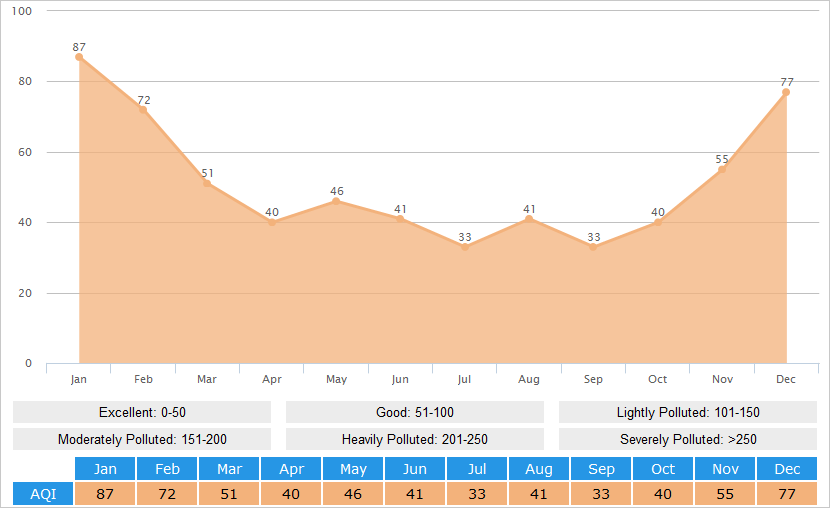
Air Quality of Chongqing
Chongqing Climate - Seasons & Travel Advice
Spring: March to May
Spring in Chongqing sees an overall rising temperature. March is a transitional month. Its daytime highs climb from around 9°C (48°F) early in the month to 25°C (77°F) by late March. By April and May, spring is in full swing, with daytime highs frequently hovering around 28°C (82°F). However, the weather in spring, especially in early spring is highly changeable; you should notice that a sudden cold snap may arrive, bringing a sharp temperature drop. Rainfall gradually increases as the monsoon approaches, with 6 rainy days in March and 12 days in April and May respectively.
Travel Advice:
1. The best sites to admire spring flowers are Nanshan Botanical Garden and Tieshanping Forest Park, where nearly every kind of flower can be found.
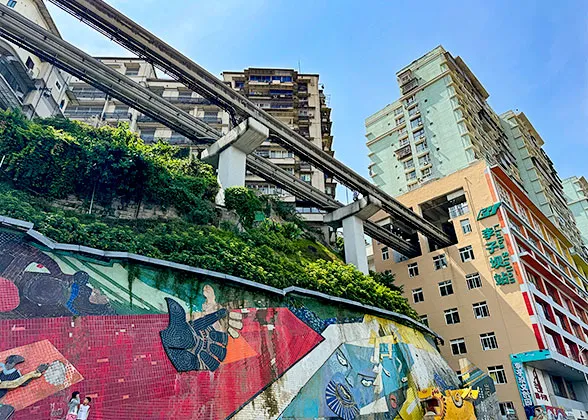
2. The pleasant weather is suitable for various outdoor activities: see the light rail train passing through a building in Liziba Station and appreciate the trendy building in Raffles City Chongqing - don't forget to check it out and snap some photos; visit Hongya Cave for its spectacular night views; you may also enjoy the night views and gentle breeze from Yangtze River on a cruise boat.
3. Tourist numbers increase around the Qingming Festival in early April and the May Day Holiday in early May. It’s best to avoid visiting Chongqing during these busy periods. If not, try to book tickets and hotels at least two weeks earlier.
|
|
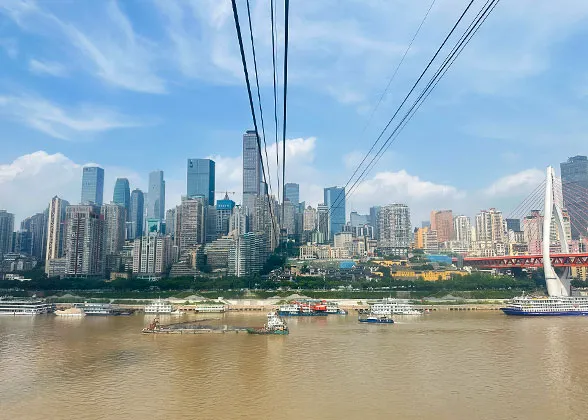
Summer: June to August
Summer in Chongqing is famously hot. June is comparatively less hot, with daytime highs of 26-35°C (79-95°F). July and August make you feel unbearably hot, with daytime highs frequently reaching 38°C (100°F). Moreover, the average UV index often reaches 12. The season is also the rainy period. Downpours, thunderstorms and strong winds are common.
Travel Advice:
1. Considering the extremely high temperatures in the daytime, indoor attractions become top choices to escape the heat, including the Three Gorges Museum. Don’t forget to taste authentic Chongqing Hotpot at an Air-Raid Shelter, offering a cool and unique experience. Night, when the temperature cools a bit, is a better time for outdoor activities.
2. Mountain areas are the best places to escape the heat and enjoy the summer nature beauty. Recommended attractions include Wulong Karst National Geology Park, Jinfo Mountain and Black Mountain Valley.
3. Chongqing’s heat can be overwhelming for visitors, so keep hydrated and avoid staying outside for extended hours.
4. Hot though it is, July and August are the peak travel season because of China’s summer holiday, so book hotels and train tickets early.
5. When you decide to explore riverside or mountain areas, check the weather forecast and avoid going if there are alerts of flooding and landslides.
|
|
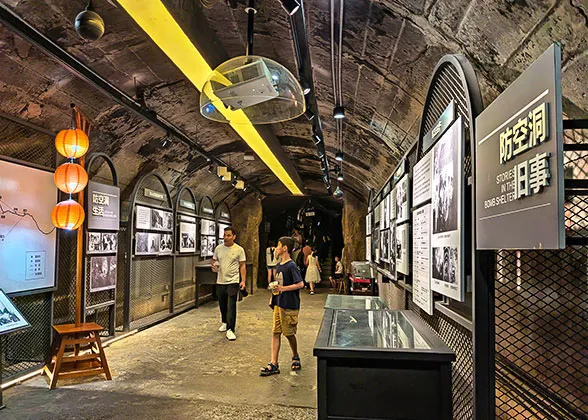
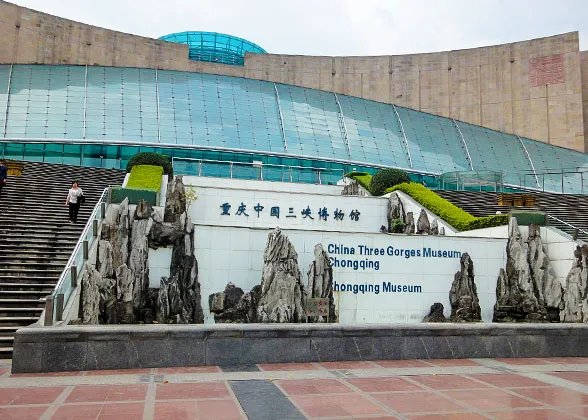
Autumn: September to November
In autumn, the temperature drops progressively, but September still feels like summer, with daytime highs hovering between 27 and 33°C (81-91°F). October and November experience significantly cooler weather. Nights can be cool, especially in late November, with lows often below 10°C (50°F).
Autumn in Chongqing sees gradually decreasing precipitation, yet rainy and cloudy days remain frequent. Consequently, it is also the season with the highest humidity levels throughout the year.
Travel Advice:
1. Chongqing’s travel highlight in autumn is the colorful fall foliage scenery. In the city center, you are advised to walk through the ginkgo avenue at E’ling Park or appreciate the maple leaves at Tieshanping Forest Park. The surrounding mountainous areas offer even more spectacular views: Wulong Karst National Geology Park is enchantingly beautiful. In Wushan, you can enjoy not only autumn leaves but also a stunning river scene.
2. Autumn is also a harvest season, offering fresh river fish and delicious fruits like oranges and pears.
3. Avoid the peak travel period around early October, which coincides with the China National Day Holiday. If not, try to book everything early.
|
|
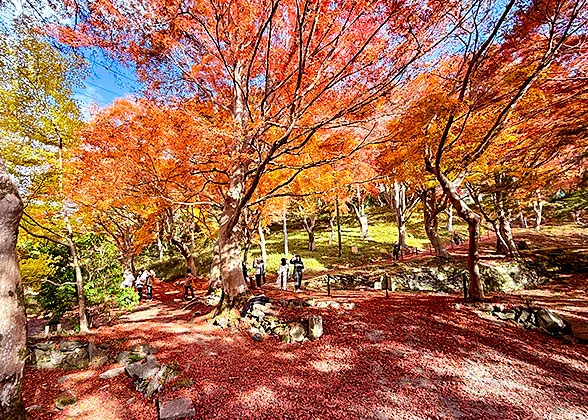
Winter: December to February
The climate of Chongqing in winter is humid, cold and often foggy. Temperatures are not very low, with lows rarely falling below zero degrees Celsius. But due to its humid and foggy climate, perceived temperatures can be much lower. In high-altitude areas, it can be even colder, usually 8 degrees Celsius (46 degrees Fahrenheit) lower than that of the urban area.
The downtown area sees very little rainfall, with the average precipitation around 24 mm per month. However, when cold air masses strike, mountainous areas experience plenty of snowfall.
Travel Advice:
1. Winter is ideal for hot springs, with several well-known and unique hot spring hotels in the surrounding areas of Chongqing.
2. The abundant snowfall in mountainous areas also provides perfect conditions for snow appreciation and snow sports. Recommended spots include: Fairy Mountain in Wulong and Nantian Lake.
3. You are advised to arrange outdoor explorations after 9:00-10:00, when the fog has dissipated.
4. Due to its foggy weather, expect fog-related delays for flights and poor scenery from the cable car of the Yangtze River.
5. Avoid peak season around the Chinese New Year Holiday, from 15th to 23rd in February 2026, when prices surge and transportation and scenic sites become crowded.
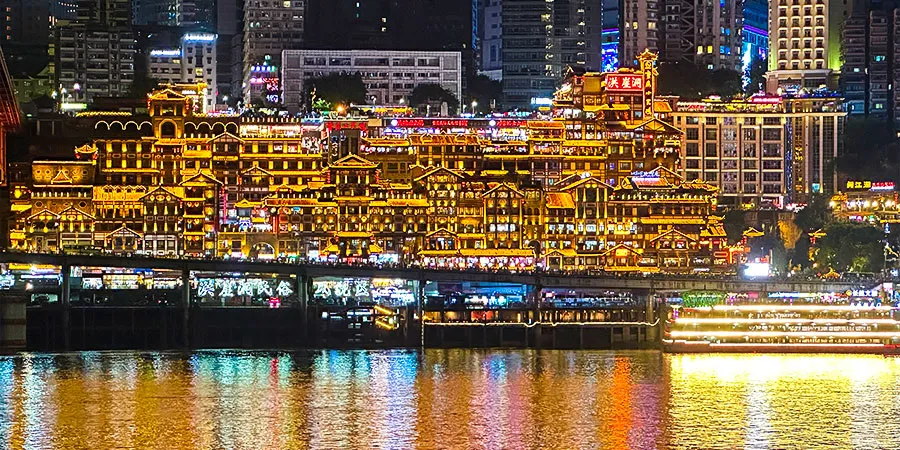 |
| Night View at Hongya Cave |
You May Like

- Last updated on Feb. 10, 2026 by Rachel Hou -