Lucky Number 4
General Analysis
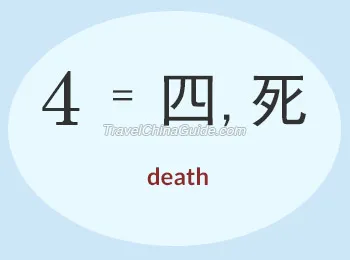 People with the lucky number 4 are usually endowed with excellent management capability. They are good at summarizing scattered documents, making complicated situations simple and clearly handling problems. Since most of them lack the sense of security, they pursue the steady relationship to make themselves feel being protected. Besides, these people fear or hate changes in life and they are the most stubborn compared with people having other lucky numbers. Though they may have realized their own weakness, they hardly want to change themselves. What’s more, they are good arguers upon some conflicts or arguments especially when they stand on a reasonable side, so give up the idea to dispute with them or persuade them.
 Strong points: They are patient, reliable and self-composed in the daily life which makes them good executants or ministrants. Generally speaking, they are proud, but not arrogant; conservative, but not stereotyped. Diligence, loyalty and realism are their strength. Apart from that, they are always ambitious and determined. No wonder that they are usually able to make great achievements. Weak points: Stubbornness is the most distinctive characteristic for those who have the lucky number 4. They are jealous, quarrelsome and sometimes boring. Although they usually are able to defeat others in the arguments with some surprising words or logicality, they actually lack imagination. Moreover, most of them may be a little tightfisted.
No. 4 in Chinese Culture
Even though 4 has derogatory connotation in Chinese, it seems to be very popular in Chinese culture, especially to express some religious ideology. For example, Four Greatness (the greatest natural power that human should abide by) in Buddhism refers to Earth, Water, Fire and Wind, while Tao, Heaven, Earth and Human are the Four Greatness of Taoism. Furthermore, the ancient Chinese people took benevolence, righteousness, courtesy and wisdom as Four Moral Criterions. Sometimes, the four moral criterions refer to fealty to parents, loyalty to one’s own country, honesty to friends and respect to the seniors. For Chinese literati, writing brush, ink stick, ink slab and paper are the Four Treasures in the Study.
Wide Use of No. 4
1. Four Seasons: spring, summer, autumn, winter
2. Four Directions: east, west, south, north
3. Four Inventions of Ancient China: paper making, printing, compass, gunpowder
4. Four Skills of the Ancient Chinese Scholars: playing zither, playing chess, calligraphy, painting
5. Four Classic Novels of the Ancient China: Romance of the Three Kingdoms (Kingdom of Wei, Shu and Wu), Outlaws of Marsh, Journey to the West, A Dream in Red Mansions (The Story of A Stone)
6. Four Sorts of the Well-known Embroidery: Su (Suzhou) Embroidery, Xiang (Hunan) Embroidery, Shu (Sichuan) Embroidery, Yue (Guangdong) Embroidery
7. Four Famous Pavilions: Penglai Pavilion in Yantai of Shandong, Yueyang Pavilion in Hunan, Tengwang Pavilion in Nanchang of Jiangxi, Yellow Crane Tower in Wuhan of Hubei
8. Four Plants in Chinese Painting: Plum Blossoms, Orchid, Bamboo, Chrysanthemum
9. Four Grottoes: Mogao Caves in Dunhuang, Yungang Grottoes in Datong, Longmen Grottoes in Luoyang, Maiji Caves in Tianshui
10. Four Famous Buddhist Mountains: Mt. Wutai in Shanxi, Mt. Putuo in Zhejiang, Mt. Emei in Sichuan, Mt. Jiuhua in Anhui
- Last updated on Aug. 07, 2025 by Gabby Li -