Beijing Planning Exhibition Hall
The Beijing Planning Exhibition Hall, located right next to Tiananmen Square, is the perfect place to understand modern Beijing after visiting the city's historic sites. This museum is dedicated to showcasing the capital's history, present, and future of Beijing's urban planning and development. Through detailed models, multimedia displays, and interactive technology, it offers an efficient, intuitive, and comprehensive window into Beijing's transformation and vision.
If you are short on time, head straight to these four iconic exhibits that explain why Beijing looks the way it does today.
Covering an area of 302㎡ at a scale of 1:750, this model includes over 500,000 building miniatures and is one of the world's largest urban scale models. You can view it from a glass walkway, locating landmarks like the Forbidden City and the Bird's Nest. For many, visiting Beijing often results in a fragmented understanding focused on individual attractions. However, the model provides a god's-eye perspective of the entire city, helping you grasp the overarching spatial structure in minutes.
This solid wood model brings the world's largest and most complete ancient wooden architectural complex, the Forbidden City, right before your eyes. You can clearly see the distinct separation between the "front court" and "rear palace", the grand three great halls, and the elegance of the Six Eastern and Western Palaces. Every golden glazed tile, each delicate cornice, down to the small lions in front of the halls, is meticulously depicted. It not only showcases this 600-year-old imperial palace's opulence but also allows you to truly feel the majesty of China's feudal past during 14th to 19th century.
This large bronze sculpture, as expansive as a round dining table, vividly illustrates why Beijing is known as Beijing Bay. It reveals a city embraced on three sides by rolling mountain ranges that act like protective arms, with winding rivers and a network of roads flowing through the center, creating a natural harbor-like shape. The textured bronze surface brings the terrain to life, vividly capturing the folds of the mountains and the flow patterns of the waterways. It also explains the strategic advantages that made Beijing an ideal capital: the mountains provide a natural defensive barrier, while the rivers have nourished the city for centuries.
Weighing an impressive 10 tons, equivalent to two large trucks, this bronze relief delicately holds the memories of an entire city. It miniaturizes old Beijing as it was in 1949, before the cityscape was dominated by modern skyscrapers, showcasing a landscape filled with traditional hutongs and courtyard houses. The artist has masterfully carved 118,000 small houses into the bronze, creating a dense yet clear depiction where every alleyway, well, and even the leaves of over 60,000 trees are vividly rendered, bringing the past to life before your eyes.
The 1st floor hosts the Barrier-Free Environment Exhibition through real-life barrier-free application scenarios. A highlight is the visually impaired guide robot. By placing a hand on it, you will be led along a predefined route, which imitates how robots help the blind in the future.
The 2nd floor showcases modern Beijing through exhibitions like Beijing - A World City, Beijing Land Use Planning, and Beijing District and County Planning. These provide an intuitive grasp of the city's current structure and governance, complemented by the Old Beijing City 1949 Bronze Relief, which contrasts the past with the present.
Considered the highlight of the entire museum, the 3rd floor houses the Beijing Urban Planning Model, Forbidden City Wooden Model, and additional exhibits like Evolution of Beijing's Ancient City and Beijing Historical and Cultural City Protection. These displays trace the capital's growth from a Ming Dynasty (1368-1644) hub to a modern metropolis, balanced with efforts to preserve its ancient charm, a theme that resonates with those interested in sustainable urban development.
The 4th floor features a multimedia theater with a curved screen that continuously shows two films. "The Immortal City" briefly narrates Beijing's 850-year history as a capital, while "Capital Planning" systematically summarizes the implementation achievements of the new master plan. Additionally, there is a special technology exhibition offering interactive experiences related to urban rail transit and low-carbon city initiatives.
Note: The 4th floor multimedia theater screenings are at 10:00, 11:00, 14:30, and 15:30, each lasting 30 minutes.
It is recommended to prioritize the core model on Floor 3 for approximately 40 minutes, followed by the historical exhibitions on Floor 2, and then the technology experiences on Floor 4. The tour typically costs 1~2 hours.
Tuesday to Sunday, 09:00-17:00 (Last entry at 16:30). Closed on Mondays except for public holidays.
The admission is free. To visit, you can reserve the entry in advance via the official WeChat account or make the reservation on site. The multimedia theater requires a separate ticket of CNY10.
Located next to China Railway Museum on the southeast side of Tiananmen Square. You may take the subway Line 2 to Qianmen Station (Exit B) and walk for 5 minutes, or take a bus like Bus No. 2 and Bus No. 120 to Qianmen Bus Stop, then walk to the hall following navigation.
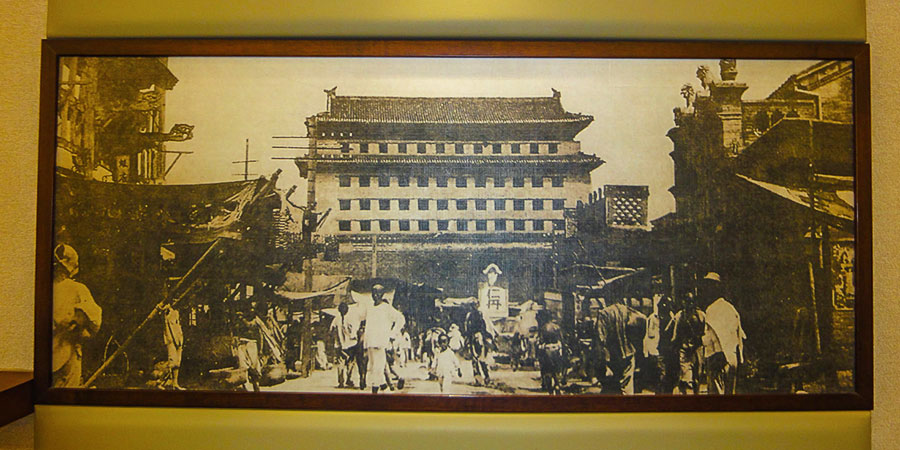 |
| Old Photo Displayed in Beijing Planning Exhibition Hall |
Must-See Exhibits in Beijing Planning Exhibition Hall
If you are short on time, head straight to these four iconic exhibits that explain why Beijing looks the way it does today.
Beijing Urban Planning Model (3rd Floor)
Covering an area of 302㎡ at a scale of 1:750, this model includes over 500,000 building miniatures and is one of the world's largest urban scale models. You can view it from a glass walkway, locating landmarks like the Forbidden City and the Bird's Nest. For many, visiting Beijing often results in a fragmented understanding focused on individual attractions. However, the model provides a god's-eye perspective of the entire city, helping you grasp the overarching spatial structure in minutes.
|
|
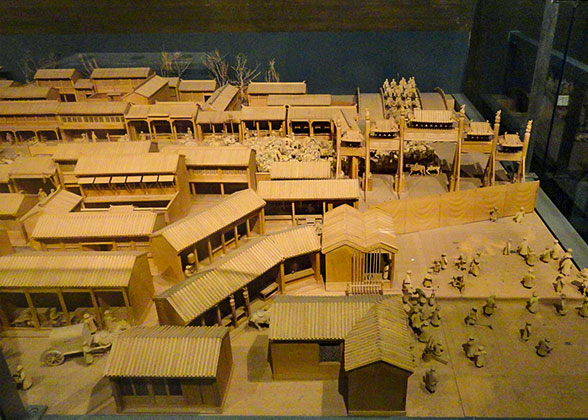
Forbidden City Wooden Model (3rd Floor)
This solid wood model brings the world's largest and most complete ancient wooden architectural complex, the Forbidden City, right before your eyes. You can clearly see the distinct separation between the "front court" and "rear palace", the grand three great halls, and the elegance of the Six Eastern and Western Palaces. Every golden glazed tile, each delicate cornice, down to the small lions in front of the halls, is meticulously depicted. It not only showcases this 600-year-old imperial palace's opulence but also allows you to truly feel the majesty of China's feudal past during 14th to 19th century.
Beijing Bay Bronze Sculpture (1st Floor)
This large bronze sculpture, as expansive as a round dining table, vividly illustrates why Beijing is known as Beijing Bay. It reveals a city embraced on three sides by rolling mountain ranges that act like protective arms, with winding rivers and a network of roads flowing through the center, creating a natural harbor-like shape. The textured bronze surface brings the terrain to life, vividly capturing the folds of the mountains and the flow patterns of the waterways. It also explains the strategic advantages that made Beijing an ideal capital: the mountains provide a natural defensive barrier, while the rivers have nourished the city for centuries.
"Old Beijing City - 1949" Bronze Relief (2nd Floor)
Weighing an impressive 10 tons, equivalent to two large trucks, this bronze relief delicately holds the memories of an entire city. It miniaturizes old Beijing as it was in 1949, before the cityscape was dominated by modern skyscrapers, showcasing a landscape filled with traditional hutongs and courtyard houses. The artist has masterfully carved 118,000 small houses into the bronze, creating a dense yet clear depiction where every alleyway, well, and even the leaves of over 60,000 trees are vividly rendered, bringing the past to life before your eyes.
Floor-by-Floor Guide for Beijing Planning Exhibition Hall
The 1st floor hosts the Barrier-Free Environment Exhibition through real-life barrier-free application scenarios. A highlight is the visually impaired guide robot. By placing a hand on it, you will be led along a predefined route, which imitates how robots help the blind in the future.
The 2nd floor showcases modern Beijing through exhibitions like Beijing - A World City, Beijing Land Use Planning, and Beijing District and County Planning. These provide an intuitive grasp of the city's current structure and governance, complemented by the Old Beijing City 1949 Bronze Relief, which contrasts the past with the present.
Considered the highlight of the entire museum, the 3rd floor houses the Beijing Urban Planning Model, Forbidden City Wooden Model, and additional exhibits like Evolution of Beijing's Ancient City and Beijing Historical and Cultural City Protection. These displays trace the capital's growth from a Ming Dynasty (1368-1644) hub to a modern metropolis, balanced with efforts to preserve its ancient charm, a theme that resonates with those interested in sustainable urban development.
The 4th floor features a multimedia theater with a curved screen that continuously shows two films. "The Immortal City" briefly narrates Beijing's 850-year history as a capital, while "Capital Planning" systematically summarizes the implementation achievements of the new master plan. Additionally, there is a special technology exhibition offering interactive experiences related to urban rail transit and low-carbon city initiatives.
Note: The 4th floor multimedia theater screenings are at 10:00, 11:00, 14:30, and 15:30, each lasting 30 minutes.
Suggested Visit Time
It is recommended to prioritize the core model on Floor 3 for approximately 40 minutes, followed by the historical exhibitions on Floor 2, and then the technology experiences on Floor 4. The tour typically costs 1~2 hours.
Opening Hours
Tuesday to Sunday, 09:00-17:00 (Last entry at 16:30). Closed on Mondays except for public holidays.
Tickets
The admission is free. To visit, you can reserve the entry in advance via the official WeChat account or make the reservation on site. The multimedia theater requires a separate ticket of CNY10.
Transportation
Located next to China Railway Museum on the southeast side of Tiananmen Square. You may take the subway Line 2 to Qianmen Station (Exit B) and walk for 5 minutes, or take a bus like Bus No. 2 and Bus No. 120 to Qianmen Bus Stop, then walk to the hall following navigation.
- Last updated on Jul. 23, 2026 by Sherry Xia -