Where are the Terracotta Warriors Located?
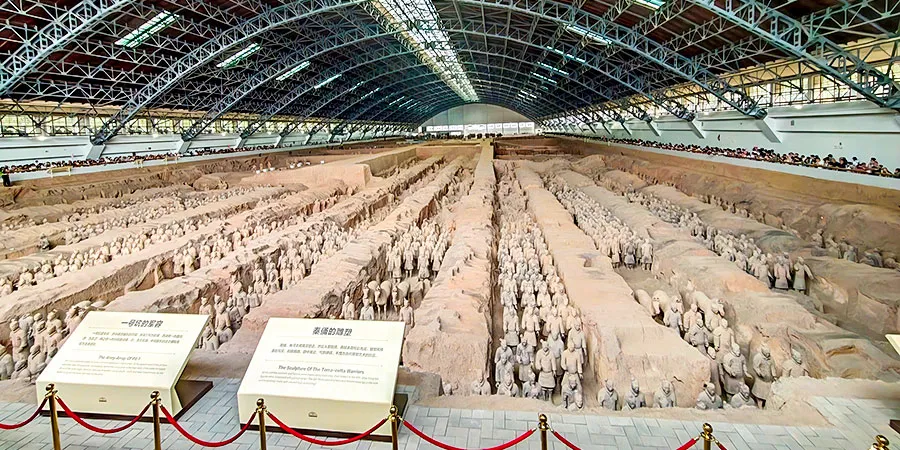 |
| Terracotta Army in Xi'an |
Distance & Driving Time from Major Xi'an Sites to the Terracotta Army
| From | Distance | Driving Time |
|---|---|---|
| Xi'an Xianyang International Airport | 68 km (42 mi) | 60 - 80 min |
| Xi'an Railway Station | 37 km (23 mi) | 40 - 60 min |
| Xi'an North Railway Station | 44 km (27 mi | 45 - 65 min |
| Xi'an City Wall | 37 km (23 mi | 40 - 60 min |
| Bell Tower / Drum Tower / Muslim Quarter | 41 km (25 mi) | 65 - 85 min |
| Giant Wild Goose Pagoda | 46 km (29 mi) | 55 - 75 min |
Nowadays, many direct international flights connect Xi'an with countries and regions such as the United States, Canada, Hong Kong, Japan, Singapore, France, and Australia. If you visit other popular Chinese tourist destinations like Beijing or Shanghai first, you can also easily reach Xi'an by taking a connecting flight or train.
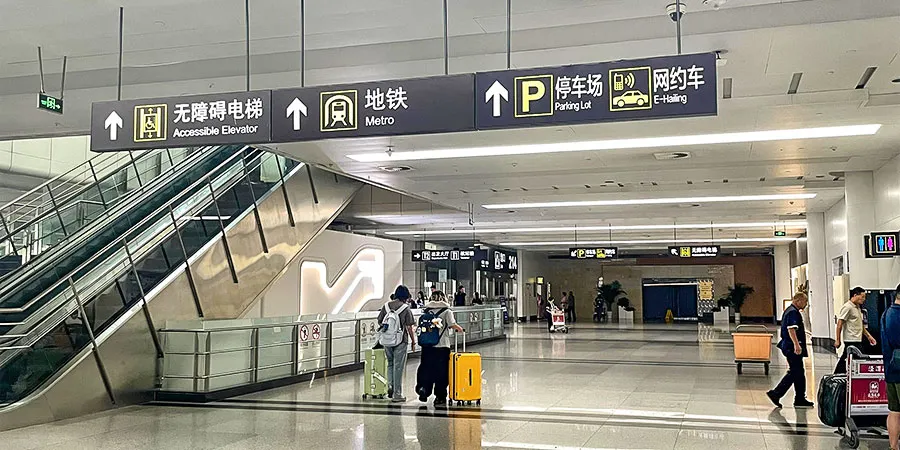 |
| Xi'an Xianyang International Airport |
You May Like:
How to Get to Terracotta Army from Xi'an?
How to Get to Terracotta Army from Beijing?
How to Get to Terracotta Army from Shanghai?
How to Get to Terracotta Army from Hong Kong?
Where is the Terracotta Army in Emperor Qinshihuang's Mausoleum Site Museum?
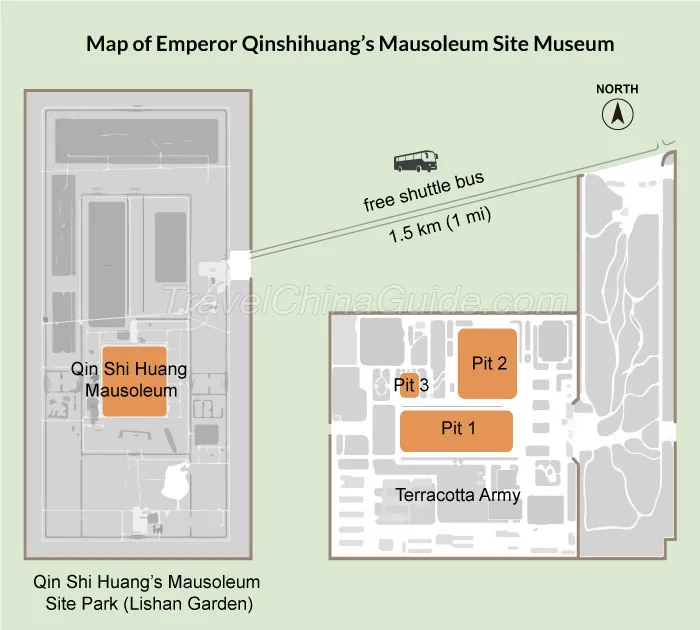 |
| Terracotta Army's Location in the Museum |
Located in the eastern part of Emperor Qin Shi Huang's Mausoleum Site Museum, the Terracotta Army is about 1.5 kilometers (0.9 miles) east of Qin Shi Huang's main tomb. It is positioned on the eastern side of the mausoleum's outer city, guarding the main tomb located inside the inner city. The site primarily consists of three pits: Pit 1, Pit 2, and Pit 3. The largest, Pit 1, is situated at the center; Pit 2, northeast of Pit 1, has a wider variety of warrior types; and Pit 3, northwest of Pit 1, is the smallest but served as the command center for the entire underground army.
Why did Qin Shi Huang select this location to build his mausoleum?
1. From a geographical and engineering standpoint, the Mausoleum of Qin Shi Huang is located at the southern foot of Mount Li, with the Weihe River flowing to its north. This site aligns with traditional Chinese Feng Shui principles of "building tombs near mountains" and "having mountains behind and water in front." Such a location was believed to bring longevity and blessings to descendants. Additionally, the soil around Mount Li is clay-rich and stable, making it suitable for digging deep underground palaces and constructing large burial pits. The higher elevation and lower water table also helped keep the site dry, which was beneficial for long-term preservation of cultural relics.
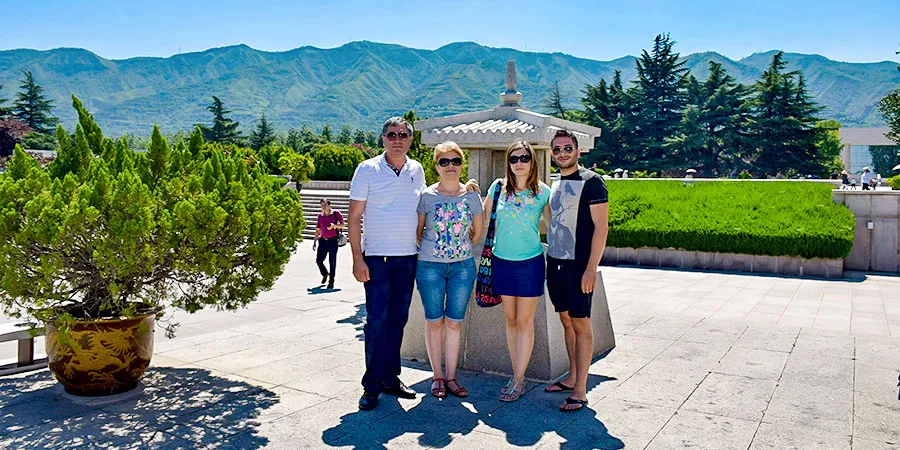 |
| Mount Li can be seen in Terracotta Army museum. |
2. Politically and militarily, the mausoleum's proximity to Xianyang City, the capital at that time, facilitated management of construction, transportation of supplies, and guarding of the tomb. The Terracotta Army was built east of the mausoleum, facing the previous six rival states to the east, symbolizing Emperor Qin Shi Huang's control over eastern territories and his wish for the army to protect his tomb.
3. In terms of cultural and ritual traditions, according to customs of that era, younger generations were often buried east of their ancestors. Mount Li was exactly situated east of the mausoleum of Qin Shi Huang's ancestors.
4. Furthermore, historical records mention that Lantian County, south of Mount Li, was known for its jade production, while Tongguan County, to the north, had gold mines. Qin Shi Huang regarded it as auspicious to be surrounded by jade and gold in the afterlife, which also influenced his decision to build his mausoleum near Mount Li.
Where can the Terracotta Warriors be seen?
The Emperor Qin Shi Huang's Mausoleum Site Museum includes both the Terracotta Army Museum and Qin Shi Huang's Mausoleum Site Park, also known as Lishan Garden. Both sites have terracotta warriors. The Terracotta Army Museum's three main pits display thousands of vivid terracotta warrior figures, which are the highlights of the museum. Lishan Garden, on the other hand, showcases valuable cultural relics, including bronze chariots and horses, as well as distinctive terracotta warriors like lively acrobatics figures and dignified civil officials. It's important to note that these two sites are separate, but visitors can travel between them via the free shuttle bus. If your time allows, don't miss either of them.
|
|
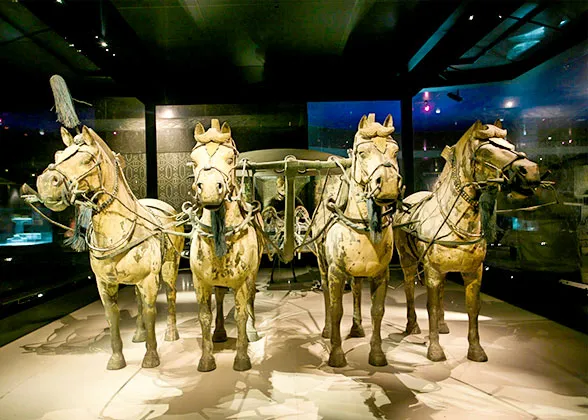
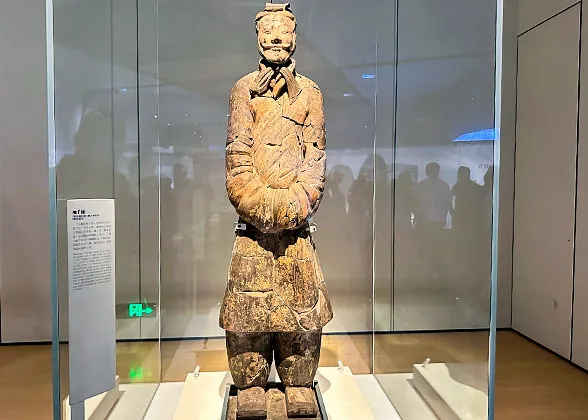
In addition, you can also see different terracotta warriors in other Chinese cities. Specifically, they are the Han Yang Ling Mausoleum and the Yangjiawan terracotta warriors in Xianyang City, Shaanxi Province; the Shizishan terracotta warriors in Xuzhou City, Jiangsu Province; and the Weishan terracotta warriors in Jinan City, Shandong Province. If you plan to visit these cities, they are also worth visiting.
Since the 1980s, overseas exhibitions of the Terracotta Army have been held many times in countries like the USA, UK, Canada, France, Australia, and New Zealand. It's believed that more overseas exhibitions will be planned for the future, so keep an eye on your local news; you might just see the Terracotta Warriors in a museum near your home one day.
You May Like:
Types of Terracotta Statues
How many Terracotta Warriors are there in the Terracotta Army?
Recommended Tours

 Further Reading:
 Discovery of Terracotta Army in 1974 Who discovered the Terracotta Warriors? When was the Terracotta Army Built? Why was the Terracotta Army built? Terracotta Accessory Pits Pit K0006 - Civil Official Figures Pit K9901 - Acrobatics Figures Exhibition of Archaeological Discoveries Top 20 FAQs about Terracotta Army 4 Sites of Terracotta Warriors besides the Xi'an Terracotta Army 8 Cool Facts You May Not Know about the Terracotta Army How to Visit Terracotta Army - A Perfect One-Day Tour Plan