The terracotta warriors were not originally terracotta-color but were actually decorated with vibrant paints. However, after being buried underground for over 2,200 years, their original pigments peeled off once they were excavated. Fortunately, modern technology now helps to preserve these colors. Today, visitors can see some of the warriors that have been restored to their colorful appearance.
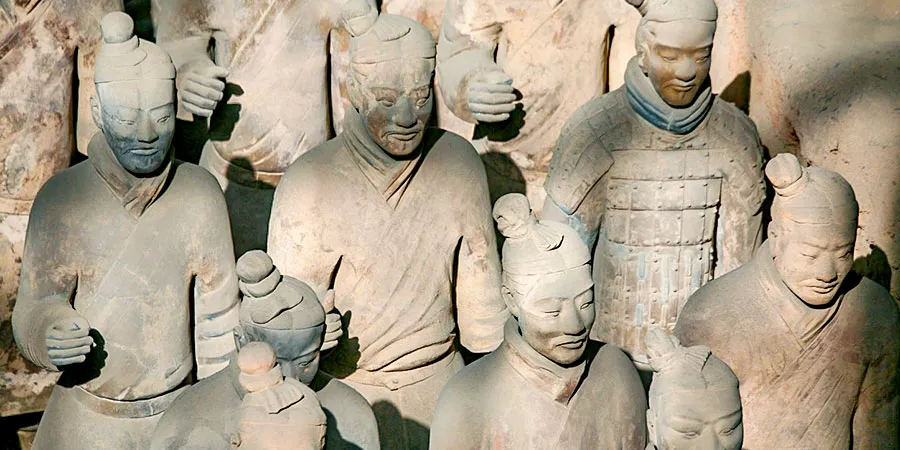 |
| Grey Infantry Warriors in Pit 1 |
How Many Colors Do the Terracotta Warriors Have?
Current archaeological research has identified more than ten different colors on the terracotta warrior figures, including vermilion, purple, light red, dark green, light green, deep purple, pinkish-purple, sky blue, light blue, yellow, orange, black, white, and ochre. Among these, light green, vermilion, purple, and sky blue were the most commonly used. Most of the pigments are made by natural mineral sources, while the purple was artificially synthesized, which demonstrates the advanced skill of ancient craftsmen in color creation.
Generally, the terracotta warriors' hair, eyebrows, eyes, and mustaches were painted black, resembling the features of real people. Their faces and limbs were mainly painted pink, close to people's natural skin tones, while their clothing featured a variety of colors such as red, green, purple, blue, and white. For example, a high-ranking officer figure unearthed from
Pit 2 wore a red inner garment, a green long robe, vermilion trousers, ochre shoes, and an ochre hat. His armor was particularly ornate, ochre armor pieces decorated with vermilion nails and straps, and his chest and back were adorned with intricate geometric patterns. There were also eight colorful ribbon knots on his shoulders and chest.
Based on the colored terracotta warrior figures discovered so far, experts point out that the coloring of the terracotta warriors had two main characteristics: first, the colors were bright and vivid; second, strong contrasting colors were skillfully used. For instance, a red upper garment might be paired with green, pinkish-purple, or light blue lower clothing, and a green upper garment with red or pinkish-purple trousers. These striking color combinations reflect the sophisticated color application and aesthetic sensibility of the people at that time.
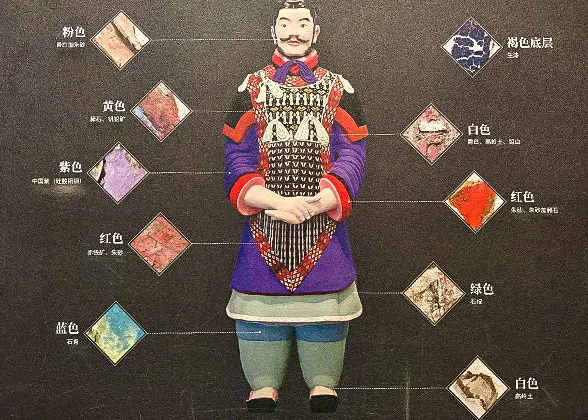 | | Originallly Colored High-ranking Officer | | 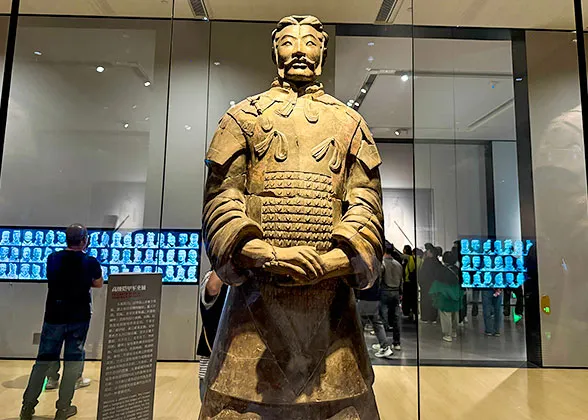 | | Today's High-ranking Officer | |
 Pictures
How Were the Terracotta Warriors Colored?
Archaeological experiments indicate that the coloring process mainly involved two steps: First, a layer of raw lacquer was brushed onto the surface of the terracotta warrior figures. Usually, a small amount of pig's blood was mixed into the lacquer to control its drying time and to enhance its gloss and smoothness. Then, various mineral pigments were blended with natural adhesives such as fish glue, bone glue, or peach tree gum to create the paint, which was evenly brushed onto the warriors. The colors were applied in a flat wash style, with most areas receiving one layer, while the face, hands, and feet often received two layers.
Why Don't the Terracotta Warriors Retain Their Original Colors Today?
The flaking off of the painted layer is mainly due to the material properties involved. The underlying raw lacquer is organic, while the painted pigments on its surface are inorganic. The organic raw lacquer is highly sensitive to changes in humidity. Once the terracotta warriors were excavated and exposed to the dry outside air, the drop in humidity caused the raw lacquer to quickly lose moisture, curl, and peel off, taking the painted layer with it and leaving the terracotta warrior figures grey.
Additionally, after being buried underground for over two thousand years, the terracotta warriors experienced damage from fires, collapses, and floods, which caused the raw lacquer and the adhesive in the painted layer to deteriorate. Furthermore, microorganisms and soluble salts in the soil also contributed to the loss of warriors' original color.
Can You See Colored Terracotta Warriors Today?
Yes! Today, visitors can see recently unearthed terracotta warriors with traces of color in the restoration area of
Pit 1, where some terracotta warrior figures still show clear pink tones on their faces. In the glass display cases in Pit 2, visitors can also observe remnants of color on certain warriors. Additionally, in the Exhibition Hall next to the Pit 2, visitors can view the famous
green-faced kneeling archer and the figure with purple sleeves.
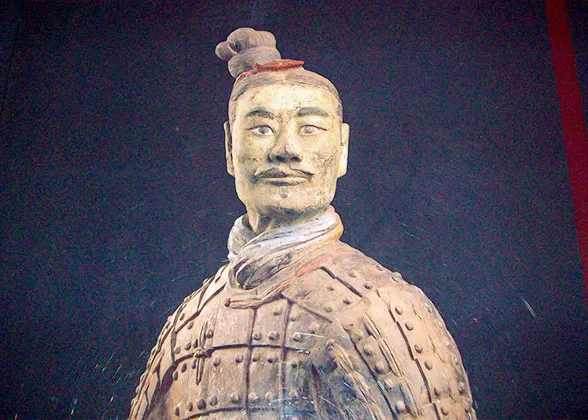 | | Green-faced Kneeling Archer | | 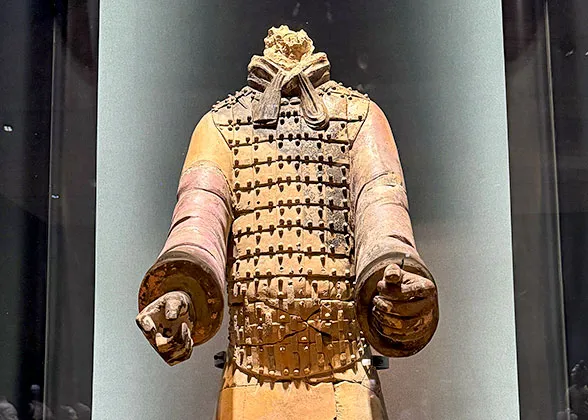 | | Purple-Sleeved Terracotta Warrior | |
Can Modern Science Preserve the Terracotta Warriors' Original Colors?
Yes! Archaeologists have now developed methods to partially preserve the original colors of the terracotta warriors. As soon as a figure is unearthed, archaeologists will spray it with a moisturizing agent to prevent the raw lacquer layer from curling due to environmental changes, keeping it flat. Then, a reinforcing agent will be applied to help the raw lacquer layer adhere more firmly to the surface of the terracotta warrior figure. Finally, the figure will be wrapped in plastic film to maintain its humidity. After these initial on-site treatments, the warrior will be transferred to a restoration laboratory for further preservation. However, the current methods are still not mature enough to fully retain the complete colors of the terracotta warriors. Nevertheless, it is believed that people can see more and more colorful terracotta figures in the future.
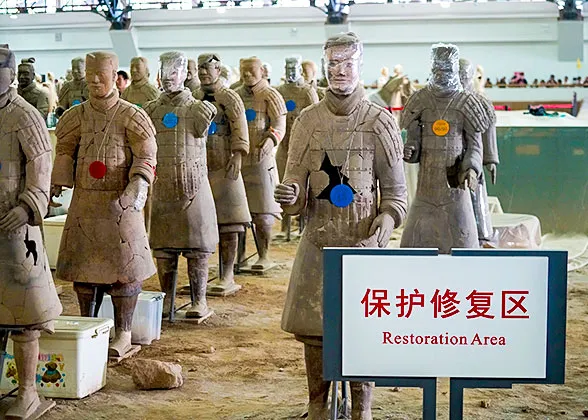 | | Terracotta Warriors in Protection and Restoration Area | | 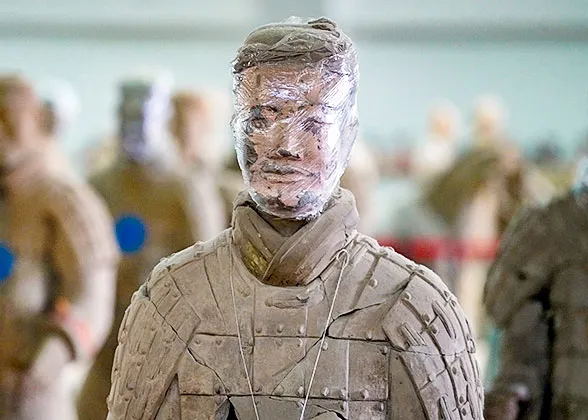 | | Terracotta Warrior Wrapped in Plastic Film | |
- Last updated on Nov. 17, 2025 by Doris Xue -
 Further Reading:
 Terracotta Army